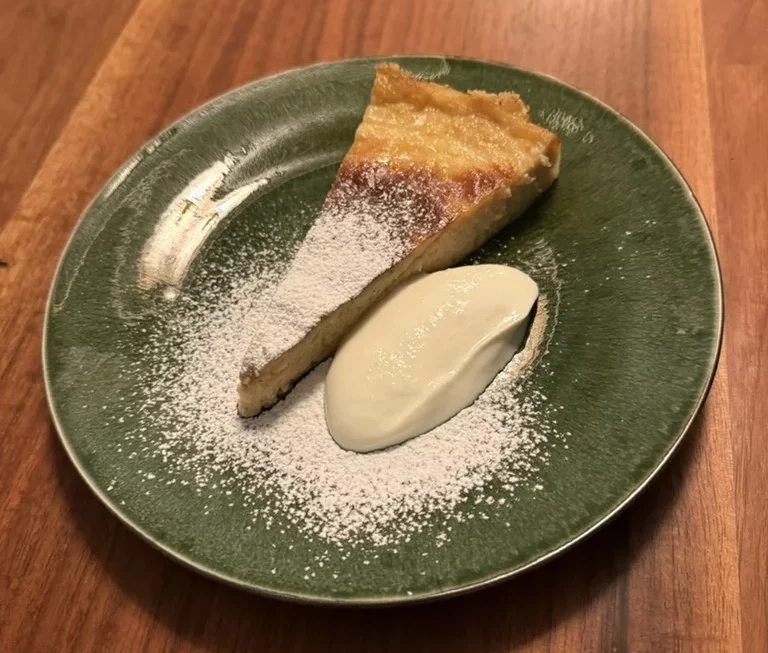
When you think of Greek cuisine, savoury dishes often spring to mind: feta cheese, olives, stuffed vine leaves, perhaps moussaka or grilled meat. But there is also a wide variety of desserts. One of these is Galatopita – literally “milk pie”.
Galatopita is a simple dish that originated in rural areas. Milk, semolina, eggs and sugar – that’s all it takes. Nevertheless (or perhaps because of this), Galatopita has endured for generations. This is often the case with things associated with childhood and grandparents. Galatopita is somewhere between semolina pudding, flan and cake. In some regions, a little filo pastry is added underneath, but this should not be confused with Galaktoboureko, which is a completely different dish.
This is our version with small but subtle special features.
First, milk is flavoured. It should be whole milk with a higher fat content. The dish requires sugar, which we generally use sparingly. As always, you will find the detailed ingredients at the end of the recipe. Traditionally, you would now cut open a vanilla pod, scrape out the contents and boil everything in the milk. This tastes great, of course, but we prefer to grate tonka bean into it instead. This is a shockingly delicious spice. It is banned in the USA, just like real cheese, which underlines its greatness.
Add a pinch of salt and cinnamon, although the latter can be omitted if desired. If you like the flavour of cinnamon, you can boil a cinnamon stick with the milk or add a little powder, which is what we did today (excellent cinnamon comes from Vietnam, by the way). It is common to add lemon zest (and sometimes a little juice), less commonly orange zest. We love the combination of both and only use zest, of course from organic fruit, which we have washed thoroughly under hot water.
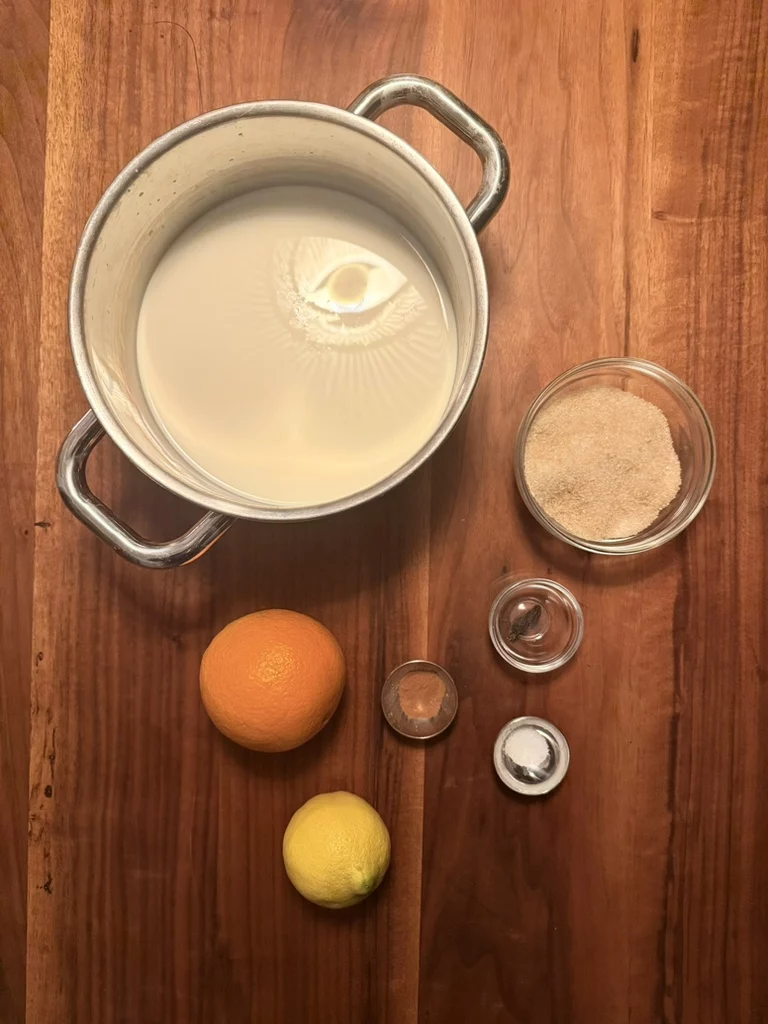
Put everything in a saucepan, stir well so that the sugar dissolves, and slowly bring almost to the boil. Keep the milk hot until it has taken on the desired flavour. This takes about 20 minutes.
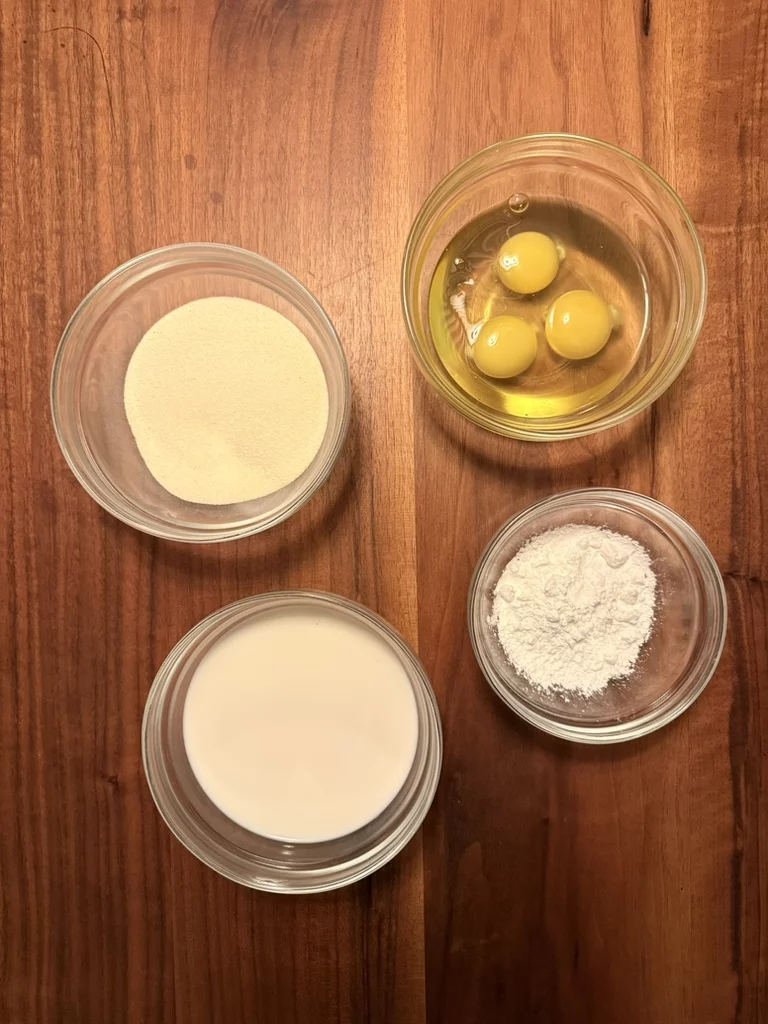
Mix the other ingredients in your biggest bowl, which are eggs, a bit more milk, some starch, and semolina. Here in Germany, we can buy semolina made from durum wheat and soft wheat. These are two totally different types of wheat (Triticum durum and Triticum aestivum), which you can compare to waxy and floury potatoes – similar, yet very different. Durum wheat semolina is the right choice for pasta, while soft wheat semolina is better for puddings, for example. The alternative to soft wheat semolina is extra finely ground semolina, but you will need to find out more about this depending on where you live.
So, the pot contains hot seasoned milk, and the bowl contains the cold mixed ingredients. Now add a ladleful of hot milk to the bowl, stirring constantly. This allows the semolina and egg mixture to slowly heat up without the egg curdling. Continue doing this until all the milk is in the bowl.
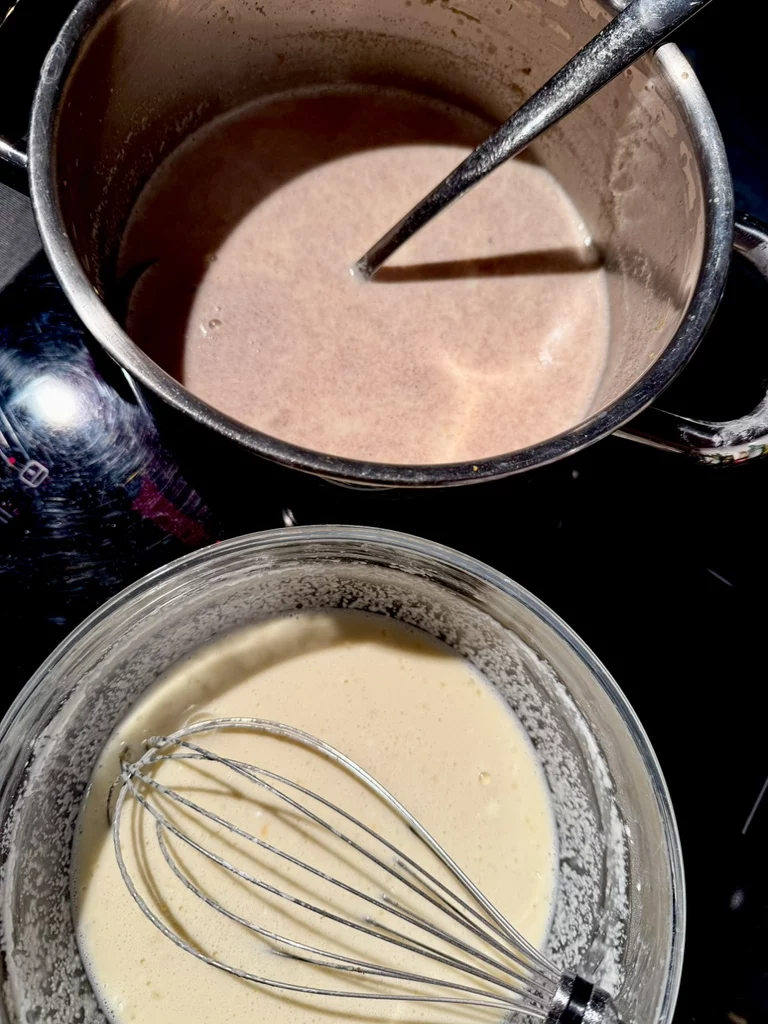
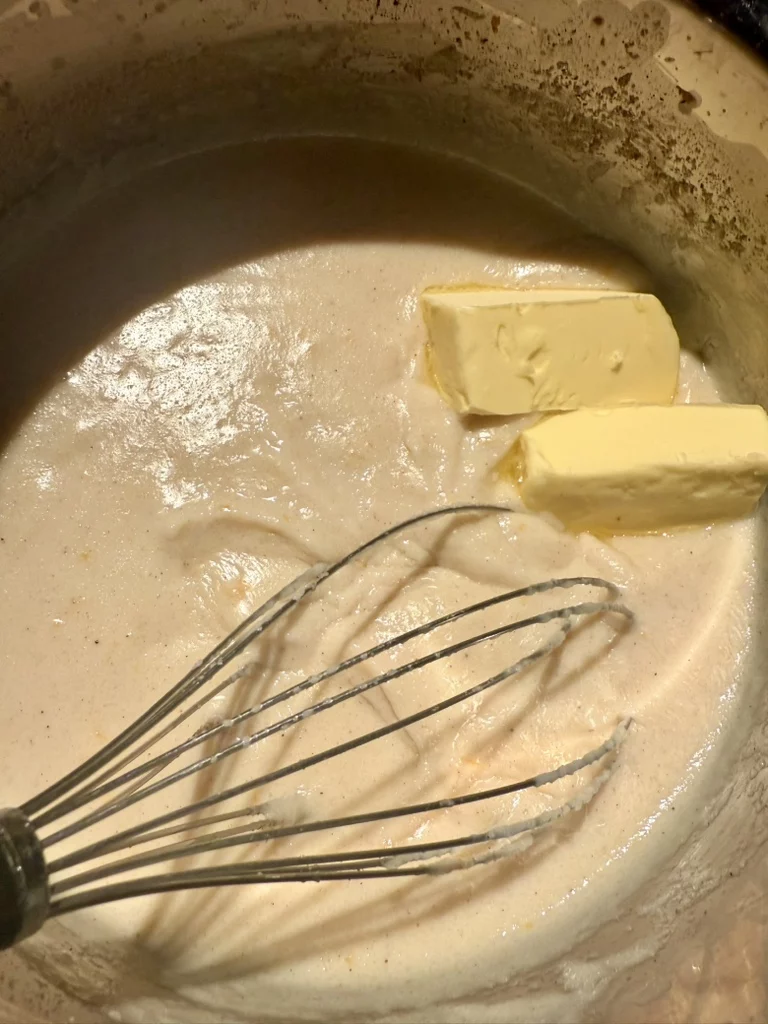
Then return the mixture to the pot and heat it again over medium heat. Stir constantly with a whisk, because now everything happens very quickly. You are actually cooking semolina pudding, which only takes about 3 minutes to form a thick mass. It is so thick that it would become too firm without the butter that is now added. It is also stirred in with a whisk until it has completely melted.
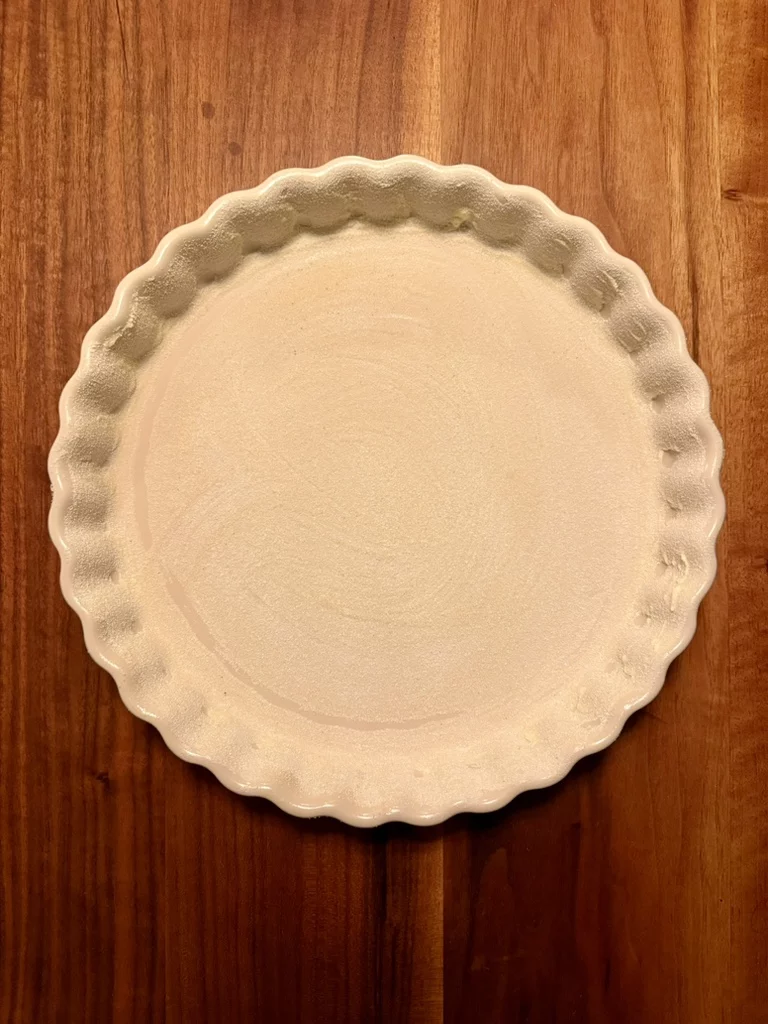
A baking tin, we use a ceramic tart mould, is coated with softened butter. Semolina is added and the mould is tilted in a circle until the base and sides are covered.
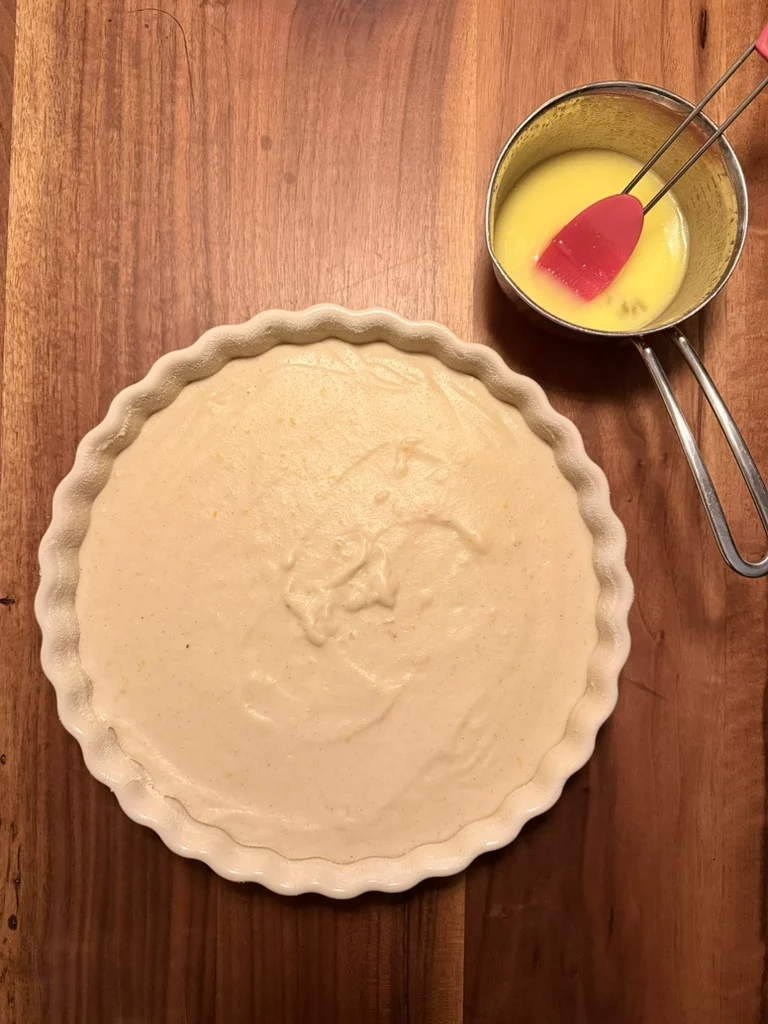
Then the entire mixture is poured into the mould and its surface is coated with a mixture of egg, water and sugar. Most recipes call for a lot of sugar here, which results not only in sweetness but also in a dark surface of the cake. We are always very restrained with sugar and do without uniform colouring. We replace the sugar with icing sugar, and thus use only a fraction of the usual amount.
Bake in a preheated oven at 180 °C with fan (without fan at 200 °C) for 40 minutes. The degree of browning on the surface is decisive for the exact time; the cake will always be baked through.

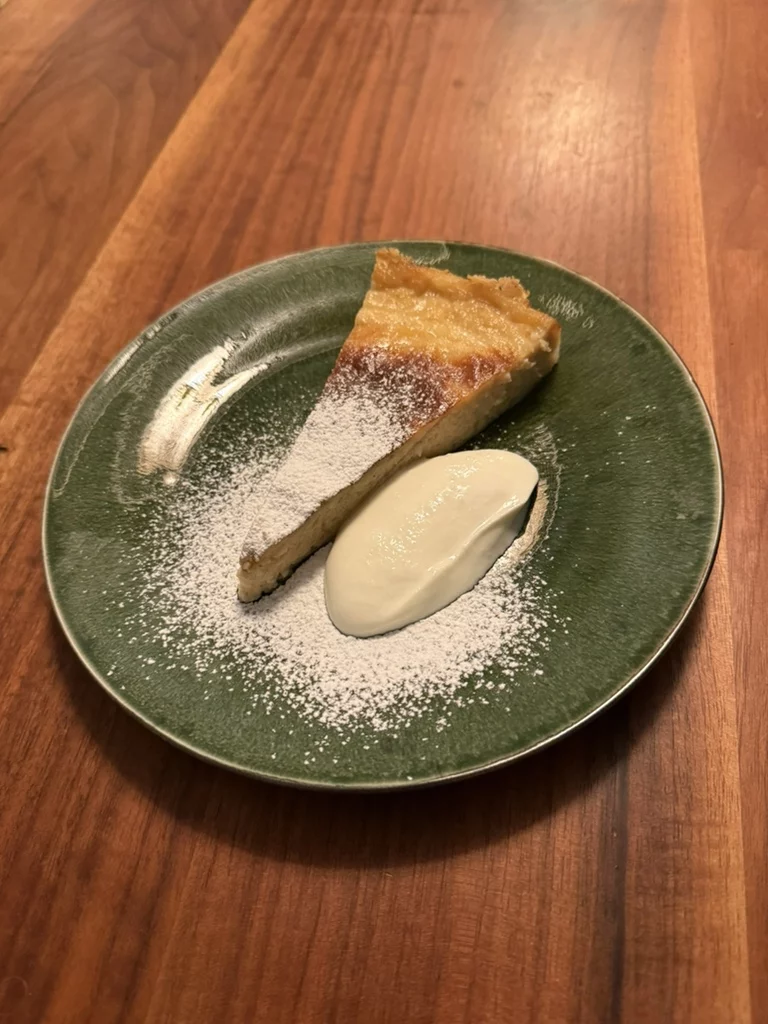
For us, Galatopita tastes best with a dollop of Greek yoghurt. The mild acidity is the perfect accompaniment. A little honey also tastes very good with it, but we only like it on the yoghurt and not on the cake. Our compromise for using less sugar is to lightly dust the whole thing at the end. It just looks pretty too.
Enjoy.
And may the taste be with you.
Ingredients (for a cake with a diameter of 28 cm):
For the flavoured milk:
1 litre whole milk
150 g sugar (175 g for more sweetness)
1 vanilla pod or gratings from a tonka bean
1 cinnamon stick or 1/3 tsp ground cinnamon
Zest of ½ lemon and ½ orange (or just one of each)
1 pinch of salt
For the cold mixture:
100 g soft wheat semolina (or very fine durum wheat semolina)
30 g starch
3 medium eggs
250 ml milk
80 g butter
For the mould (28–30 cm diameter):
30 g soft butter
4 tbsp semolina
For the glazing:
1 egg
2 tbsp water
2 tbsp sugar (we use icing sugar)
