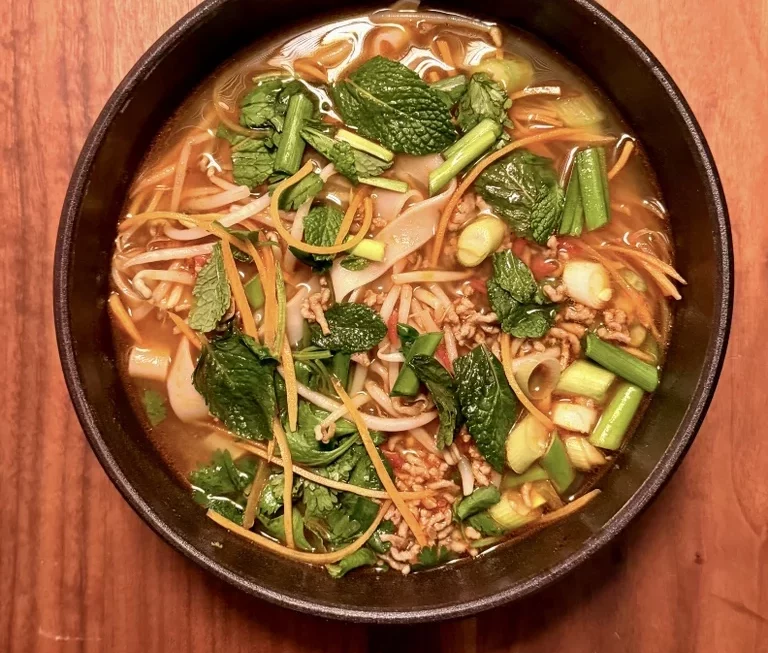
Khao Soi is the name of a dish that is prepared in many different ways in northern Thailand and Laos. We have described the Thai version, specifically from Chiang Mai, here.
We recently travelled to Laos, where we also took part in a cooking class, and now we’re going to explain Laotian khao soi as we got to know it in Luang Prabang in northern Laos – and it’s a completely different dish. The Laotian version has virtually nothing in common with the creamy curry from northern Thailand, except for the name. The word khao means rice in Laotian, soi means to cut – which refers to the cut rice noodles. Thai khao soi, on the other hand, contains wheat noodles, often with egg.
For this dish, you first need a very good stock, which means you should make it yourself, but that’s not difficult. We have explained how to make Asian chicken stock here.
In Laos, pork is used, but we prefer beef. For a broth, you need bones, preferably with some meat on them. This is also the most sensible use for the parts of the animal that are not otherwise consumed.
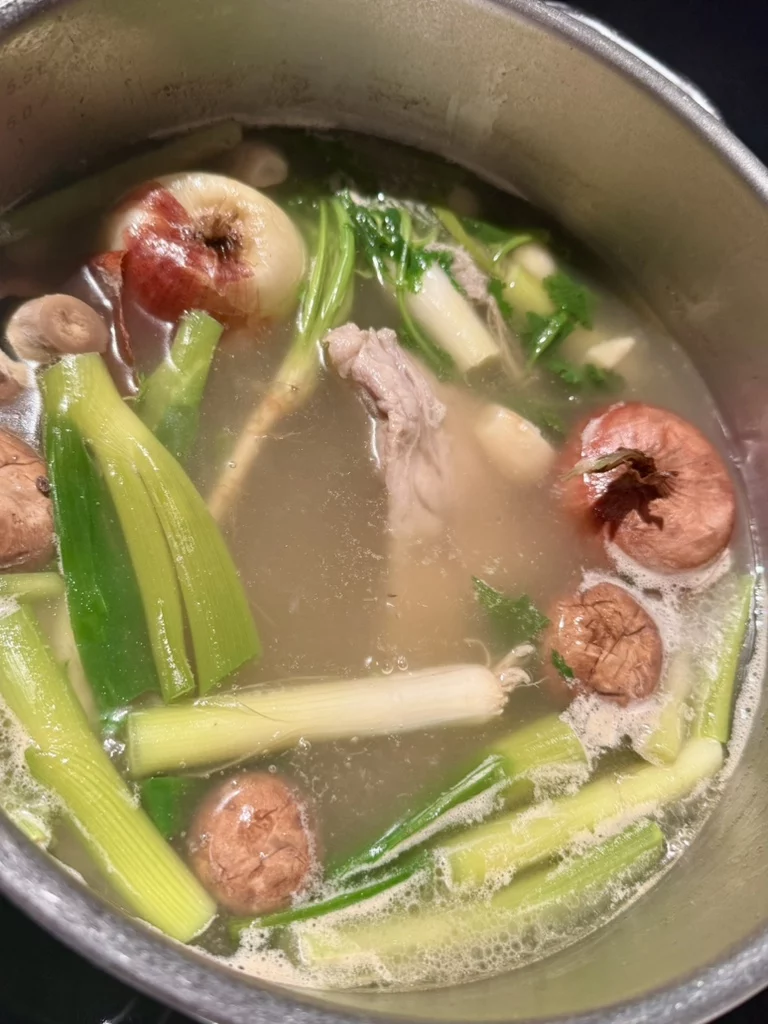
The meat bones are boiled once in plenty of water and drained immediately as soon as foam forms. The pot and meat are washed thoroughly to remove all impurities. Then all the ingredients for the broth (bones, ginger, garlic, onion and coriander root) are slowly brought to the boil again in fresh, cold water. We also use spring onions and mushrooms for umami.
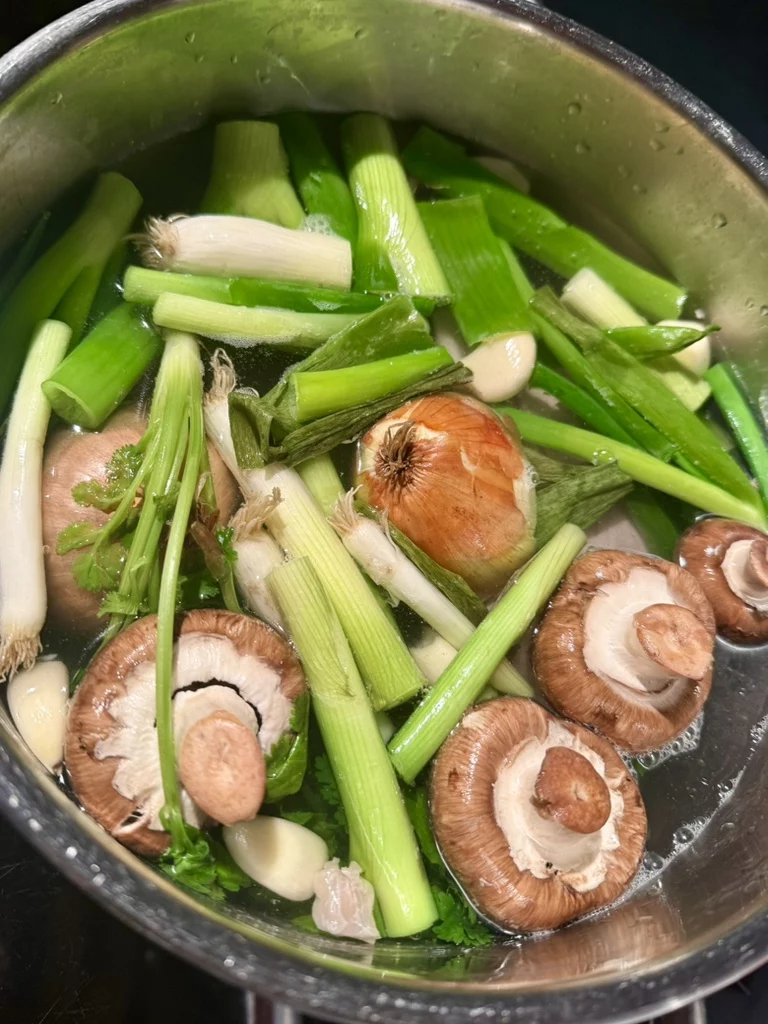
Let this simmer gently for at least two hours; longer never harms. We do this the night before and simply leave the pot with all the ingredients until the next day, which intensifies the flavour. The broth is poured through a sieve and only then salted to taste – but not with salt itself (or at least not only), but with fish sauce, as is also customary in Thailand.
In the 19th century, many Chinese fled from Yunnan province to Burma (Myanmar), northern Thailand and Laos. Others had already arrived earlier as traders. These people, known as ‘Chin Haw’, brought Yunnan cooking techniques, spice profiles and noodle traditions to northern Thailand and Laos. Both Thai and Laotian Khao Soi can be traced back to this influence.
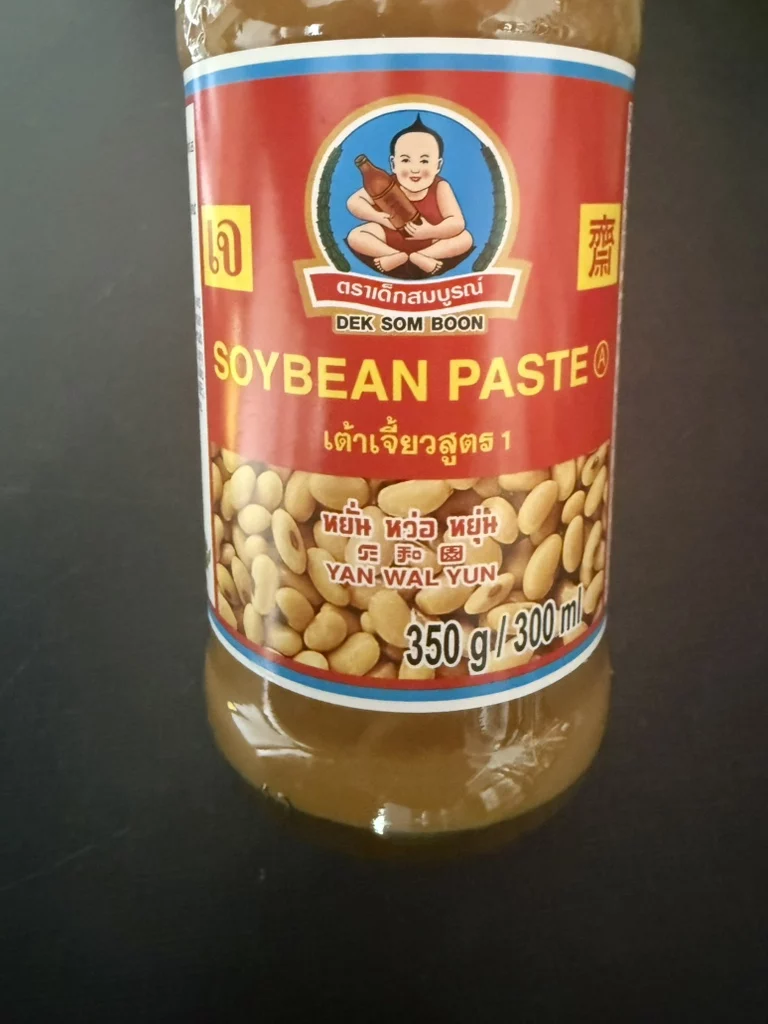
The next element of this dish is a meat sauce that is reminiscent of Bolognese. In addition to minced meat (pork in Laos), you will need red curry paste, tomatoes and fermented soybean paste (tua nao). You can buy the red curry paste, but if you want to make it yourself, we have explained how here. No surprise: homemade tastes much better.
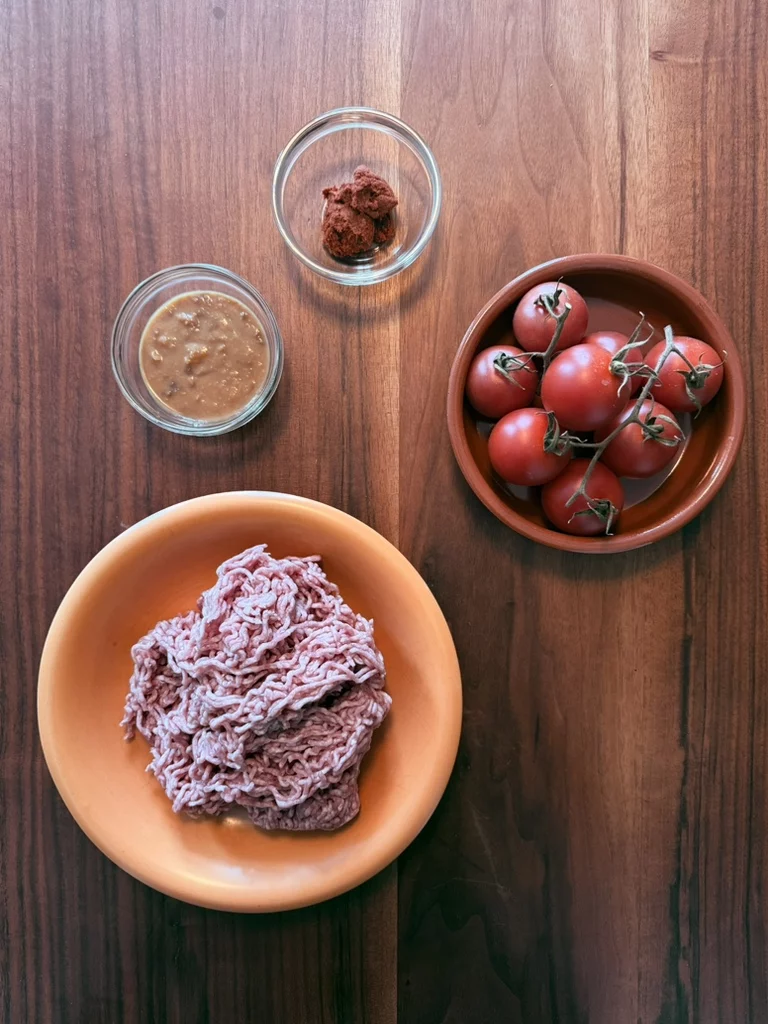
The soybean paste can be purchased from the popular brand ‘Healthy Boy’, for example:
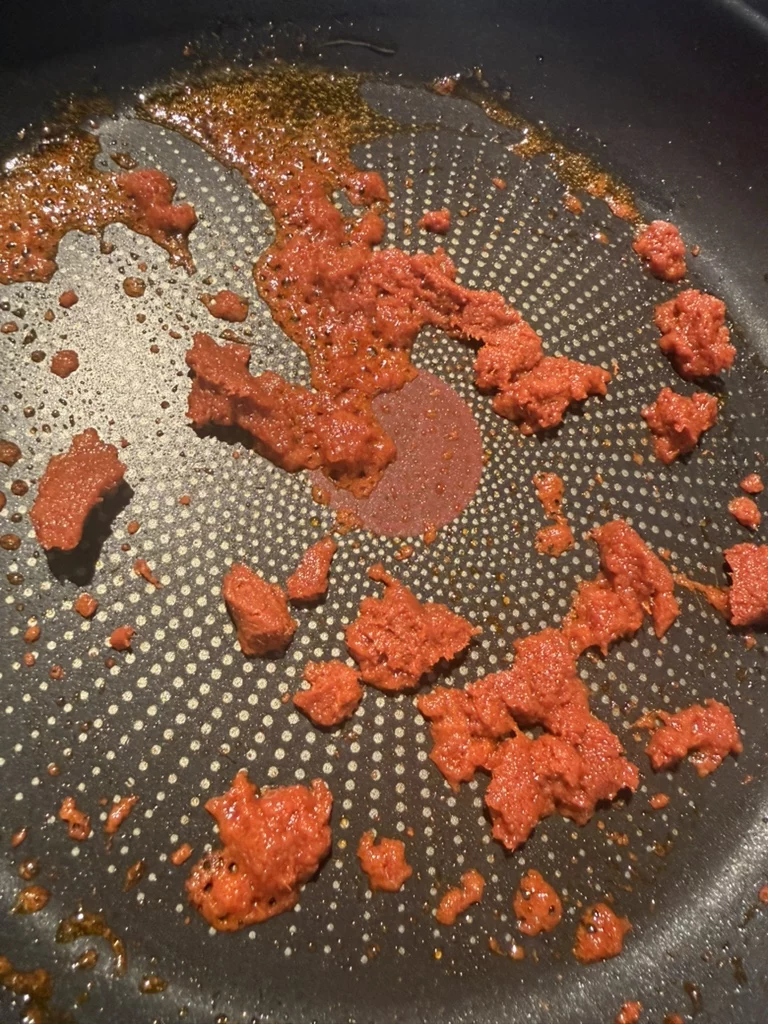
First, fry the red curry paste in a pan with a little neutral vegetable oil for 30–60 seconds, stirring continuously to allow the flavours to develop fully. Medium high heat is the right choice here.
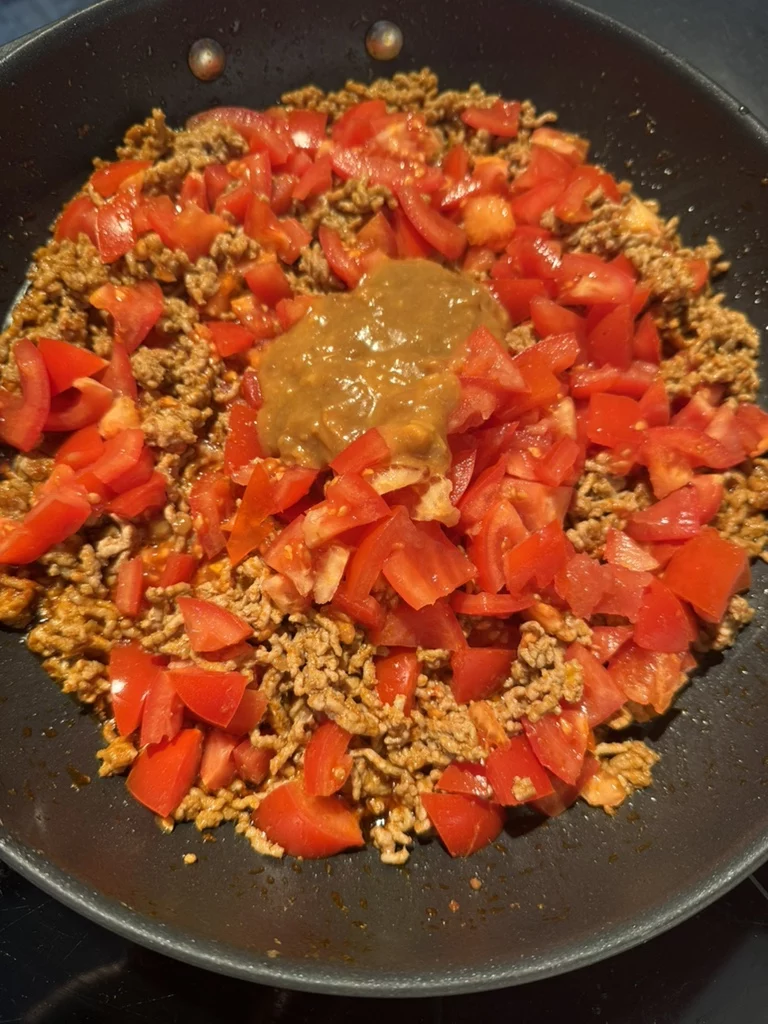
Spread the minced meat in the pan and leave it to fry on the bottom for a minute. Then turn it over and crumble it bit by bit. Don’t stir it constantly, though, or you’ll just dry out the meat without getting any roast flavour. Once it’s browned, add the diced tomatoes and soybeans.
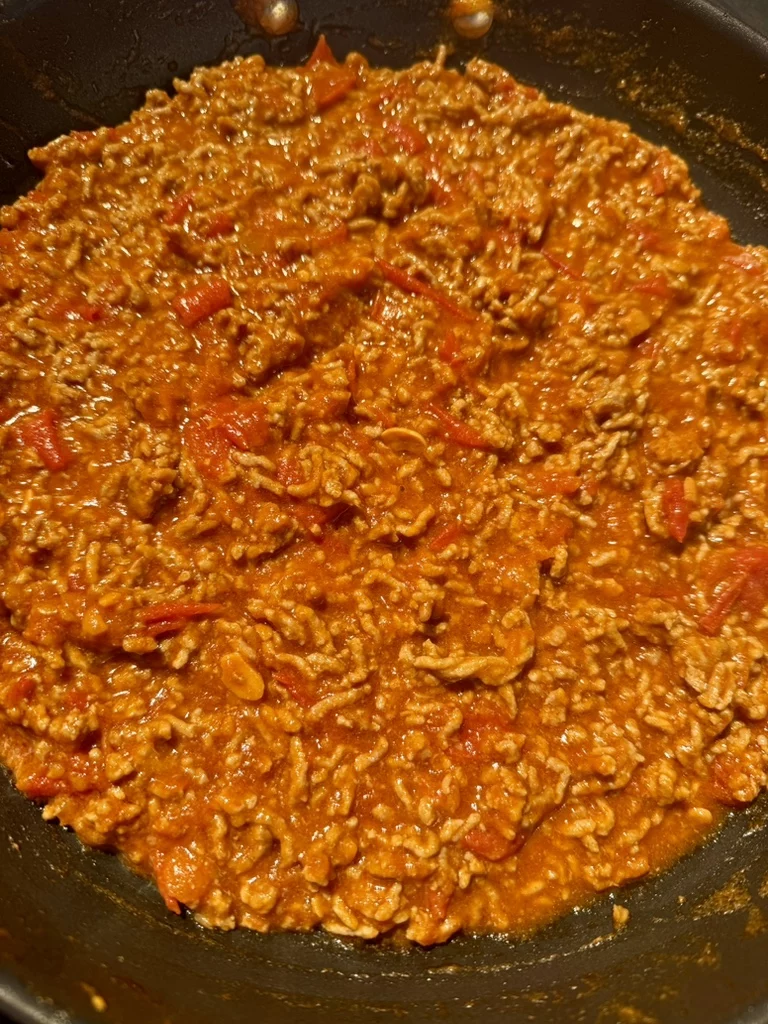
Mix everything together and continue frying until the tomatoes have melted and a creamy sauce has formed. No further seasoning is required.
Khao Soi from Laos is eaten with rice noodles, which can usually be bought under the name ‘Banh Pho’. The broader variety (approx. 1 cm) is most suitable. These noodles are cooked according to the instructions on the packet, which for dry rice noodles often means a combination of soaking and boiling. Fresh rice noodles, which do not require any further preparation, are rarely available outside Asia.
Fresh bean sprouts and herbs (typically coriander, mint and Thai basil) are essential. We find that finely chopped spring onions and even finer strips of carrot are a great addition. A splash of lime juice rounds off the final result.
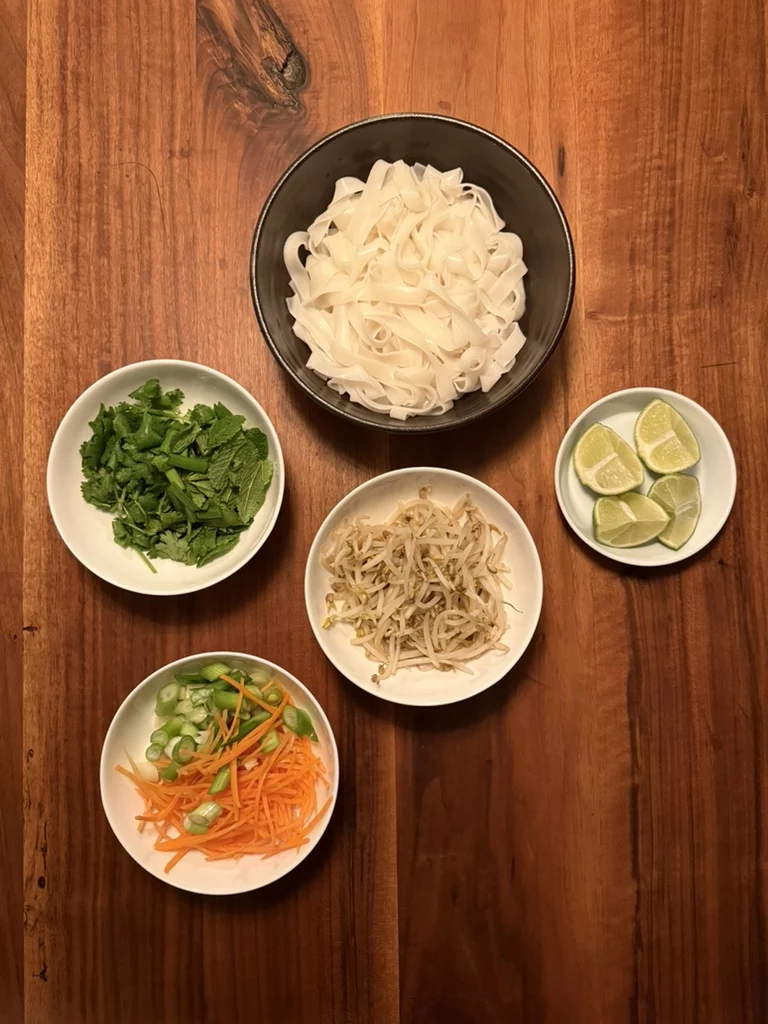
Pre-cooked (or fresh) rice noodles are placed in a warmed bowl, along with sprouts, vegetables and herbs to taste. A helping of warm meat sauce is poured on top.
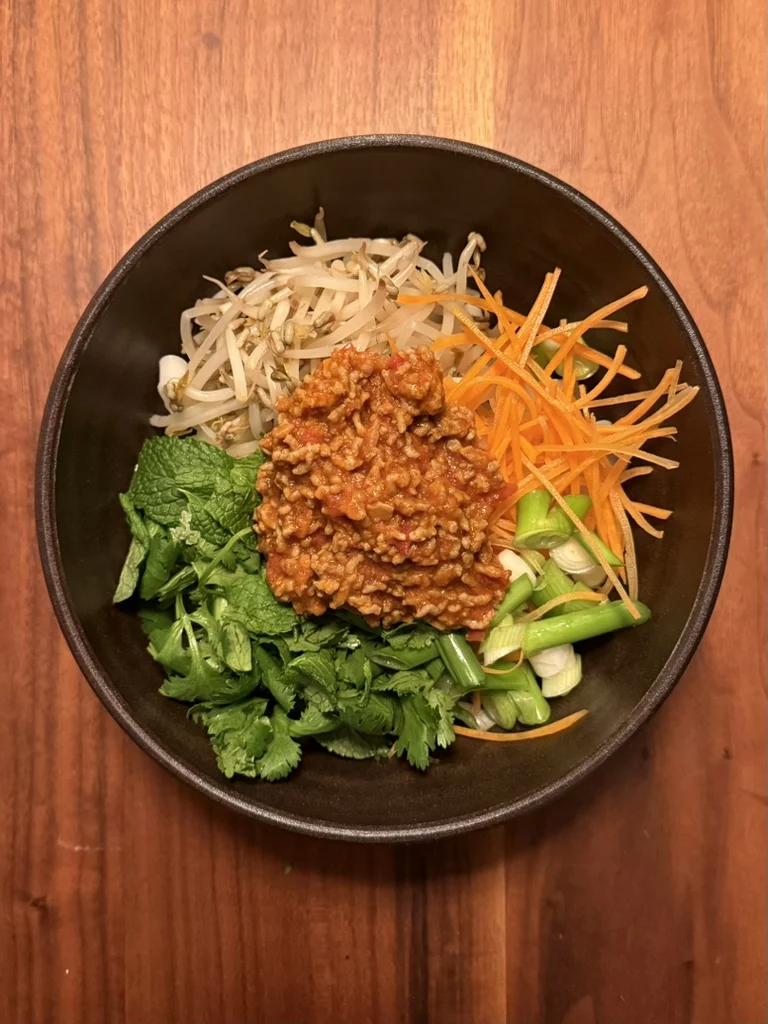
Now pour the boiling hot broth over it without stirring. It is then typically eaten with chopsticks and a spoon, and so each mouthful is different from the last. A squeeze of lime adds freshness. If you want it saltier, season with a few drops of fish sauce. If you want it spicier, add chilli flakes. These three ingredients were also a regular feature of breakfast in Laos. There were no complaints.
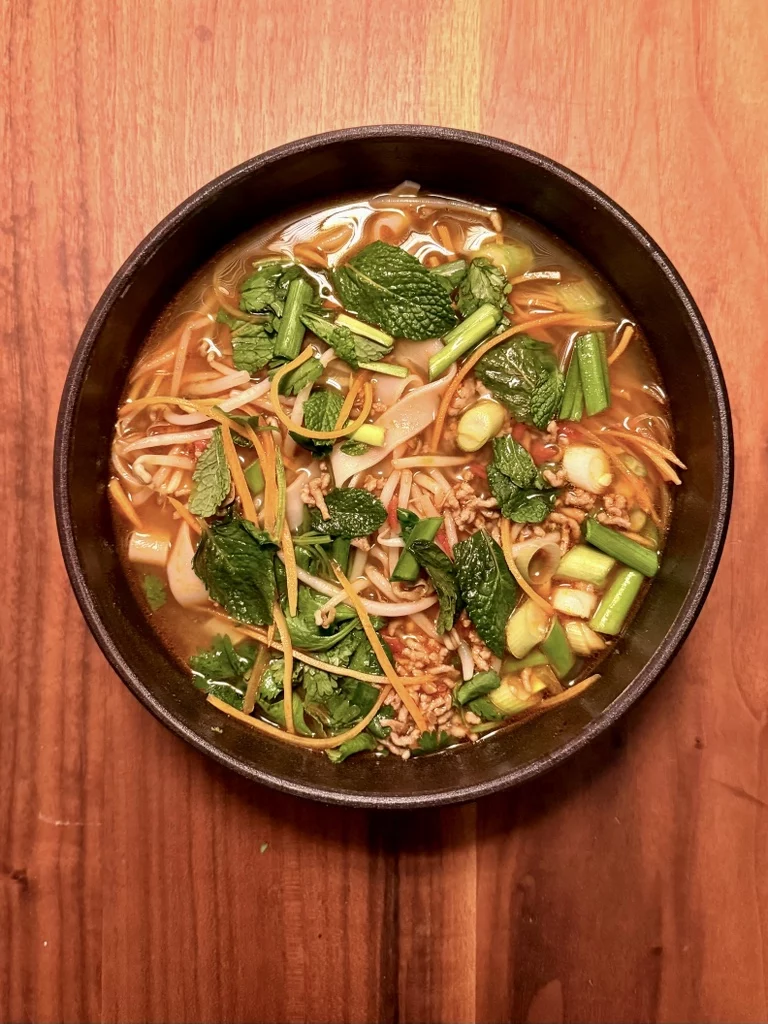
Enjoy.
And may the taste be with you.
Ingredients (for 4 people) :
For the stock:
1 kg pork (or beef) bones with some meat
3 litres cold water
3 – 4 cm ginger, rinsed
6 – 8 spring onions, rinsed
6 cloves of garlic
3 – 4 coriander roots (alternatively: a bunch of coriander stalks)
1 onion
1 handful of mushrooms
To taste: fish sauce
For the meat sauce:
1 tbsp neutral vegetable oil
1 ½ tbsp red curry paste
500 g minced pork (or beef)
3 tbsp fermented light soybean paste
2 handfuls of ripe tomatoes (alternatively tinned tomatoes)
Black pepper and salt
To serve:
250 g broad rice noodles (dry weight, otherwise double the amount fresh), soaked or cooked
160 g fresh bean sprouts
4 spring onions
Optional: Very finely sliced vegetables, e.g. carrots
2 handfuls of fresh herbs (coriander, mint, Thai basil)
To taste:
Lime, fish sauce and chilli flakes

One thought on “Laos Khao Soi”