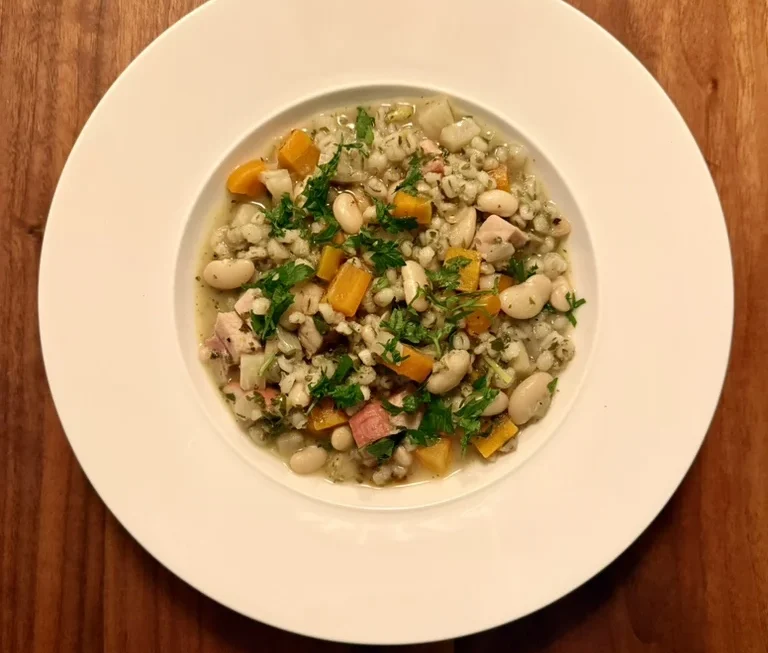
Anyone looking for the oldest dishes in Europe that are still eaten today will eventually come across the Ritschert. Archaeological finds in Austria show that people there were already familiar with a dish made from barley grains, pulses and salted pork some 3,500 years ago – in other words, the very three basic ingredients that still make up a Ritschert today.
In south-eastern Austria, in the province of Carinthia, Ritschert is very well known and popular. However, it is eaten throughout the Eastern Alps region and also in Bavaria, Germany. In Slovenia, it is called ričet. The oldest known written reference to it comes from a monastery cookbook from Tegernsee (also in Bavaria) dating from 1534.
The key ingredient is pearl barley. You can find more information about this in this recipe from Switzerland.
It gives the dish its characteristic texture and a flavour that more familiar staple foods do not provide.
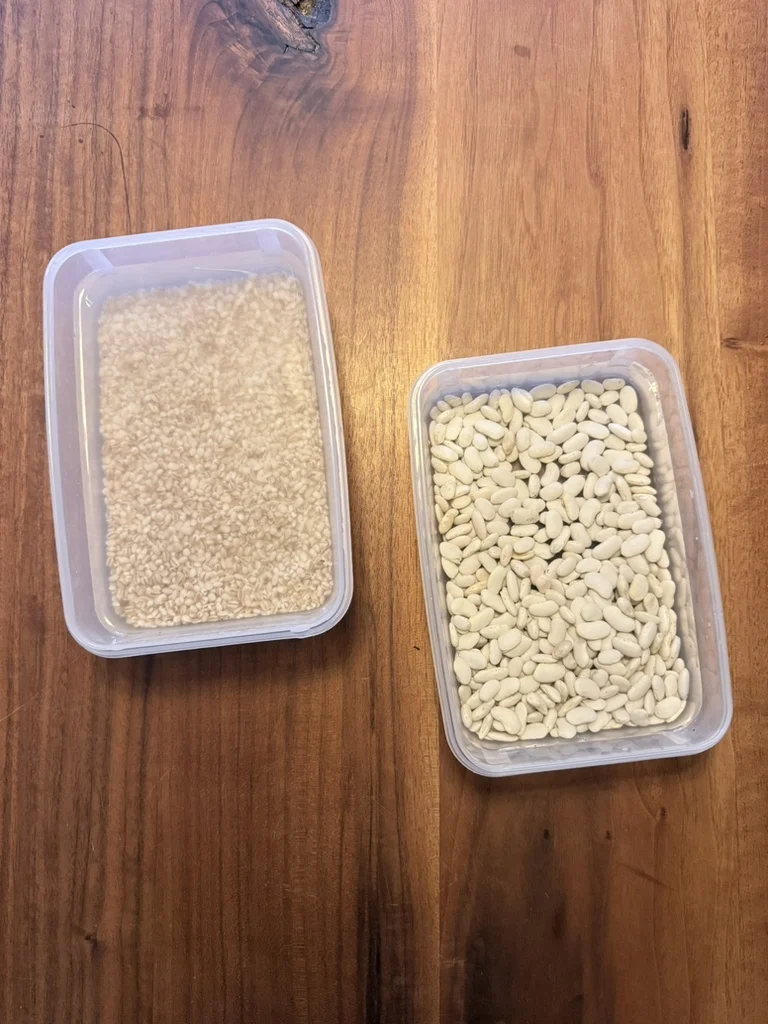
Beans are also included; these could be white beans, for example.
Both are soaked overnight in plenty of water the night before.
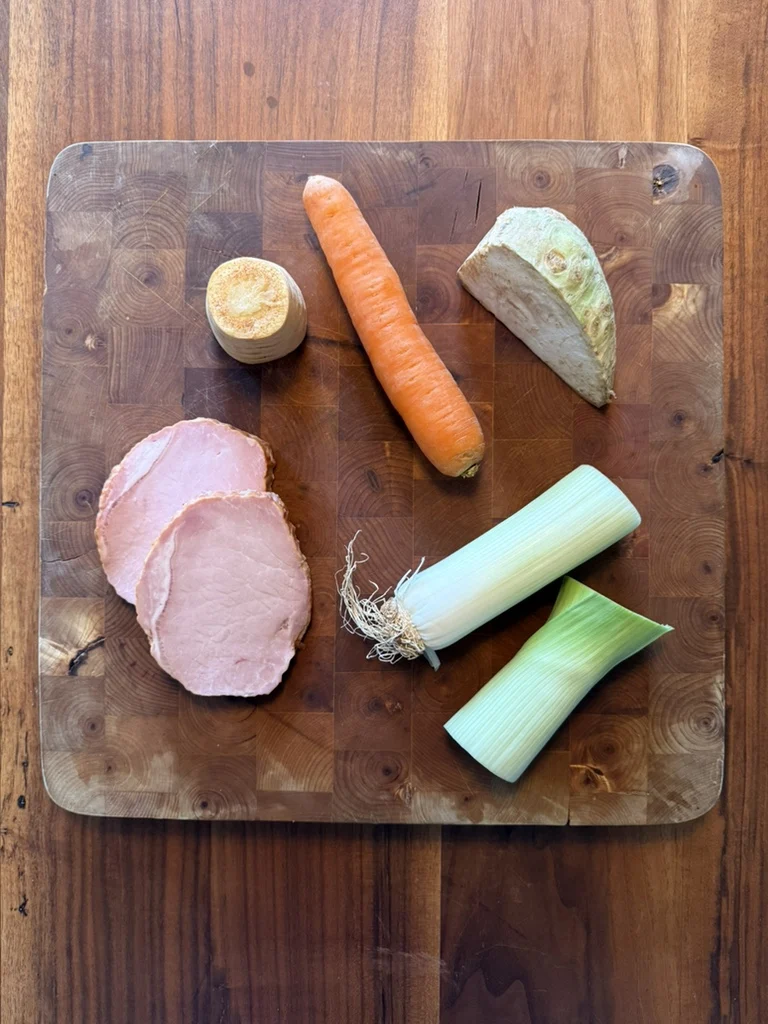
The other ingredients are root vegetables – namely carrots, celeriac and parsley root – along with leeks. And meat: in Austria, this is known as ‘Geselchtes’. In Germany, one would use ‘Kassler’. Both are cured, smoked pork; however, the Austrian Geselchtes is cold-smoked using beech, spruce or Swiss stone pine wood. The result has an intense smoky flavour, a firm texture and is comparatively dry. Kassler, on the other hand, is a 19th-century German product that is hot-smoked. It is significantly more tender, but has less smoky flavour as a result.
Elsewhere, it is best to use a more heavily smoked, cured cut of pork neck, belly or ribs – in France, for example, ‘palette fumée’ or ‘poitrine fumée’, and in Anglo-Saxon countries, ‘smoked pork shoulder’ or ‘smoked ham hock’. The key point is that it should be raw or semi-cooked smoked meat intended for cooking.
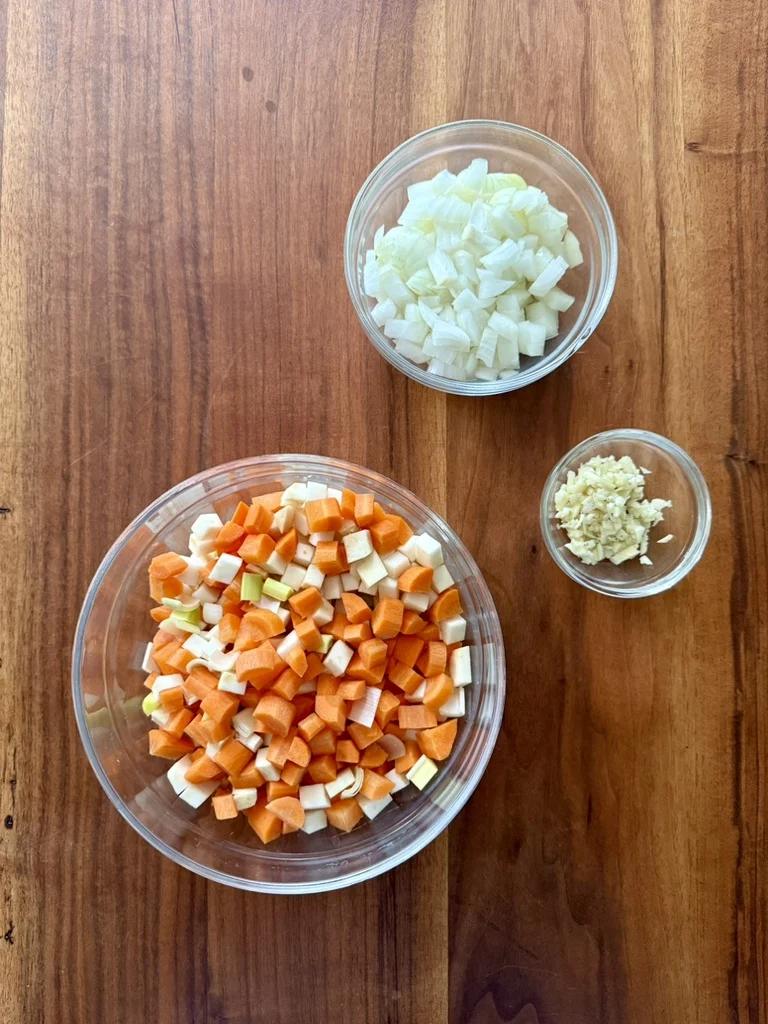
Peel the root vegetables and dice them into 1 cm pieces. Chop the onion and garlic.
Bring the meat to the boil in water, then leave it to simmer for an hour with the lid on. It should become very tender and a stock should form in the process.
The soaked beans can be cooked right through in the dish, but as cooking times vary greatly depending on the product, we pre-cook them at the same time in plenty of unsalted water.
Meanwhile, we heat some neutral oil – lard is often used as well. The pan should be as large as possible. First, we soften the onion over a medium-high heat. Once it has become translucent, we add the garlic.
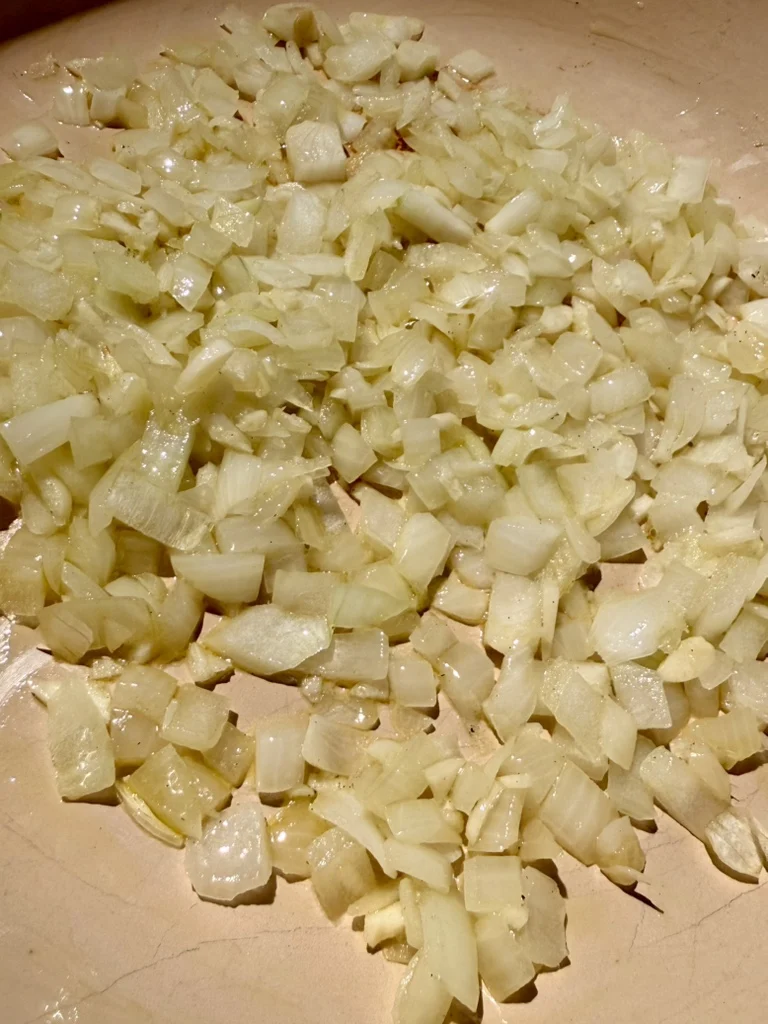
Two minutes later, add the root vegetables. Sauté these as well until they give off a strong aroma.
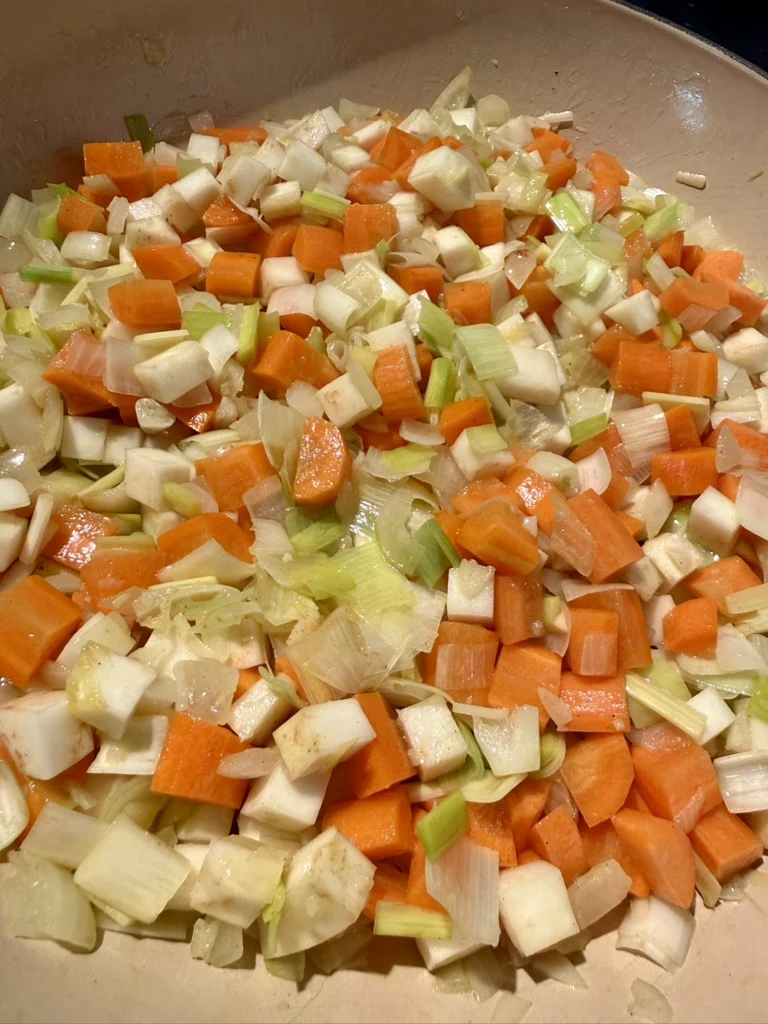
By this point, a good 15 minutes have passed. Next, add the pearl barley and beans, both drained and without the soaking or cooking water. Add the bay leaves and pour in enough water to cover everything.
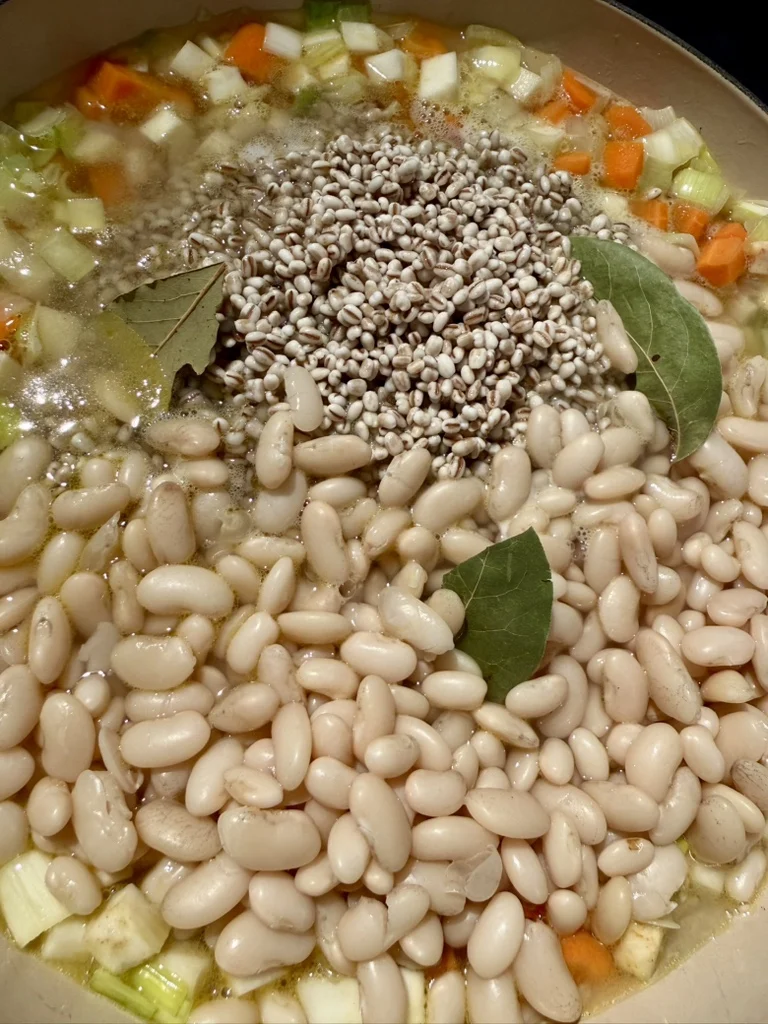
Stir thoroughly, bring to the boil, then cover with a lid and simmer gently over a low heat for 30 minutes. After about 15 minutes, you will need to top up with water. The ingredients should remain covered.
In the meantime, you can prepare herbs, which are particularly important for this dish. You’ll need thyme, marjoram, lovage and parsley. Depending on the season, these can be fresh or dried herbs.
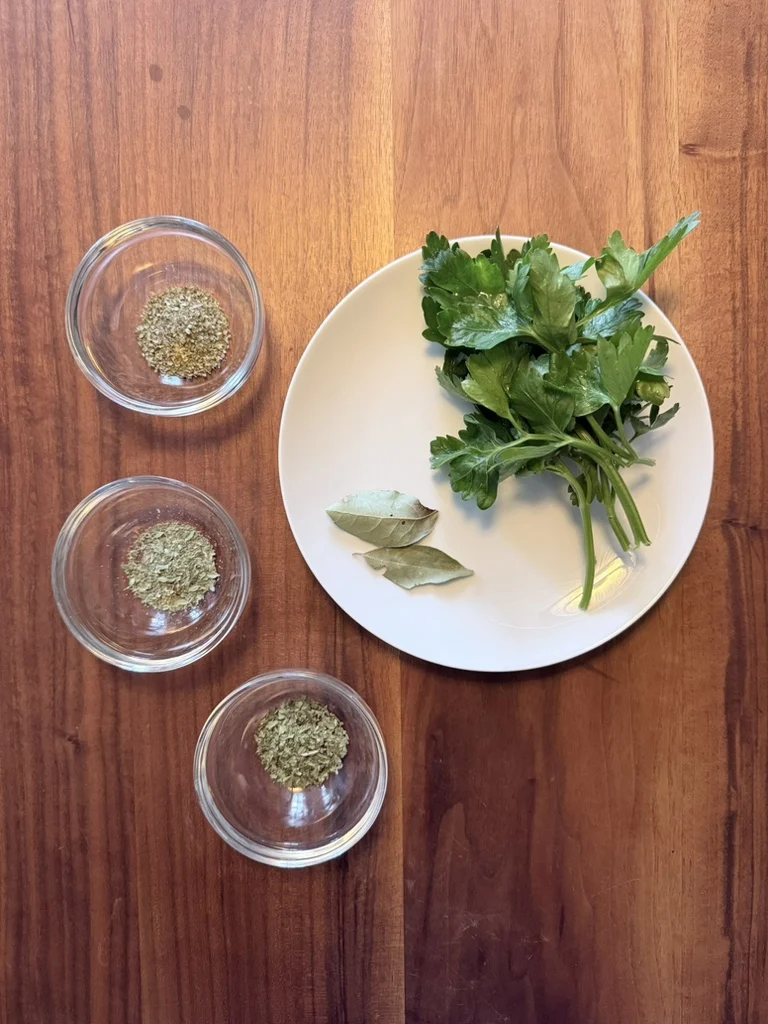
The pearl barley is now almost tender, but the beans probably aren’t yet. Add all the herbs and season with salt and pepper for the first time.
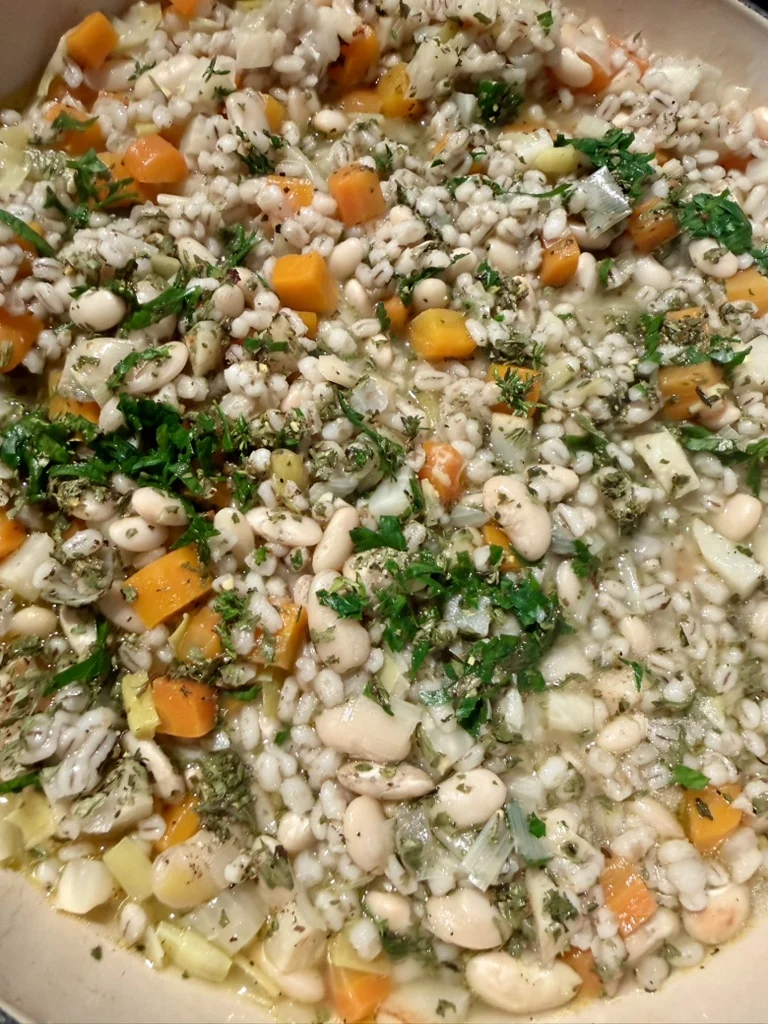
The meat is removed from the stock and cut into bite-sized pieces. From this point onwards, no more water is added to the Ritschert; instead, this cooking stock, which imparts the smoky flavour, is used.
Once again, the ingredients should be just covered with liquid.
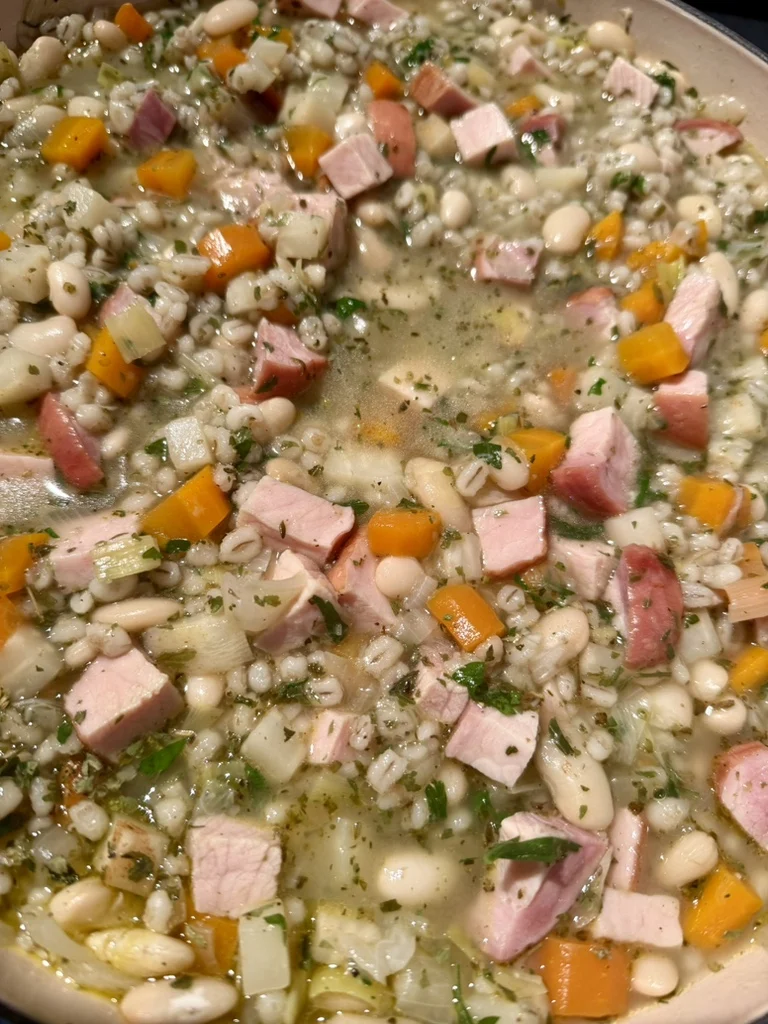
Continue to simmer the dish over a low heat with the lid on until the beans are tender. If there isn’t enough liquid, add more of the stock from the meat. Finally, season to taste with salt and pepper, then serve with more freshly chopped parsley.
This is a truly exceptional dish, incredibly flavourful and very nutritious – yet not at all heavy. We’re not surprised that it has stood the test of time.
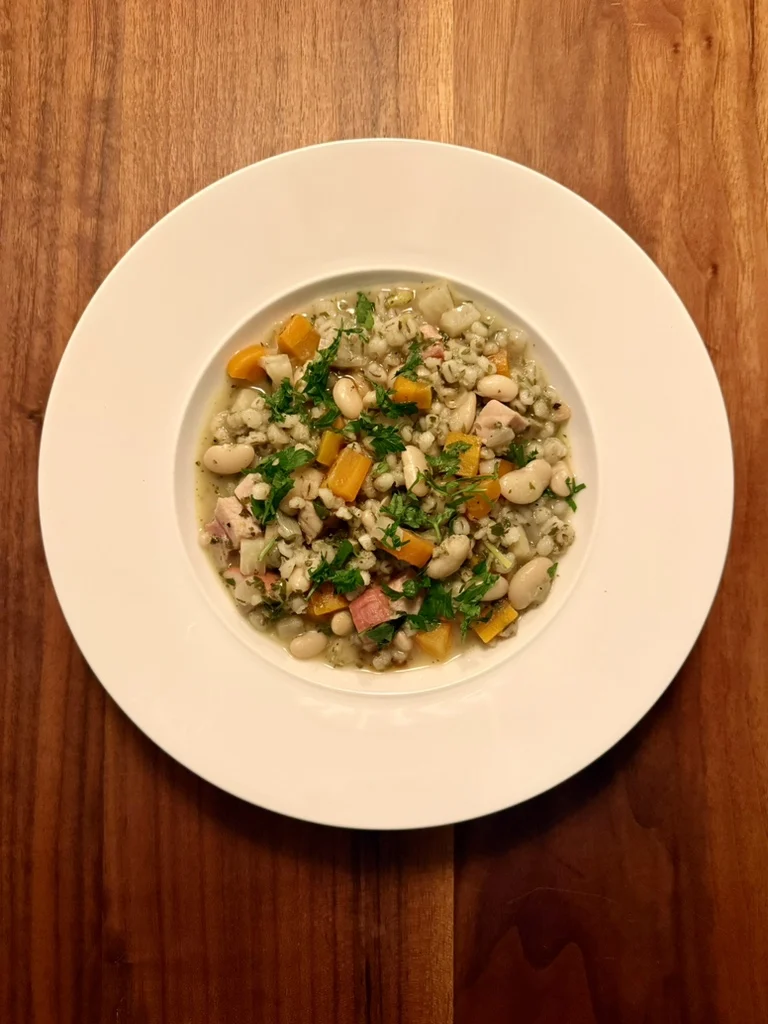
Enjoy.
And may the taste be with you.
Ingredients (for 5–6 people):
200 g pearl barley
150 g dried white beans
500 g smoked pork
1 l water for cooking the meat
Neutral oil or lard for frying
2 onions
3 garlic cloves
500 g root vegetables (carrots, celeriac, parsley root, leek)
3 bay leaves
2 sprigs of thyme (or 2 tsp dried)
2 sprigs of marjoram (or 2 tsp dried)
2 sprigs of lovage (or 2 tsp dried)
Parsley to taste
Salt & pepper
Stock from the cooked meat
