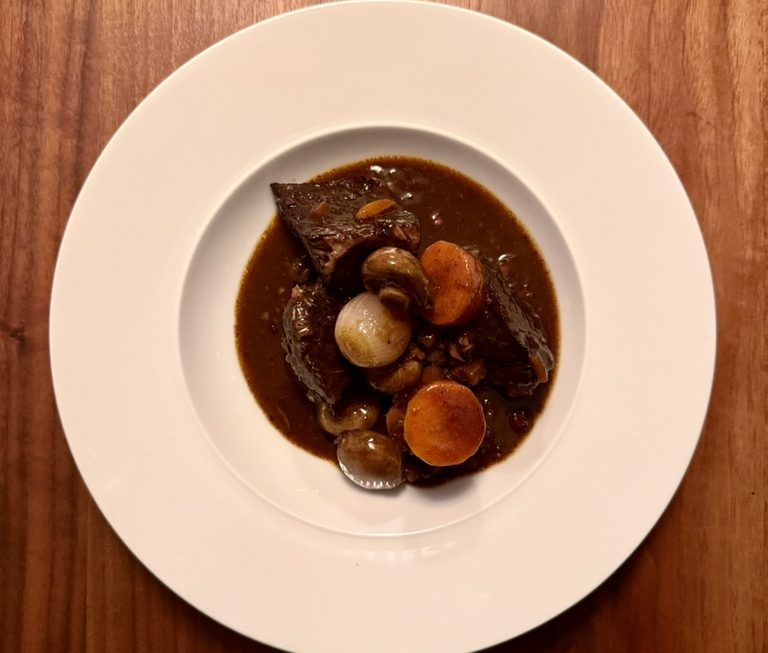
For many, the hardest part of Boeuf Bourguignon is learning how to spell it. Admittedly, cooking it is no walk in the park either. But if you follow the instructions here, you’re sure to succeed in making this classic French dish.
This hearty stew, named after the wine region of Burgundy (Bourgogne) in eastern France, has achieved cult status in the culinary world. However, it was originally a peasant dish that served to make tough meat edible through long braising.
The typical Burgundy red wine – usually a Pinot Noir – was an integral part of the dish. The meat was marinated in wine and then slowly braised, together with bacon, onions, carrots and often mushrooms. Just as it was available on a Burgundy farm.
In the 19th century, French cuisine began to professionalise. Chefs such as Auguste Escoffier, the founder of classic French haute cuisine, drew on regional dishes, refined them and elevated them to a new level. Boeuf Bourguignon thus became part of refined gastronomy.
We always start with the ingredients for the meat, as this takes by far the most time.
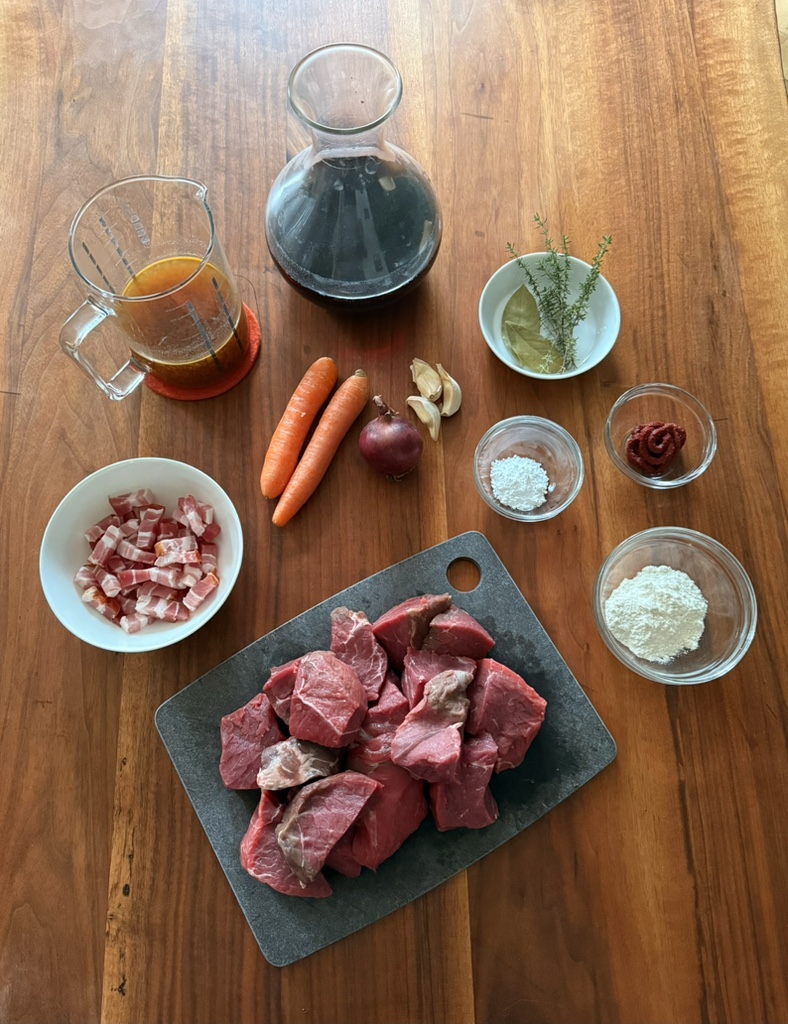
For stews, cuts rich in connective tissue are generally used, which become tender and aromatic when cooked slowly. We have described this, for example, here for Stracotto di Manzo from Italy, here for braised onion roast from Germany, and here for Carbonade Flamande from Belgium.
For Boeuf Bourguignon, we think the shoulder is the best cut, but you can also use fattier meat. Since it becomes very, very tender when braised, we always cut it into large pieces, at least 5 cm long. This is absolutely crucial for perfect results, and we find recipes that use small, sometimes even tiny pieces for this dish irritating.
You will also need streaky bacon. Remove the skin and cut the rest into lardons, which are strips approximately 1 cm wide and 3 cm long.
For the vegetables, you need to use onions, carrots and garlic. To make the sauce, you will further need icing sugar, tomato paste, flour, red wine (Pinot Noir, of course) and beef stock.
The typical aromatics are found in a bouquet garni, a classic herb bundle used in French cuisine, consisting of bay leaves, thyme and parsley. However, we consider the latter to be dispensable at this point, as it contributes little to the strong flavours of this dish.
Preheat the oven to 150 °C without convection.
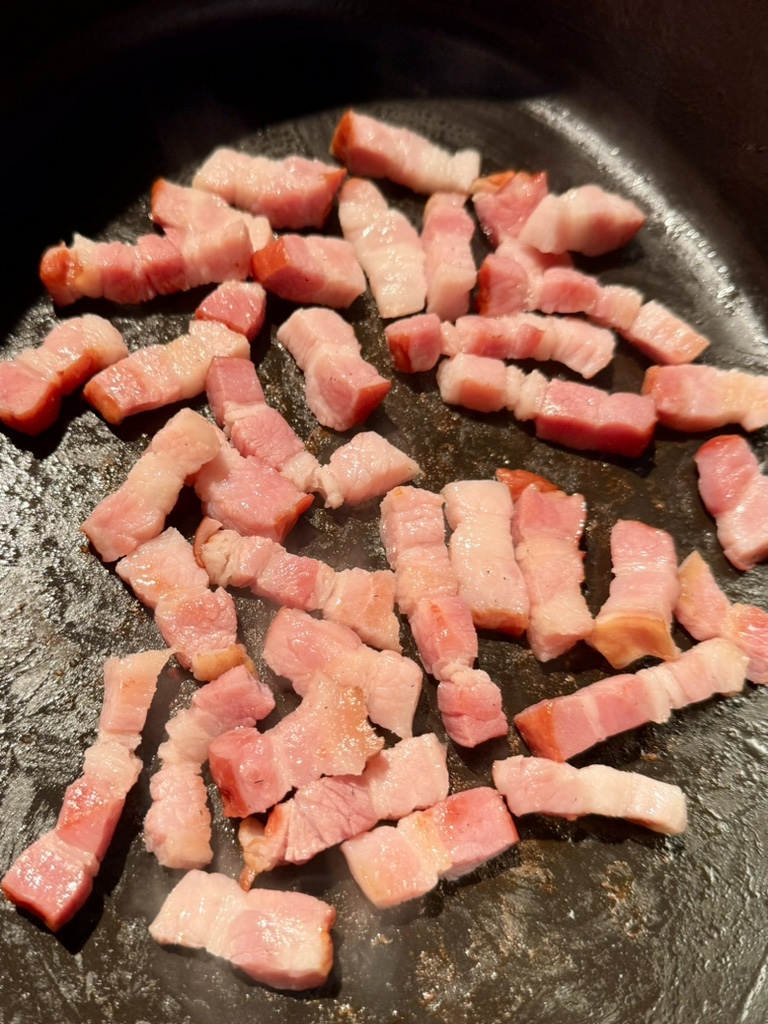
Place a large, heavy roasting pan over medium-high heat and add the lardons. There is no need to add any additional fat. Fry the bacon until it begins to lightly brown. Then immediately remove it from the pan and set it aside.
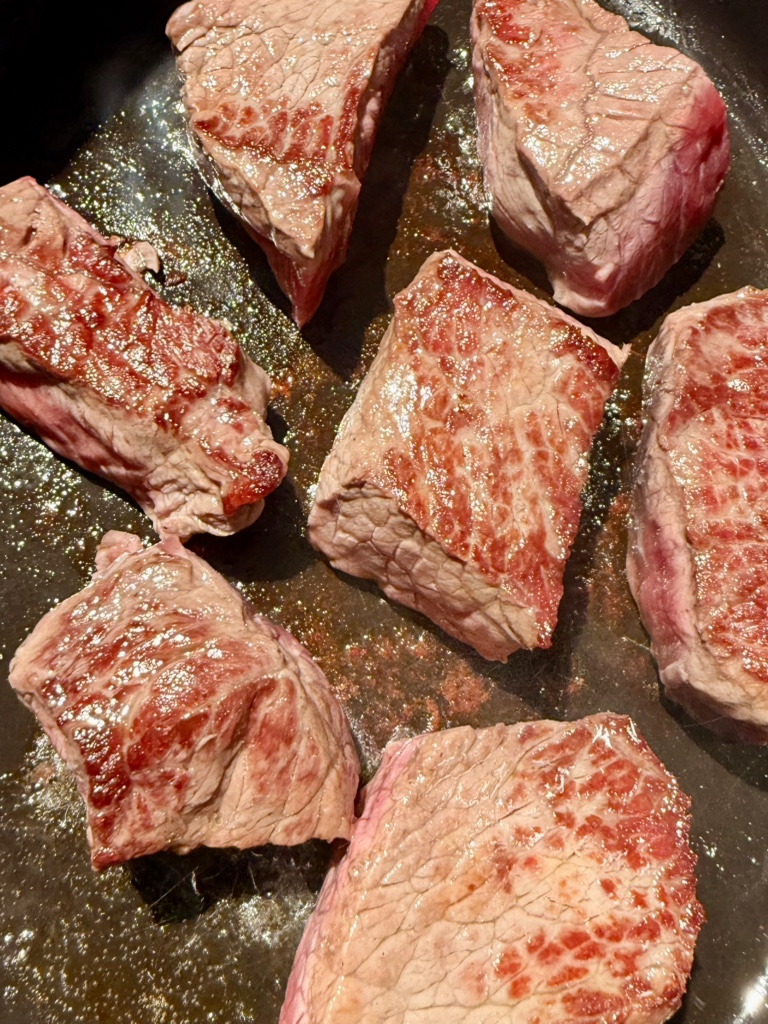
Heat some clarified butter in the same pot and brown the beef thoroughly. Do not put too many pieces in at once; each piece must be in contact with the bottom of the pot and there must be enough space to turn them. Depending on the quantity, roast the meat in batches. As always, do not stir, but leave the meat on one side until it can be easily removed from the bottom of the pot, at which point it will have formed the desired crust on the surface. Patiently brown the pieces on all sides and then remove them from the pot. Juice will escape from the resting meat, so place it in a bowl or deep plate.
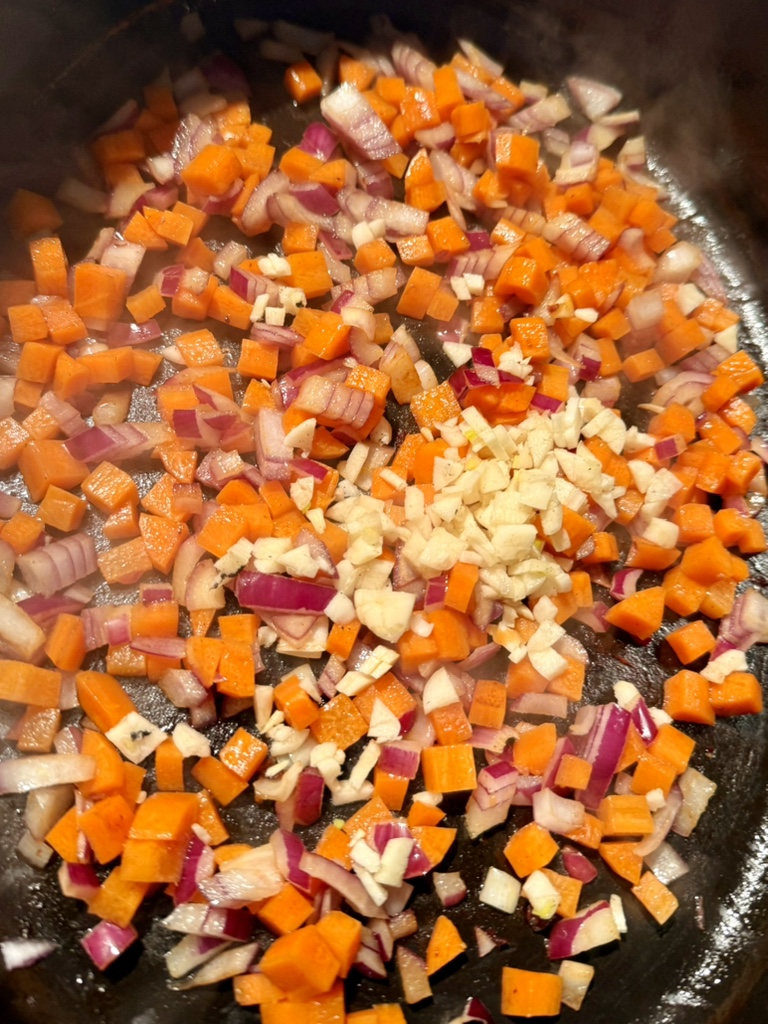
Peel and finely dice carrot, onion and garlic. In the same pot, sauté the carrot and onion for 2–3 minutes until the onion becomes translucent. Then add the garlic and sauté until it begins to smell fragrant.
We make space at the bottom of the pot and roast tomato purée there for a good minute, then we sprinkle some icing sugar over the vegetables.
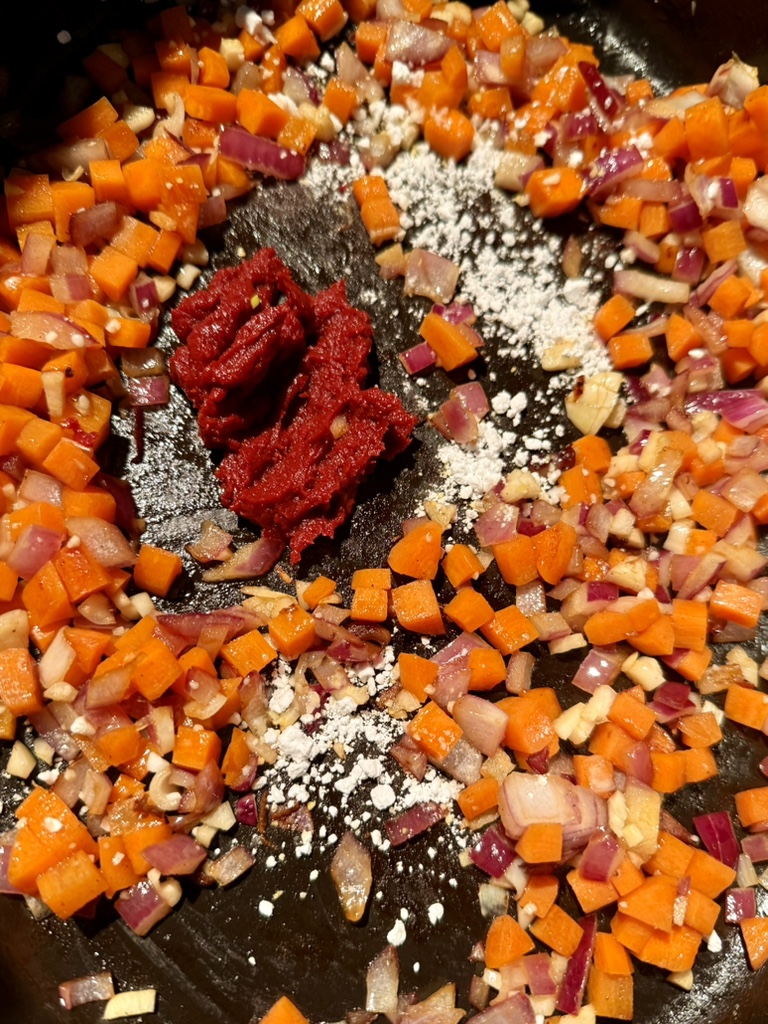
Stir everything together and continue to sauté while the icing sugar melts. Once everything is thoroughly mixed, return the bacon and meat, along with any juices, to the pot and dust everything with a little flour.
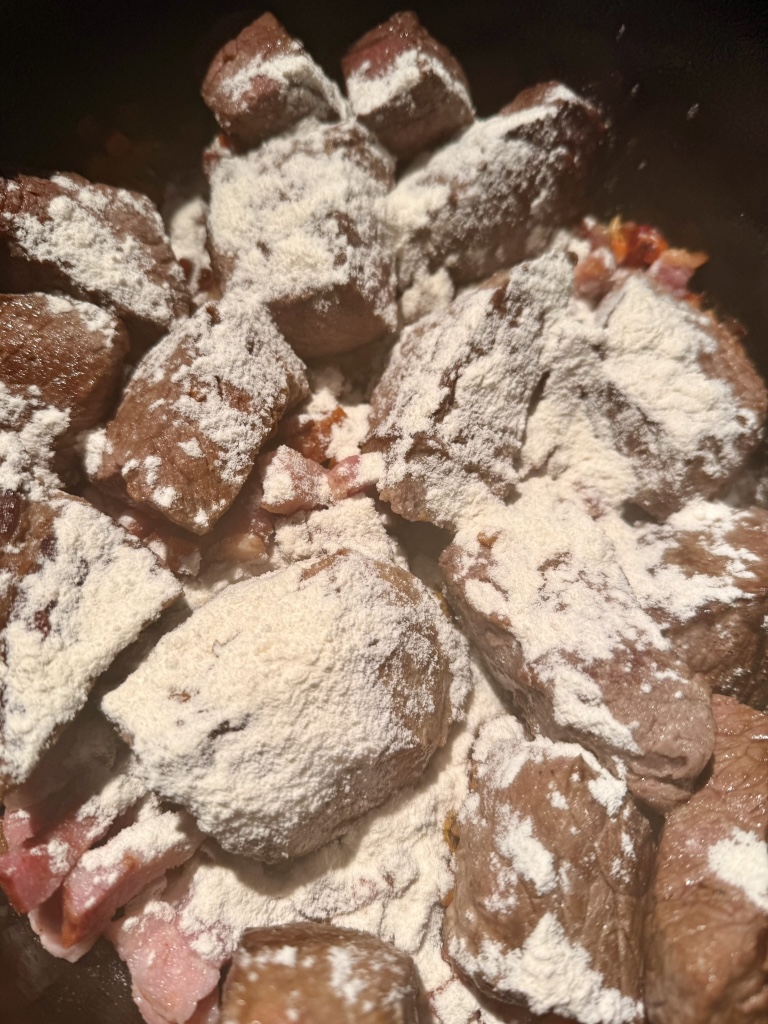
Once again, stir everything thoroughly so that a thick layer of tomato purée, vegetables and flour coats the meat.
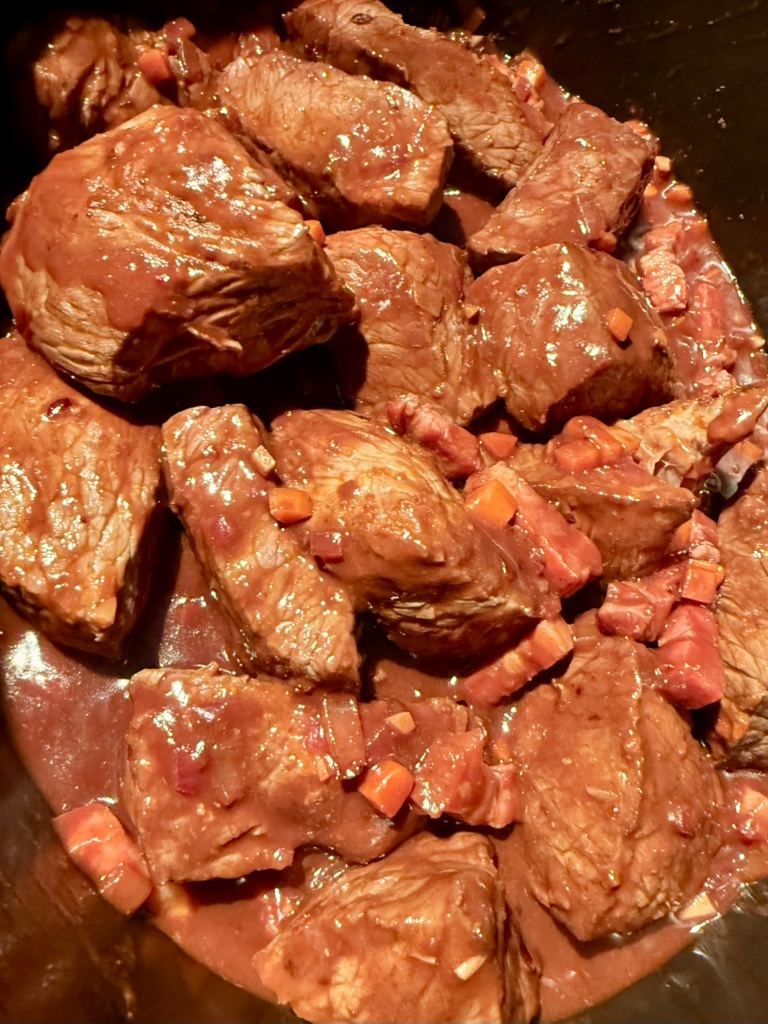
Add a third of the red wine and allow it to reduce briefly. Then add another third. Once this has almost boiled away, add the remaining wine and beef stock. Continue stirring well so that the flour is completely distributed. Add the bay leaves and thyme as the last ingredients. We use a spice ball at this point so that both can be removed more easily later.
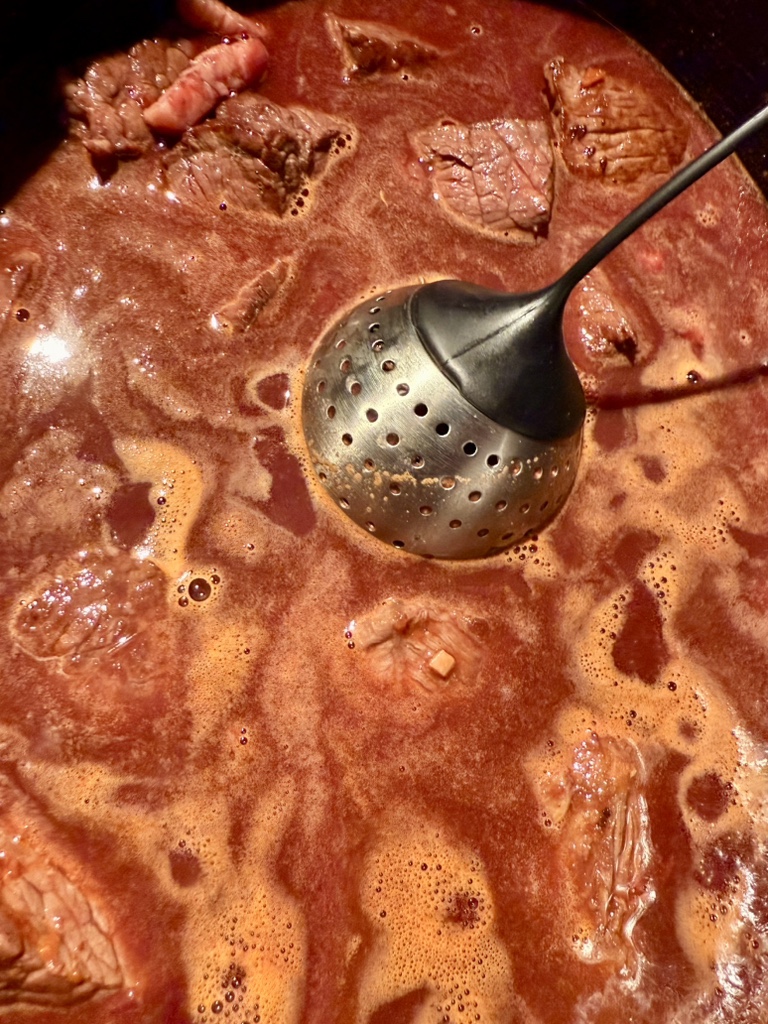
The pot is closed and placed in the preheated oven for 4 hours. After about half the time, we turn the meat once.
This leaves plenty of time to prepare the other ingredients. We always cook these separately, as they behave very differently. This gives you full control over all the components and creates optimal textures.
Boeuf Bourguignon is served with braised onions, ideally small pearl onions, but these are not always available and we were out of luck at the market today. The alternative is to use shallots that are as small as possible – the smaller, the better. If you do use pearl onions, don’t try to peel them with a knife, as this takes forever. It’s better to bring some water to the boil and blanch the small onions in their skins for 2 minutes. Then immediately place them in cold water, preferably with ice in it. Once they have cooled down, you can easily squeeze them out of their skins.
The shallots are peeled carefully so as not to damage their structure, as they are to be braised whole. To do this, heat them in a little clarified butter over a medium heat in a pan and add a little salt and thyme sprigs. We let them brown gently on one side and then turn them over until the other side has also taken on colour. This must be done slowly and the shallots must not be moved too much, otherwise the innermost layers will be squeezed out by the temperature difference and they will lose their shape.
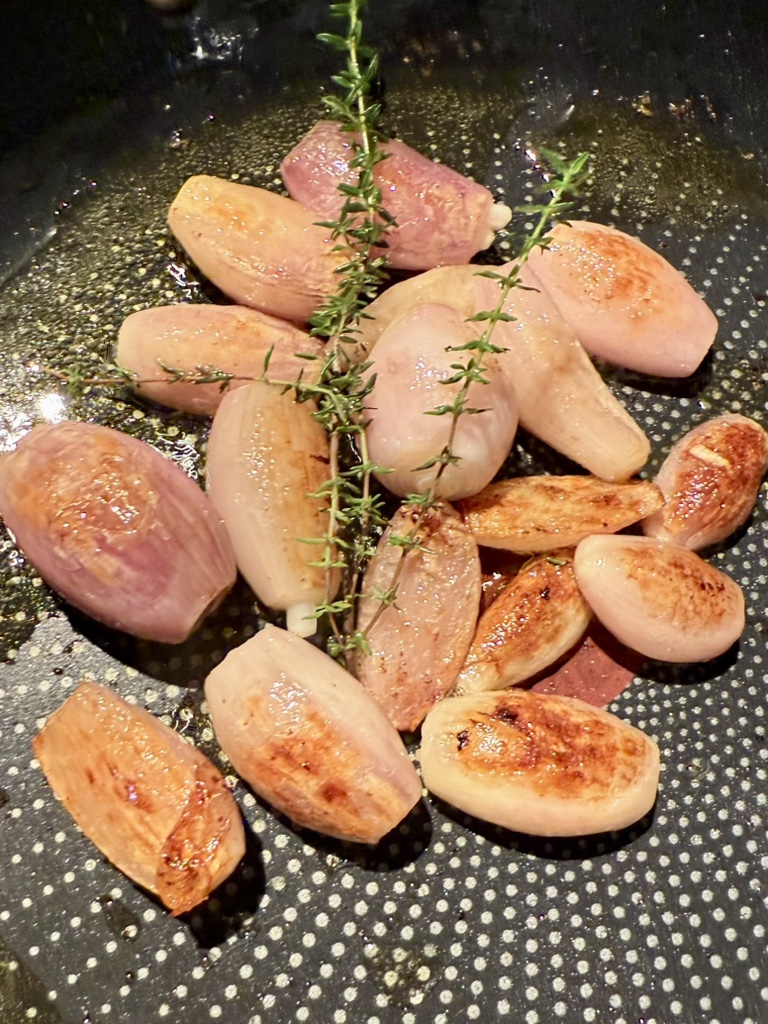
Once the shallots have browned, which can take 10 minutes, add a little water, season with salt and pepper and cover with a lid. Now simmer the shallots on an even lower heat (we use 3 out of 10) for 20 minutes – done. We treat pearl onions in the same way, they just cook faster.
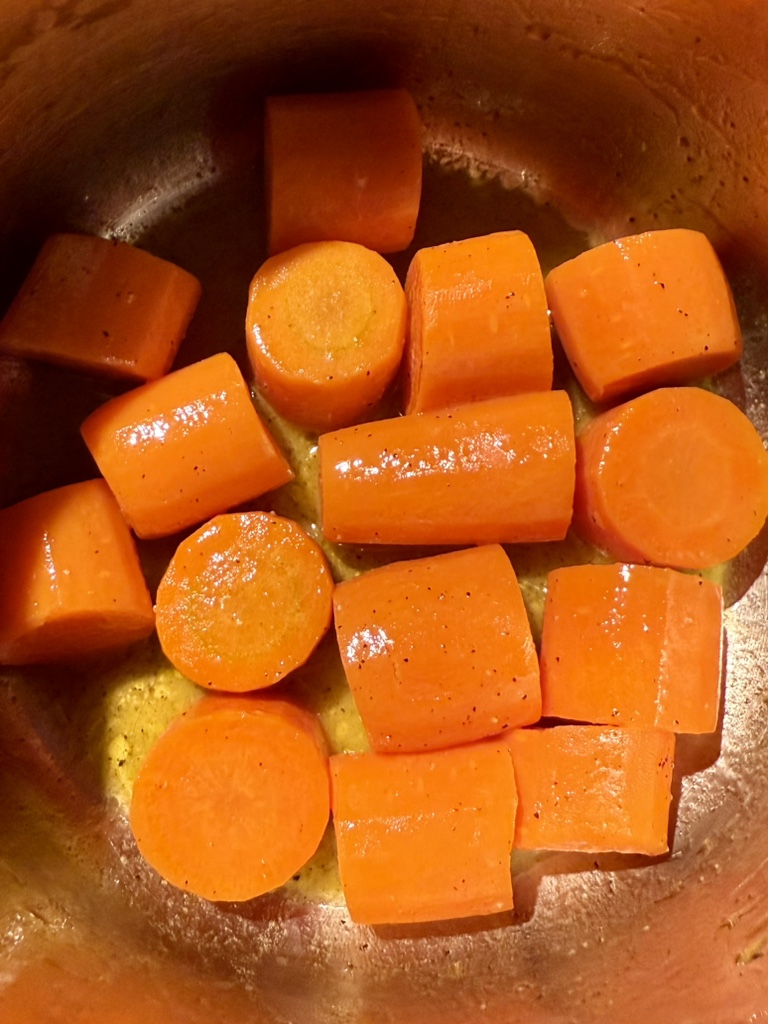
We do a similar thing with carrots: we peel them and cut them into big chunks, which we also want to keep their shape and not get too soft. To do this, we put them in a small pot with a bit of butter, season them with some salt and pepper, and put a lid on. We then place the pot on medium heat (4 out of 10) and cook the carrots for 25–30 minutes, turning them only occasionally.
The third and final vegetable is mushrooms. Clean them with kitchen paper and cut off the stalks where they protrude from the mushroom caps. This allows the mushrooms to be evenly sautéed on both sides. First, we do this without adding any fat in a hot pan (8 out of 10) so that the mushrooms brown quickly and lose their liquid.
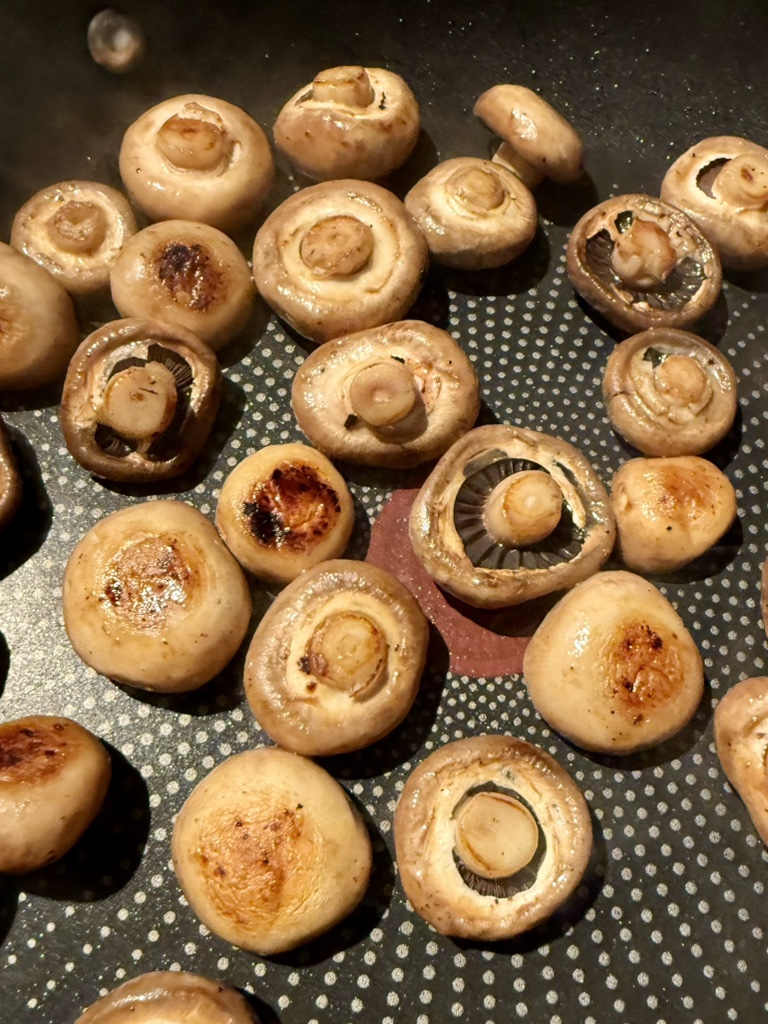
Only when this has happened and an intense mushroom aroma has spread do we add a little butter, in which we toss the mushrooms with salt and pepper.
All three vegetables retain their typical, wonderfully intense flavour this way. This is hard to achieve in the same way if you cook them with the meat.
We take the roasting pan out of the oven and carefully remove the large pieces of meat from the sauce. They are now so tender that they fall apart easily and can be eaten with a spoon.
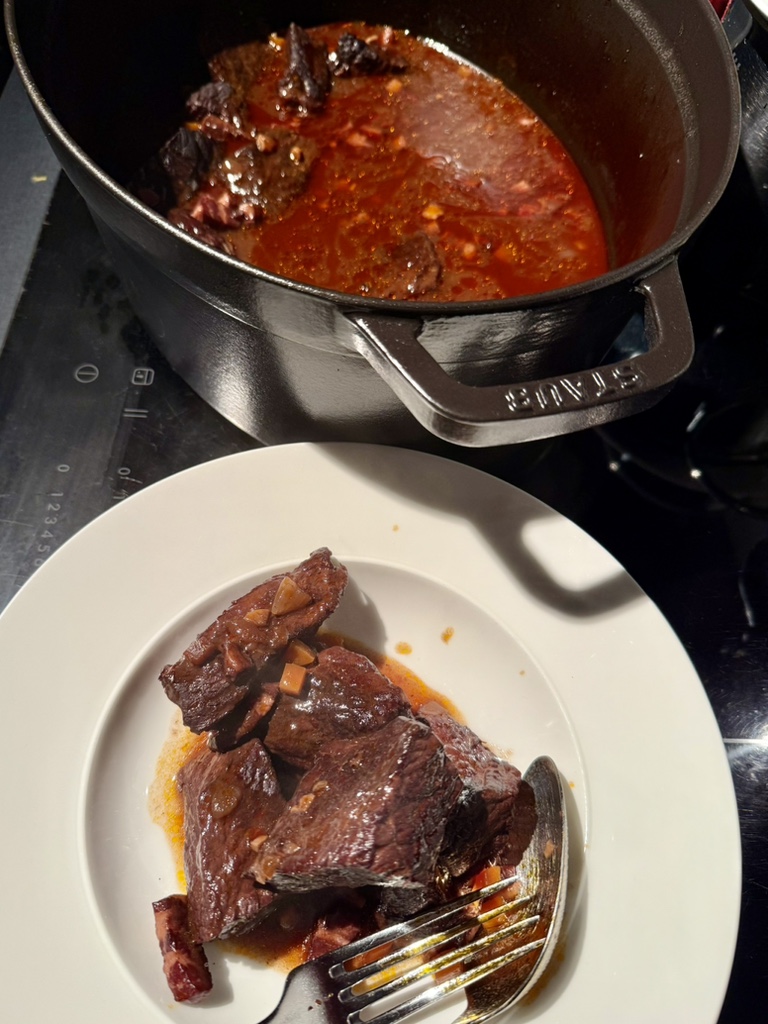
Then bring the sauce back to a simmer on the hob and stir in pieces of cold butter with a whisk. As well as adding flavour, this thickens the sauce and gives it a lovely shine. Now season to taste with salt and freshly ground black pepper. If you want the sauce to be even thicker, stir 1–2 teaspoons of starch into a little cold water until smooth and bring to the boil with the sauce so that the starch swells.
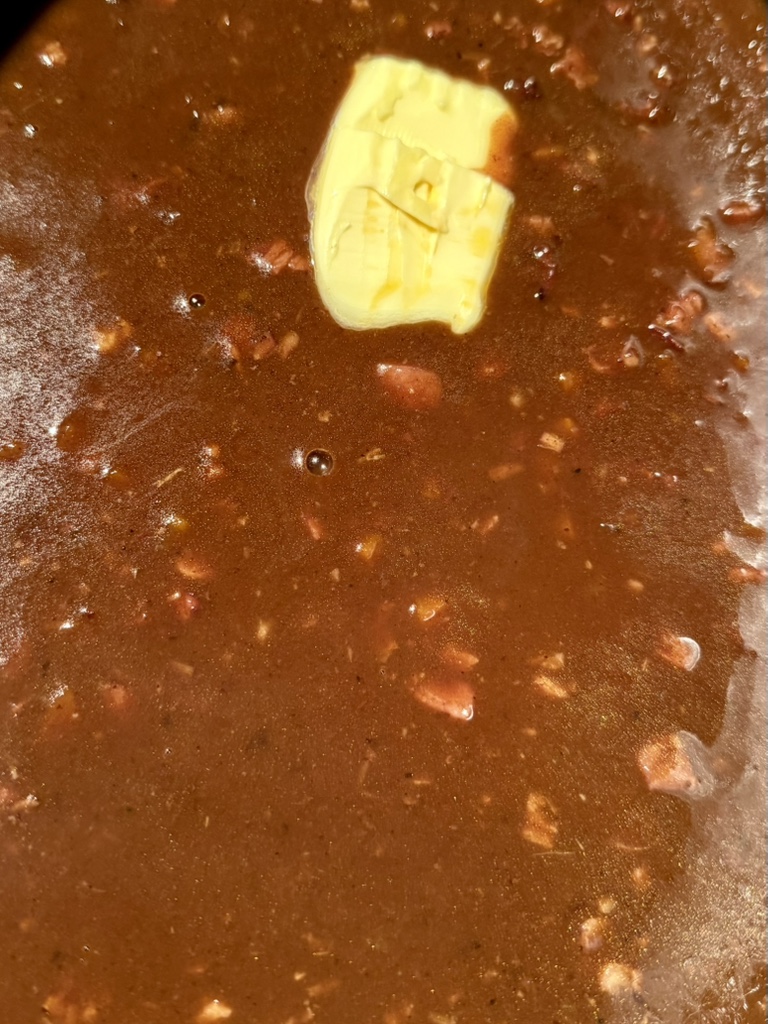
Then we put the meat and now also the vegetables into the sauce – just to warm everything through.
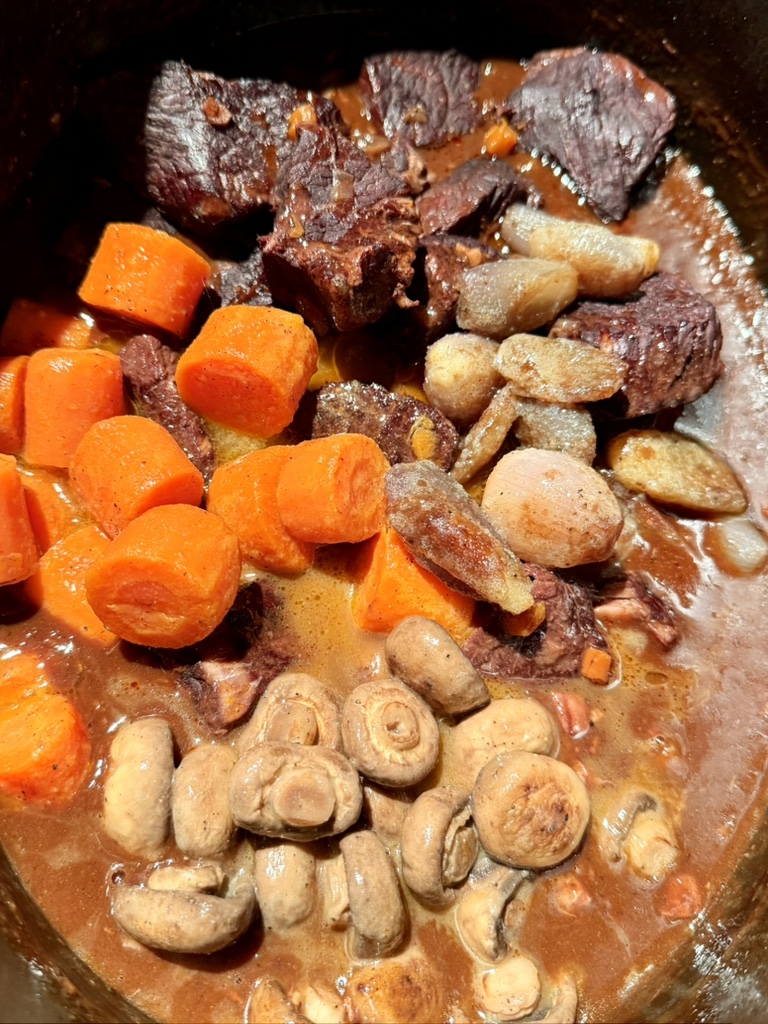
A glorious dish that we love to enjoy with fresh baguette. But boiled new potatoes also go very well with it.
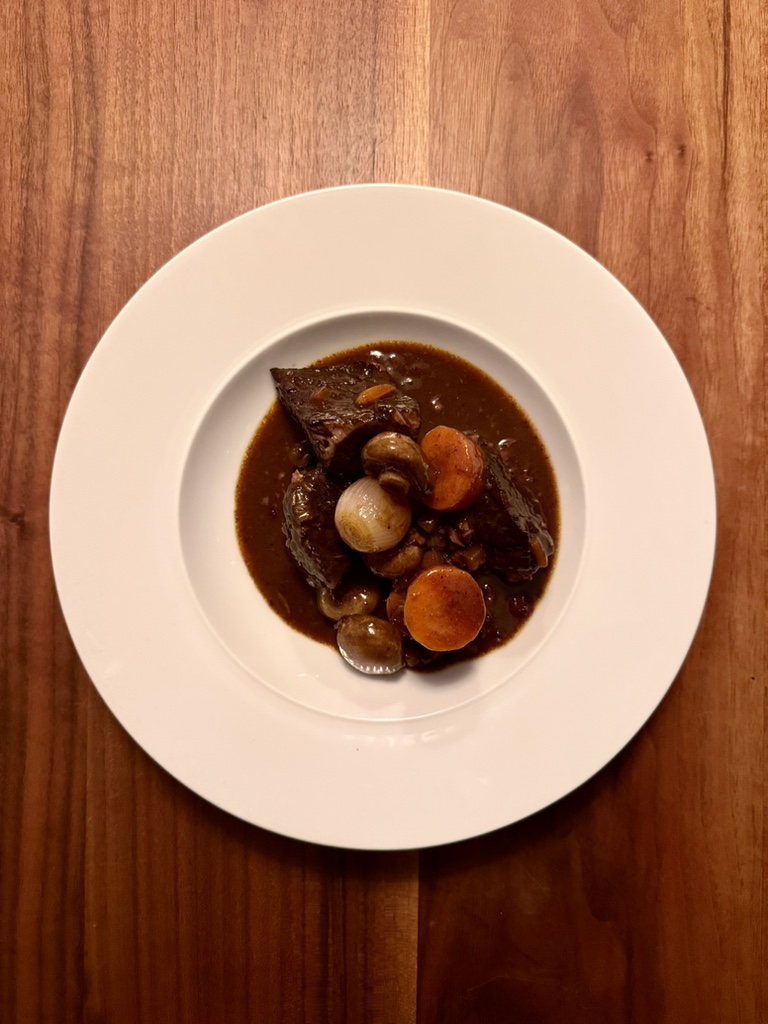
Enjoy.
And may the taste be with you.
Ingredients ( for 4 people):
Meat:
160 g streaky bacon, cut into strips
2 tbsp clarified butter
1 kg beef for braising (we use shoulder)
1 onion
2 carrots
3 cloves of garlic
2 tsp icing sugar
2 tsp tomato paste
2 tbsp flour
1 bottle red wine (we use Pinot Noir)
400 ml beef stock
2 bay leaves and 4 sprigs of thyme
Salt and pepper to taste
Onions:
1 tbsp clarified butter
Approx. 20 pearl onions or 8 small shallots
2 sprigs of thyme
100 ml water
Salt and pepper
Carrots:
2 tbsp butter
3 thick carrots, cut into large pieces
Salt and pepper
Mushrooms:
400 g small mushrooms
2 tbsp butter
Salt and pepper
Finishing touches:
50 g cold butter
Optional: 1–2 tsp starch and cold water