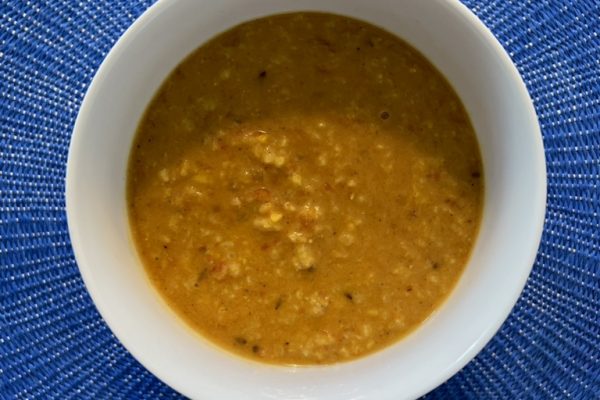
At first glance, Caldo Verde appears unremarkable, but that is deceptive. The ‘green broth’ originates from the Portuguese region of Norte (Região do Norte), which is also where Vinho Verde originates. It is now widespread throughout the country and is considered by many to be Portugal’s national dish.
At its heart is an ingredient that can only be found in north-western Spain and Portugal: couve galega, also known as Galician cabbage. Botanically, it belongs to the Brassica oleracea species, a cabbage that does not form firm heads but grows in long, smooth leaves with a strong central stalk.
However, there are a number of very similar types of cabbage that can be used instead. Black cabbage (Italian: cavolo nero) is particularly suitable. It is mainly grown in Tuscany, but nowadays also much further north (including here in Bavaria). Its leaves are also long and relatively smooth, although darker, firmer and with a slightly nutty flavour.
Here in Germany, “Grünkohl” (green kale) is harvested at the beginning of winter and is also common in the Netherlands and Scandinavia. Its leaves are curly and its flavour is intense. It also needs to be cooked longer than other types of cabbage. Other varieties include collard greens from the USA (brought there and cultivated by European immigrants) and couve manteiga from Brazil. What is known as Chinese broccoli is also a closely related plant.
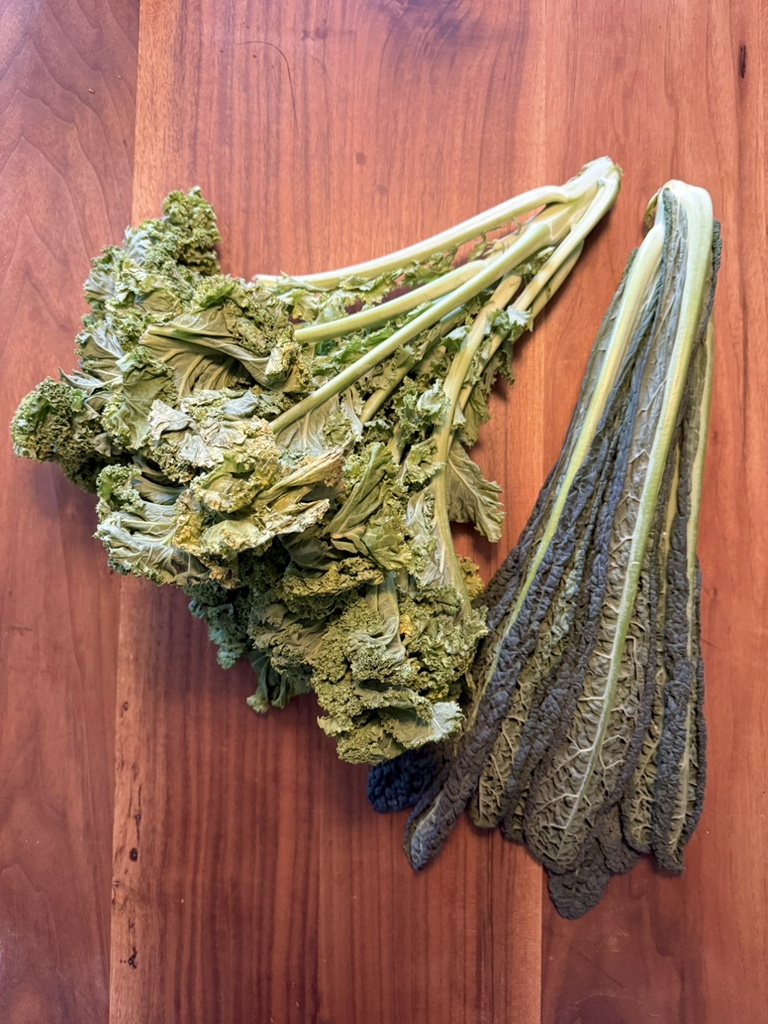
Today we are using Grünkohl, as it is in season and a Portuguese caldo verde is a very welcome alternative to local dishes. For all of the cabbage varieties mentioned, wash the leaves thoroughly, remove the hard stalks completely and cut the remaining leaves into fine strips about 2–3 mm wide. This is important and ensures the characteristic consistency of the soup later on. For smooth-leaved varieties, cut out the stalks, roll up the leaves and then cut them crosswise into strips. With Grünkohl, it is easier to pluck the leaves from the stalk before cutting them accordingly.
The other ingredients are always onions and garlic, potatoes and chouriço, which is a Portuguese pork sausage seasoned with paprika, garlic, salt and wine. The main difference between this and Spanish chorizo is that the Portuguese sausage has a much less smoky flavour. Instead of Spanish smoked paprika powder, sweet paprika powder is used, and the sausage itself is usually less intensely smoked.
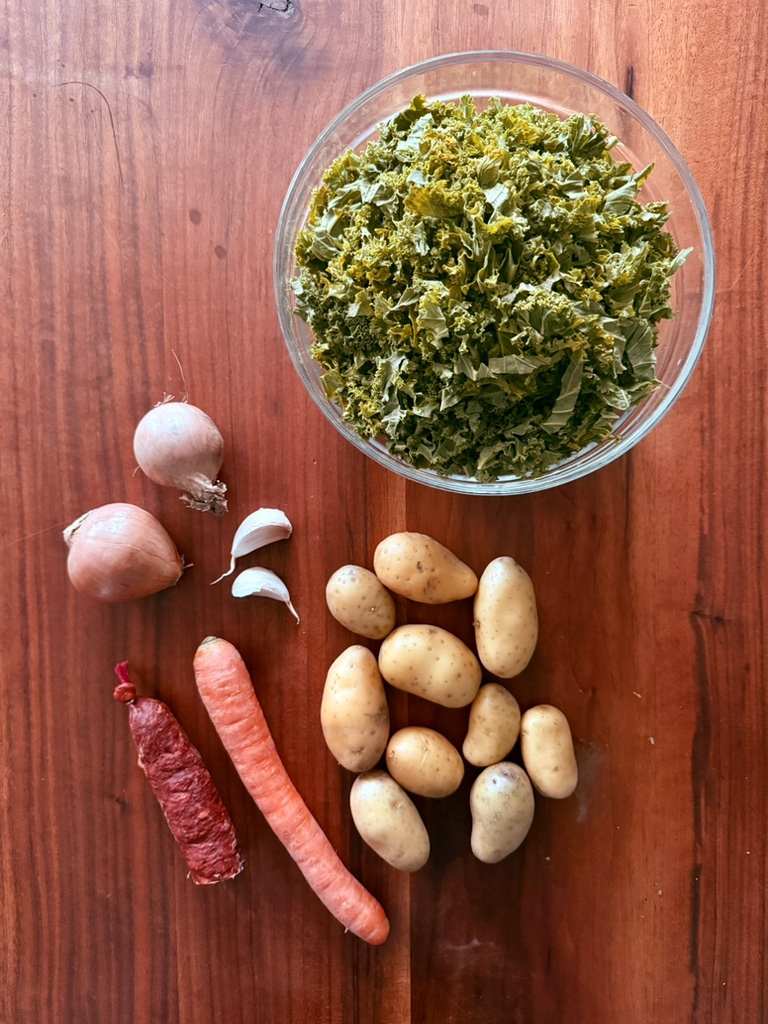
The sausage provides the key flavouring for the soup, so you can’t simply leave it out. Of course, you can find modern interpretations of caldo verde, including vegan versions. However, the flavour profile is then very different.
The skin is removed from the sausage and it is sliced, we prefer it to be about 3 mm thick. Then it is slowly fried in plenty of olive oil over medium heat. The fat and aroma should be released and combine with the oil, which takes on a strong red colour. However, the sausage should not become tough. About 4 minutes, stirring occasionally, is enough.
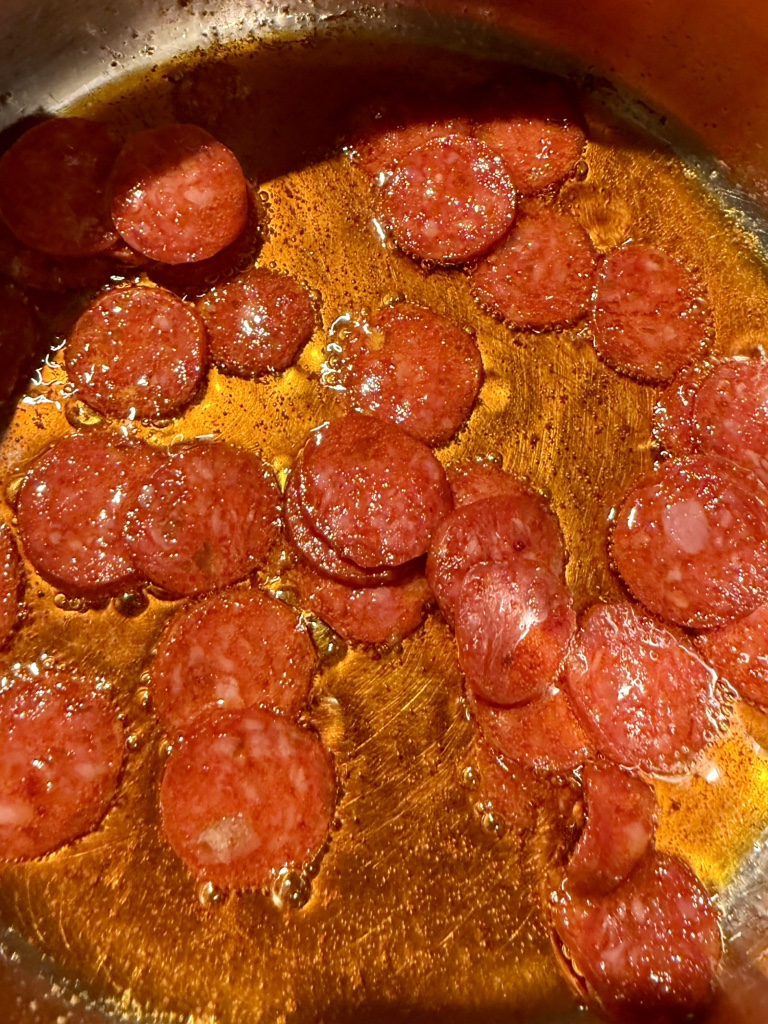
Remove the sausage slices from the pot and set aside. Then sauté the diced onion and chopped garlic in the seasoned oil for 2 minutes until translucent. From now on, cook over medium-high heat.

Next, add the potatoes, cut into small pieces. If you are using carrots, as we do, add them now too. Sauté the vegetables for 4–5 minutes, stirring occasionally, to allow their flavours to develop.
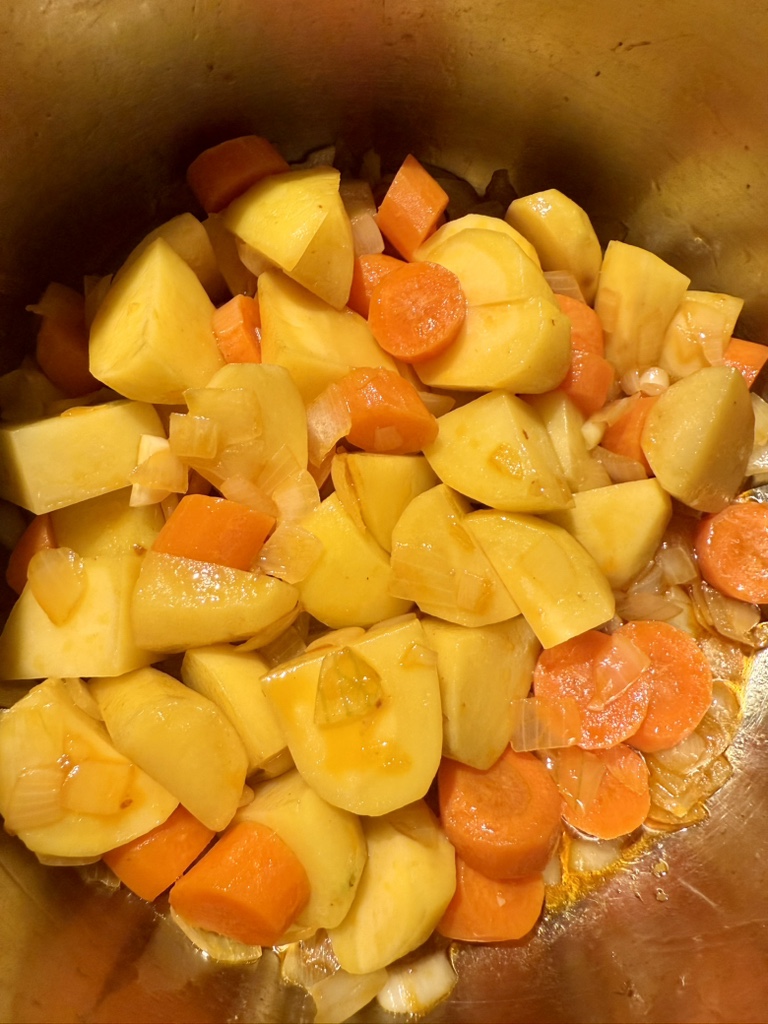
Then add water or stock. We use stock because it adds more depth of flavour. Vegetable stock or chicken stock are both suitable. Today we are using the latter because we made several litres of it yesterday. Simmer for about 25 minutes or until the potatoes (and in our case the carrots too, of course) are completely soft. We also add a bay leaf, but this is not used in most recipes.
Now there are several options, depending on your preference: you can simmer the vegetables until they fall apart and leave the soup chunky. Or you can partially mash the vegetables with a potato masher so that the soup retains more texture. Or you can purée everything, preferably with a hand blender. You can also cook some of the cabbage and chop it up as well, which will turn the base of the soup green. All variations are common.
We cook 1/3 of the cabbage with the vegetables for a good 5 minutes until soft…
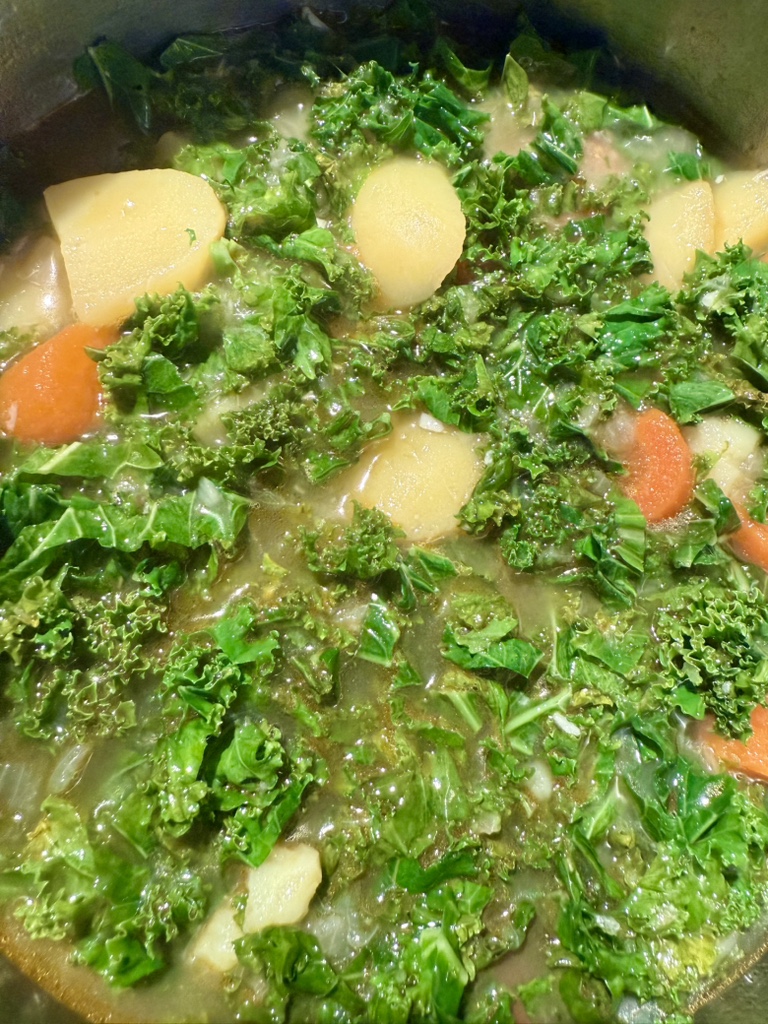
…and then purée everything, but not too finely.

The rest of the cabbage and the sausage slices are added to the soup. At this point, we like to reserve some of the sausage to add to the plates of those who would like more at the end.
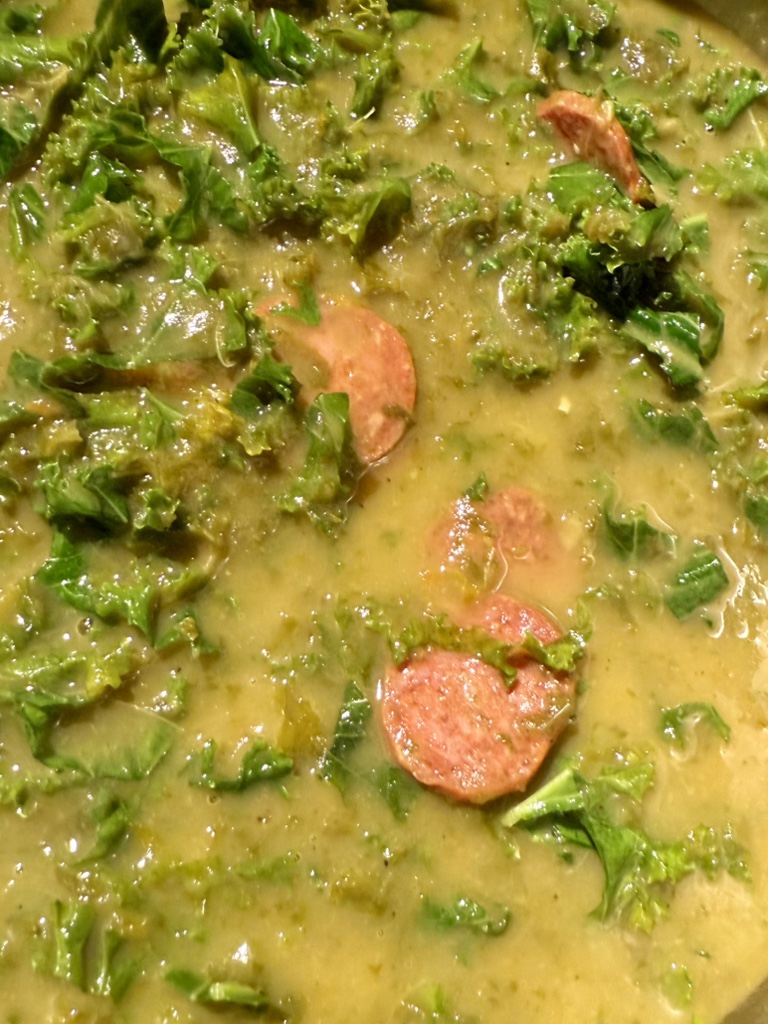
The cabbage is cooked and the soup is seasoned with salt and pepper. That’s all there is to it. Caldo Verde is a purist dish that thrives on the flavour of its ingredients, especially the cabbage, but in the end is much more than the sum of its parts.
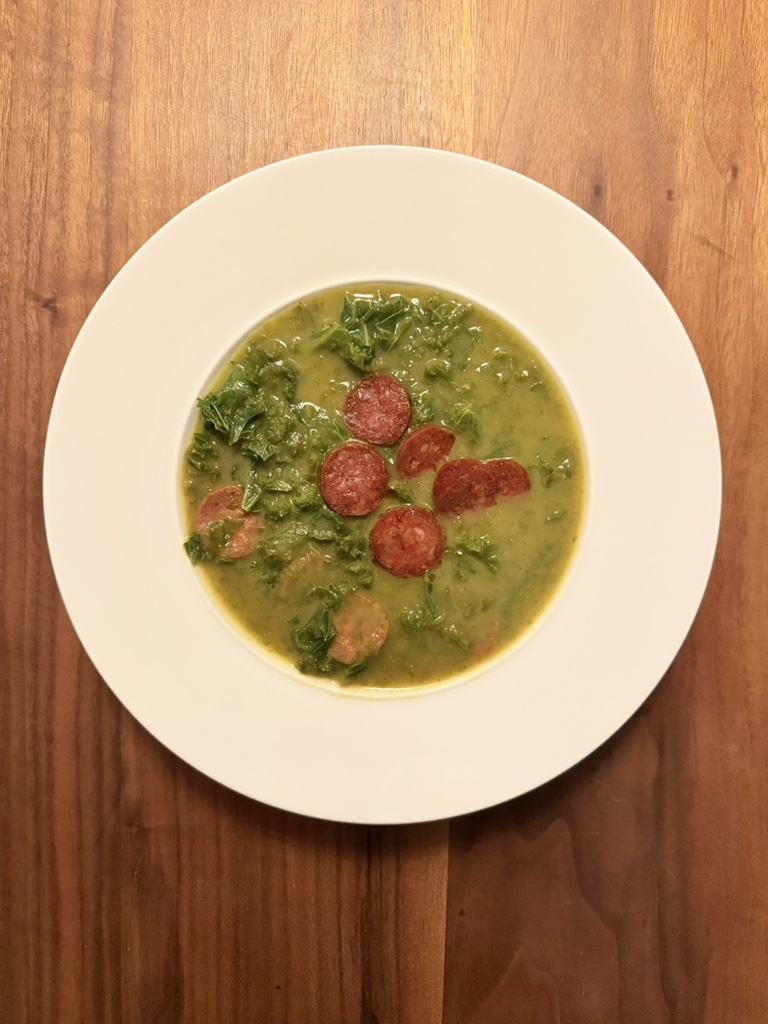
Serve with bread or croutons. In Portugal, the classic choice would be cornbread (broa de milho). If desired, drizzle some high-quality olive oil over the soup.
Enjoy.
And may the taste be with you.
Ingredients ( for 4 people):
4 tbsp olive oil
250 g Portuguese chouriço (alternatively Spanish chorizo)
2 medium yellow or white onions
2–4 cloves of garlic, to taste
450 g waxy potatoes
150 g carrots (or more potatoes)
Optional: 1 bay leaf
500 g kale (Couve Galega, Cavolo Nero, Grünkohl or similar)
1.2 l vegetable or chicken stock or water (more water as needed)
Salt and black pepper