Since the late 1980s, London’s Hammersmith has been home to the now iconic River Café, which has also been awarded a Michelin star since 1997. Founded by Ruth Rogers and Rose Gray, the restaurant cooks with great ease according to Italian principles, but using local products. Many subsequent careers have been linked to this place; the best known is certainly Jamie Oliver, who worked there as a young chef and was discovered through a TV production in the restaurant’s environment.
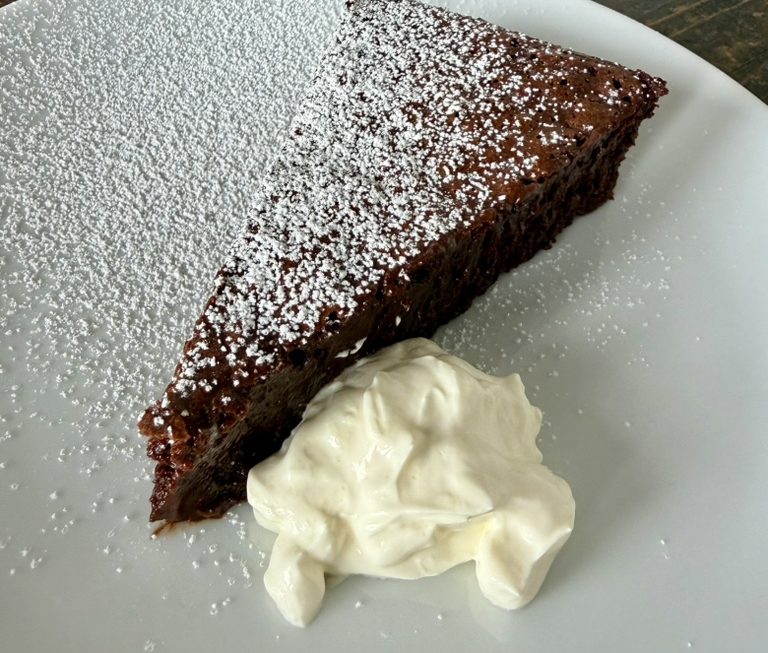
Rogers and Gray also wrote six cookbooks before Rose Gray passed away in 2010. The first of these cookbooks, ‘The River Café Cook Book’ (incidentally, the first cookbook Madam Chilipepper bought when she was studying in London), describes the chocolate cake ‘Chocolate Nemesis,’ which the River Café still serves today.
The cookbook casually claims: ‘The best chocolate cake ever’. We agree. So here we explain how to prepare this flavour explosion. Of course, it’s also a calorie bomb.
We use a round baking tin with a diameter of 30 cm. This can be a springform tin; ours consists of a fixed ring and a base that can be inserted from above and later lifted out. The tin is lightly greased with butter and then very carefully lined with baking paper, which sticks to the tin because of the butter. How to cut the baking paper to size is shown here.
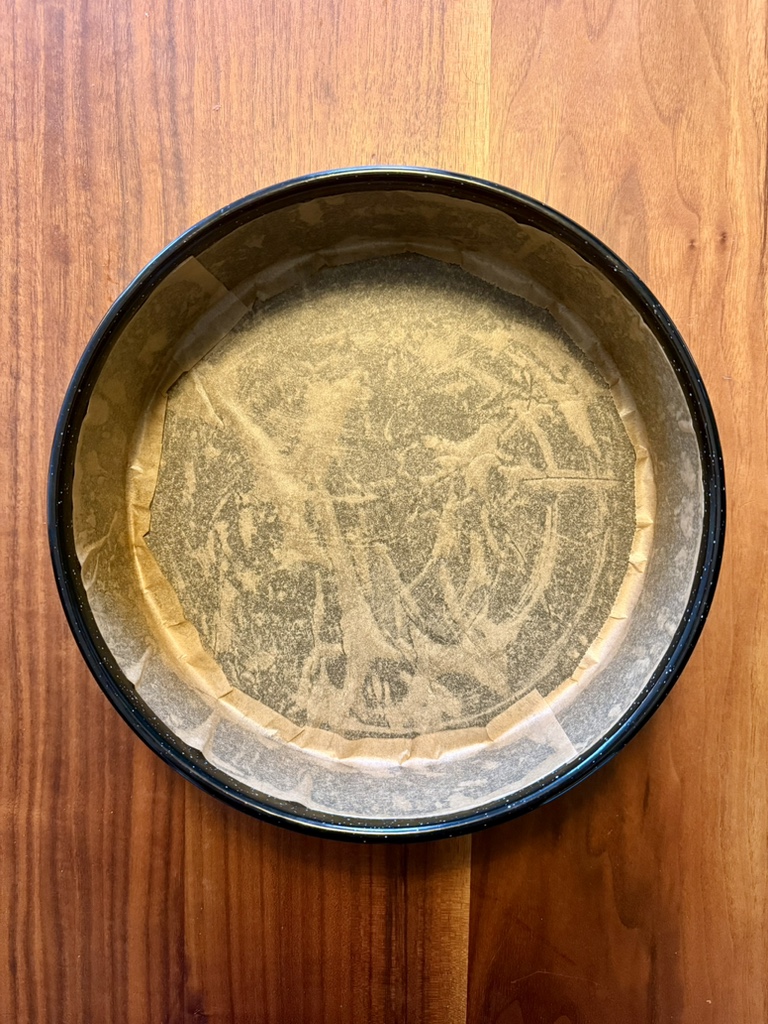
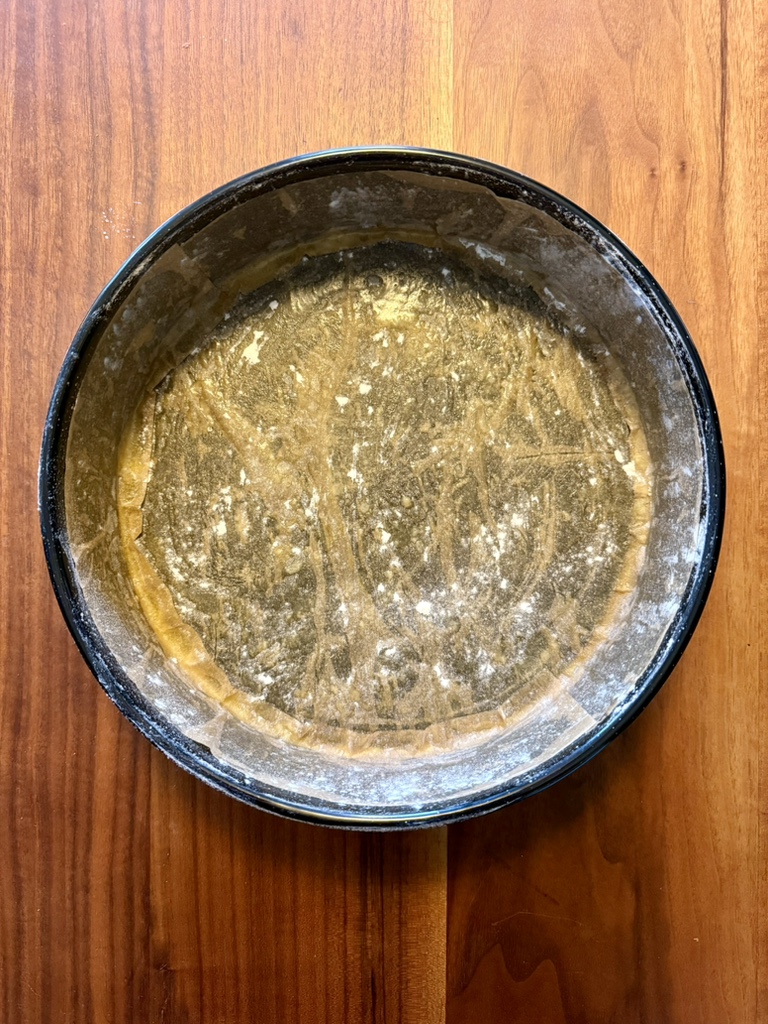
The baking paper is also greased with a little butter. This must be soft so that the paper does not shift unintentionally. Then it is lightly dusted with flour. The best way to do this is to put some flour in a small sieve and tap it repeatedly with the palm of your hand or a spoon so that the flour trickles out evenly. Do not forget the inside of the edge of the tin.
The cake must be prepared in a water bath (also known as a bain-marie), so the tin must be sealed. We lay out a sheet of aluminium foil and place another sheet on top of it in a criss-cross pattern. Then we place the cake tin in the middle and fold the foil tightly around it so that no water can get in at the bottom. If you are using a solid tin where the base and ring cannot be separated, this step is not necessary, of course. However, we do not recommend using this type of tin, as it is almost impossible to turn this cake out without destroying its shape.
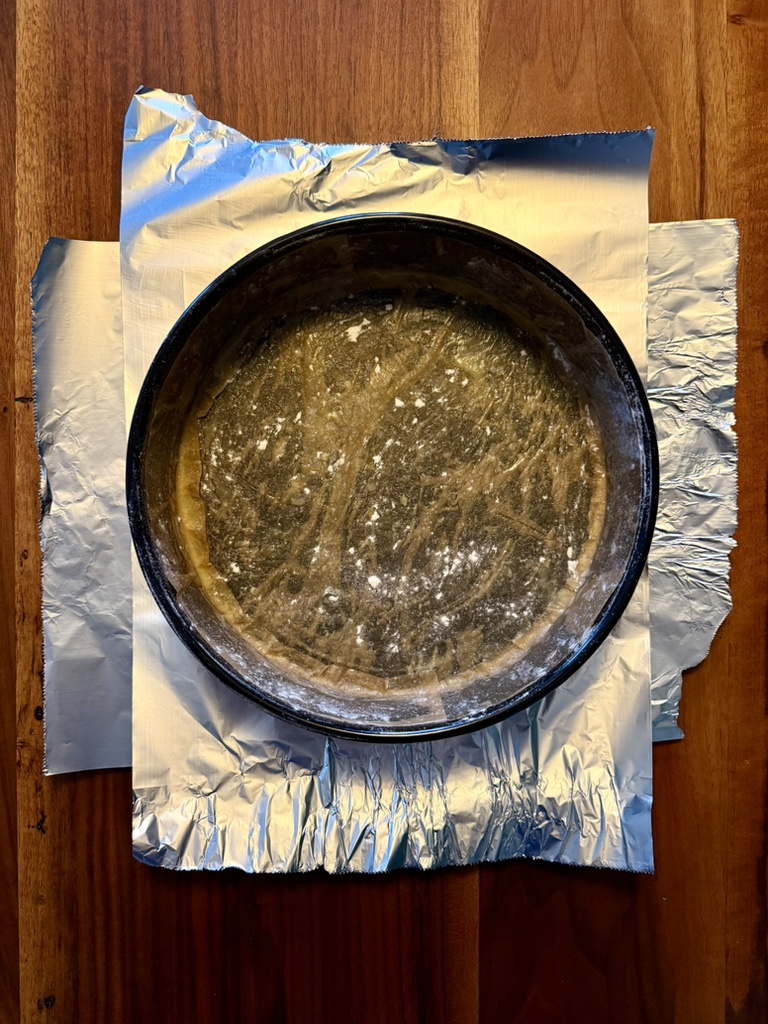
The dough, if you can call it that, consists only of butter, sugar, chocolate and eggs. It does not contain any flour, and if you want to stay gluten-free, you can use a gluten-free flour mixture or gluten-free starch to dust the tin.
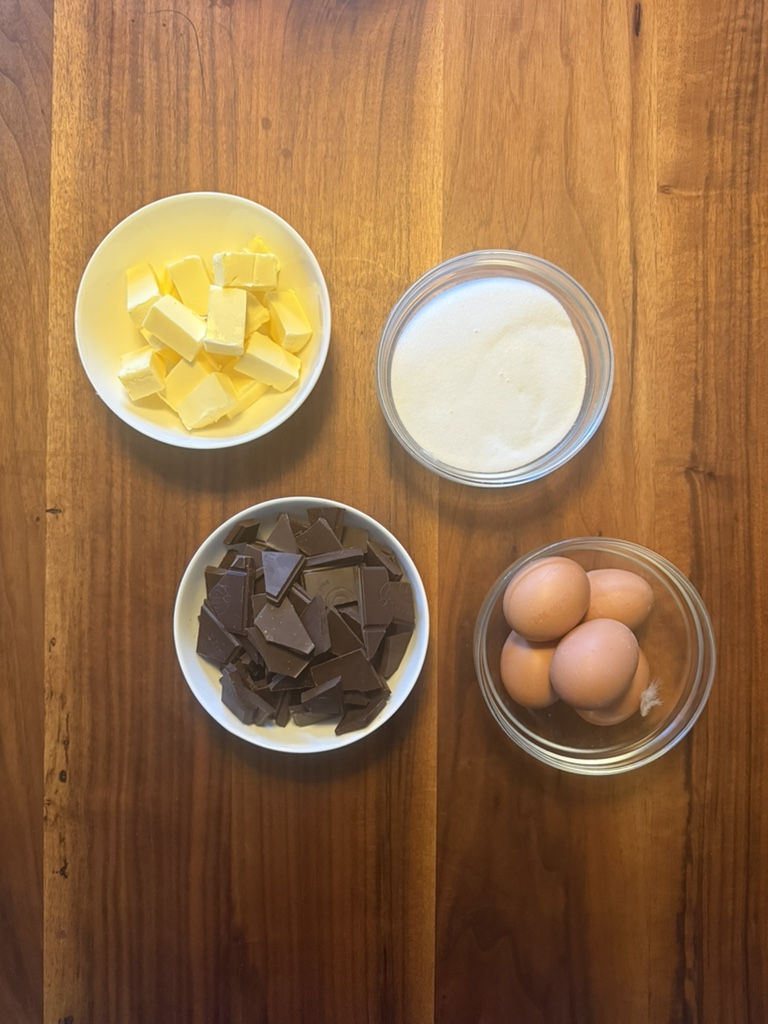
A food processor or at least a hand mixer is recommended, otherwise it will be long and hard work with a whisk. Place the eggs and about a third of the sugar (this can be eyeballed) in a bowl.
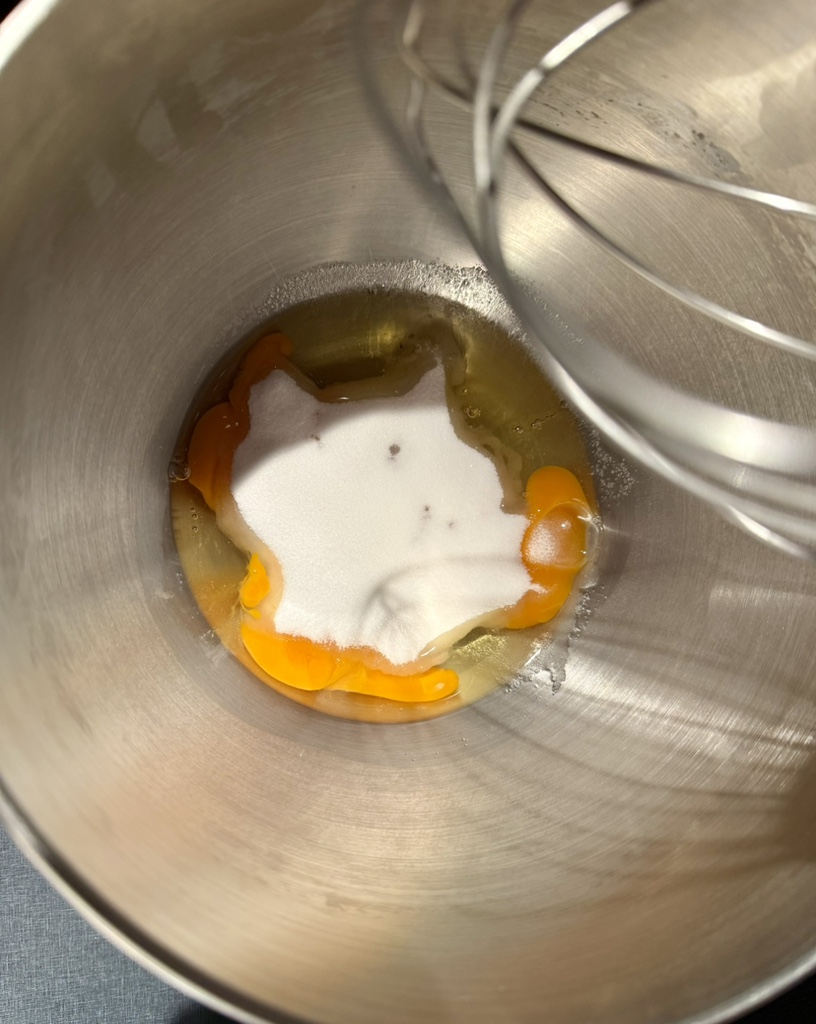
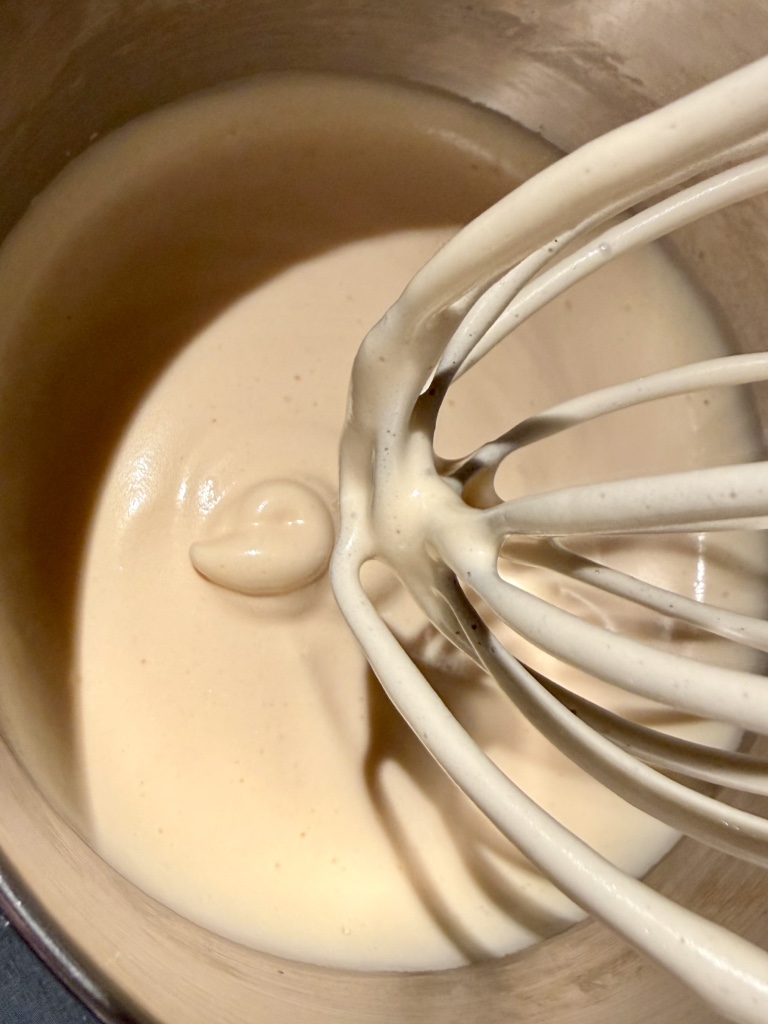
Then beat them vigorously until frothy (Kitchen Aid: speed 4). This takes around 10 minutes, and the mixture should then have quadrupled in volume.
The remaining sugar is heated in a saucepan with a little water over medium high heat until the sugar dissolves completely in the water. We help this along by stirring with a whisk. Then all the butter and chocolate are melted in the syrup and stirred until smooth.
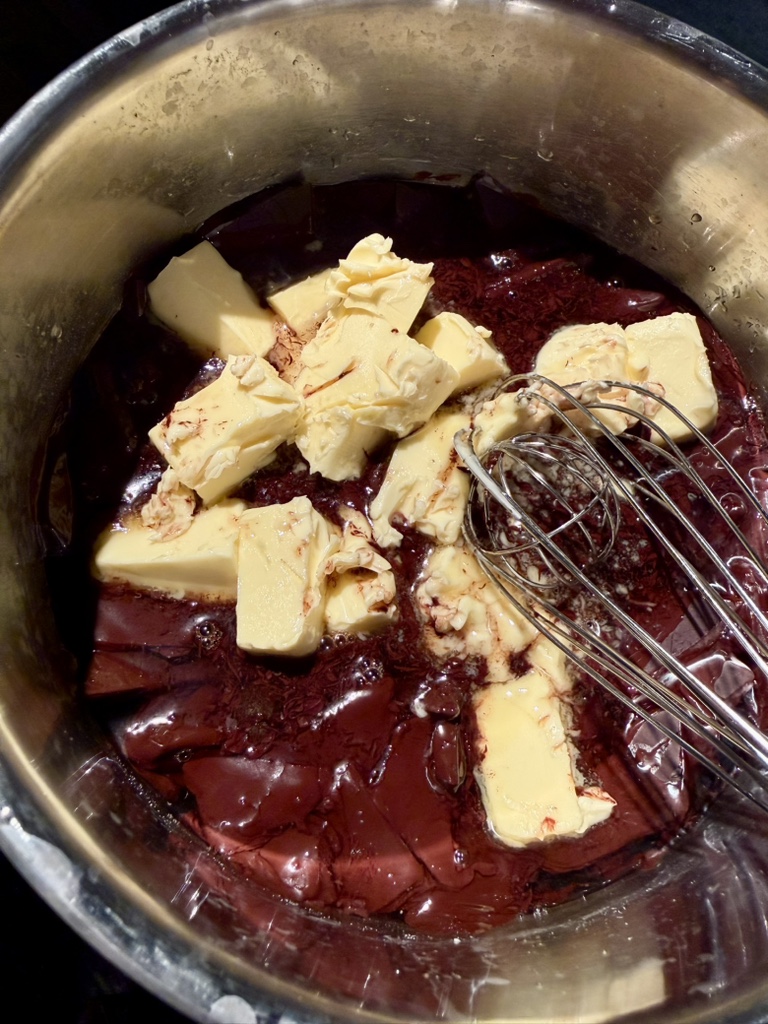
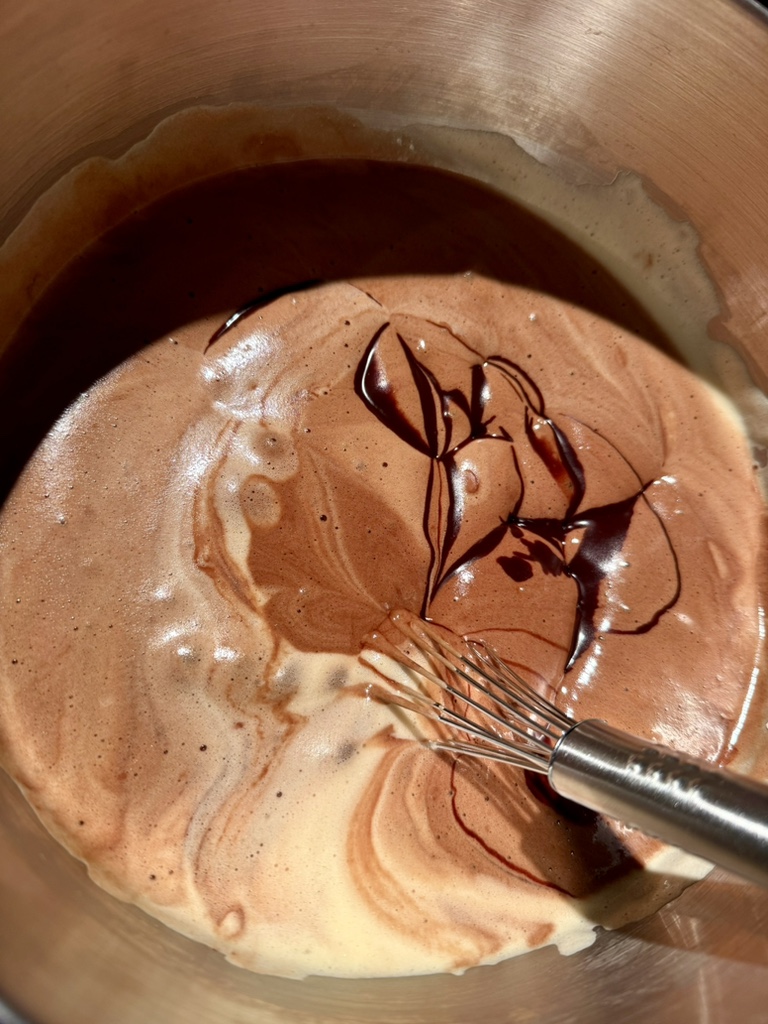
This very hot mixture now needs to cool down a little, so we take the pan off the heat and leave it for 15 minutes. Then it is added to the foamy egg and sugar mixture in the bowl. We do this carefully with a whisk, not with a machine. It should not be stirred for too long, as it needs to remain light and aerated. We therefore mix everything together just long enough to create a mixture with a uniform colour.
While the butter and chocolate mixture is cooling, you can preheat the oven. The first recipe specified a high heat of 160 degrees Celsius with a short baking time of only 30 minutes. We tried this and the result was extremely delicate, with a thin crust and a moist, mousse-like interior, almost like a soufflé. It tastes great, but is extremely difficult to serve.
A later recipe from the River Café specifies a much lower temperature of only 120 degrees Celsius (still without convection) and a baking time of 1.5 to 2 hours. In our oven, 1 hour and 45 minutes at this temperature is perfect, and we recommend baking this way – for longer at a lower temperature. The cake is ready when you can place your hand on the surface and it is dry and does not sink when pressed gently. The inside is still very moist, like a ganache.
The batter is poured into the tin, which is then lifted and placed firmly on the work surface once or twice so that the mixture is evenly distributed into the corners. The tin is then placed in a very deep baking tray filled with hot water. The water must be at least 2 cm deep, preferably up to the top edge of the cake batter.
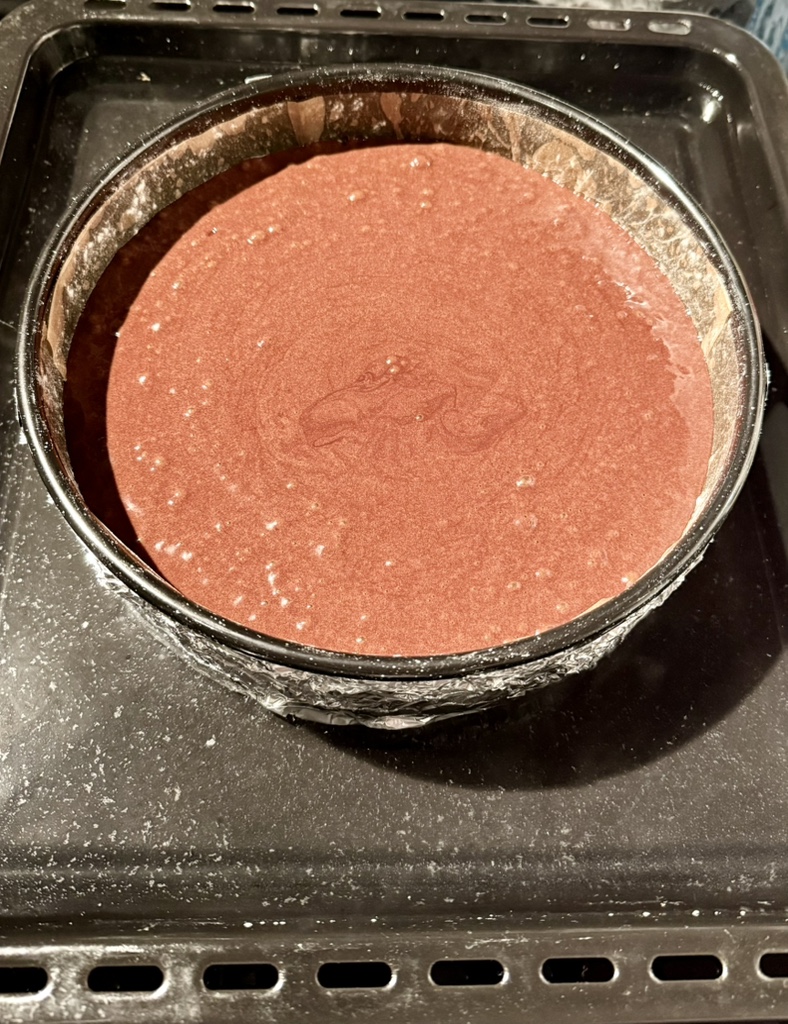
After baking, allow the cake to cool completely. Do not attempt to remove it from the tin before it has cooled. Then remove the aluminium foil and open the tin. The baking paper around the rim can be removed very easily. The cake is so delicate that we do not attempt to lift it off the baking paper at the bottom. We only do this with the individual pieces.
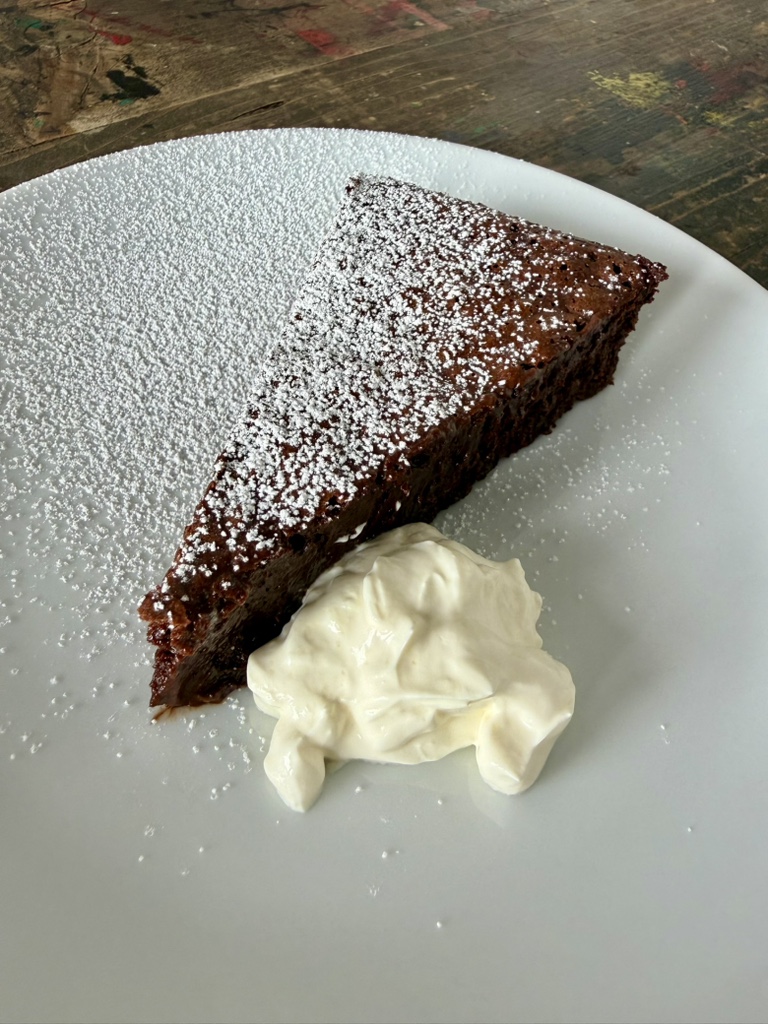
The River Café serves Chocolate Nemesis with a little crème fraîche. We use sour cream, which contains less fat and adds a little more acidity.
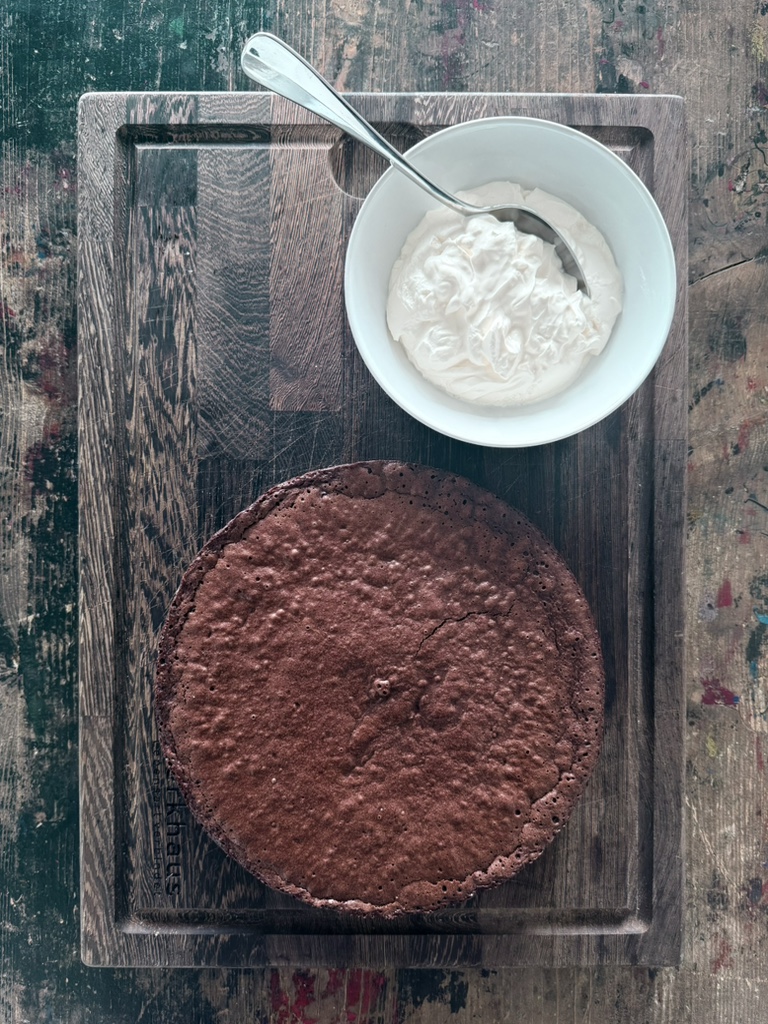
Chocolate Nemesis should be cut with a blade dipped in water, otherwise too much of the very soft chocolate will stick to it. Overall, care must be taken when serving this cake, as it has a decadently intense flavour but is extremely delicate in structure.
Enjoy.
And may the taste be with you.
Ingredients (for 1 round cake with a diameter of 30 cm):
For the tin:
A little softened butter and flour
Baking paper
For the cake:
5 eggs (size M)
280 g sugar
125 ml water
225 g butter
340 g best dark chocolate (we use: 70% cocoa)
Optional: crème fraîche, sour cream and/or a little icing sugar for decoration