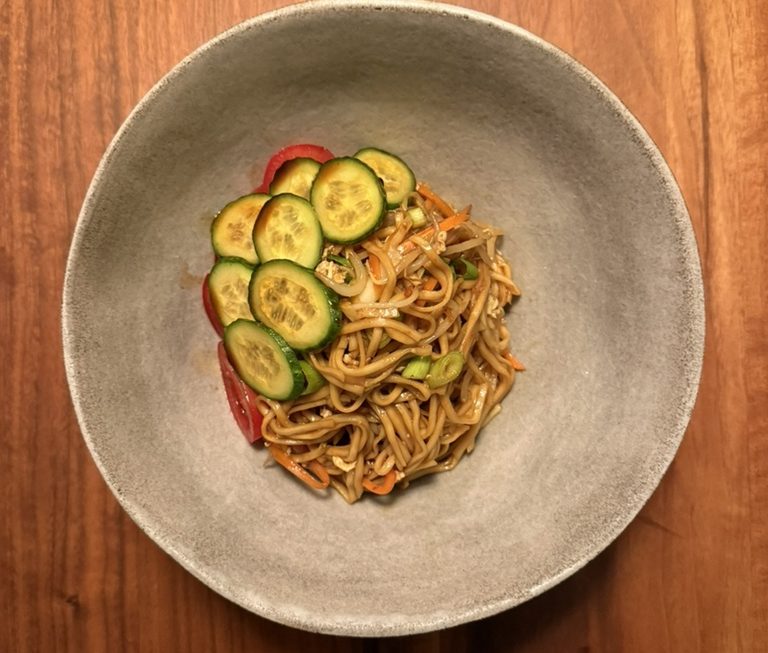
Mie Goreng means ‘fried noodles’ in Indonesian (mie = noodles, goreng = fried). Just as Nasi Goreng (recipe with explanation of special ingredients here) means ‘fried rice’.
The origins of Mie Goreng probably lie in the fried noodle dishes of Chinese cuisine, which found their way to Southeast Asia via trade routes. In Indonesia, they were adapted and modified – with soy sauces such as Ketjap Manis, local chillies, shrimp pastes and whatever else was available at the time or in season.
Today, Mie Goreng is a national dish in Indonesia, with countless regional and family variations. It is sold at markets, cooked at home and (unfortunately) also served from masses of instant packets.
When you encounter ‘bami goreng’, you are usually dealing with the Dutch-Indonesian version, a legacy of the colonial era. It is usually oilier, meatier and therefore heavier than the original.
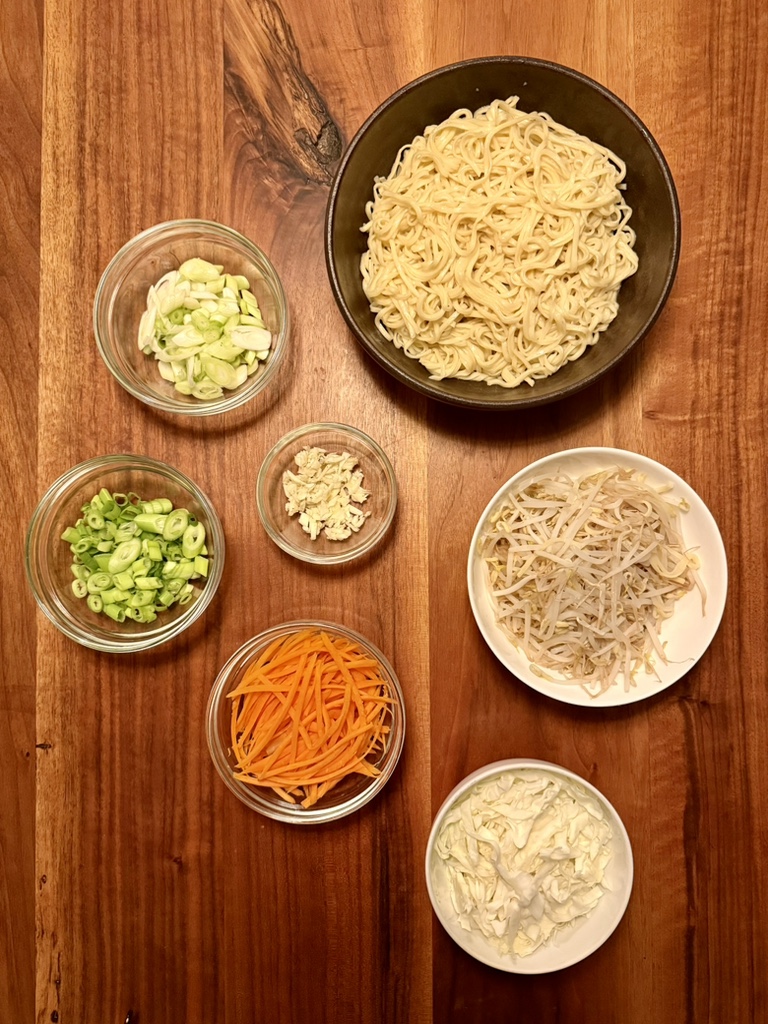
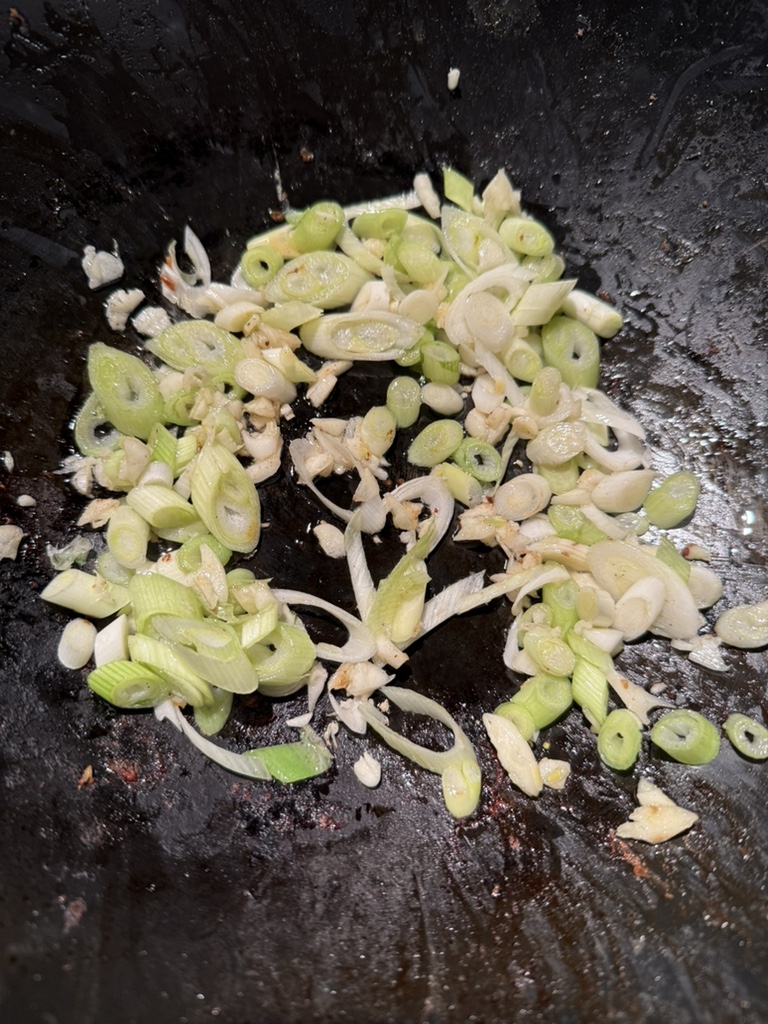
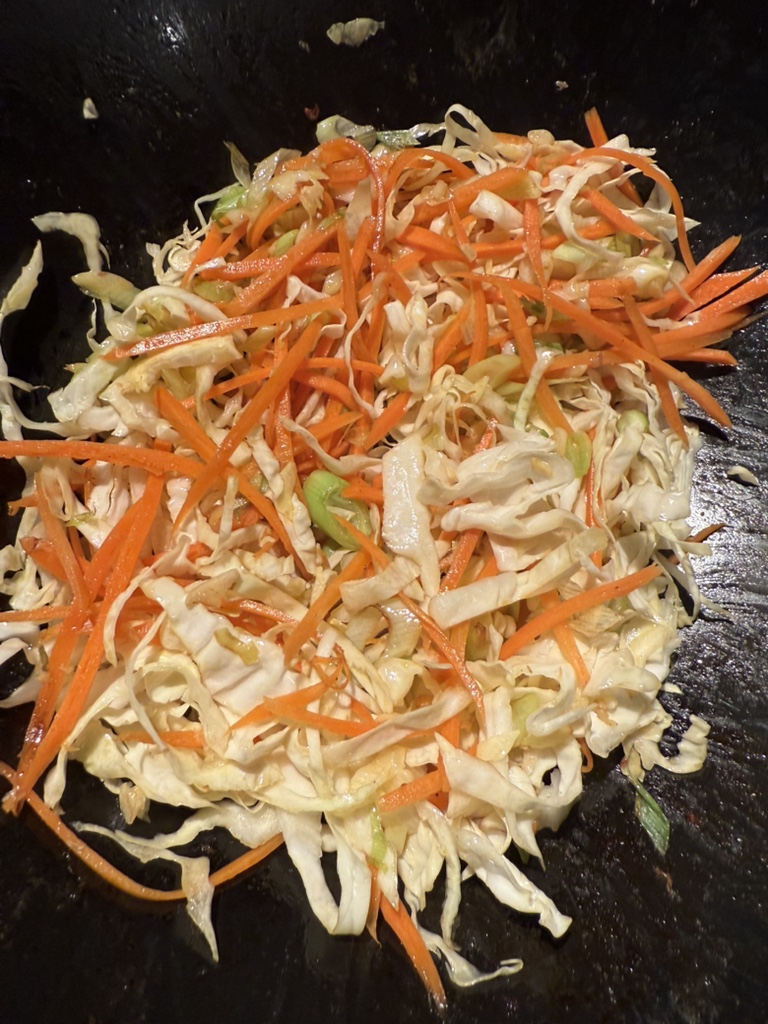
The typical ingredients are first and foremost mie noodles, which are wheat noodles commonly used in East Asia. They are available with or without egg and in thick and thin varieties. We cook them according to the instructions on the packet, drain them and mix them with a little neutral oil to prevent them from sticking. We also use spring onions, cutting the white and green parts separately into pieces (at a 45-degree angle for aesthetic appeal), roughly chopped garlic, bean sprouts, carrots cut into strips, and white or napa cabbage.
Whether and which proteins are added to the dish is purely a matter of taste. For nasi goreng, we opted for prawns. Today we are cooking with chicken, which is very typical. We also add egg, another very common ingredient. We cut chicken breast into bite-sized strips and mix them with a little soy sauce to marinate them. Of course, you can also use the fattier and more aromatic meat from the thighs.
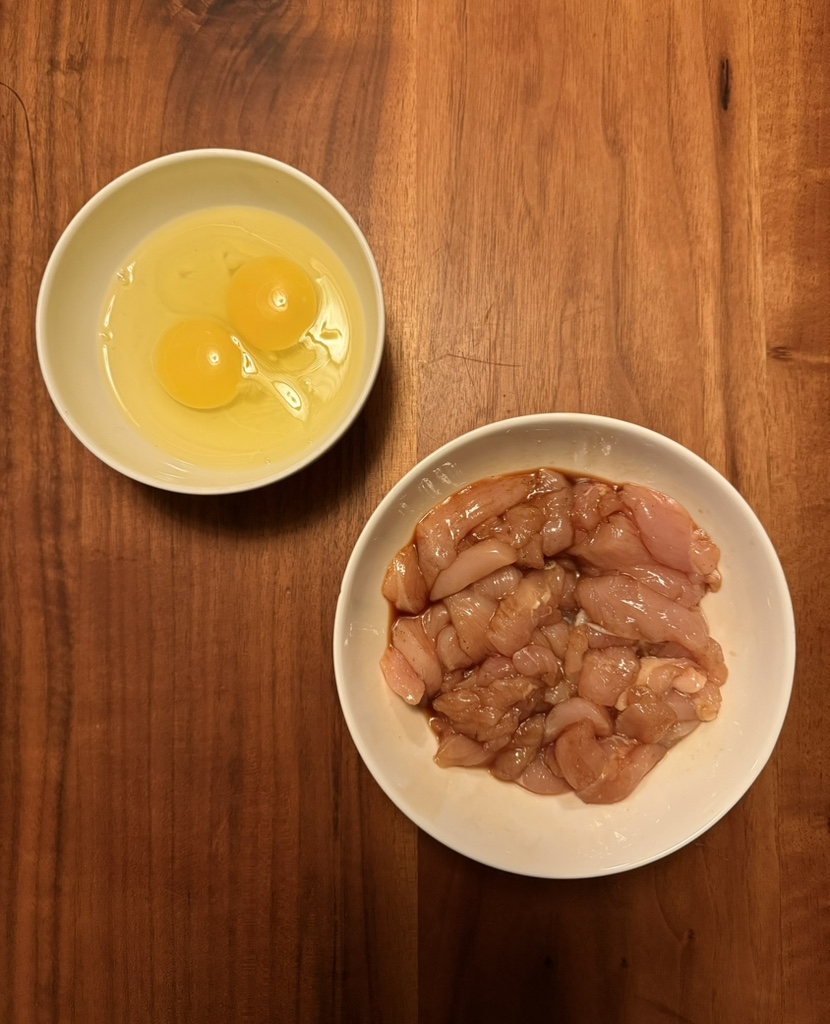
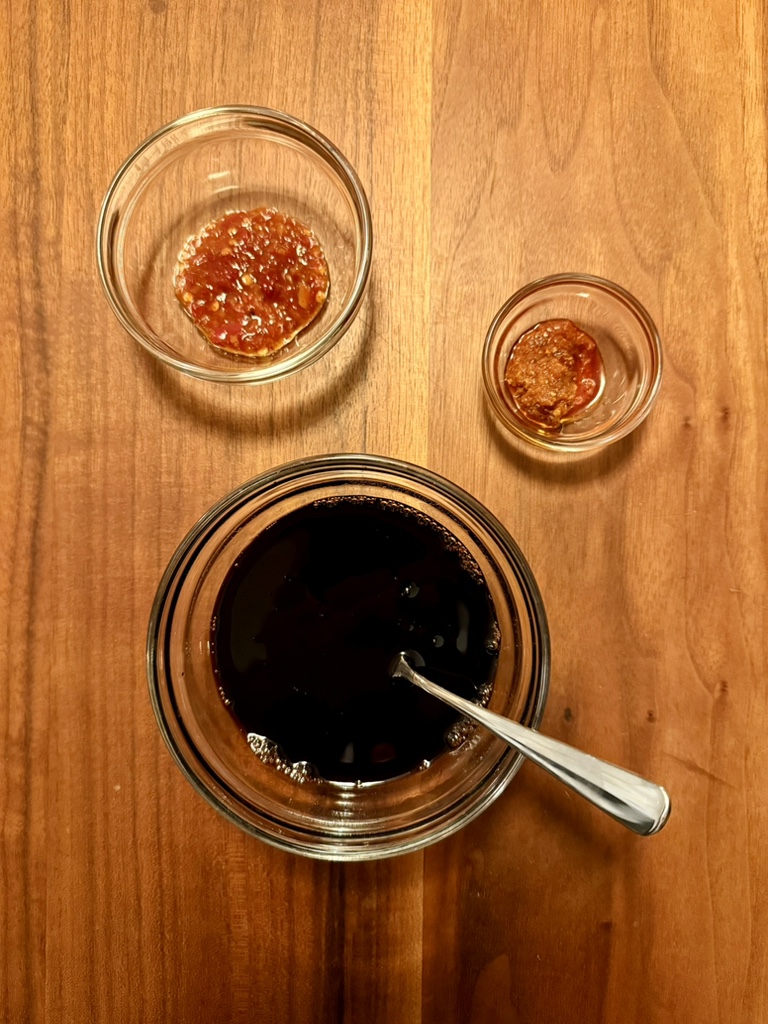
The spices are the same as those used in nasi goreng. Sambal oelek, a shrimp paste, ketjap manis and soy sauce give the dish its characteristic flavour. Ketjap manis is very thick and sweet and is mixed with soy sauce in a 1:1 ratio.
As always, the wok is heated to a high temperature. First, we cook the eggs. To do this, we add neutral oil to the wok and swirl it around so that it covers a large area. If a puddle of oil forms at the bottom, we pour the excess oil into a container to be used later. We pour the beaten eggs into the wok and swirl it again so that they spread out thinly.
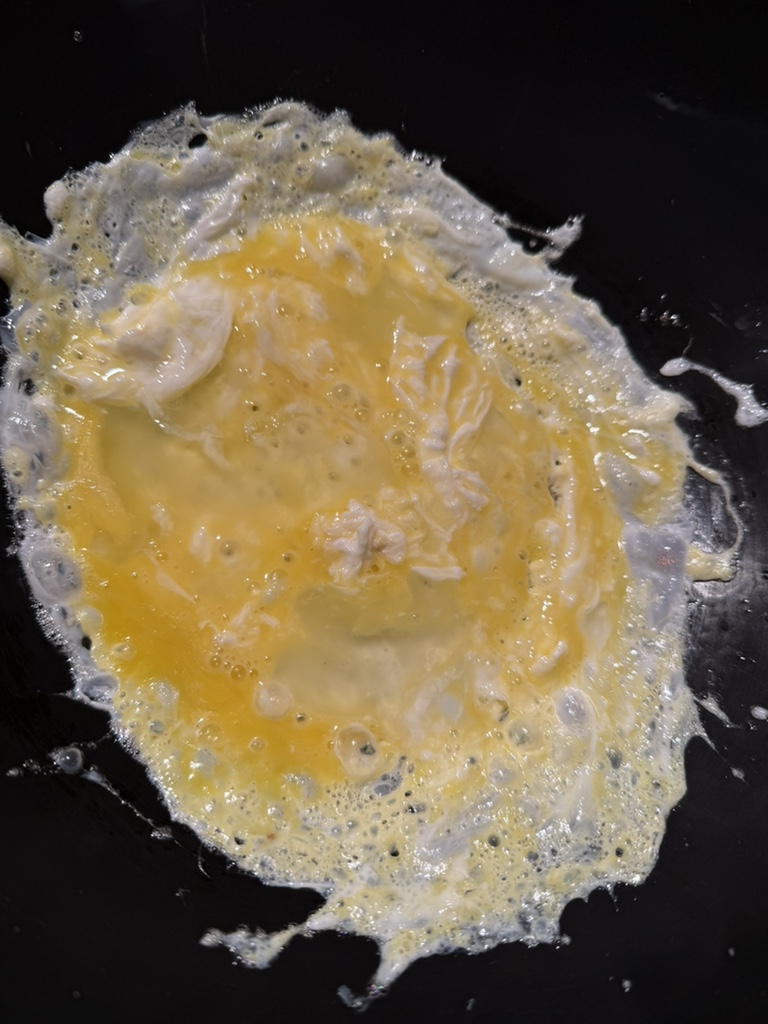
After a few seconds, they are done. We break them up with a cooking spatula and immediately remove them from the wok.
A little oil is added if necessary, then we fry the chicken. Everything is cooked on a very high heat, so it’s quick and has that slightly smoky aroma typical of wok cooking.
If you are unsure about the cooking time, cut open a small piece of chicken and check. We don’t want it to dry out, but of course it mustn’t be raw inside either. This should take about a minute, stirring continuously.
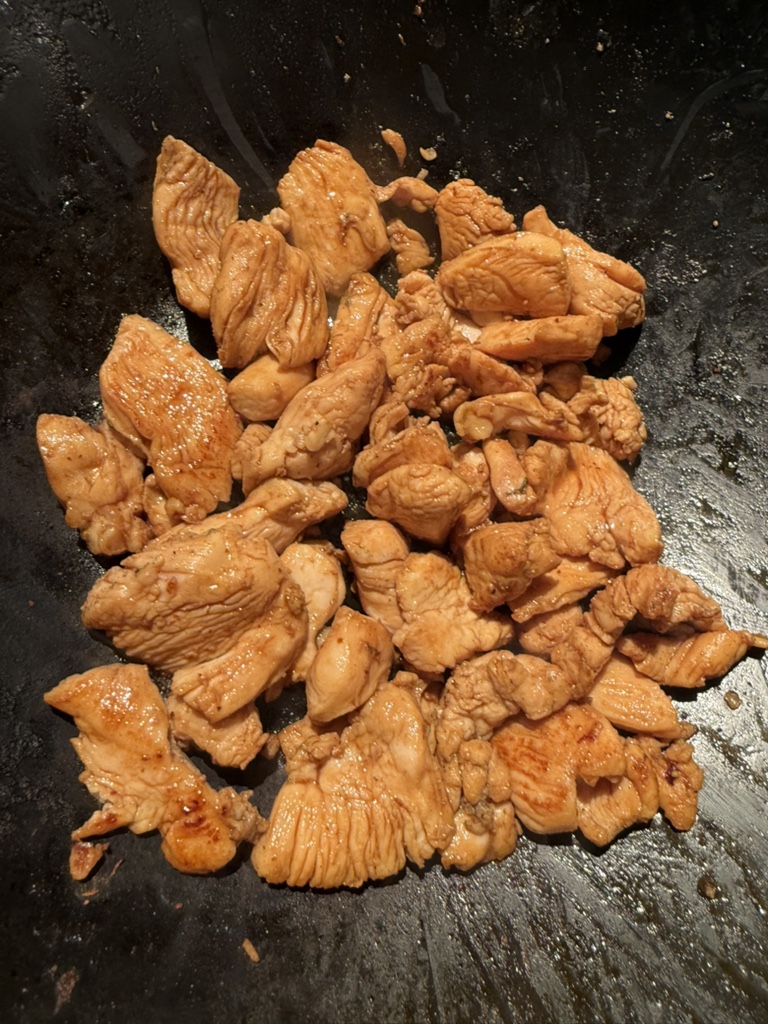
We also remove the chicken from the wok and stir-fry the lighter part of the spring onions with the garlic until it smells intense, but the garlic does not brown. This takes no more than 30 seconds.
The remaining vegetables are added and fried briefly while stirring continuously so that they remain crisp (1–2 minutes). If necessary, we add a little more oil, but use it sparingly overall.
The noodles follow, and now we add sambal oelek, shrimp paste and the mixture of soy sauces. If you have prepared egg, add it back into the wok now.
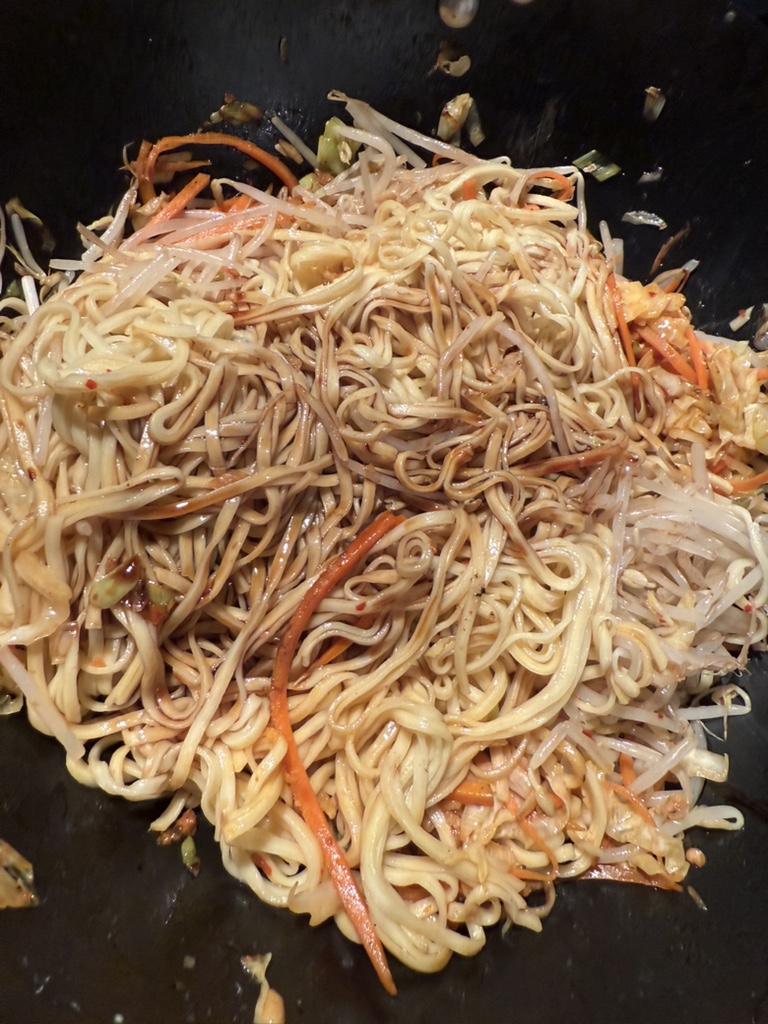
Then everything is mixed thoroughly immediately. This is best done with two cooking spatulas or long cooking sticks or kitchen tongs. The green part of the spring onions is added as the last ingredient.
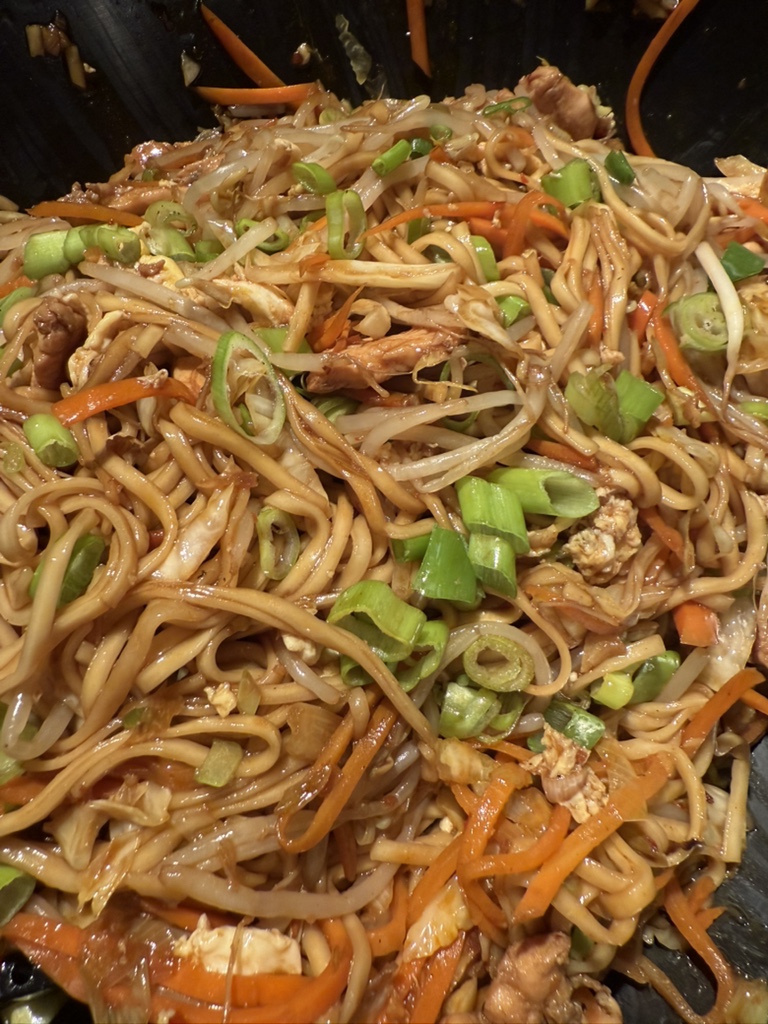
The noodles should have absorbed the sauce thoroughly, be lightly toasted and everything should be mixed as evenly as possible. Nothing needs to be cooked further, so it all goes very quickly.
As with nasi goreng, it is served with raw vegetables, such as slices of fresh tomatoes and cucumbers. Crispy fried onions are a nice addition.
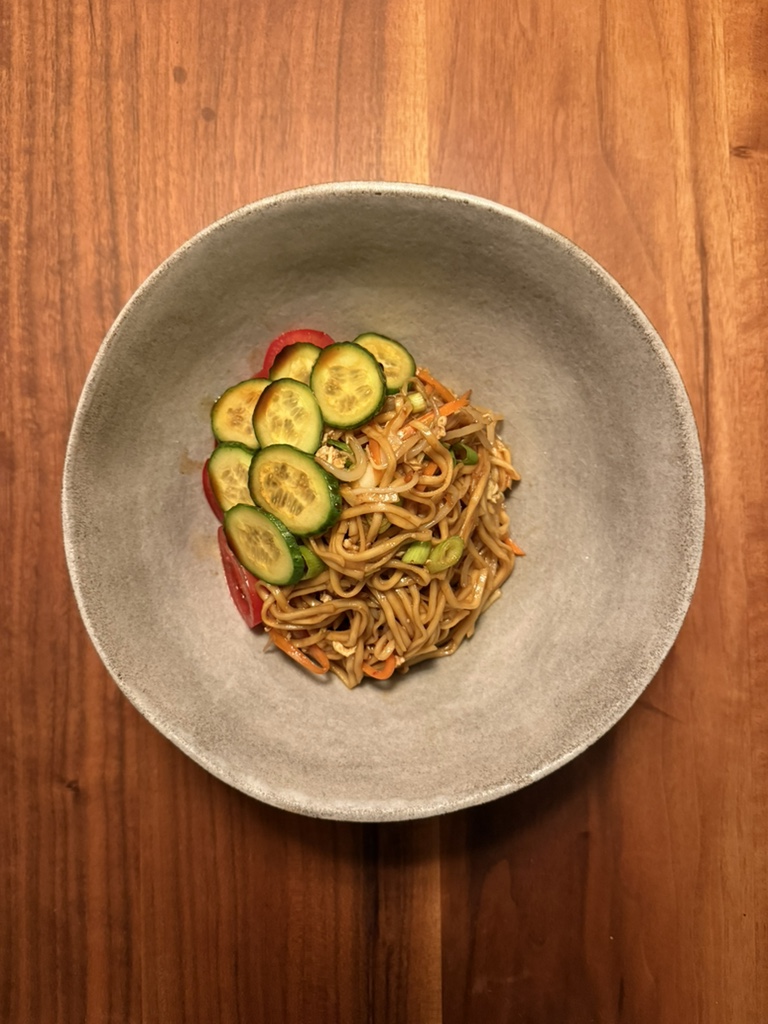
Enjoy.
And may the taste be with you.
Ingredients (for 2 people):
150 g dried mie noodles
Optional: 2 eggs
Optional: 120 g chicken (or prawns, for example)
2 tbsp neutral vegetable oil
4 spring onions
2 cloves of garlic
1 carrot
Some white or Chinese cabbage (or peppers, beans, etc.)
1 handful of bean sprouts
1–2 tsp sambal oelek (or fresh chilli to taste)
½–1 tsp prawn paste
1.5 tbsp sweet soy sauce
1.5 tbsp soy sauce
Fresh raw vegetables, e.g. cucumber and tomato