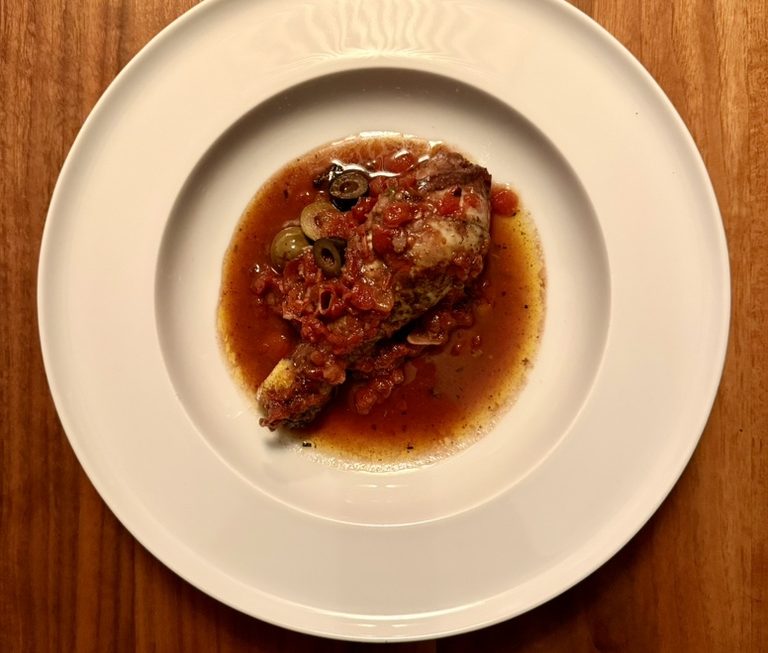
This is an old and very simple dish. Pollo alla cacciatora literally means ‘chicken huntress style’ though it is also known in a male version (pollo cacciatore). A similar dish can also be found in France, for example. In days before the invention of refrigeration, it made sense for reasons of aroma and hygiene to marinate meat in wine and then braise it, which is probably why the name is associated with hunting.
The origins of this dish lie in ‘cucina povera’, or ‘poor man’s cuisine’, although it is important to bear in mind that tomatoes did not arrive in Italy until the mid-16th century.
There are two basic versions of the dish: with tomato (rosso) and without (in bianco). Both are authentic, depending on who you ask and where. Tuscany and Umbria insist on red wine, rosemary and garlic. Campania uses white wine. There are northern versions with porcini mushrooms and southern ones with chilli. Some add olives, some capers, some both, and some neither. The dish is found from Veneto to Sicily and is cooked differently in every family – which in Italy is not the exception, but the rule. So feel free to adapt it as you like.
What all these variations have in common is country-style cooking that needs nothing more than a good piece of bread. And a little time.
For a really good pollo alla cacciatora, we use chicken pieces on the bone, preferably thighs and drumsticks. We’ve explained how to cut them up here.
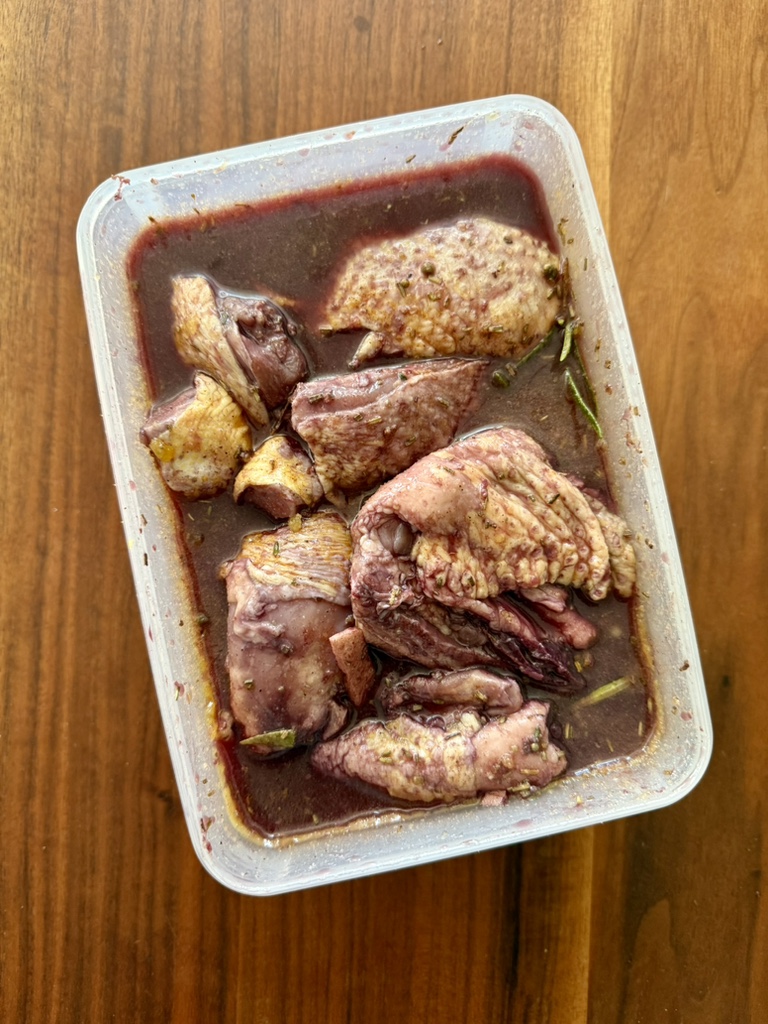
The washed pieces are marinated with roughly chopped garlic, rosemary (and/or thyme / sage), bay leaves and a full-bodied, dry red wine for at least one night. We advise against marinating for a shorter period; otherwise, there is no point in doing it at all. 12 – 24 hours is good and important.
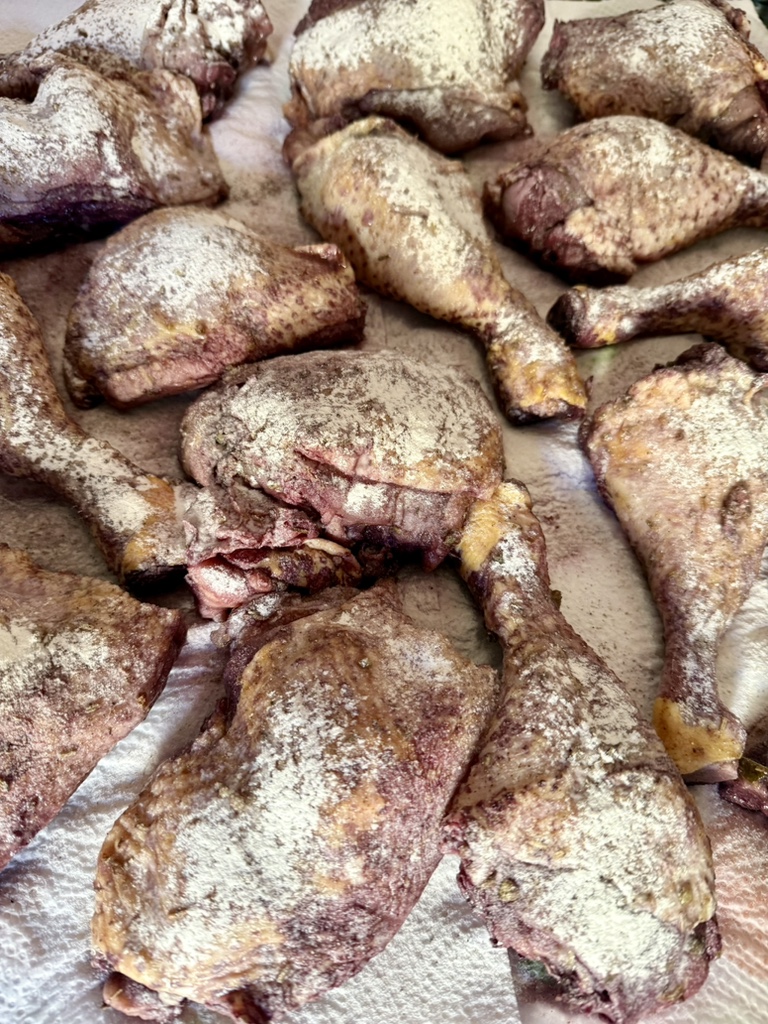
Next, remove the chicken pieces from the marinade and pat them dry a little – we do this on kitchen paper, as red wine is very difficult, if not impossible, to remove from fabrics. Then season the meat very generously with salt and pepper and dust it with flour on both sides. This dish is no place for subtlety; instead, it calls for bold flavours.
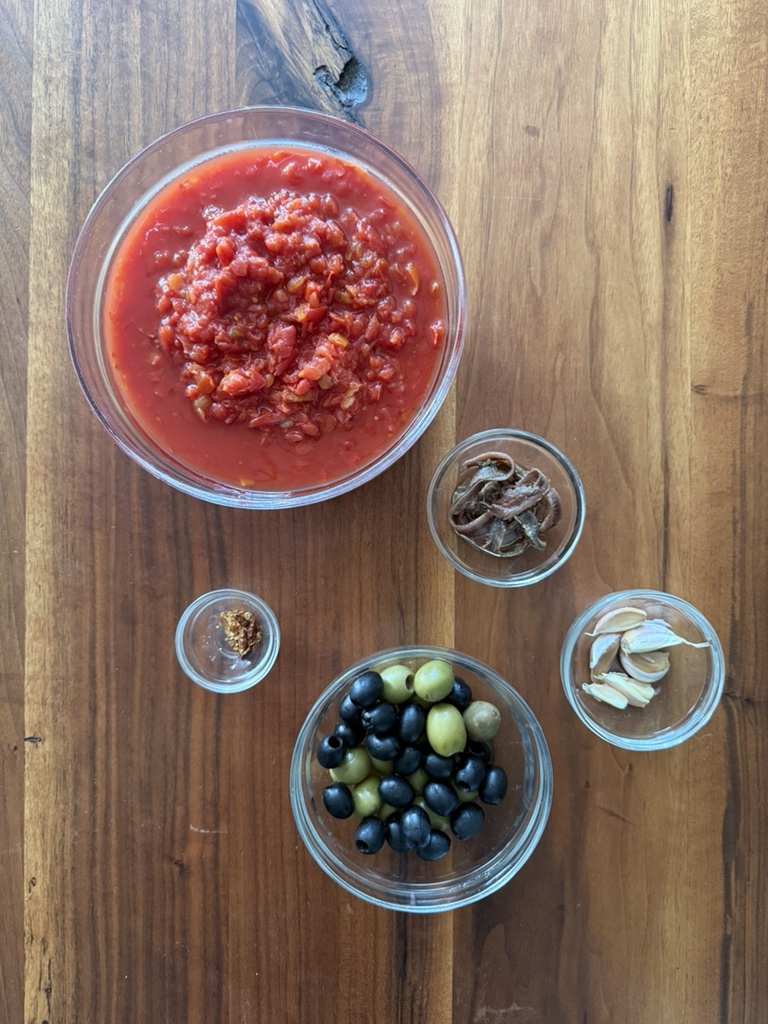
Now, you need a lot of tomatoes (in this version), and there’s no getting round using tinned ones. It requires a depth of flavour that, with fresh tomatoes, you could only achieve during a very few weeks of the year, and even then only in the right place. Garlic is essential, as are olives. For us, it wouldn’t be the same without a bit of heat, which we get from chilli. And we simply cannot imagine this dish without salted anchovy fillets (and a little of their oil).
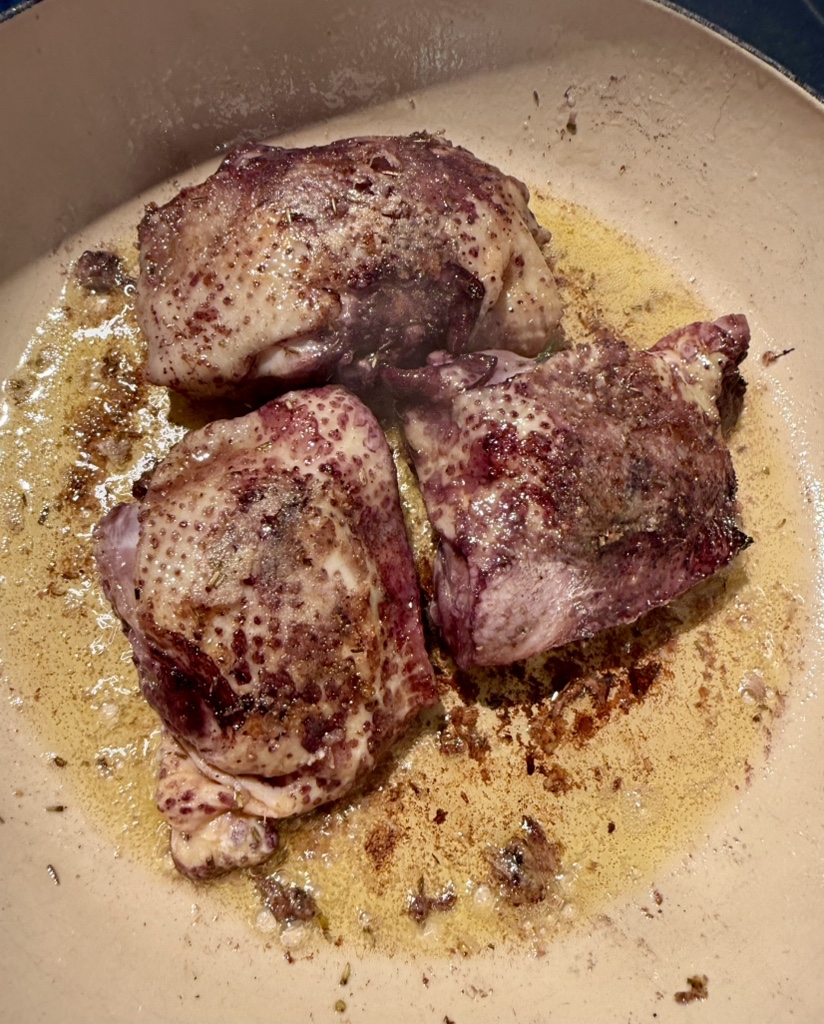
Sear the chicken pieces in a little olive oil over a medium-high heat until browned on both sides. Only cook as many as will fit in the pan at a time. Then set them aside and continue in the same way. Add a little more oil if needed. The bottom of the pan will get darker and darker – that’s exactly how it should be.
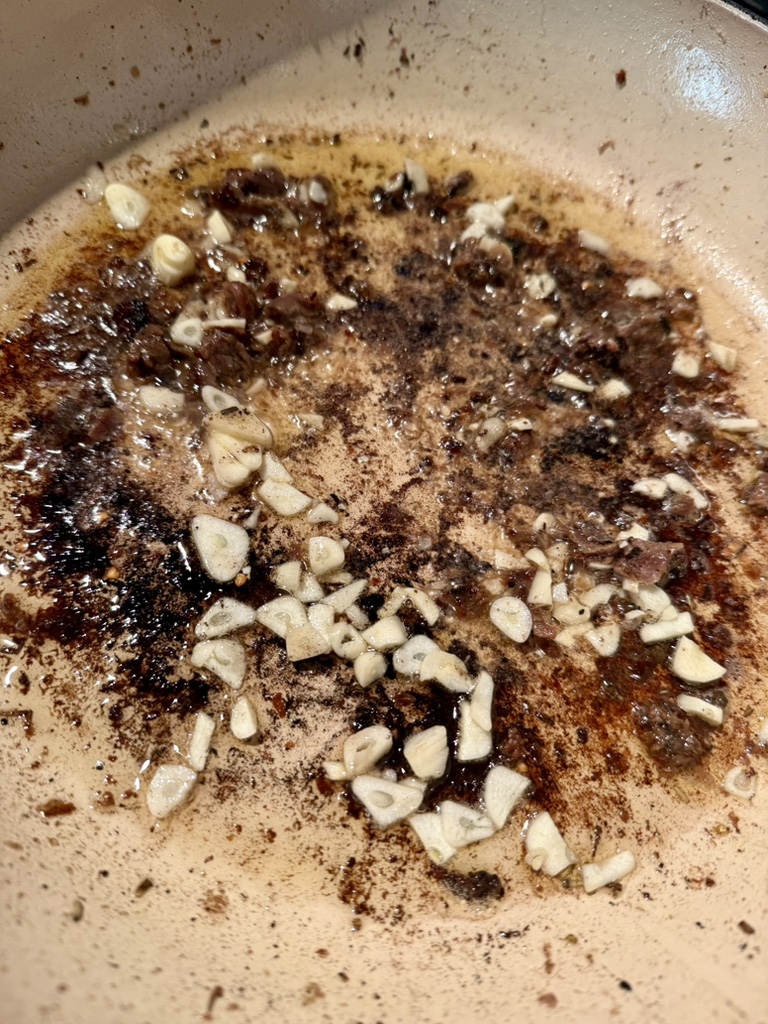
When that’s done, add the garlic and anchovy fillets to the pan (both roughly chopped), and in our case, chilli too. Sauté these for 2 – 3 minutes until fragrant – that’s all it takes. Add a little more olive oil if there isn’t enough in the pan.
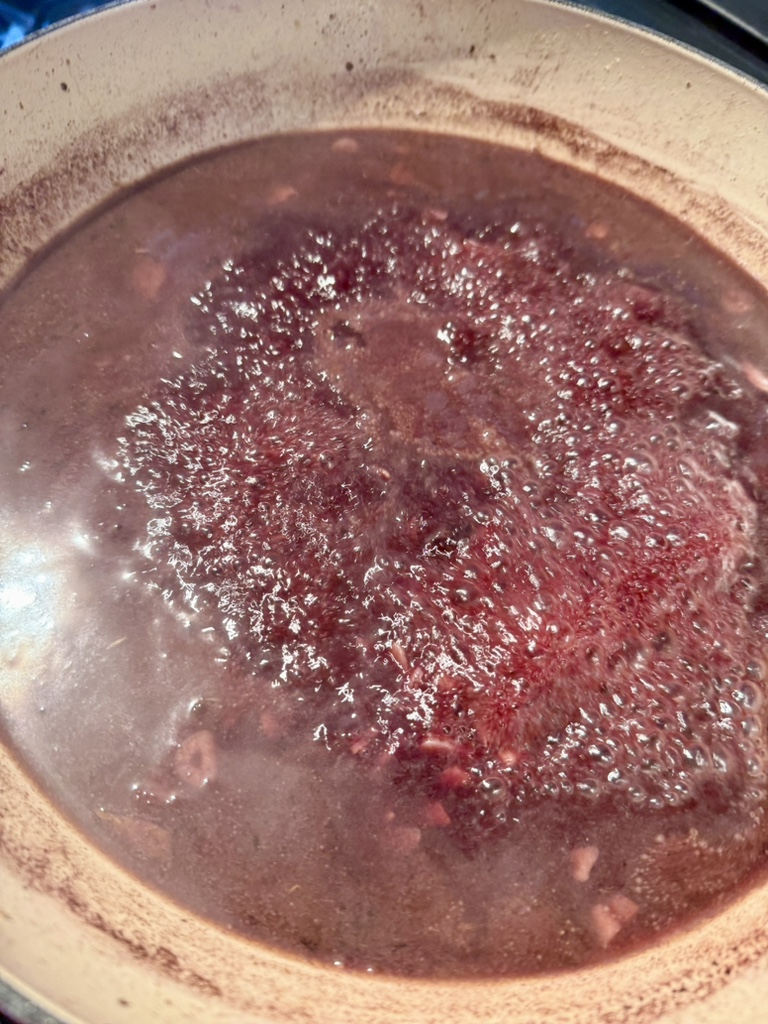
Now pour the entire marinade – the red wine with the herbs – into the pan. Bring it to the boil and stir thoroughly with a wooden spoon, scraping the base of the pan to loosen any browned bits that have stuck to it, which will then infuse the sauce. Simmer until the liquid has reduced to half its volume, concentrating the flavour. While you’re at it, have a look at this recipe from Italy – there are many similarities.
Preheat the oven to just 150 degrees Celsius (without fan) – this fairly low temperature achieves several things: the chicken stays tender and juicy, the sauce remains fruity, and it doesn’t matter if it takes an extra 15 or 20 minutes. Guests running late? No problem! There are many recipes, including some well-known ones, that use 180 degrees – we strongly advise against this.
Place the chicken pieces in a sufficiently large baking dish. Mix the reduced marinade with the remaining ingredients (tomatoes, olives and, if using, capers) and spread it over the chicken. This is a good opportunity for us to add even more flavour by adding herbs.
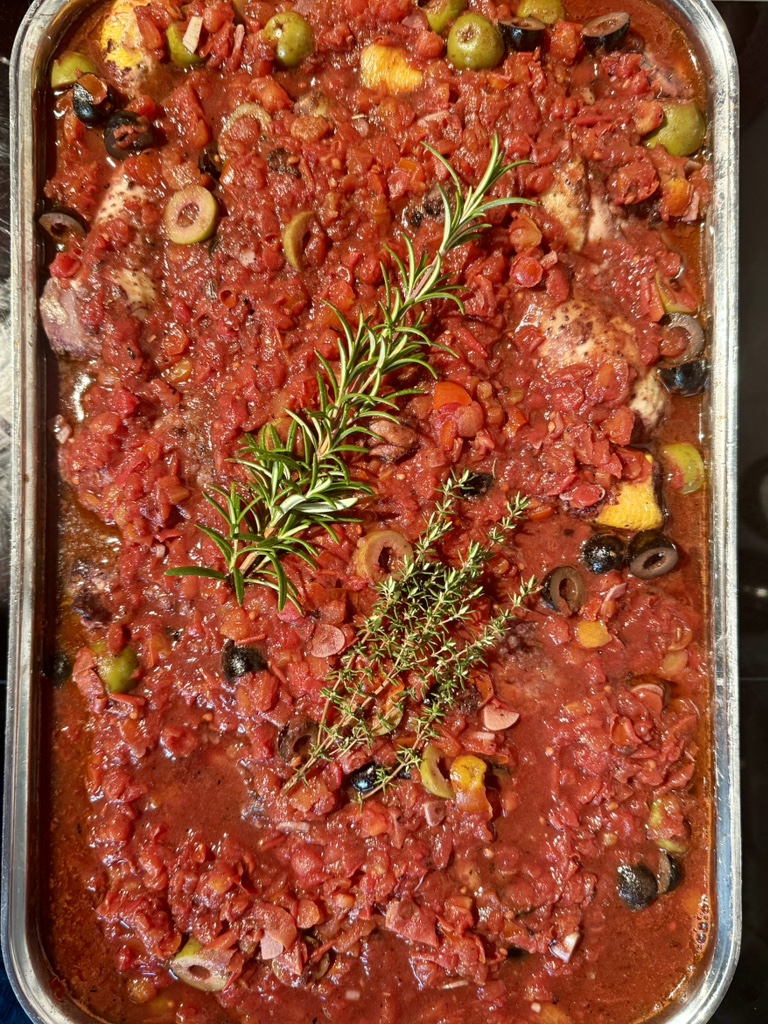
This is then placed in the oven to bake. At our low temperature, it’s left open, but if you prefer a higher temperature, you’ll probably need to cover it. As already mentioned, we prefer the slow method, which allows you to check every now and then, at your leisure, just how delicious the sauce has become. And we are talking about massive deliciousness, especially if you don’t hold back on the anchovies.
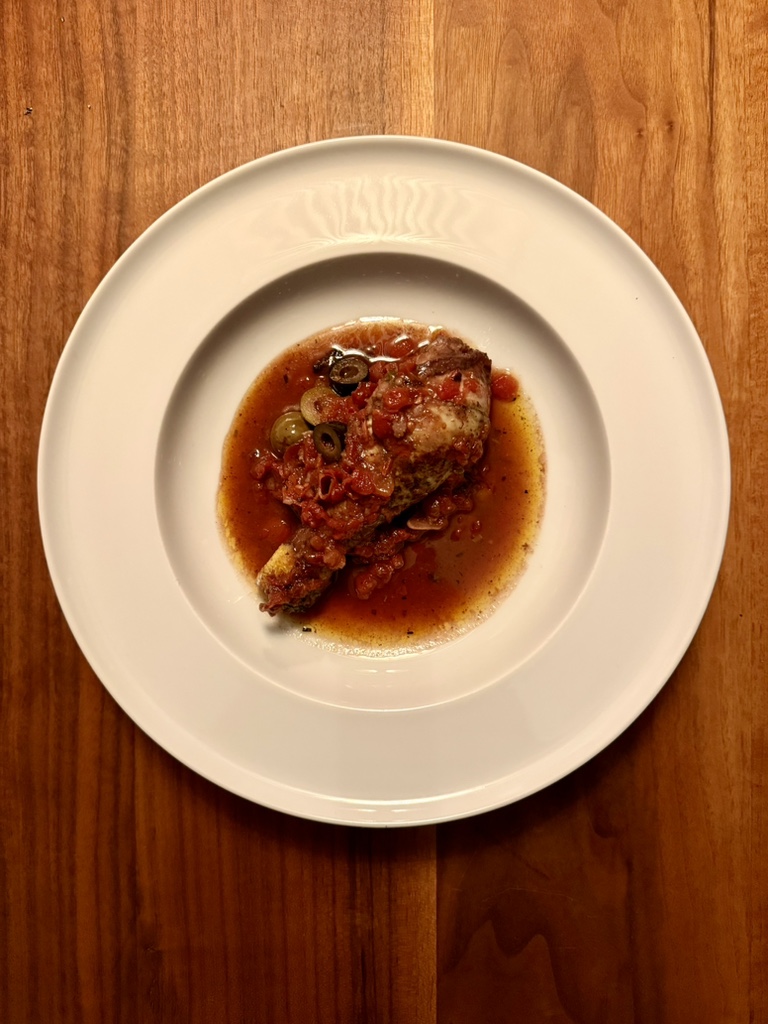
Enjoy.
And may the taste be with you.
Ingredients (for 4 people):
To marinate:
1.8 – 2 kg chicken/chicken pieces (on the bone)
1 – 2 sprigs of rosemary, or alternatively thyme and/or sage
4 bay leaves
500 ml red wine, full-bodied and dry
3 garlic cloves
Salt and freshly ground black pepper, coarsely ground
4 tbsp flour
Olive oil
3 garlic cloves
8 anchovy fillets, preferably with some of their oil
Optional: 1–2 chilli peppers, crumbled
80 g pitted olives, green and/or black
Optional: 40 g capers
800 g tinned tomatoes (San Marzano or similar – fresh tomatoes are not recommended here)