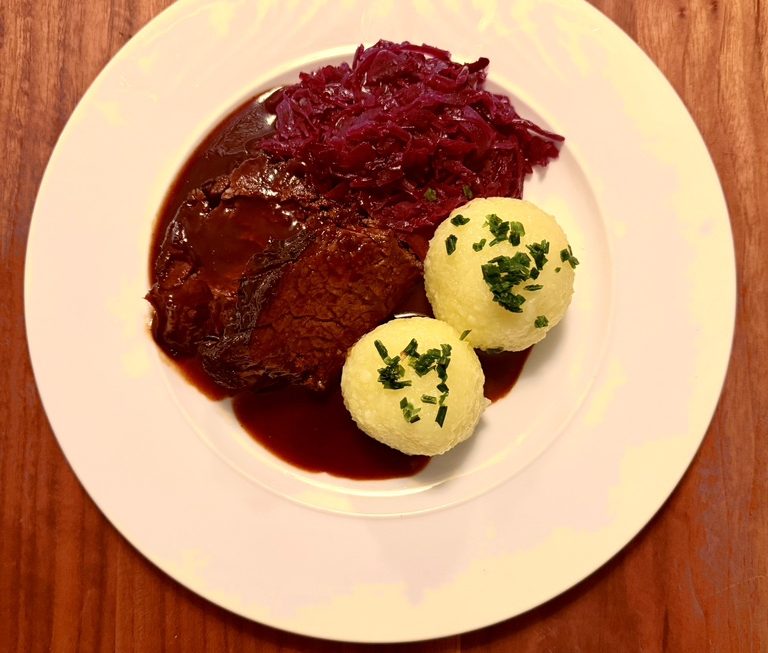
Sauerbraten is one of the (relatively few) German dishes that can be clearly identified as belonging to this cuisine and is known internationally. Anyone who has ever eaten it when prepared properly will understand why: the most tender braised meat, a sauce with a tanginess you won’t find anywhere else, and a complexity of flavour that comes from the combination of spices and plenty of time.
In the 19th century, as a middle-class cuisine began to take root in Germany, Sauerbraten was already an established dish – and even then it varied greatly from region to region. The Rhineland, Bavaria, Franconia, Swabia, Westphalia: every region had its own version. This diversity has been preserved to this day, and so Sauerbraten is not a fixed recipe, but a principle: beef is left to marinate for several days in an acidic marinade of wine, vinegar and spices before being slowly braised.
You need beef that is suitable for braising – this usually refers to cuts of the animal that contain a lot of connective tissue, such as the top round and shoulder. However, for a Sauerbraten, you can also use a cut that is slightly more tender and could even be pan-fried: the so-called ‘Bürgermeisterstück’, which is suitable for both methods of preparation. In English, this is known as the Tri-tip.
Here we present our own – not specifically regional – method of preparation. For this, you will also need a dry red wine and red wine vinegar, as well as soup vegetables consisting of celeriac, carrot, parsley root (optional), onion and leek. Parsley and a variety of whole spices give it its distinctive flavour profile: juniper berries, bay leaves, allspice berries, peppercorns, mustard seeds, cloves, star anise, cardamom pods and cinnamon sticks. Depending on the season, rosemary and/or thyme may also be used.
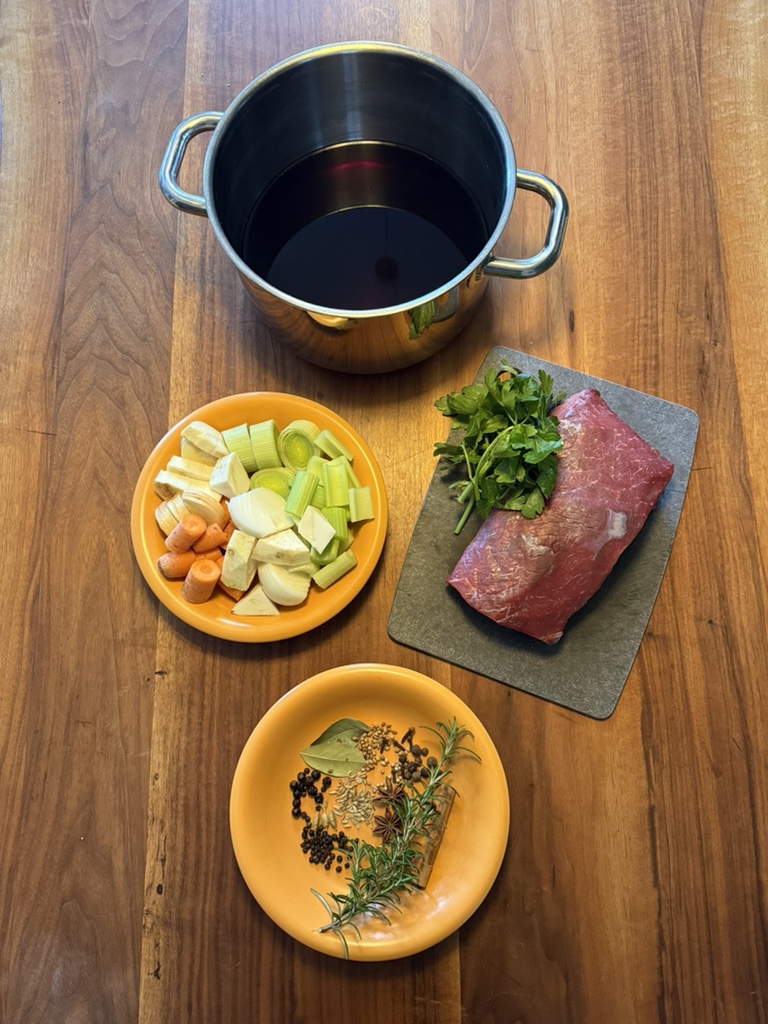
You can marinate the meat for a shorter or longer period; we recommend a full 5 days (and if it ends up being a 6th or even 7th day, that’s no problem). Given such a long period, you should bring the marinade to the boil once, otherwise the lactic acid bacteria become uncontrollable. What’s more, this allows the spices to release their full flavour.
So we add the washed vegetables – roughly chopped – to the wine along with all the spices, a little sugar and salt, bring it to a rolling boil, then remove the pan from the heat and leave the liquid, which now smells like mulled wine, to cool. Only then do we add the vinegar, as its acidity would otherwise diminish when heated.
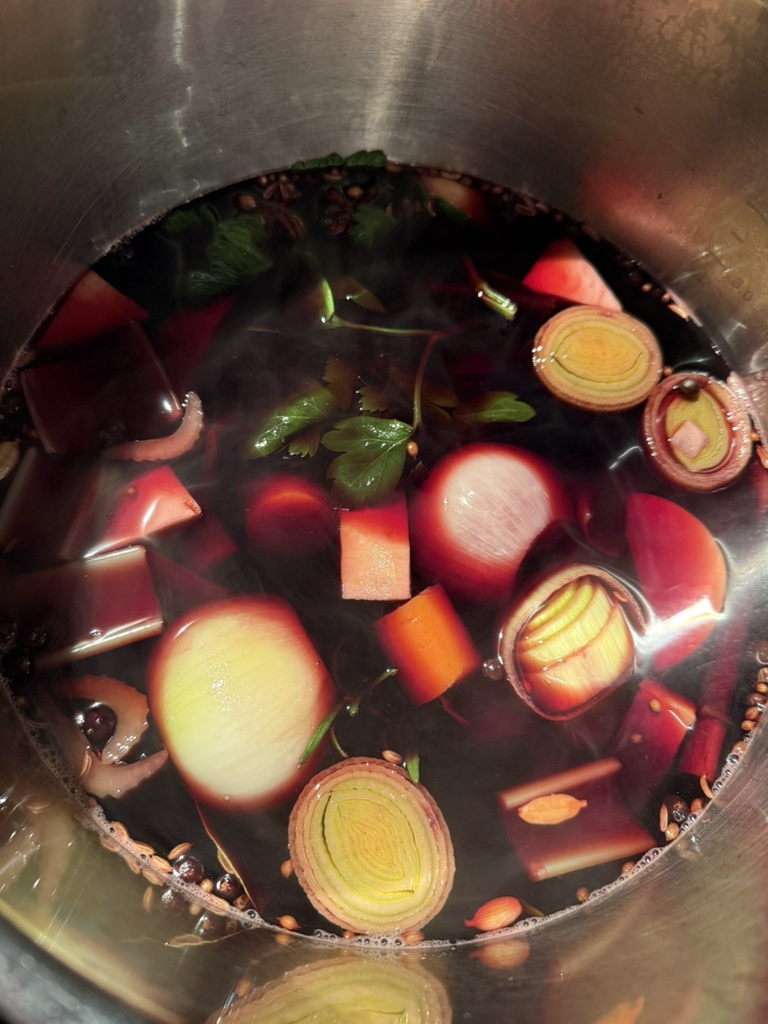
Depending on the size, we cut the meat into large pieces or leave it in one piece, then place it in a sealable container with vegetables and spices to marinate. It is then stored in the fridge for at least 5 days.
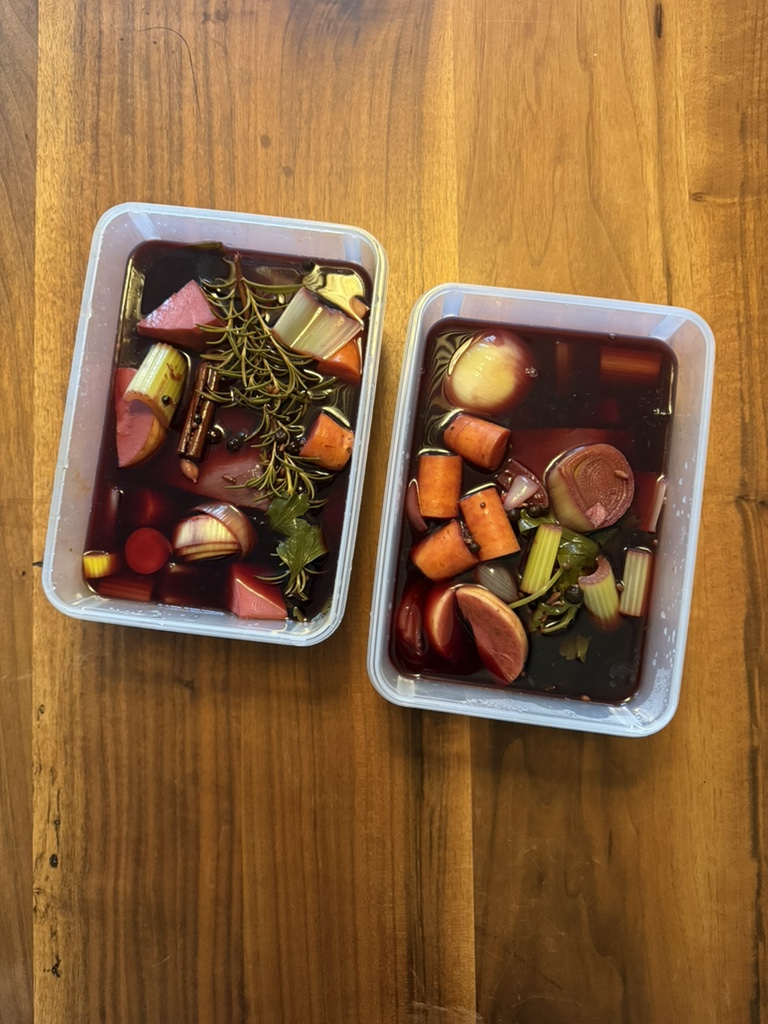
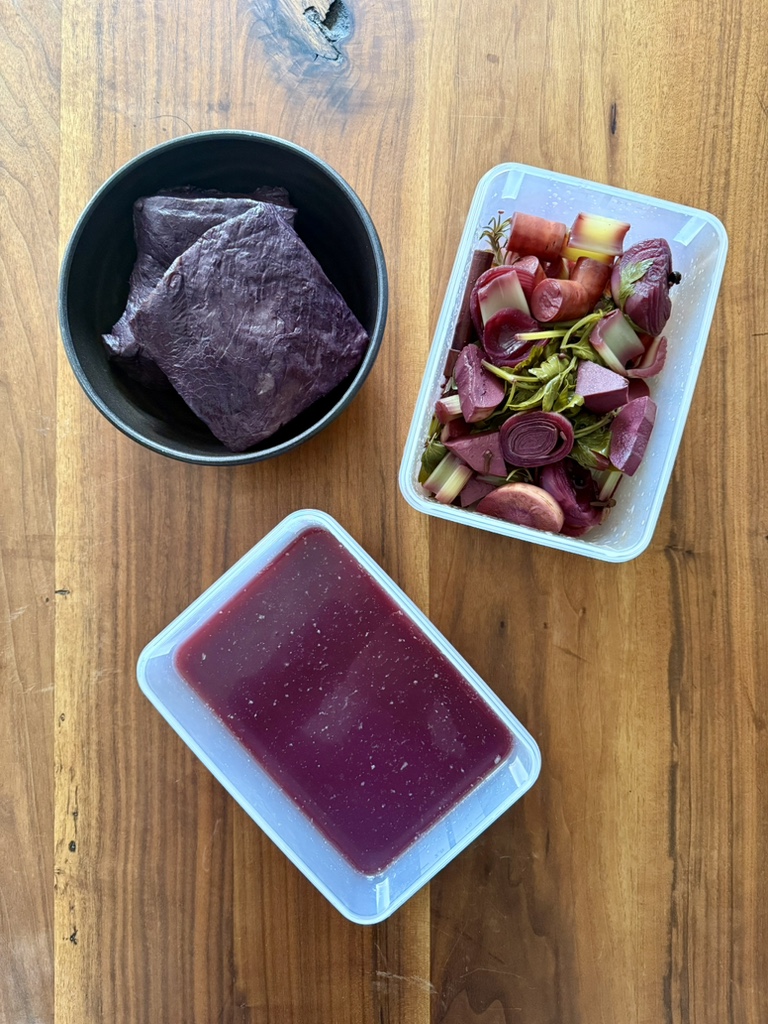
Remove the meat from the marinade and pat it dry with kitchen paper. Pour the marinade through a fine sieve into a container and set it aside. All the ingredients will be used further.
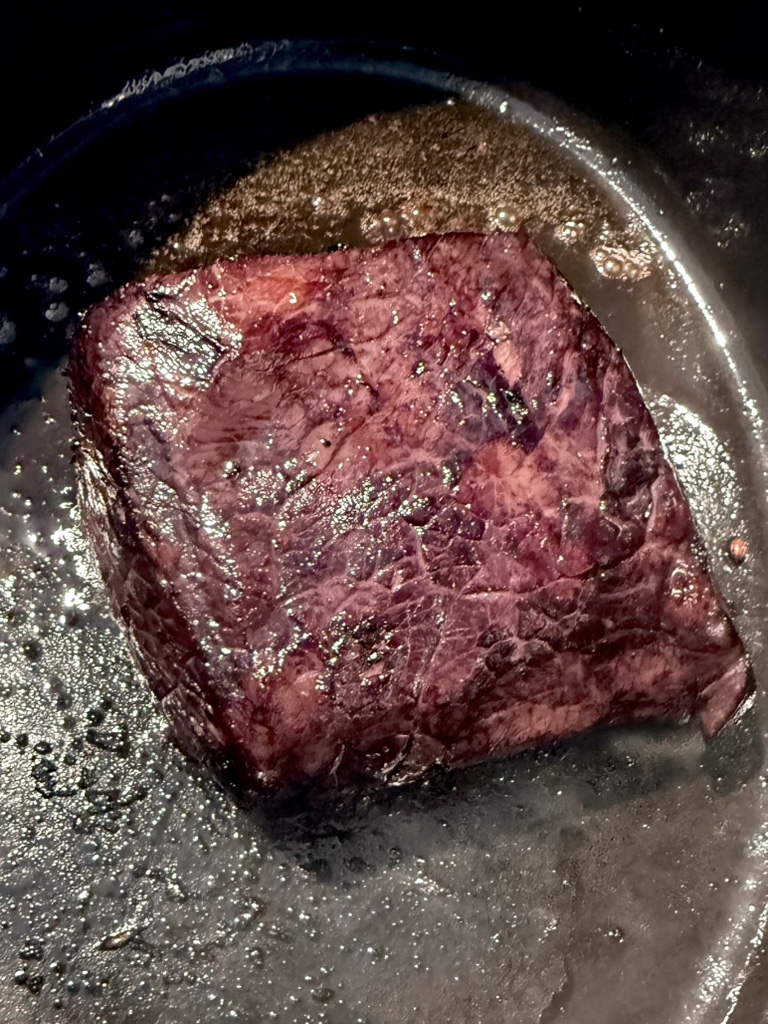
In a heavy roasting pan, ideally made of cast iron, heat clarified butter over a high heat and sear the meat thoroughly on all sides. It should develop a deeply dark crust all around. Don’t move it around too much and be patient until the meat releases from the bottom of the pan on its own. Then remove it and place it in a bowl to catch the juices that will run out.
In the same roasting pan, sweat the vegetables over a medium-high heat for a few minutes, then sprinkle them evenly with icing sugar, stir, and allow the sugar to caramelise. As well as adding flavour, this gradually produces the deep brown colour of a braising sauce.
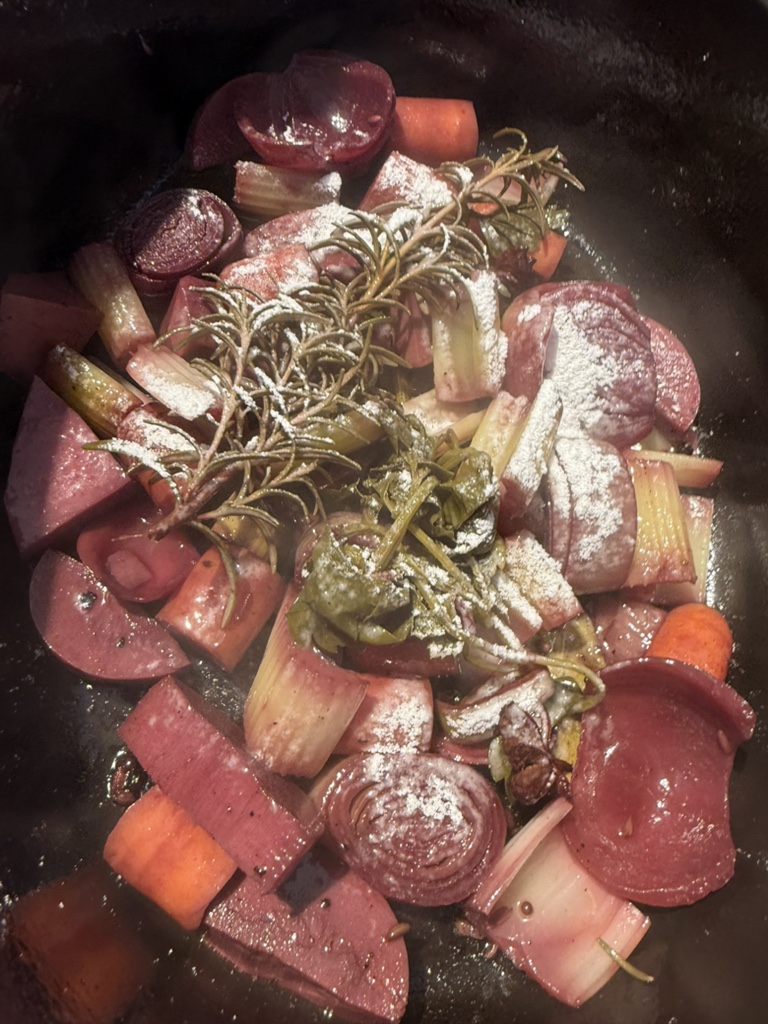
Make a little space at the bottom of the pan and fry tomato paste there, stirring constantly, for one to two minutes until it darkens and begins to release its aroma.
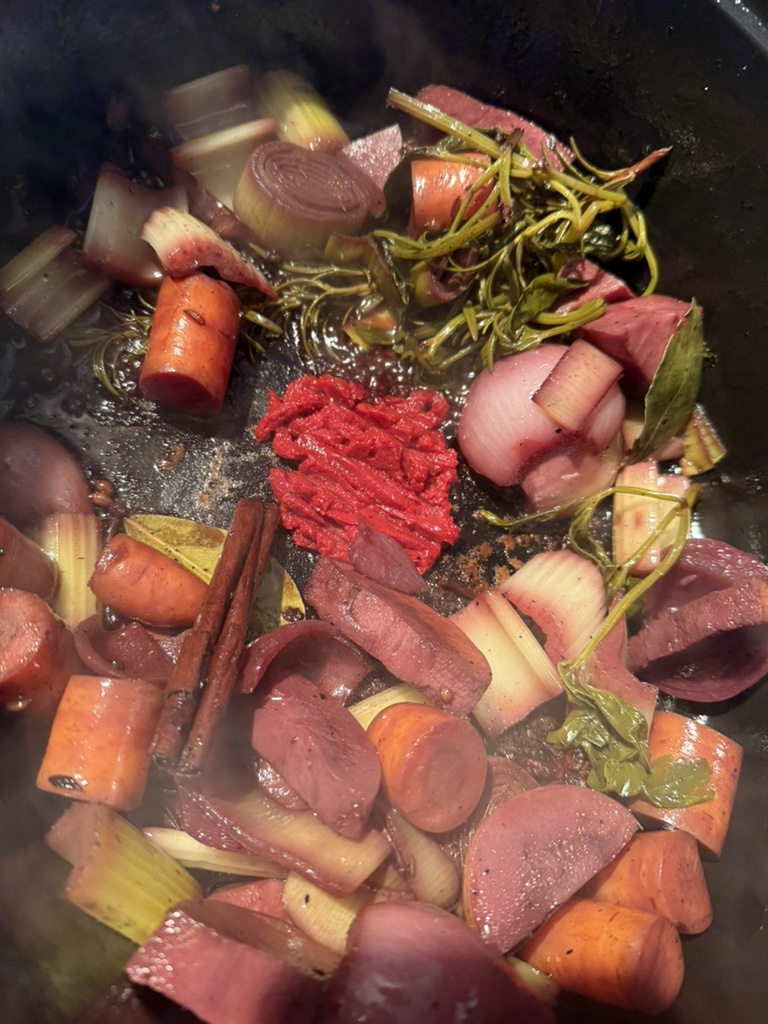
Now we deglaze the pan with a generous splash of the marinade and let it reduce completely. We repeat this process twice more – with each go, the dish develops more depth and colour. This is a very important part of the preparation!
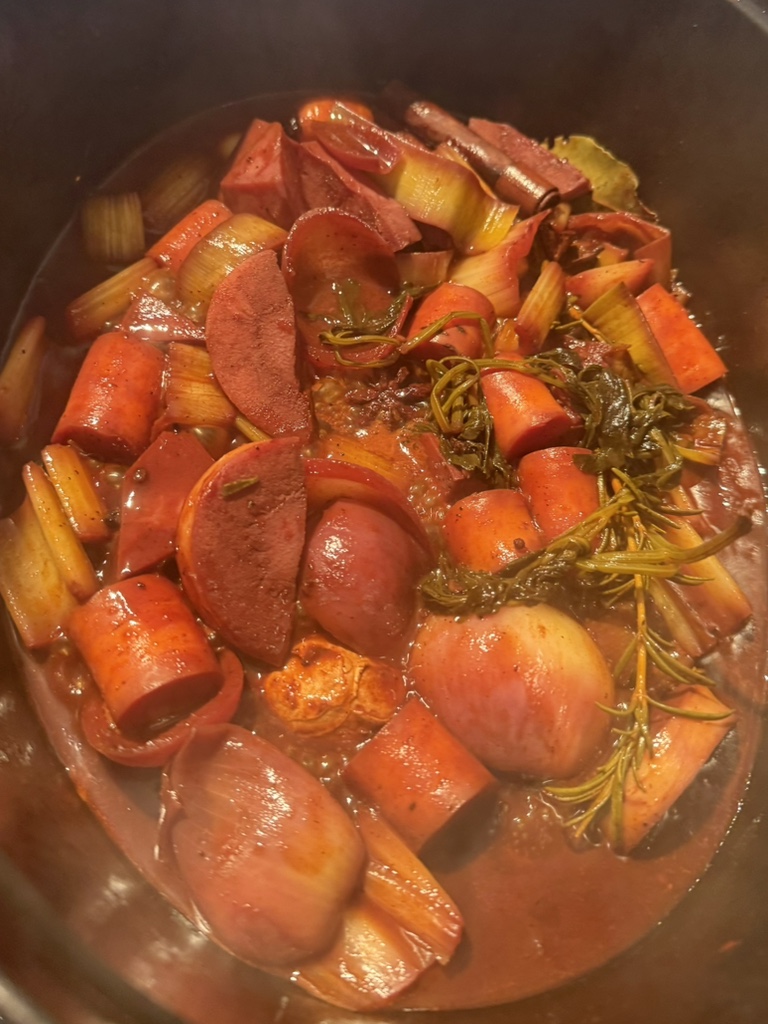
Only then do we pour in the rest of the marinade and return the meat, along with the juices that have run out, to the roasting pan. The liquid should cover at least half of the meat – if not, add a little water.
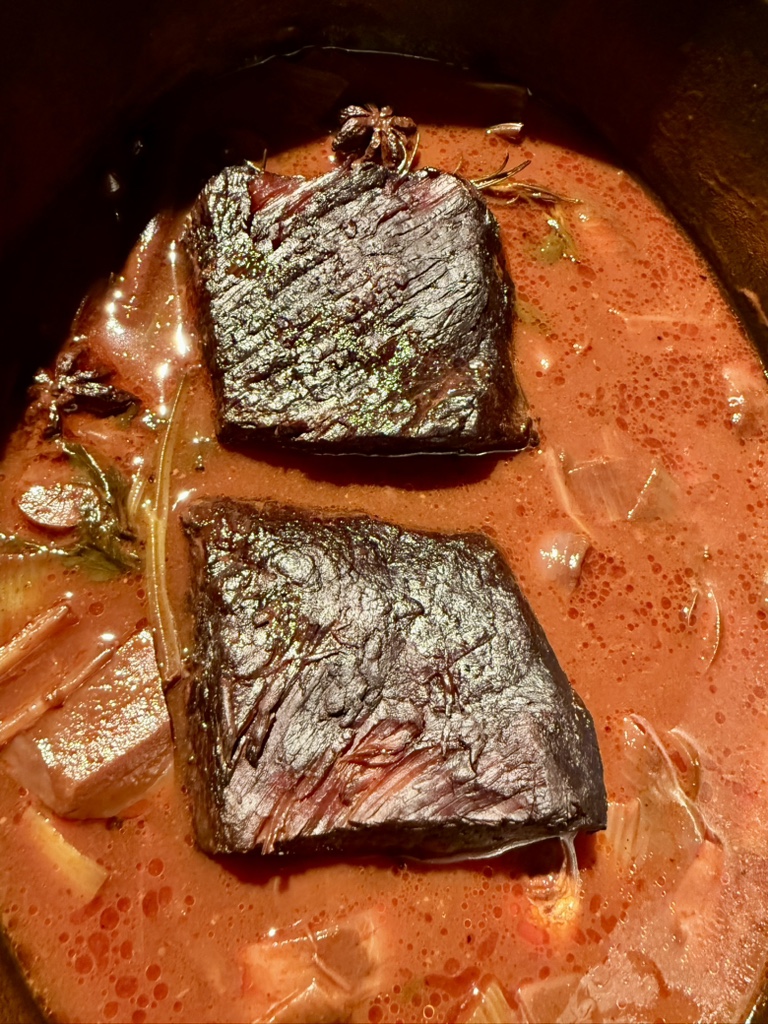
Place a lid on top and braise the Sauerbraten at 150°C (top and bottom heat) for at least 2½ hours, or up to 3½ hours for larger pieces. Turn the meat once, roughly halfway through the cooking time. It is ready when you can pierce it easily with a spoon but it still holds its shape – it is meant to be sliced, not fall apart.
Then we carefully remove the meat, wrap it in aluminium foil and keep it warm in the residual heat of the oven, whilst we finish preparing the sauce. We pour the braising liquid through a fine sieve into a saucepan, pressing the vegetables firmly through as we do so. We bring the strained sauce to the boil over a high heat and reduce it to a third of its original volume. This process removes much of the acidity.
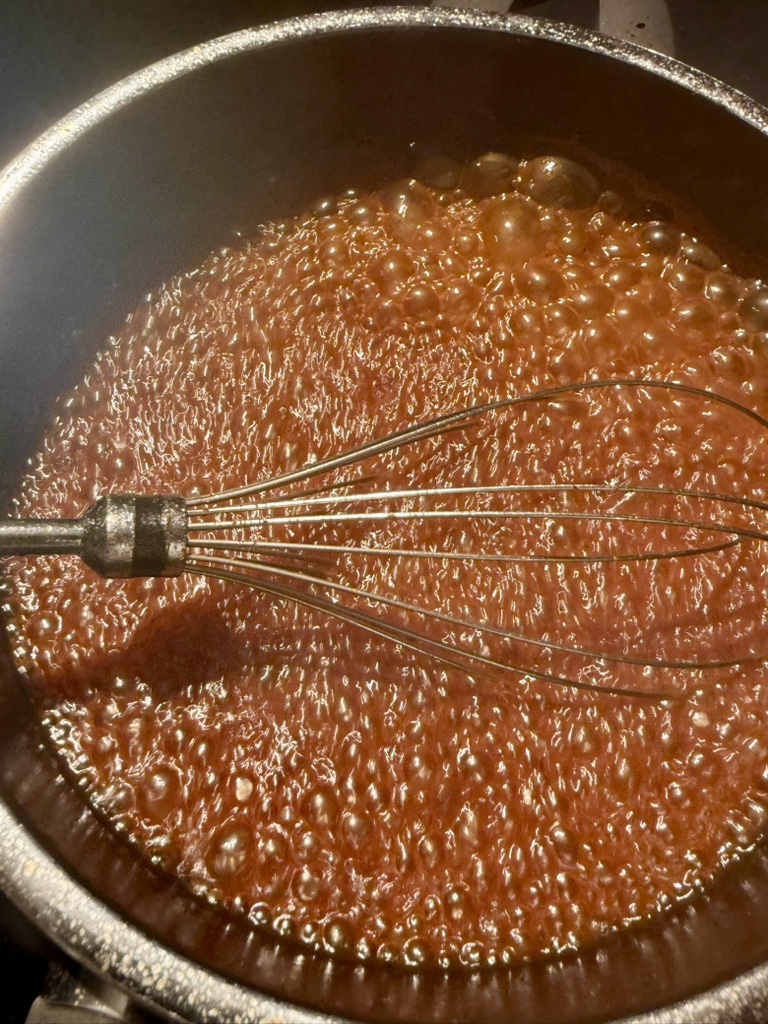
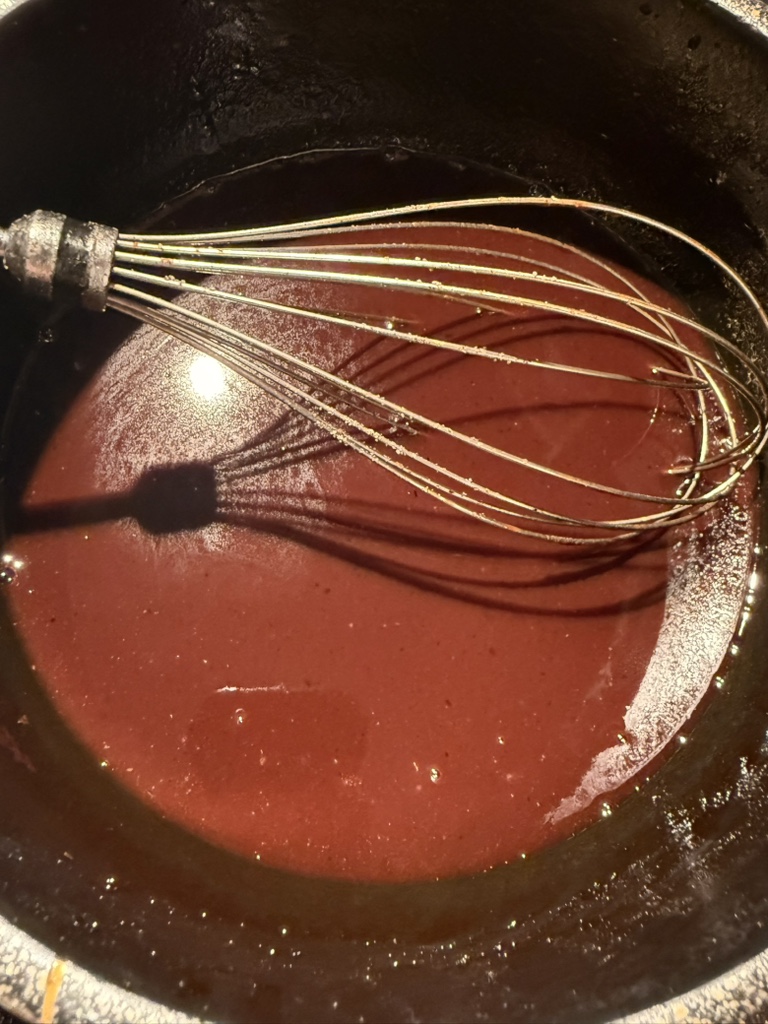
The sauce is seasoned to taste with salt and freshly ground pepper, then ‘mounted’ with butter: cold butter is gradually whisked in little by little – this gives the sauce body, shine and a silky texture.
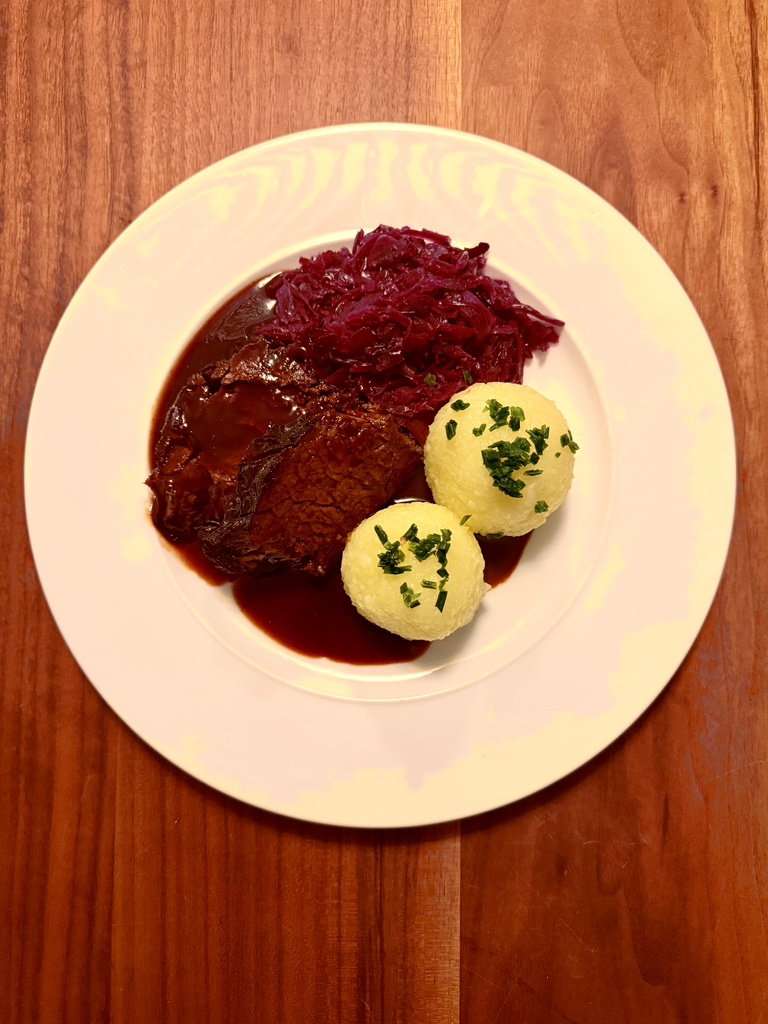
The meat is sliced across the grain, not with it – and this applies in other dishes as well. We then serve it on warmed plates with a generous helping of sauce. Potato dumplings and red cabbage are the perfect accompaniments for us.
Ingredients (for 4 people):
750 ml full-bodied, dry red wine
500 g soup vegetables, consisting of onion, carrot, celeriac, parsley root (optional), leek and parsley
8 juniper berries, lightly crushed
2 bay leaves
5 allspice berries
10 black peppercorns
1 tsp mustard seeds
3 cloves
2 star anise
3 green cardamom pods, lightly crushed
1 cinnamon stick (approx. 5 cm)
1 tsp each of salt and sugar
Optional: rosemary / thyme
350 ml red wine vinegar
1.2 kg beef from the top round, shoulder or tri-top
3 tbsp clarified butter for searing
3 tbsp icing sugar
1 tbsp tomato purée
Cold butter to thicken the sauce
Final seasoning with salt and pepper