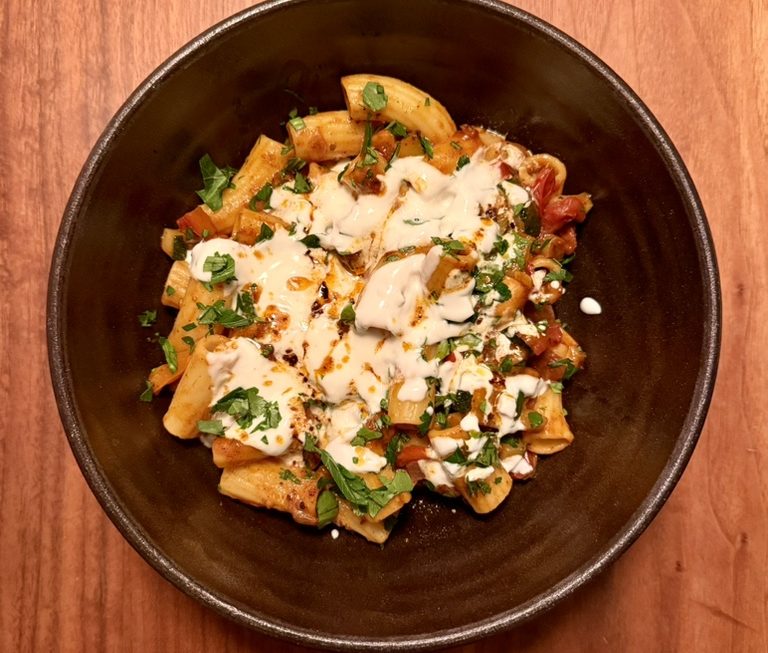
Yoğurtlu Makarna literally translates as ‘noodles with yoghurt’. Makarna is borrowed from the Italian word maccheroni.
This Turkish dish combines hot noodles with cool garlic yoghurt and chilli butter. Other ingredients include ground beef or Turkish garlic sausage (sucuk) and all kinds of vegetables. However, what you see online and on un-social media these days when you search for this dish is basically always the same: the classic accompaniment for Turkish filled pasta (mantı) – garlic yoghurt and chilli butter – simply dumped over some pasta and that’s it. This is then touted as a ‘hack’, but it’s utter nonsense and pushes aside the whole spectrum of yoğurtlu makarna, as it’s prepared in Turkey.
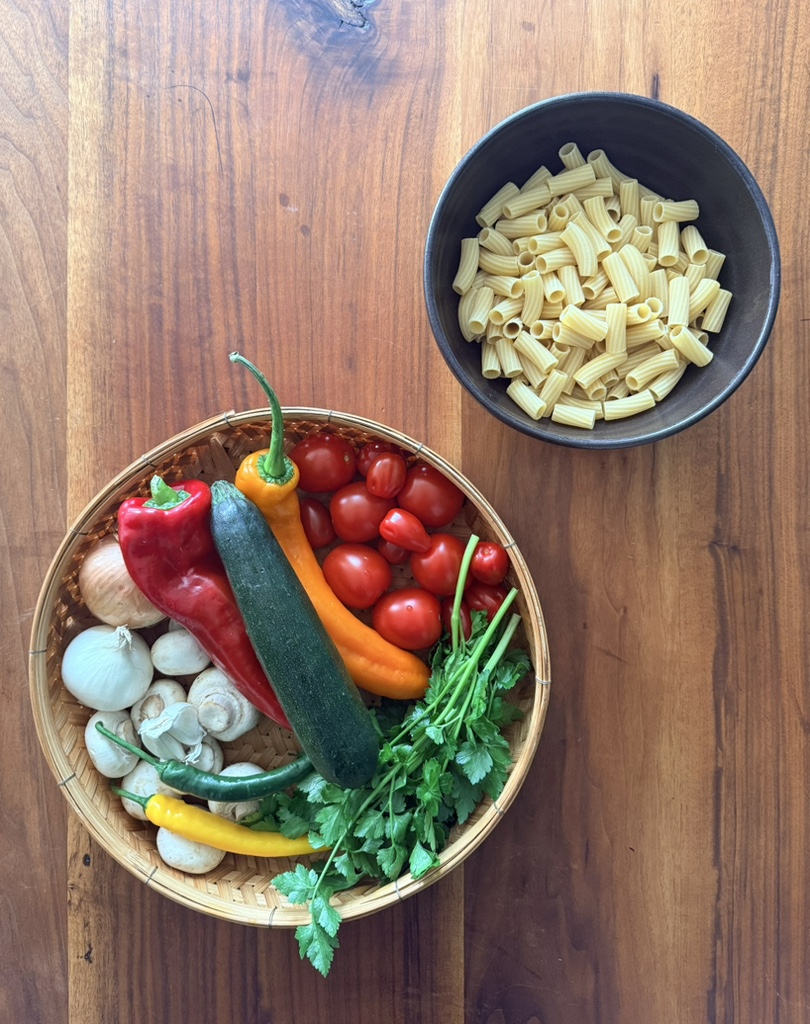
Today we are cooking a vegetarian dish with a colourful basket of vegetables: onion, garlic and fresh chilli for spice, mushrooms for umami, a variety of peppers and courgette for fruitiness, tomatoes for the base, and fresh parsley. Other combinations are also possible, and aubergine is another vegetable that is very commonly used in Turkish cuisine.
Short tube-shaped pasta works best; today we are using tortiglioni.
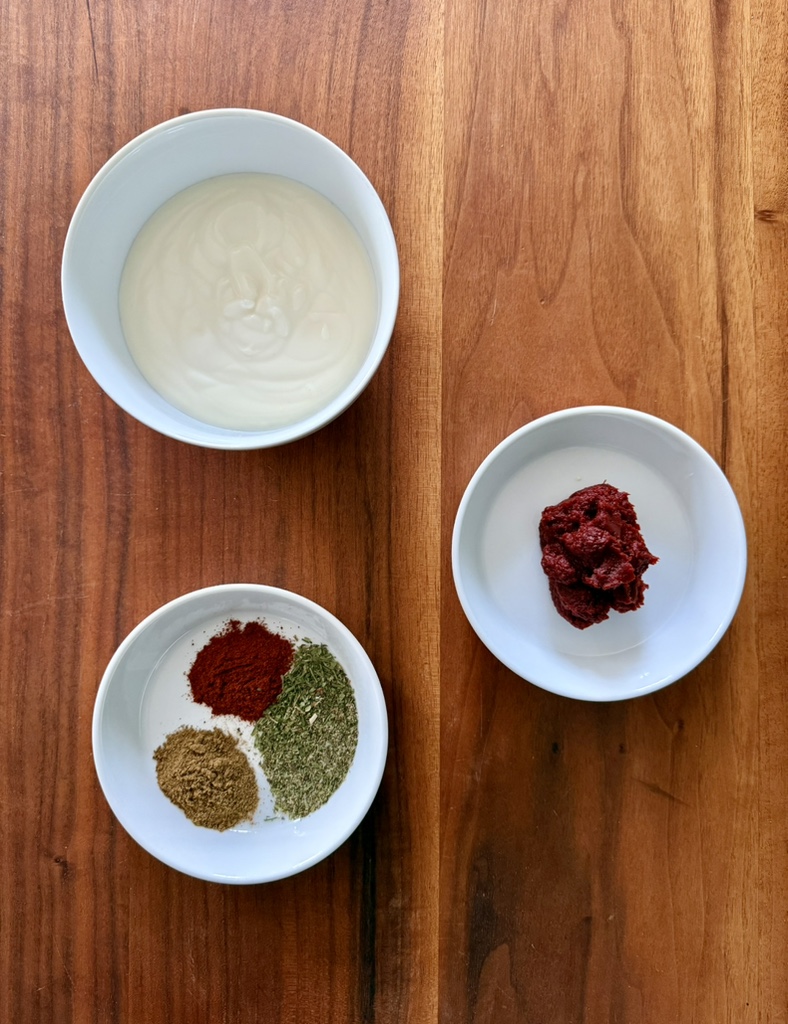
Yoghurt is an essential part of this dish. Another typical Turkish ingredient is salça, a concentrated paste made from tomatoes and/or peppers. We like a mixture of both (karışık salça) and buy it ready-made in jars. Note: salça is also available in a spicier version (acı), with a little chilli added.
In addition to salt and pepper, we use paprika, dried mint and oregano as well as baharat, an Arabic spice mixture that can contain coriander, cloves, cumin, cardamom, nutmeg and cinnamon, for example.
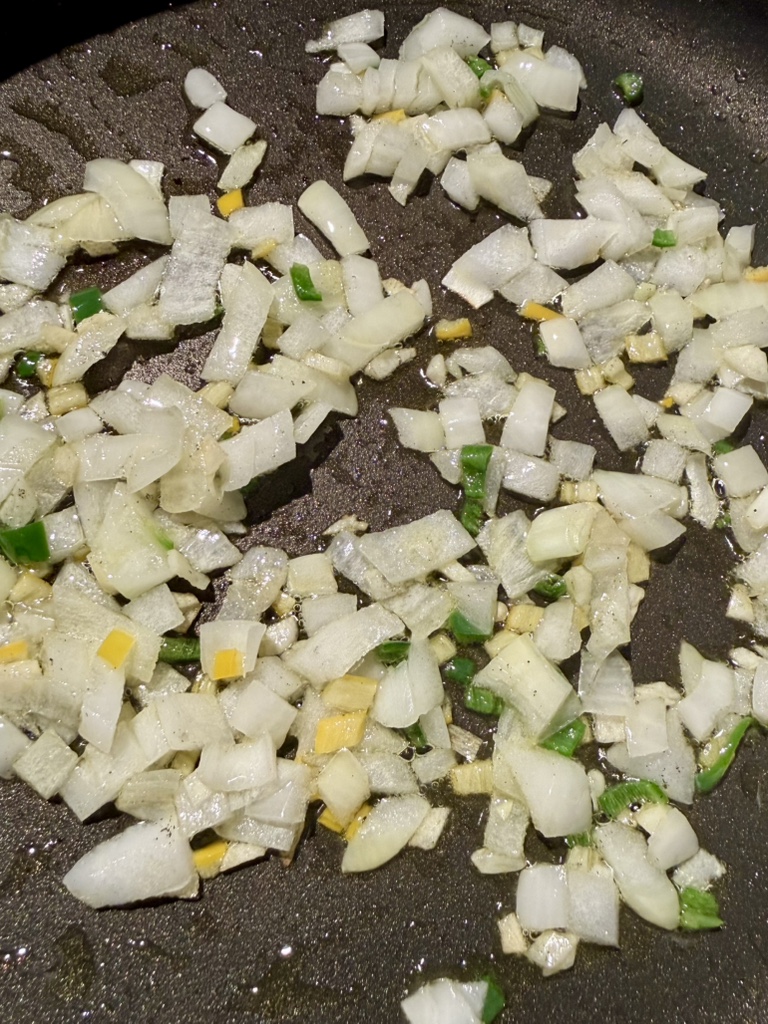
The noodles are pre-cooked, but should still be al dente. Chopped onion and garlic, as well as fresh chilli to taste, are sautéed in a little olive oil over medium heat until translucent.
Next, add firm vegetables such as peppers and courgettes, which are cut into pieces approximately 1 cm in size. Also add the salça to the pan and sauté the vegetables for about 3 minutes…
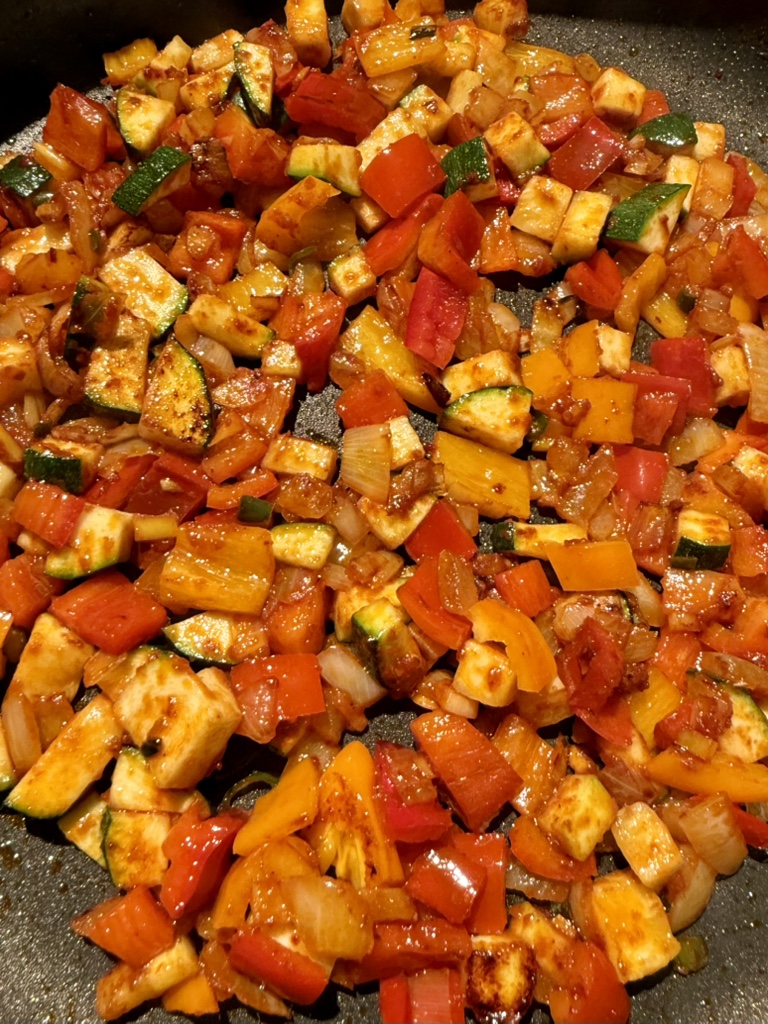
…before adding the softer mushrooms, which we have quartered. Now follow the dry spices.
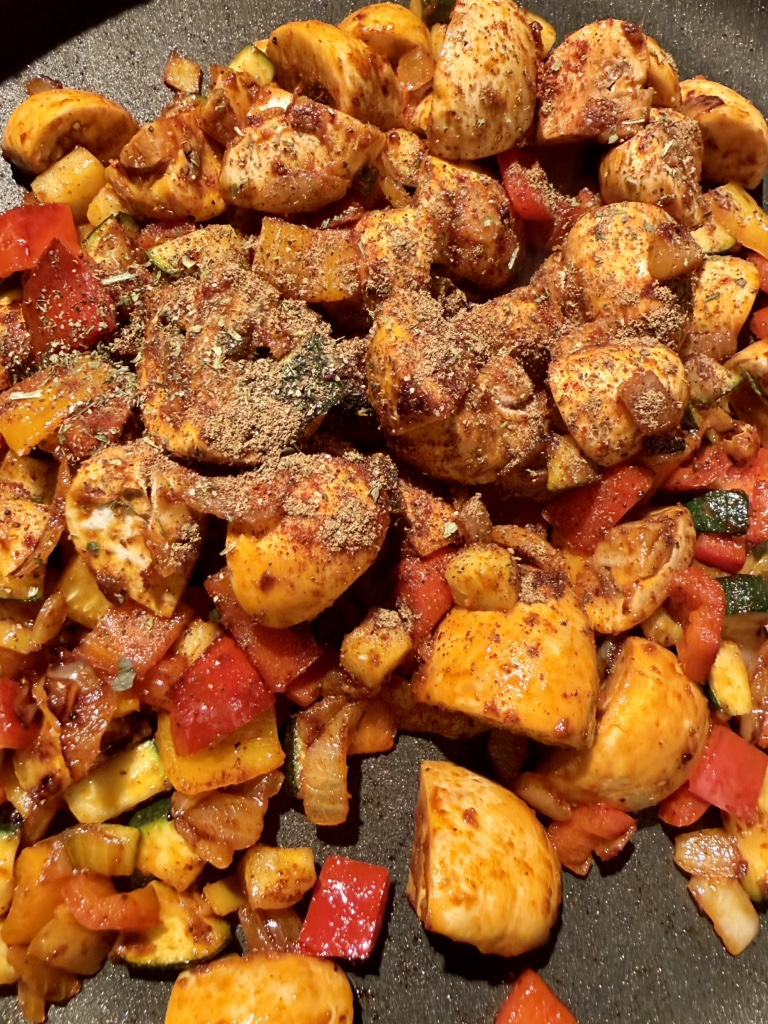
Over the next 3 minutes or so, the mushrooms lose their liquid and the other vegetables cook in it. Then we add diced tomatoes, which slowly melt in the heat. If it all seems too dry, simply add a little water.
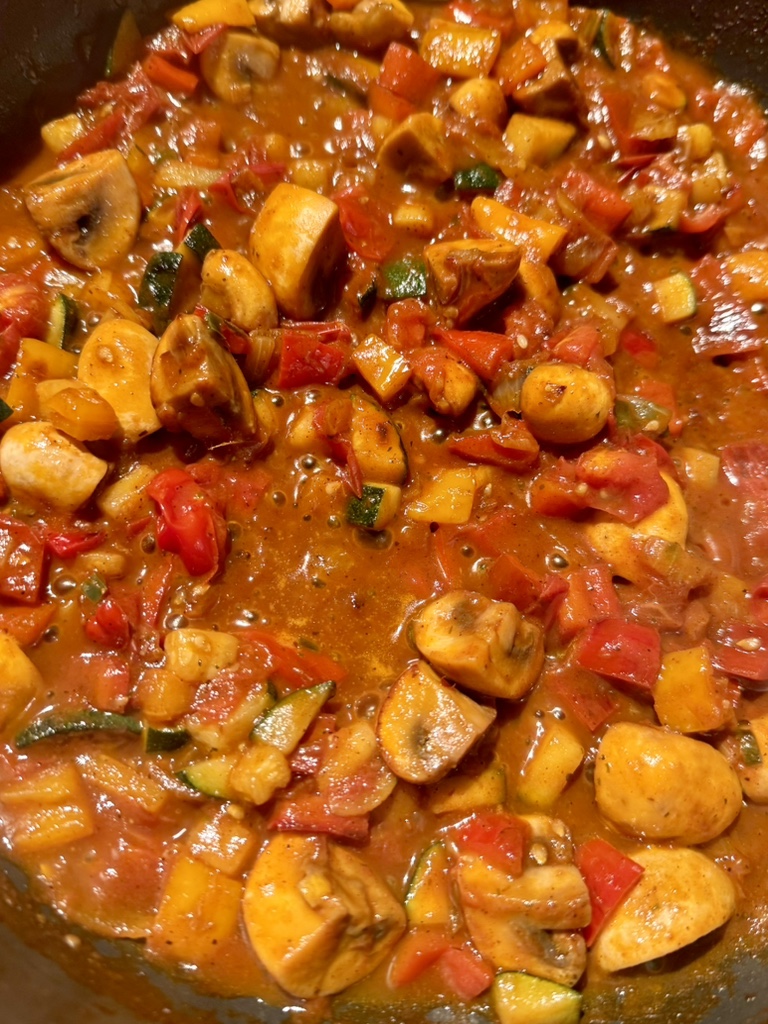
Season the sauce to taste and stir in the noodles. Turn off the heat so that they don’t continue cooking and become too soft, but leave them for at least 2 minutes to absorb the flavour of the vegetables.
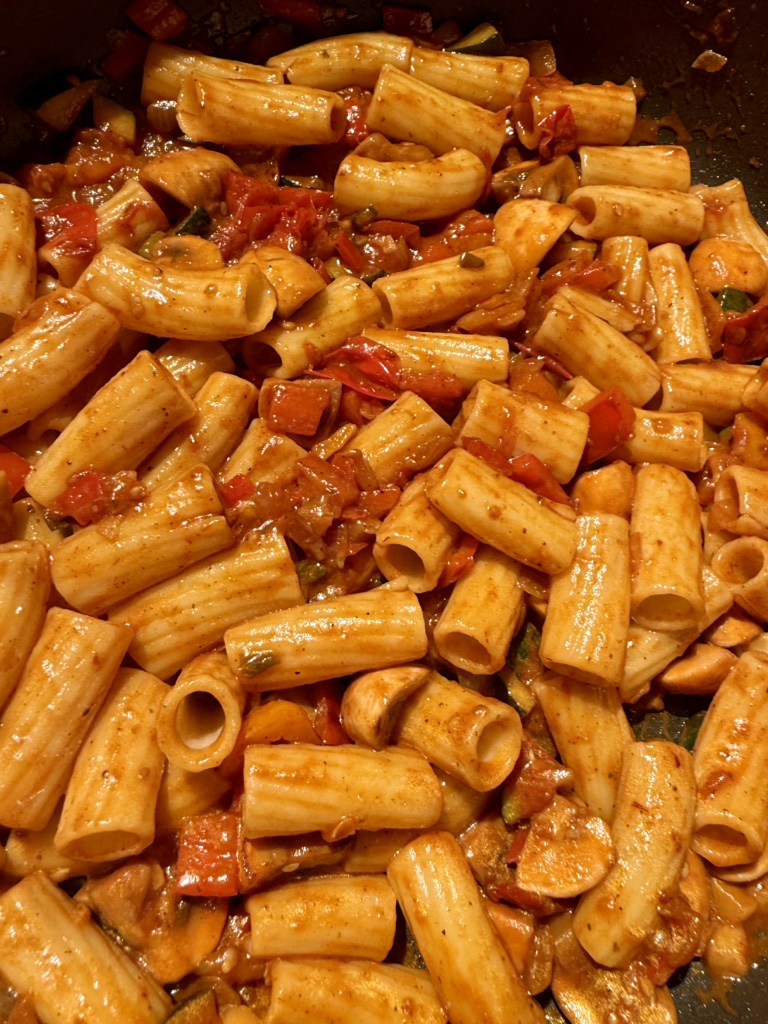
Sometimes the noodles are gratinated in portions with some cheese that melts well (fırında yoğurtlu makarna), as we recall from a Turkish restaurant during our student days. Today, we are foregoing the additional calories.
Yoghurt can be flavoured with finely grated garlic and a little lemon juice, but this is not essential. Parsley is chopped freshly. We also heat a little butter until it is liquid and then add some Aleppo chilli (Turkish: Pul Biber), which is a very typical combination in Turkish cuisine and one we have already described for the delicious breakfast dish Çılbır.
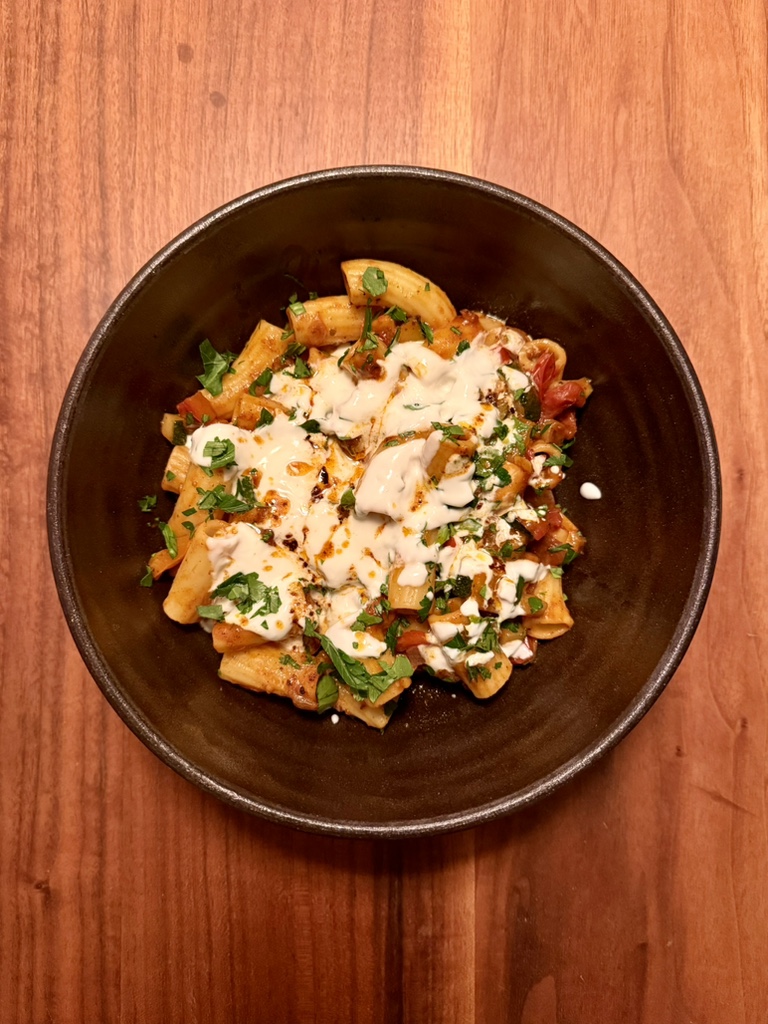
The veggie noodles are sprinkled with parsley and coated with a little yoghurt. We pour a little chilli butter over them for even more aroma. The result is a noodle dish with a difference. The cool yoghurt contrasts beautifully with the hot noodles and the spiciness of the vegetables, which is why it should not be mixed with the noodles.
Enjoy.
And may the taste be with you.
Ingredients (for 2 people):
240 g short tube-shaped pasta (e.g. tortiglioni, rigatoni or penne)
Vegetables base:
1–2 onions
2 cloves of garlic
1 fresh chillies (optional)
1 handful of tomatoes (alternatively: tinned tomatoes)
Optional vegetables:
1–2 colourful peppers
1–2 courgettes
1–2 handfuls of mushrooms
(and/or aubergine, artichoke, peas, green beans)
1 tbsp salça (alternatively tomato concentrate)
1 tsp baharat
1 tsp paprika powder
1 tsp dried mint
1 tsp oregano
Salt and pepper
Fresh parsley to taste
120 g yoghurt
Optional: 1 clove of garlic and/or a little lemon juice
2 tbsp butter
1 tsp Aleppo chilli (Pul Biber)
A little olive oil for frying