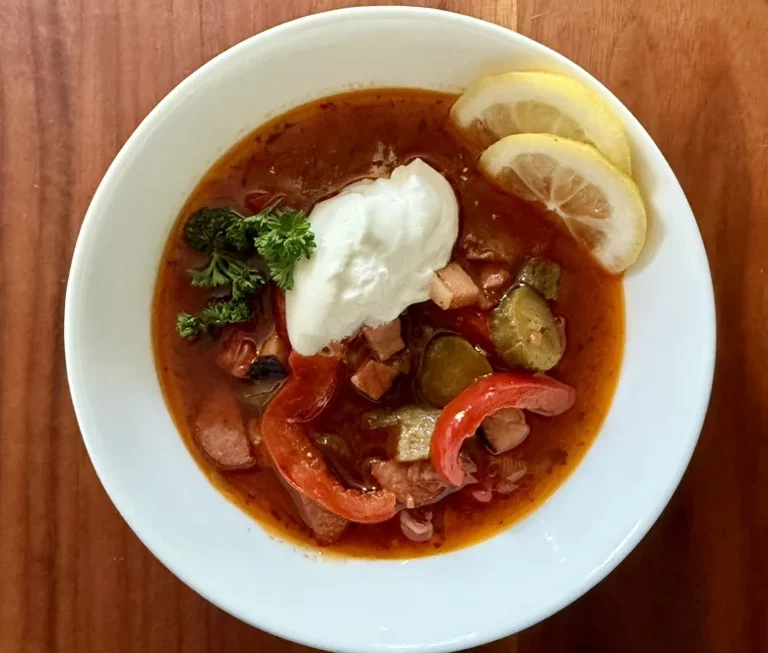
The name and the dish originate from Russia. There, solyanka is a traditional home-style soup, prepared in variations featuring meat, fish or mushrooms. It is made using a meat or fish stock as a base and derives its characteristic tang from pickled gherkins, gherkin brine, and olives or capers. At this point in time, we will refrain from further elaborating on Russia.
Due to the political and economic ties between the GDR and the Soviet Union, solyanka found its way into everyday East German cuisine in a modified form. In homes, workplace canteens and restaurants, the Russian original evolved into a unique local interpretation: a spicy soup made with whatever ingredients were to hand – a typical dish made from leftovers, quick to prepare.
The result differs from the Russian original in several key respects. The stock, which in the original is prepared using traditional methods over a long period of time, was replaced by instant stock or water. Olives and capers were omitted, which was probably due to their lack of availability. Instead, a central role was played by lecsó, a Hungarian paprika and tomato dish that could be bought in jars (and can still be bought in Germany today). Lecsó (or “letcho”) took on the role of the tomato component and gave the soup its characteristic sweet undertone, which is absent from the Russian original.
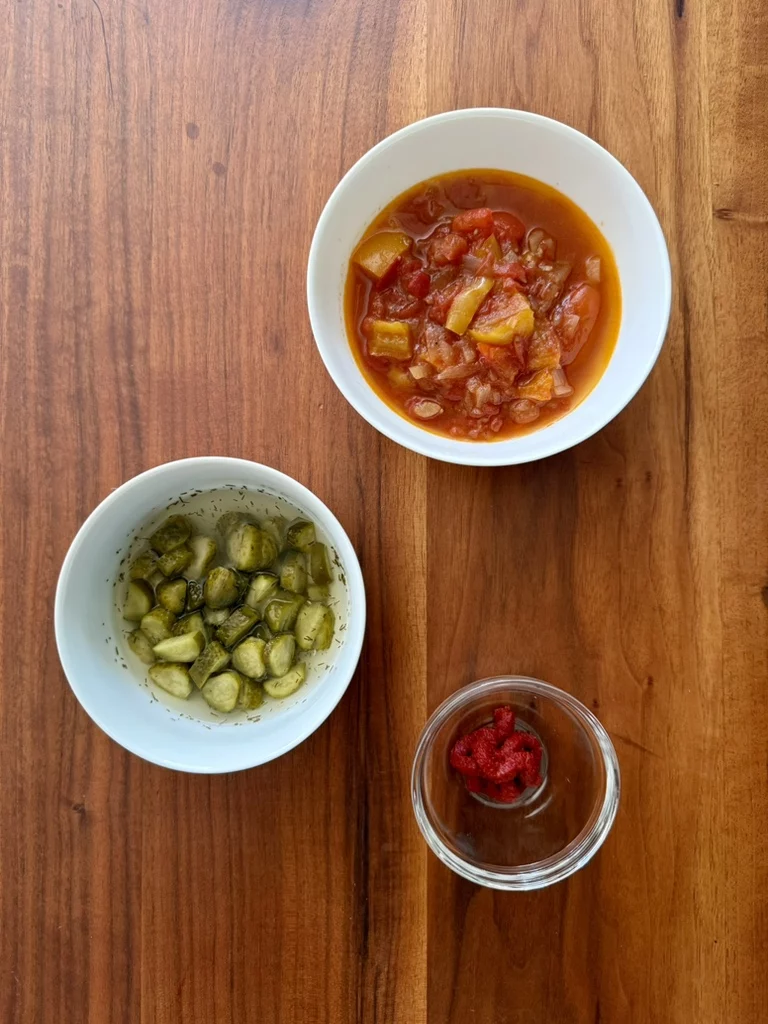
So, without letcho, there’s no East German solyanka. But don’t worry, because we’ve explained here how to easily make letcho yourself. It’s a simple but delicious dish that’s perfect for making in larger quantities and also makes a great side dish.
Following German reunification, the vast majority of Soviet influences disappeared from East German life. Solyanka is one of the few culinary relics of that era to have survived. Yet the GDR-style solyanka has evolved into a dish in its own right, with its unmistakable triad of sweetness, acidity and heartiness. The latter is provided by bacon, meat and sausage, or simply whatever leftovers can be found, all diced or cut into strips. Salami, Krakauer or “Jagdwurst”, as well as cured and smoked pork (such as “Kassler”), are typical ingredients (in the picture: Bavarian smoked pork – “Schwarzgeräuchertes”).
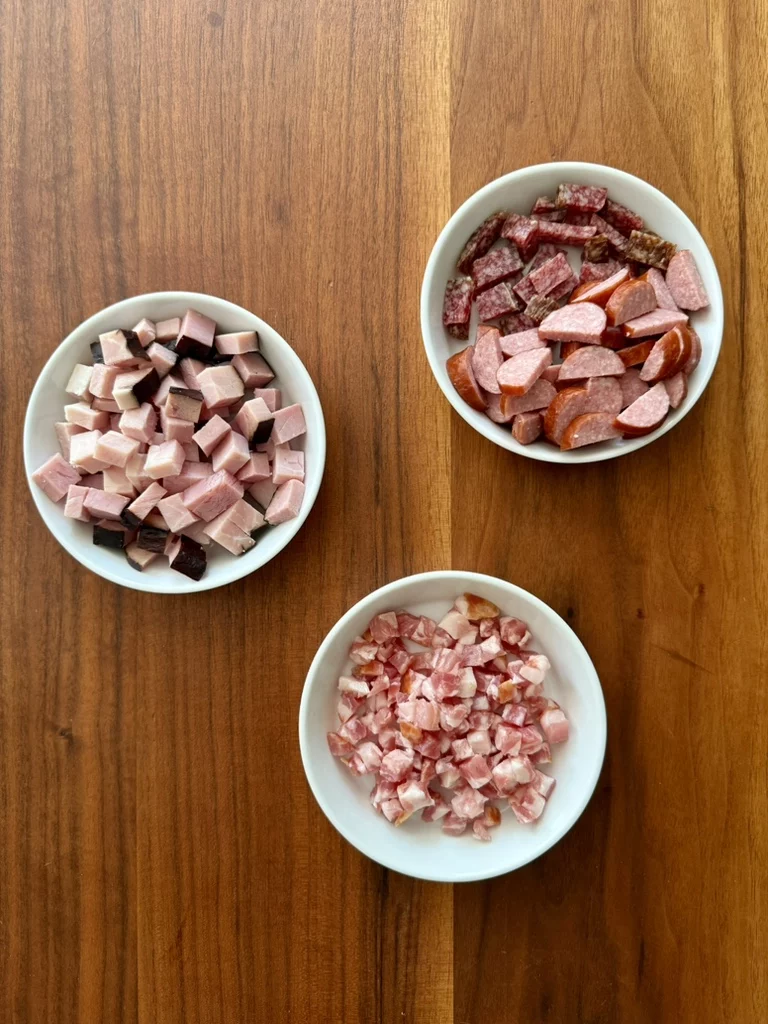
If you don’t want to eat that, you can use smoked tofu and mushrooms instead. It tastes really good, but it has nothing to do with the traditional dish. Whatever you choose to eat, do give the combination of letcho and gherkins a try – it’s an absolute treat for the taste buds (and, as such, vegan).
As well as lecho and pickled gherkins, solyanka needs a little of their brine and the rich flavour of tomatoes, which is provided by concentrated tomato paste.
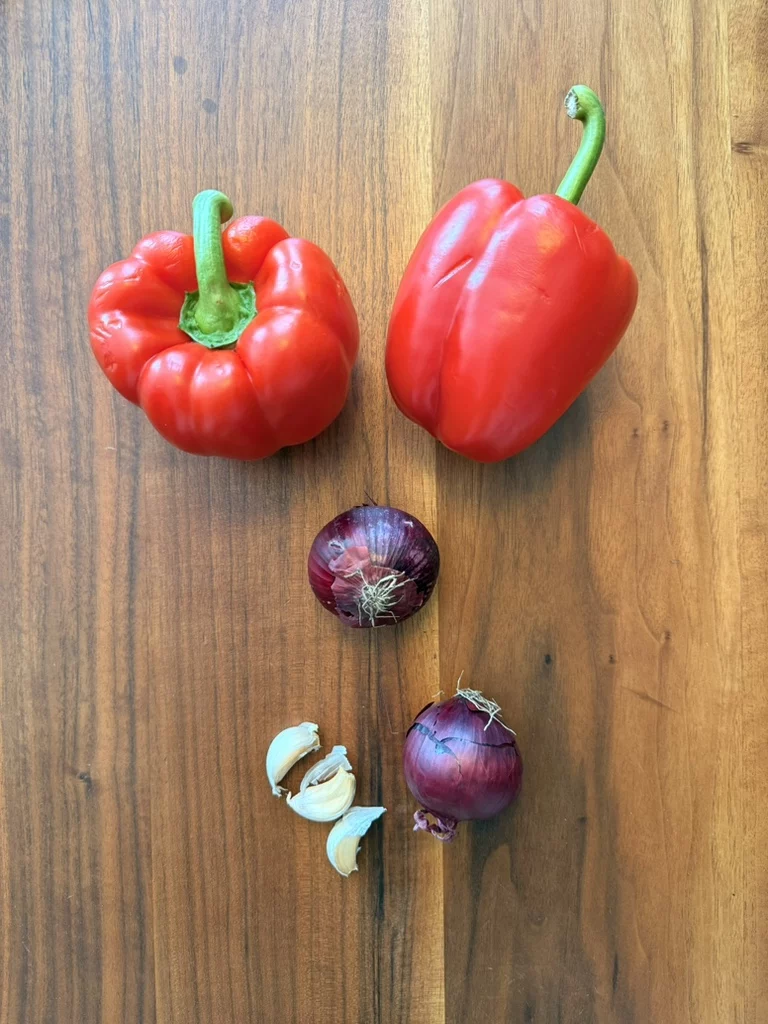
For vegetables, you’ll need onions, garlic and peppers. But solyanka is a dish made from leftovers, so feel free to get creative with the ingredients.
Important: Everything is cooked over a medium heat. This means it takes longer to cook, but it also gives you more control over the cooking process and, above all, allows you to extract more flavour from each ingredient, which is very important for a solyanka (and, like many stews, it actually tastes even better the next day).
First, the bacon is rendered; no extra fat or oil is needed for this. It’s fine if it browns a little.
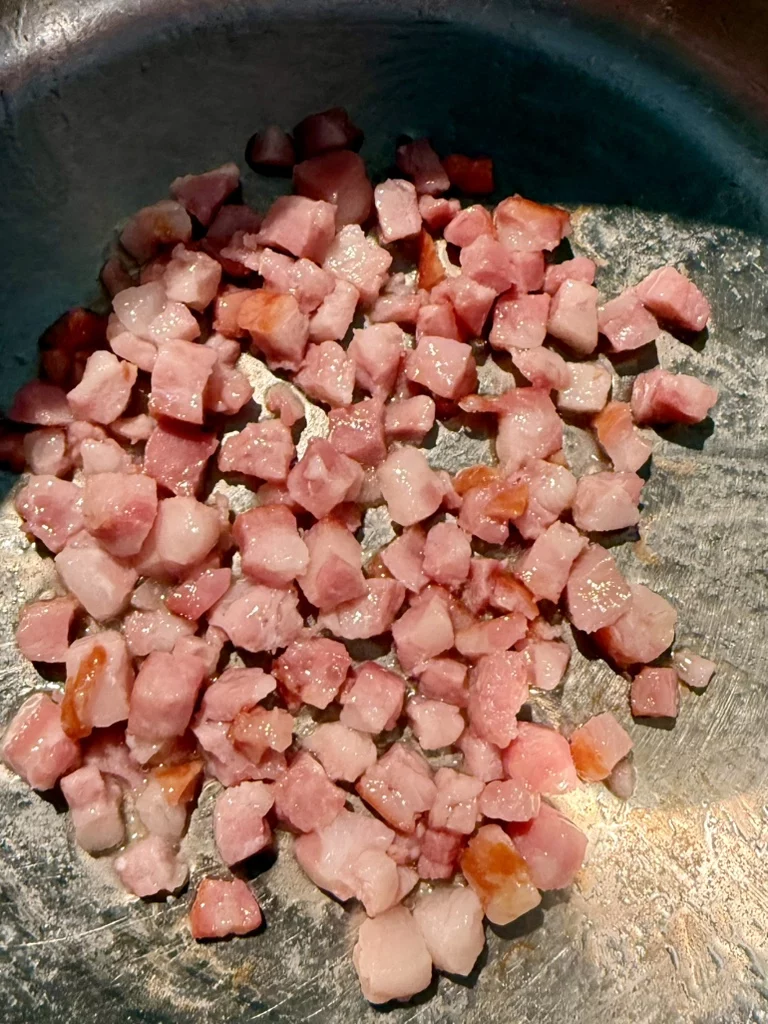
Add the chopped onion and fry until translucent. If you like, you can also brown it a little to bring out the roasting aromas. Only then do you add the other types of sausage and/or meat, as well as chopped garlic. Stir everything together and sauté for 3 minutes to allow the garlic to release its aroma. However, it’s best never to fry garlic for too long, as it will turn dark and bitter.
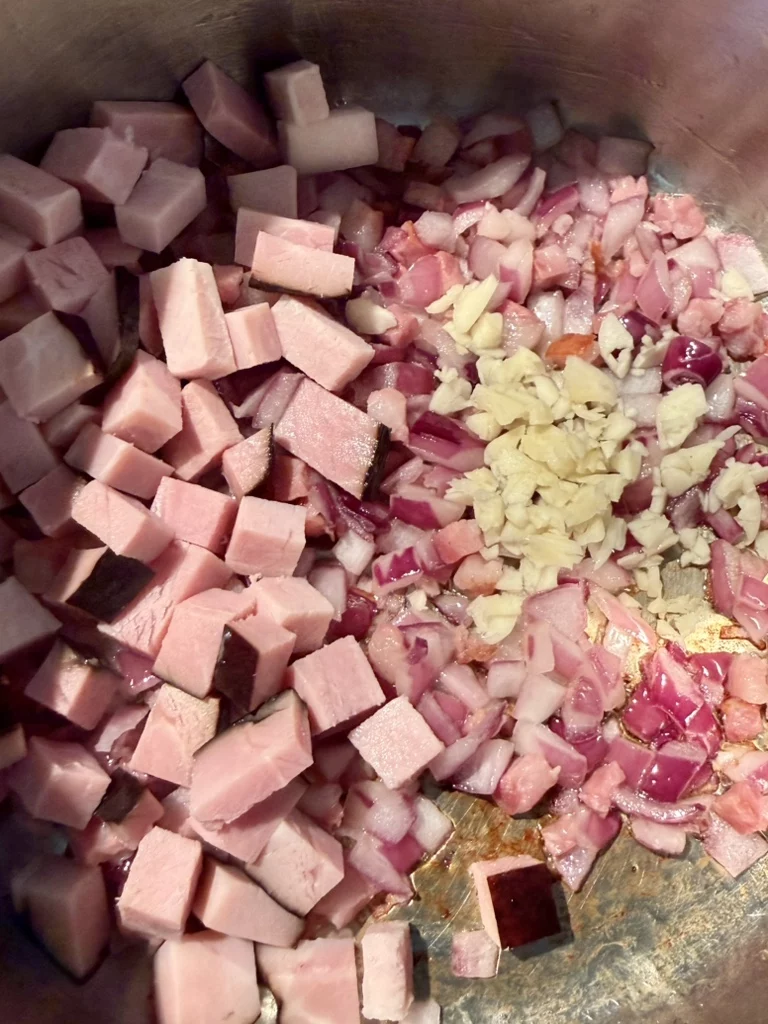
Make a little space at the bottom of the pan, where you can now lightly sauté the tomato paste. If there isn’t enough fat from the bacon, add a little neutral vegetable oil. Now season with sweet and hot paprika (or cayenne pepper).
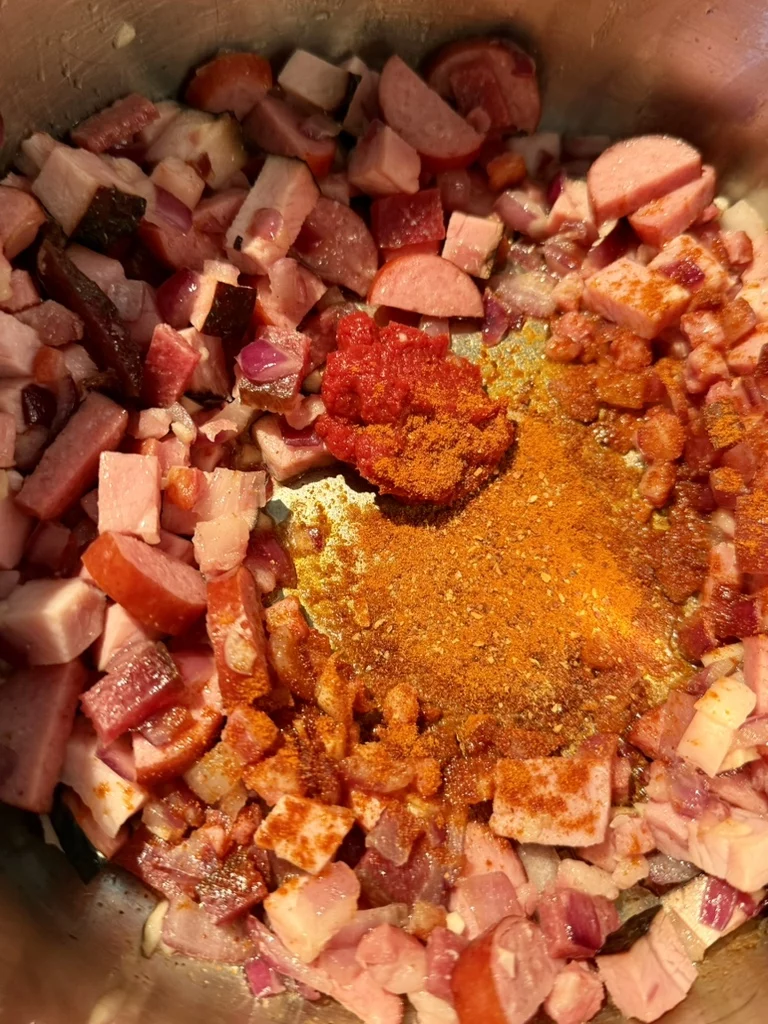
Continue stirring and coat everything with the tomato concentrate, then add the peppers, cut into strips, along with bay leaves for flavour, and sauté briefly…
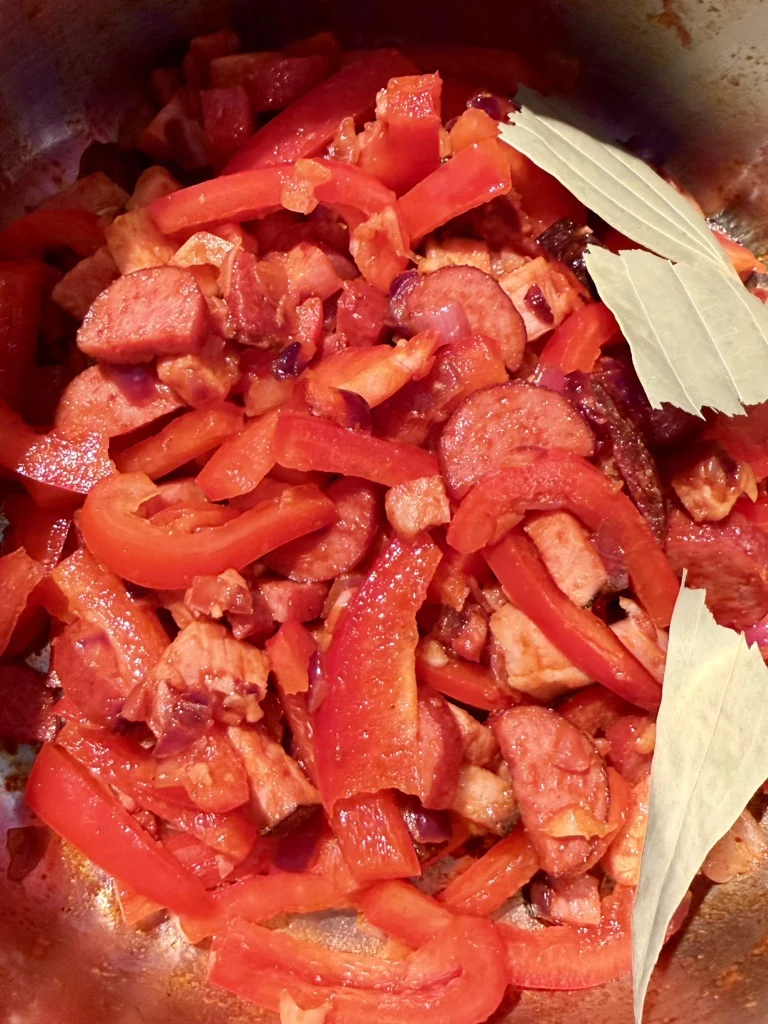
…before adding the gherkins and their brine, the letcho and stock (or water). We always use instant stock here, unlike, for example, in a vegetable stew that has been slowly and lovingly simmered.
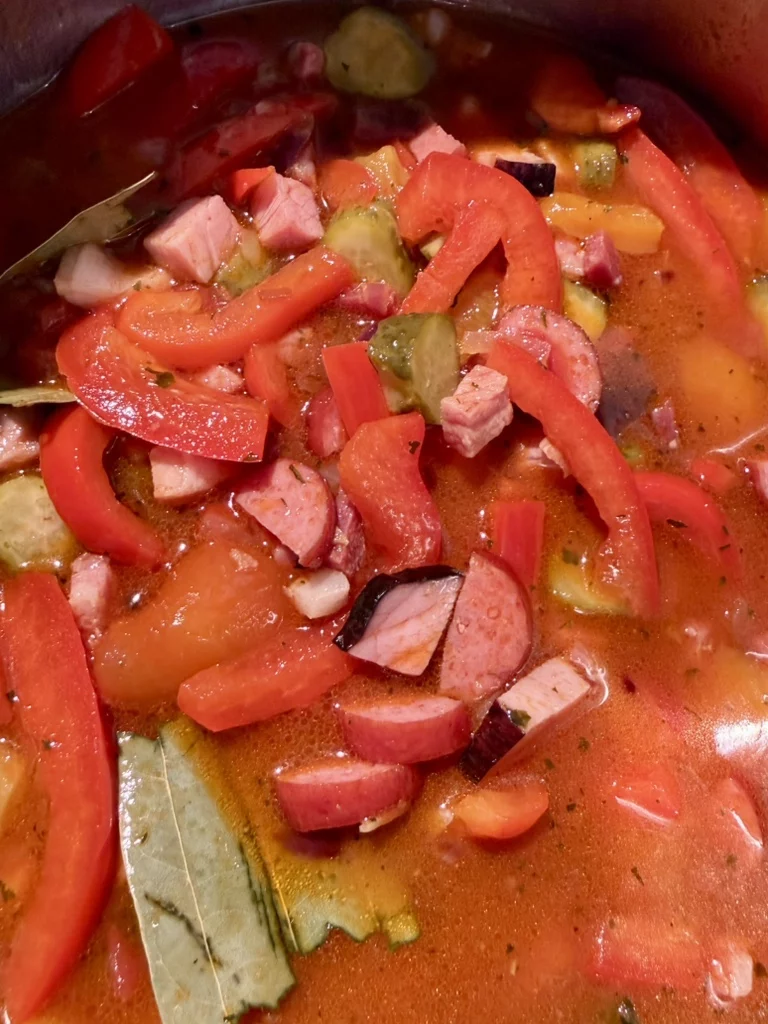
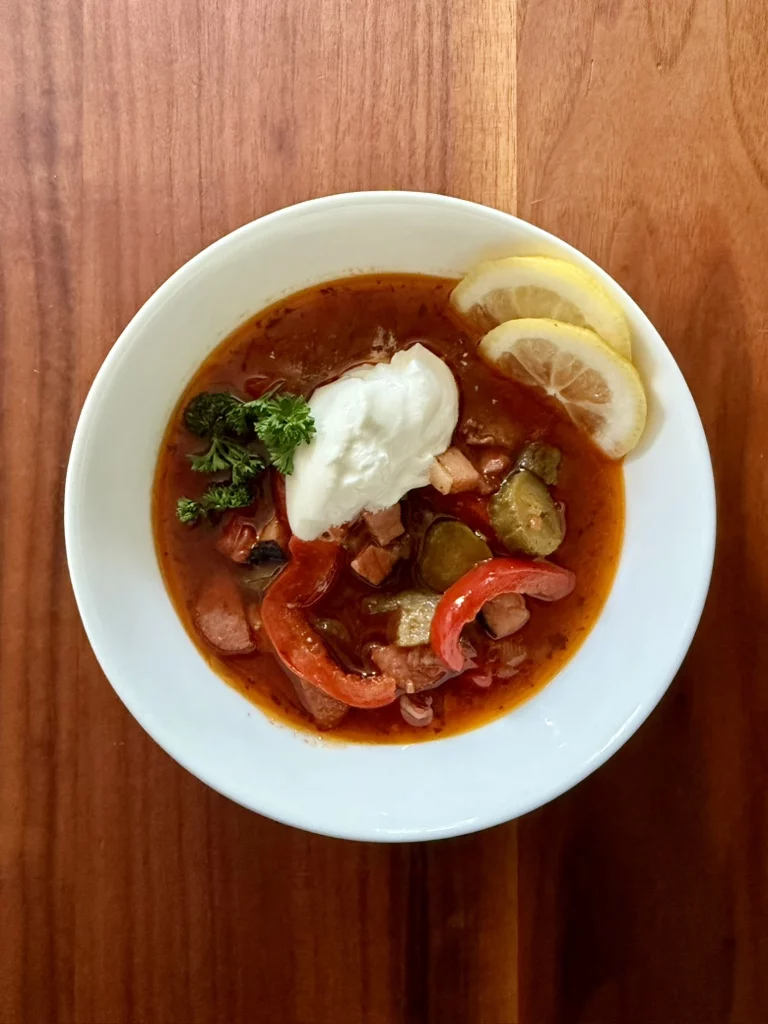
Let this simmer gently, uncovered and over a low heat, for 25 minutes. Then remove the bay leaves and season to taste with salt and pepper. Serve with the non-negotiable garnish of a slice of lemon and a dollop of sour cream. For us, a sprinkling of curly parsley is the perfect finishing touch.
Enjoy.
And may the taste be with you.
Ingredients (for 4 people):
Meat and sausages (typical examples):
60 g streaky bacon
100 g cured and smoked pork loin (“Kassler”)
100 g Jagdwurst, Krakauer or Kabanossi
60 g salami
Vegetables and herbs:
2 onions
3 garlic cloves
3 tbsp tomato paste
2 red peppers
120 g gherkins
100 ml gherkin brine from the jar
240 g letcho from a jar
Stock and spices:
1.2 l vegetable or beef stock
2 bay leaves
3 tsp sweet paprika
1 tsp hot paprika (or cayenne pepper to taste)
Salt and pepper
Optional: a little sugar and/or 4 allspice berries
To serve:
160 g sour cream
1 organic lemon, sliced
Optional: 2 tbsp fresh parsley (we use curly)
