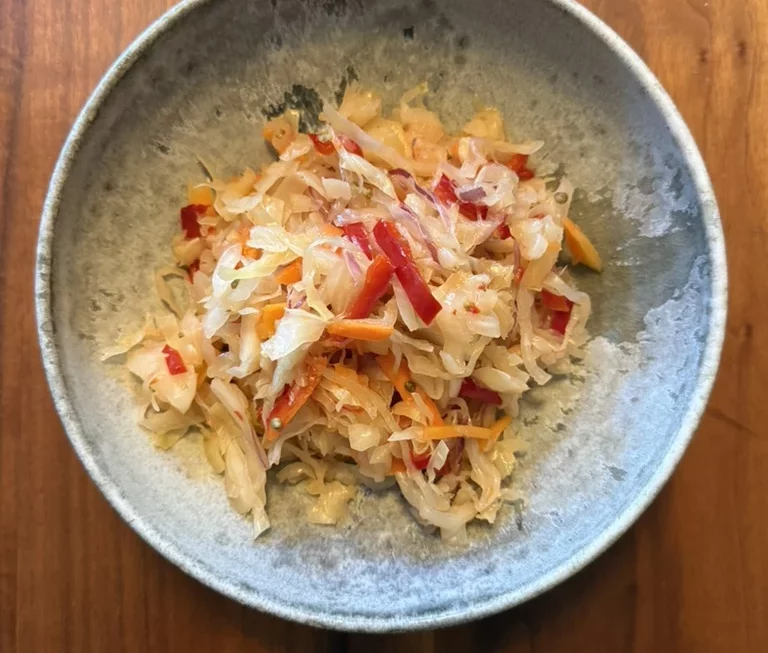
El Salvador is the smallest country in Central America and the only one situated entirely on the Pacific coast, with no access to the Caribbean. The people there are passionate about eating pupusas – thick, hand-shaped maize tortillas made from masa de maíz, which are filled before baking. No pupusa is complete without curtido – it balances their richness with freshness and tang, and every pupusería has its own version.
Curtido is a fermented cabbage salad with a flavour profile that is more distinct than kimchi’s, similar to sauerkraut, but considerably more varied.
Its origins lie in the ancient fermentation practices of the indigenous peoples of pre-colonial El Salvador. For them, fermenting vegetables was not a culinary pursuit, but a means of preservation without refrigeration. With Spanish colonisation came new ingredients – including cabbage and vinegar – which were incorporated into existing fermentation traditions, giving rise to the curtido as we know it today.
The name itself hints at the method: ‘curtido’ is derived from the Spanish word ‘curtir’, which means ‘to tan’. Just as tanning agents preserve animal hides, the combination of fermentation and acid preserves the vegetables.
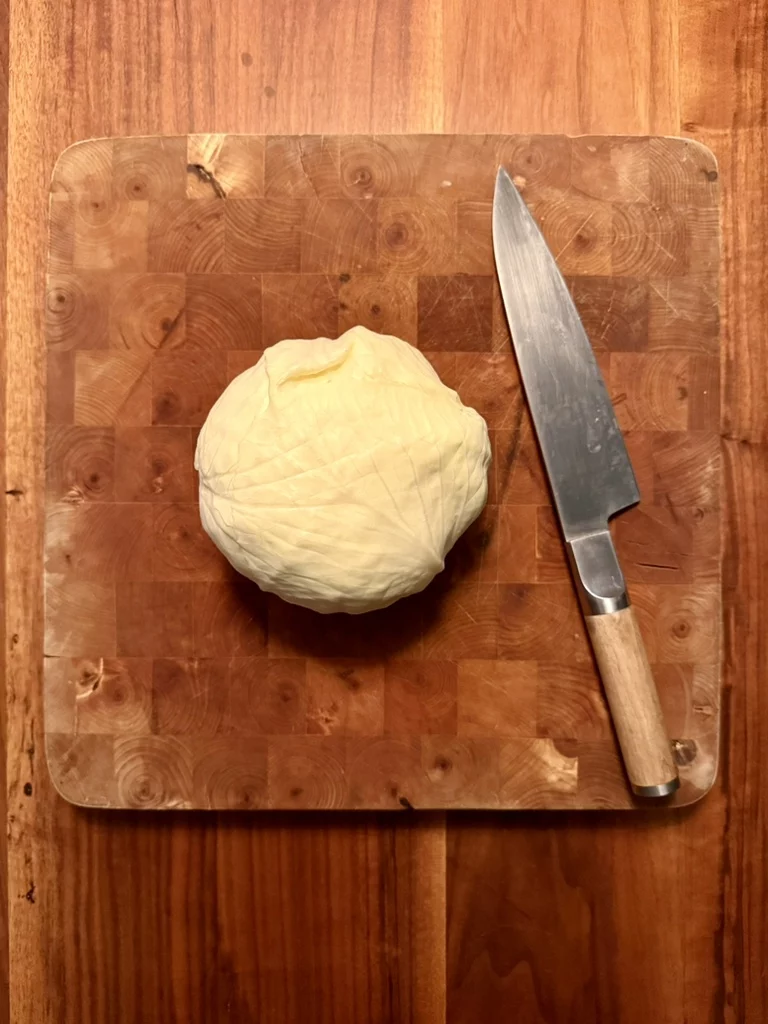
The main ingredient is cabbage. You can use white cabbage or hispi cabbage, but you can also use red cabbage or a mixture if you prefer. Napa cabbage alone would be too soft for this recipe. You can read here how to cut your cabbage perfectly for a coleslaw.
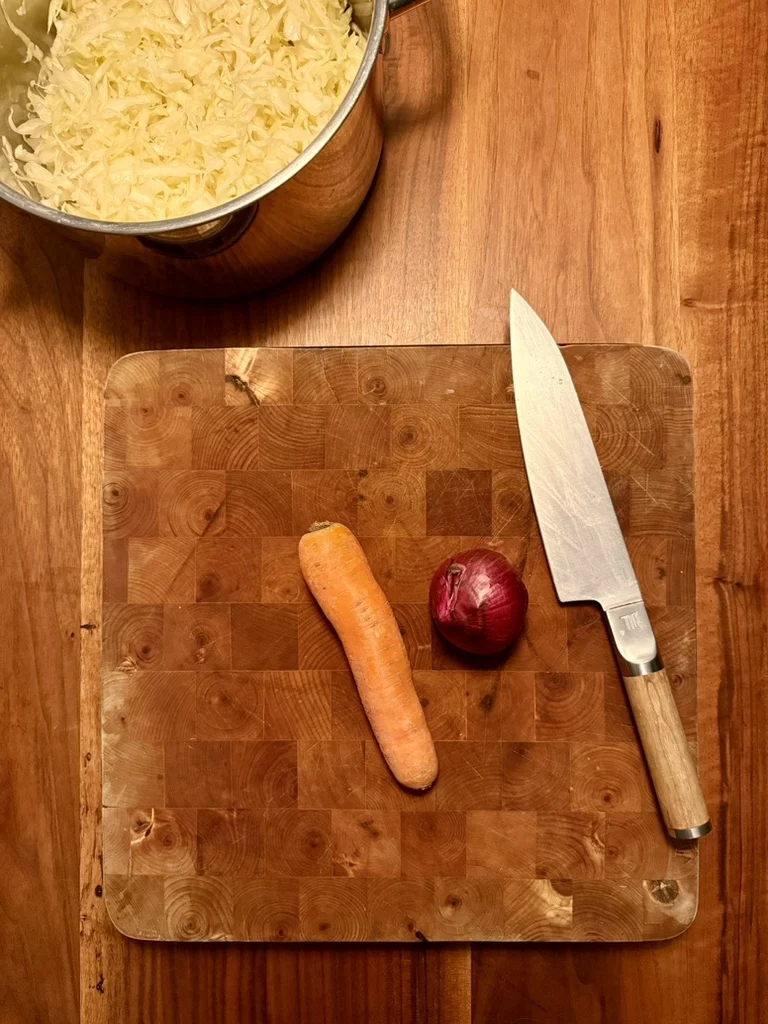
Other typical ingredients include carrots and onions. Depending on your preference, you can chop the carrots as finely as the cabbage, or grate them coarsely. Red onions add a nice touch of colour; they should be halved and sliced into thin half-moons.
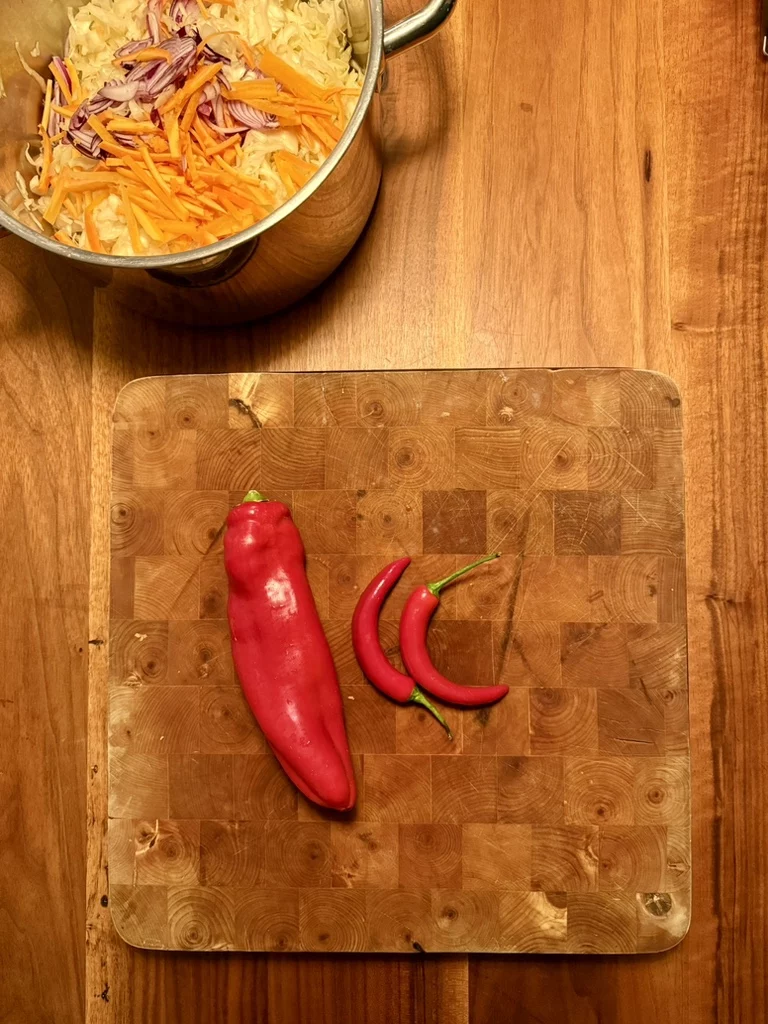
Fresh chilli, deseeded and finely sliced, adds further variety to the flavour. Jalapeños or serranos are typically used, but you can also use just sweet peppers, or a little of both, to adjust the heat.
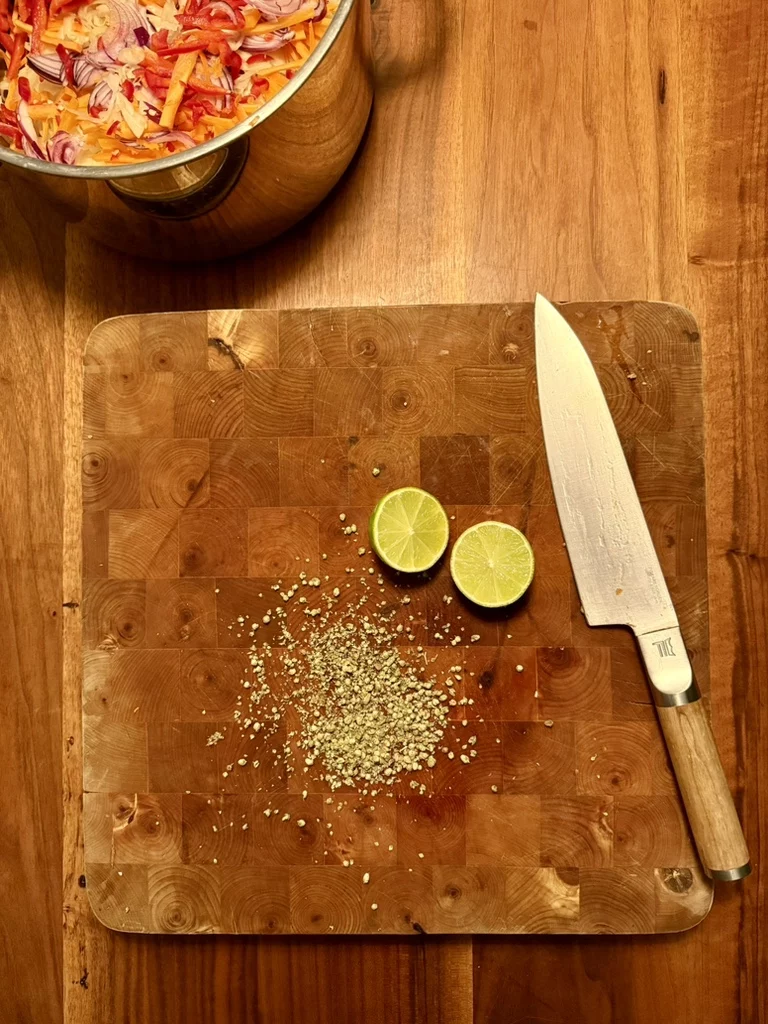
Dried oregano is also essential – the Mexican variety if you can get it, or Mediterranean if not.
Now the big question arises: lacto-fermentation or vinegar? Curtido is often prepared with vinegar, which makes it more like a salad or pickle. However, this does not come close to the depth of flavour and complexity of a fermented product. Lactobacillus bacteria convert the sugars in the vegetable juice into lactic acid, which creates the characteristic tang and preserves the product at the same time. Vinegar can at best imitate this flavour, whilst fermentation makes the dish far more nutritionally valuable.
So we don’t use vinegar, just lime juice and salt, and here we explain how to make fermented curtido.
The fermentation period typically lasts between two and five days, depending on the temperature and the desired level of acidity. This does not result in full fermentation, but rather in a partially fermented product – tangy and lively, whilst retaining the crunch of the fresh vegetables. This also makes curtido an excellent introduction to the world of fermentation, which should be approached in a methodical, cautious and gradual manner.
First, mix the chopped cabbage with a precisely measured amount of salt (see the measurements at the end of the recipe, as always) and knead it vigorously with your hands for a few minutes. The cabbage needs to be crushed and allowed to break down, after which it will quickly soften and start to release liquid.
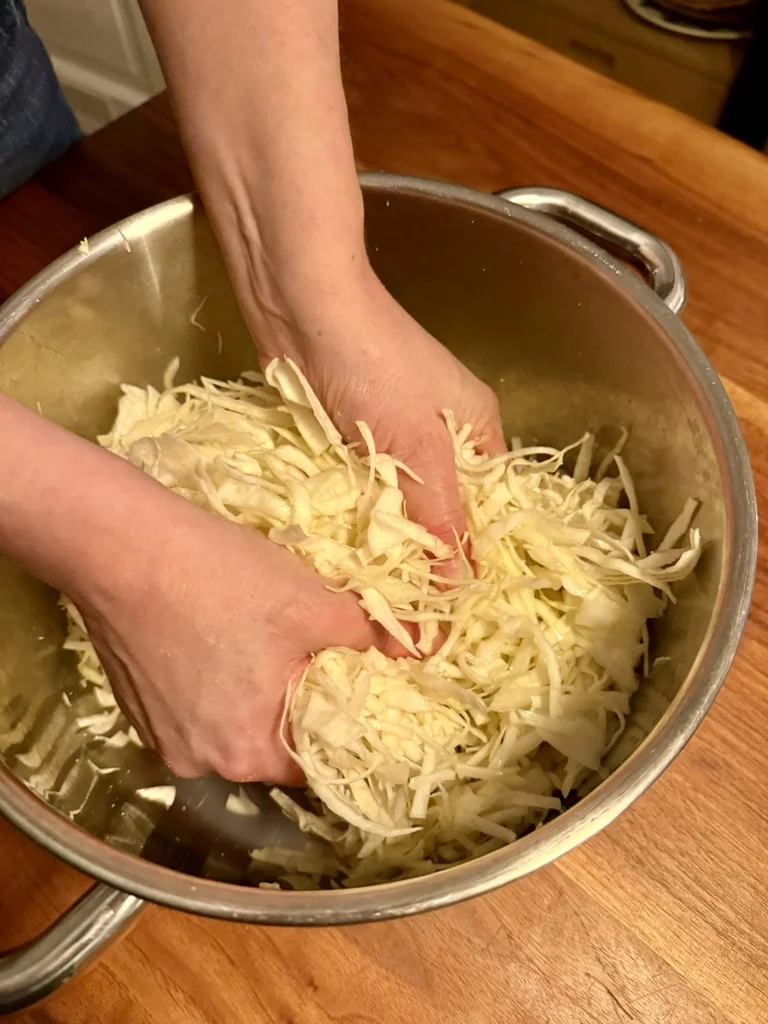
Only then do you add the remaining ingredients, in a container that is large and sturdy enough; we’re using a saucepan here, even though we won’t be cooking anything in it.
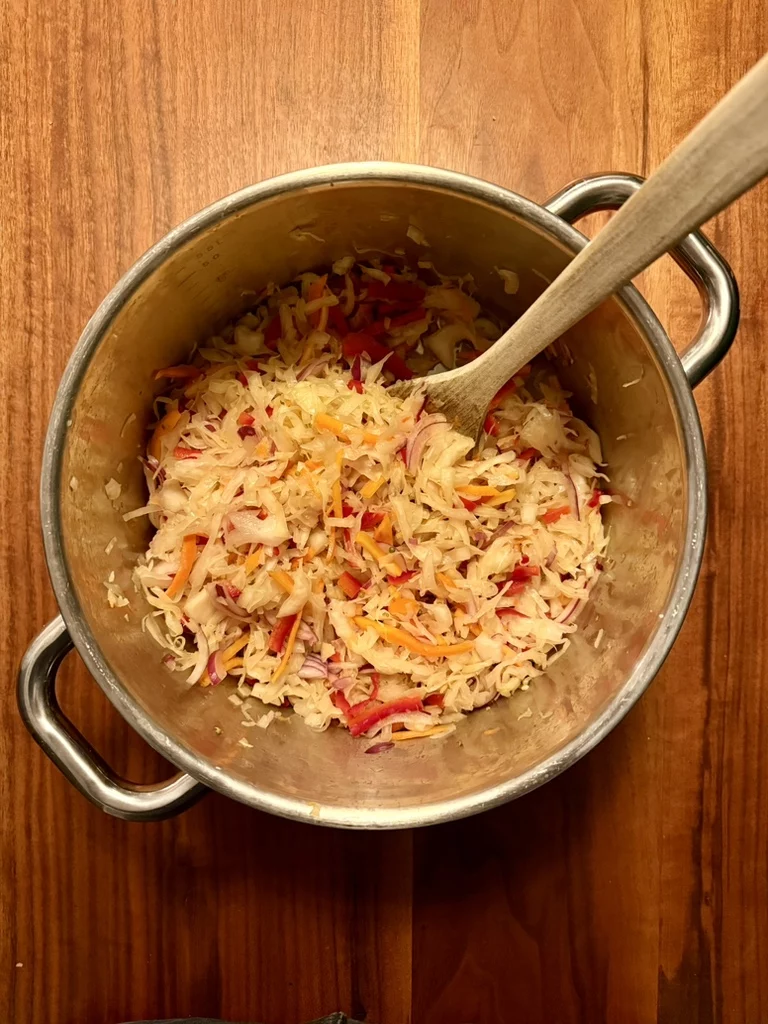
Using a wooden spoon, we now pound this mixture for a few more minutes, as if in a mortar, so that the vegetables release even more liquid as their cell structures break down. We then leave it to stand for half an hour to allow the salt to take effect.
During this time, we sterilise our fermentation container. You need a glass jar with a lid that does not seal completely. There are products designed specifically for fermentation, but we use a simple, thick-walled preserving jar. To kill any germs, boil it for 10 minutes in a pot of water or place it in the oven at 130 degrees Celsius for 15 minutes. After that, do not touch the inside of the jar.
Next, we put the vegetable mixture into the jar, pressing it down very firmly to compact it so that no air pockets remain. This step is essential to ensure that the vegetables ferment rather than spoiling. It is equally important that there are no solid pieces on the surface, or that these do not come into contact with the air. Instead, everything must be covered with liquid.
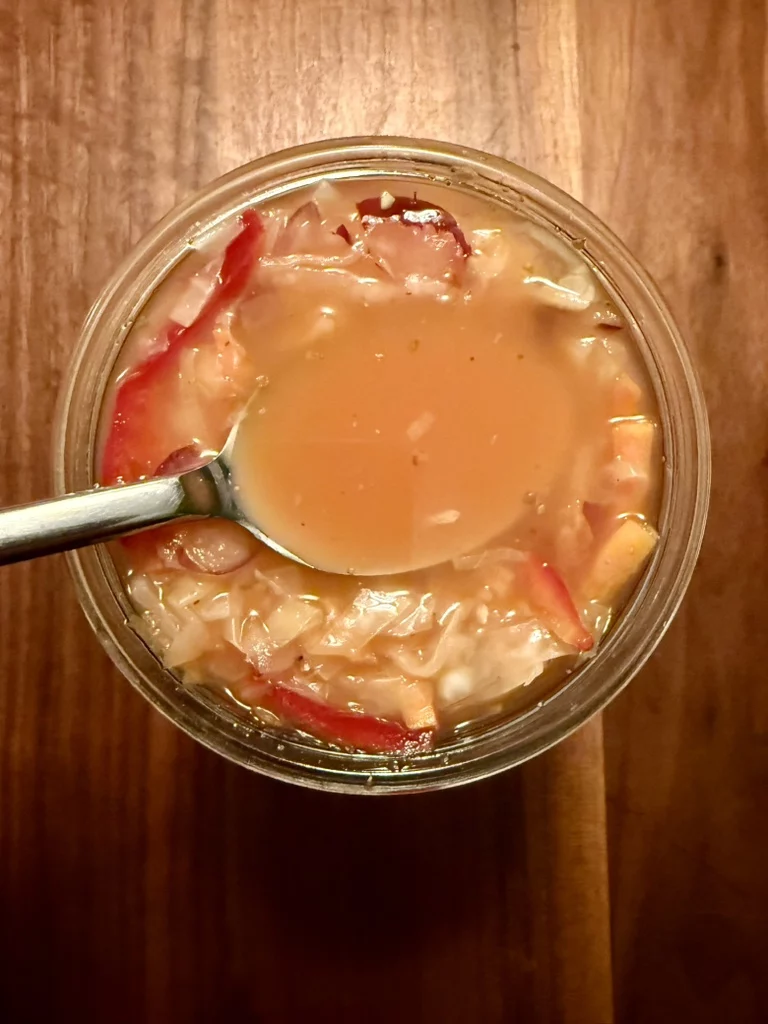
Cover the jar, but do not seal it tightly, as any gas produced needs to be able to escape. You should also place it on a (deep) plate in case anything spills over. Leave it to stand at room temperature – ideally between 18 and 24°C – but keep it out of direct sunlight.
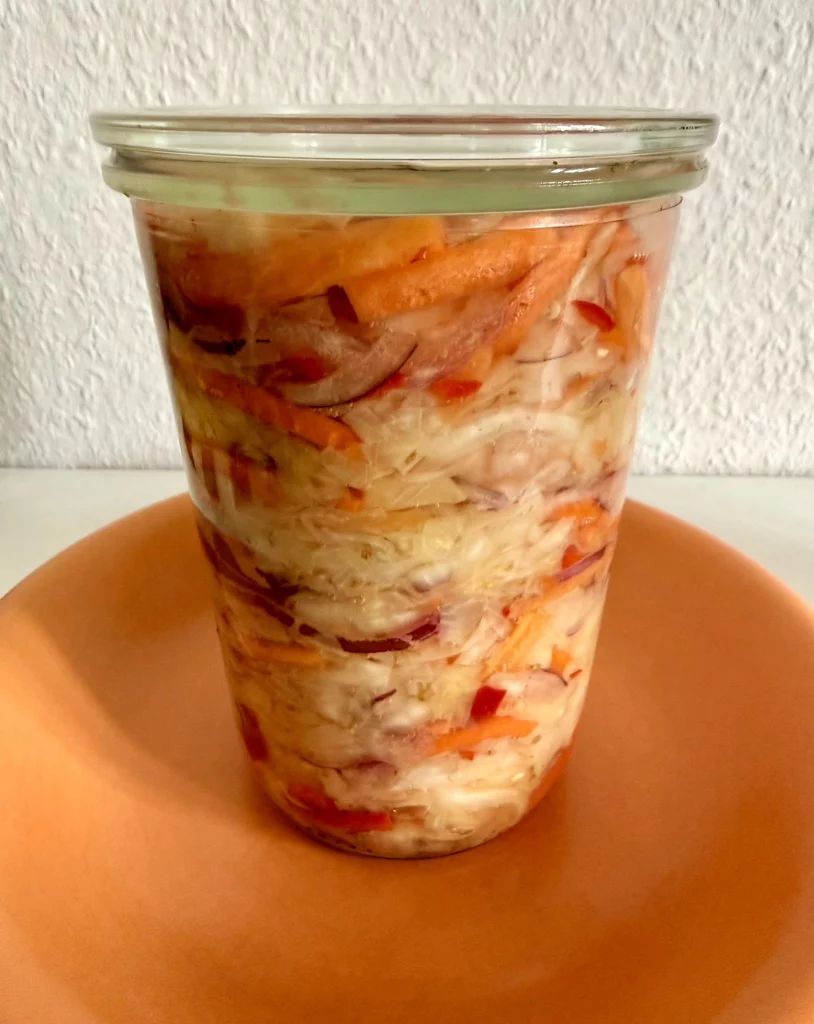
For our taste, two days isn’t enough, three is good, and four is even better. But it always depends on the environmental conditions, so just give it a try with a clean fork to see if it’s ready yet. If not, just leave it be.
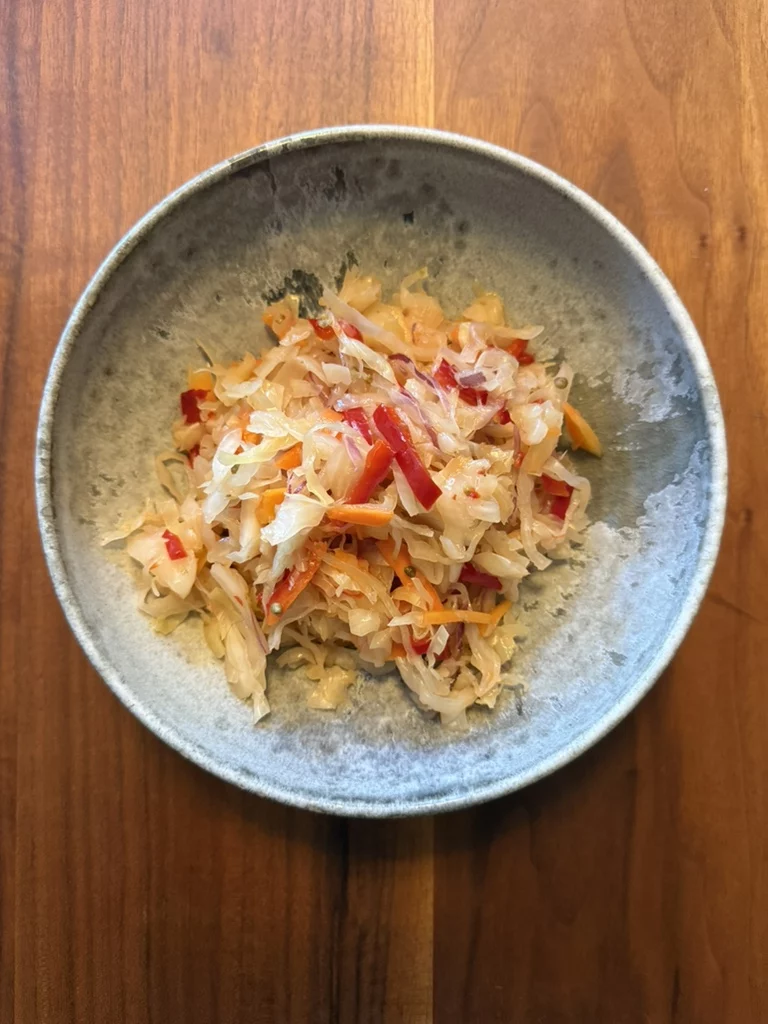
What you’ve ended up with is a spicy, tangy and crunchy flavour explosion that’s also packed with vitamins. You won’t find anything like it in the supermarket.
Once opened, curtido will keep in the fridge for weeks rather than days – the lactic acid produced during fermentation continues to act as a natural preservative. It is important to ensure that the vegetables remain submerged in the brine even when in the fridge, and to use only clean cutlery when removing them to avoid introducing any external bacteria.
Enjoy.
And may the taste be with you.
Ingredients (for a jar of 1.000 ml):
700 g white or hispi cabbage
15 g salt
150 g carrot
70 g onion (red or white)
2 chilis (e.g. serrano or jalapeño) and/or a little red paprika
100 ml lime juice
2 tsp dried oregano
