There are few communist countries these days. Laos is one of them. The people there are poor, and many things work very differently from what we are used to. This naturally applies to the cuisine as well, which differs from Thai, Vietnamese and Chinese cuisine and has a style all of its own. In addition, Laos took a very particular turn due to French influences in the former Indochina. In the beautiful city of Luang Prabang, there are therefore a surprising number of bakeries serving excellent croissants and baguettes, of which the locals are, quite rightly, very proud. Nevertheless, they feel like a foreign slice of Europe in an otherwise very poor country – a stark contrast.
We were really keen to discover the local cuisine through a cookery class, and we’ve rarely learnt so much in a single day. The Tamarind restaurant is perhaps the most authentic restaurant in the town, but the cookery class they offer doesn’t take you into the restaurant kitchen; instead, it takes you back to the origins of the dishes.
Early in the morning, we meet up at the restaurant, then we hop into a songthaew (a sort of cross between a bus and a tuk-tuk), which takes us first to the market just outside the city centre. We’d already been there on our own the day before, but today we’ll get to see more of it.
Just visiting the market is a unique experience – and not just in a positive sense. The vegetable market outside is certainly the most beautiful part. We’re given explanations about some herbs and vegetables we’ve never tried before, and we’re even allowed to taste them.
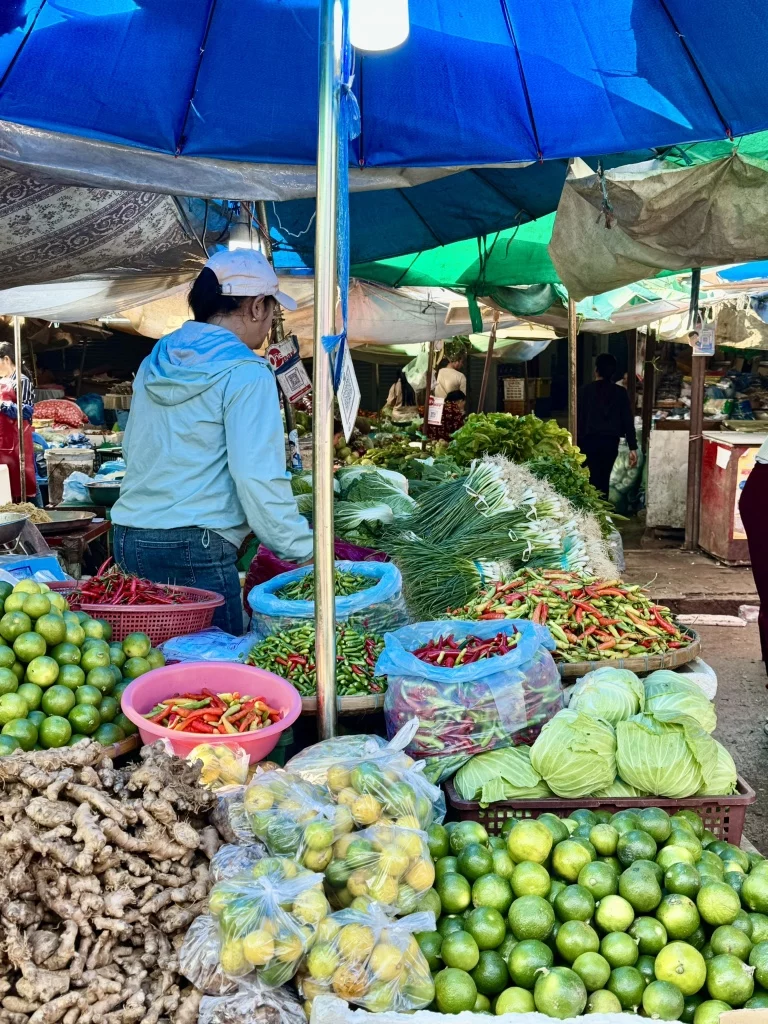
Mountains of herbs, mountains of incredibly hot chillies, limes and tamarinds dominate the low stalls. In between, there’s a small hairdresser’s right out in the open – this is a place where life is lived: children are playing in the background, and somewhere a rather funny Laotian pop song is blaring at full volume. It’s really, really cool; it puts you in a great mood and gives you a taste of what’s to come from the cookery school’s dishes.
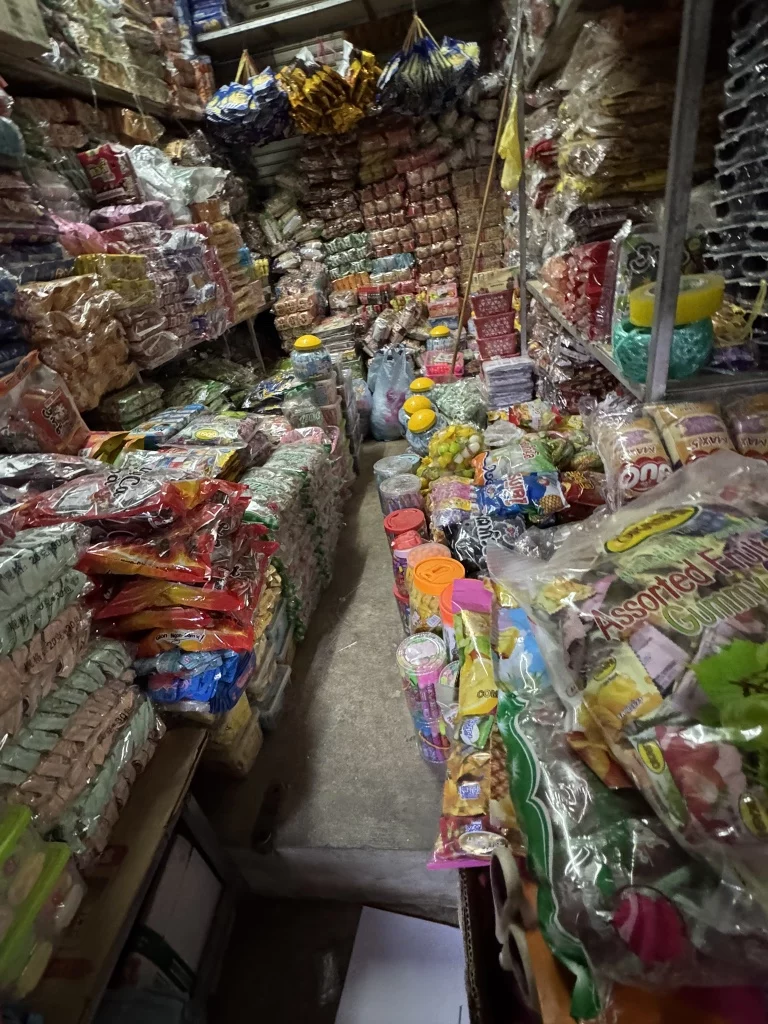
Then we head inside the market, most of which is covered. This is where China and rural Laos meet. Many stalls are crammed (and we mean that literally – right up to the ceiling) with the cheapest plastic goods – shoes, bags, toys and more – much of which would not meet European consumer protection standards. In amazement, we wind our way through the narrow aisles.
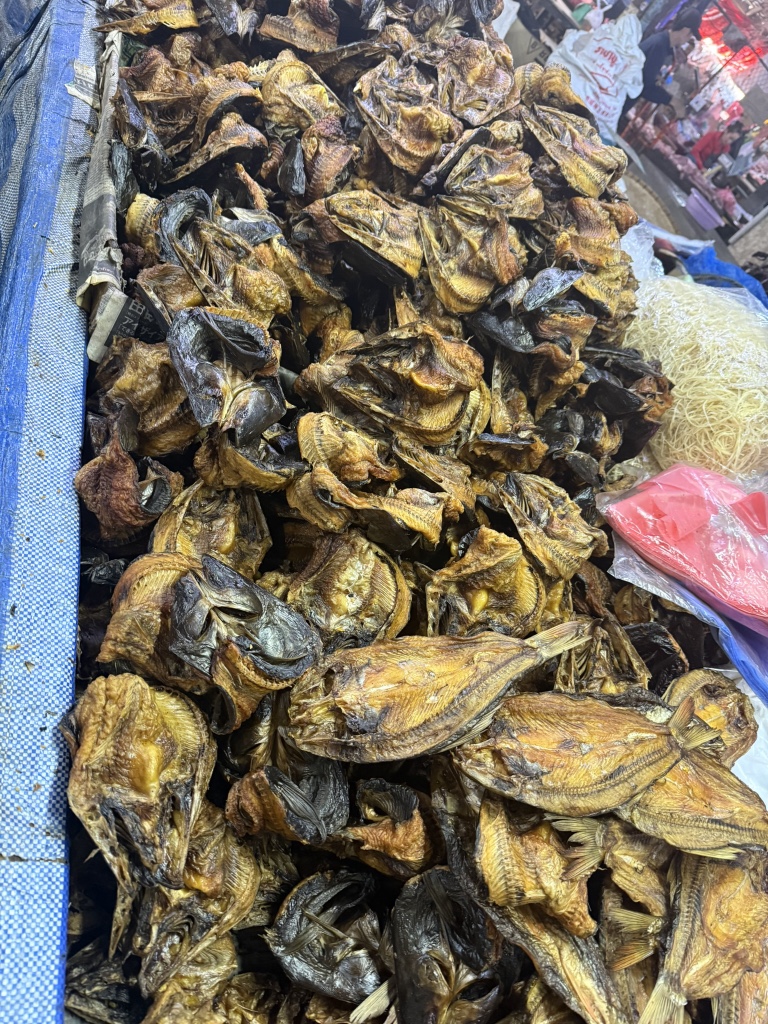
Things get really tough in the meat and fish section of the market, and we’ve been to quite a few wet markets in Asia. As mentioned, Laos is poor. Very poor. This means that pretty much every available source of protein is eaten and used, no ifs or buts – regardless of the animal or which part of the animal it is. Anything that is no longer quite fresh or doesn’t taste good for some other reason is singed or dried and used in soups. Nose to tail – but with all the trimmings. Buffalo feet with fur and hooves, dried frogs and charred squirrels. Out in the countryside, we saw other things too. The hygiene standards, particularly when handling raw meat, really pushed us to our limits. That much is clear.
We very much hope that the cookery course won’t do the same. Visiting the market was important nonetheless, because it’s the only way to understand how people in Laos cook and eat. Afterwards, we decided not to eat any more meat in Laos and have remained vegetarian from the day after the cookery course. What we Europeans just find acceptable is very valuable to the people there, whilst we take it for granted – that’s not right.
The meat we used in the cookery school, by the way, was absolutely safe, tasty and wonderful. But that’s also a concession to us luxury-spoilt visitors and after our visit to the market, we realised that.
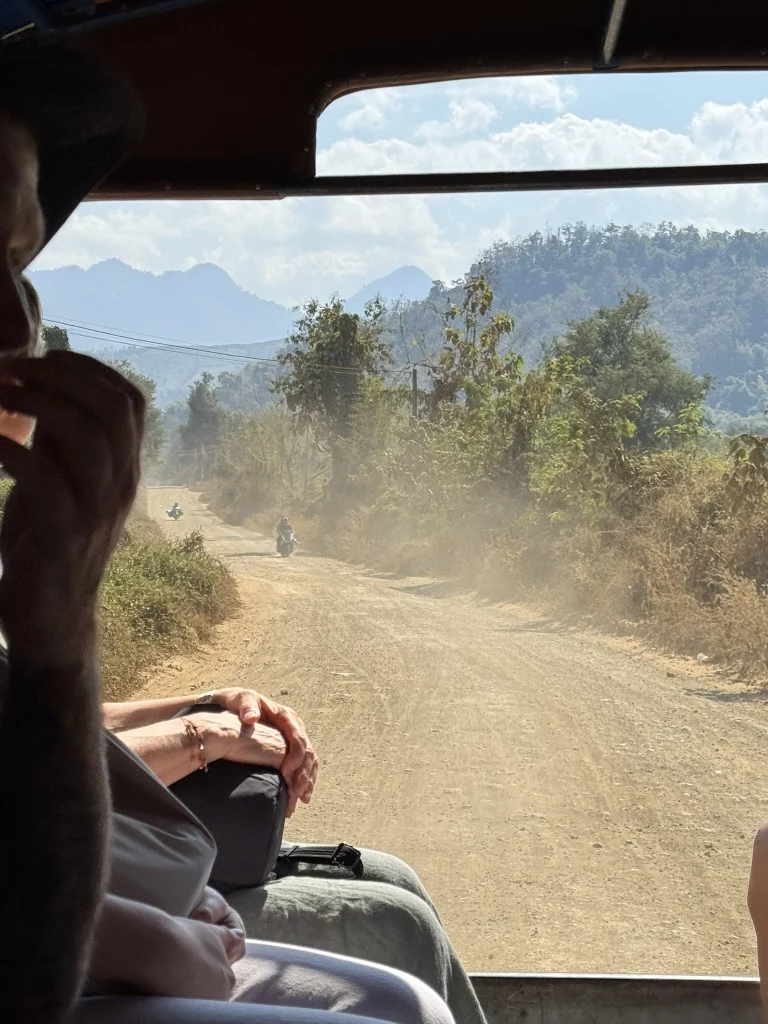
After that, we continue for quite a while further out of the city and into the jungle in the rumbling songthaew. We rattle our way through lush countryside on dusty tracks and over deep potholes.
And then we stop off at a little patch of paradise. The Tamarind Cooking School has created a wonderful space out in the bush; wooden steps lead up to a covered area with spotlessly clean workbenches, flanked by well-tended herb beds.
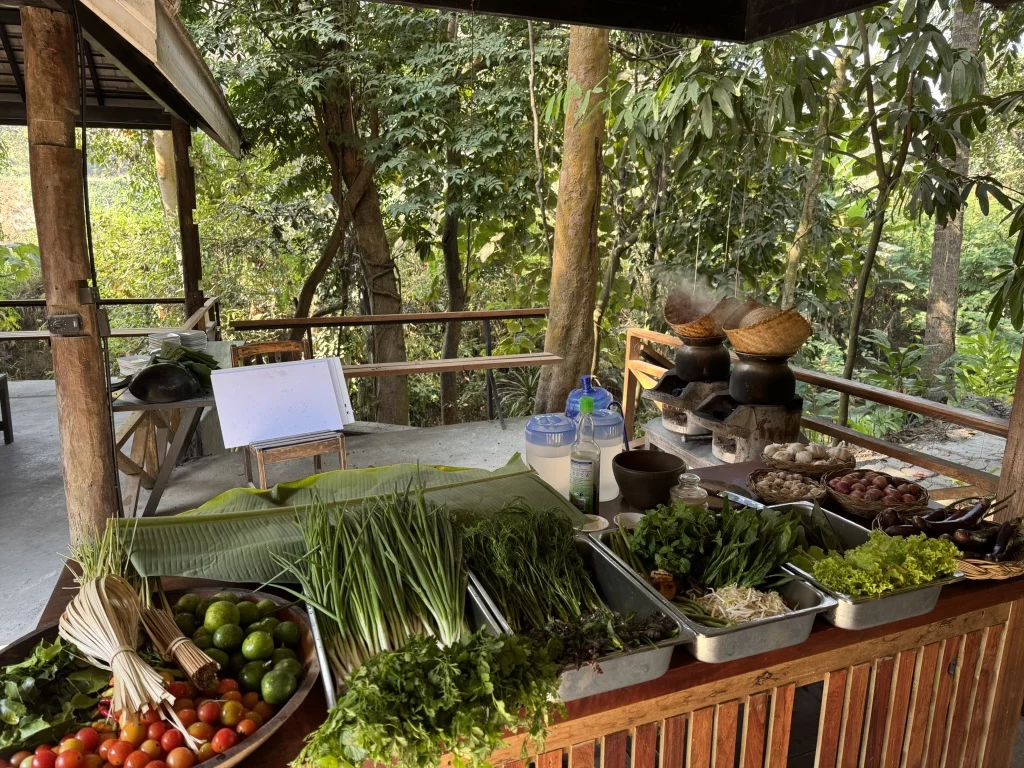
All the cooking is done exclusively over an open fire. There are several fire pits, and Sit, the chef, shows us around.
The most important tools are waiting for us at our workstations. As well as the usual items – chef’s knives and so on – the most important of these is a large mortar, which is absolutely essential for many Laotian dishes.
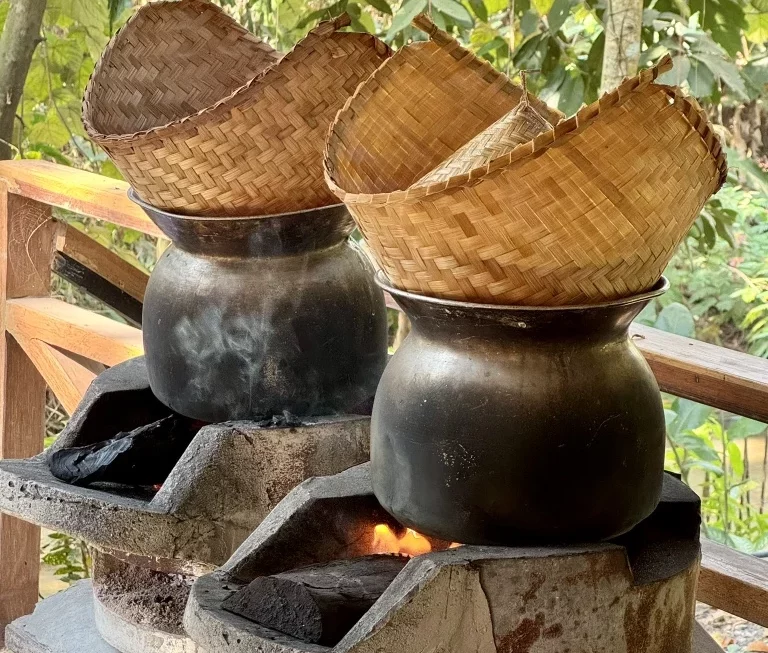
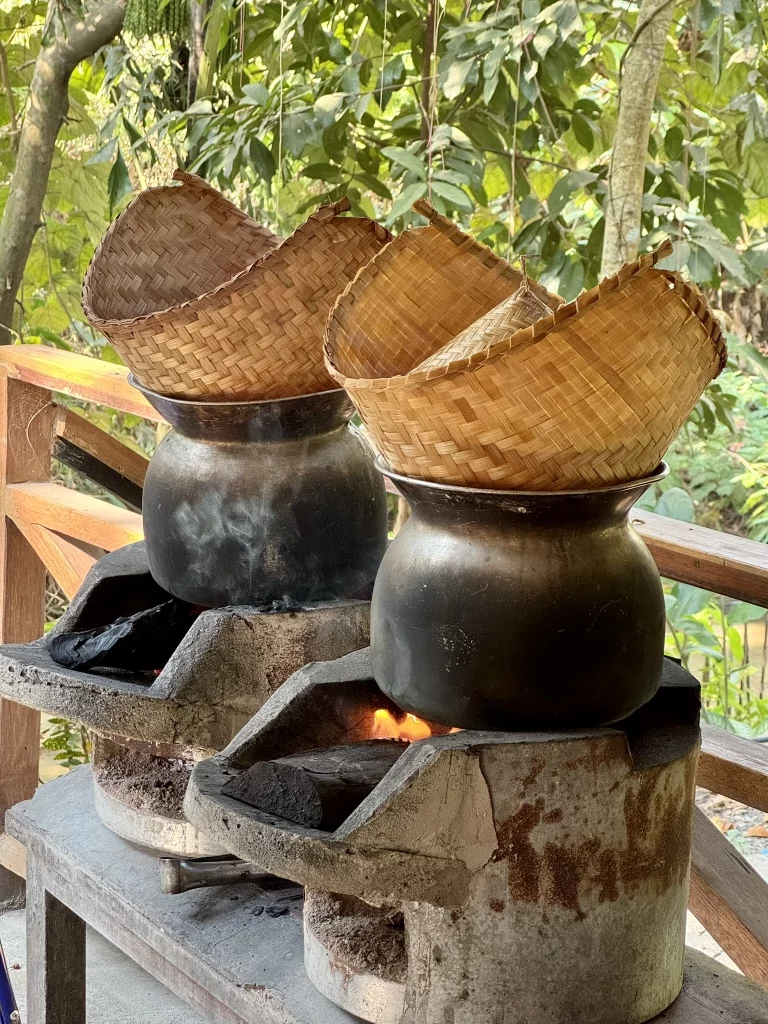
Rice – which in Laos is always sticky rice – is perhaps the most important staple food. The Laotians therefore sometimes refer to themselves as “luuk khao niew”, which means “children of the sticky rice”. This rice is also prepared in a special way, namely by steaming. The rice is washed thoroughly and then hung in bamboo baskets over the steam. This takes a while – at least 30 minutes – and is therefore done first.
The first dish is a spicy aubergine dip. The long aubergines are first roasted directly over the fire until they are completely charred and black.
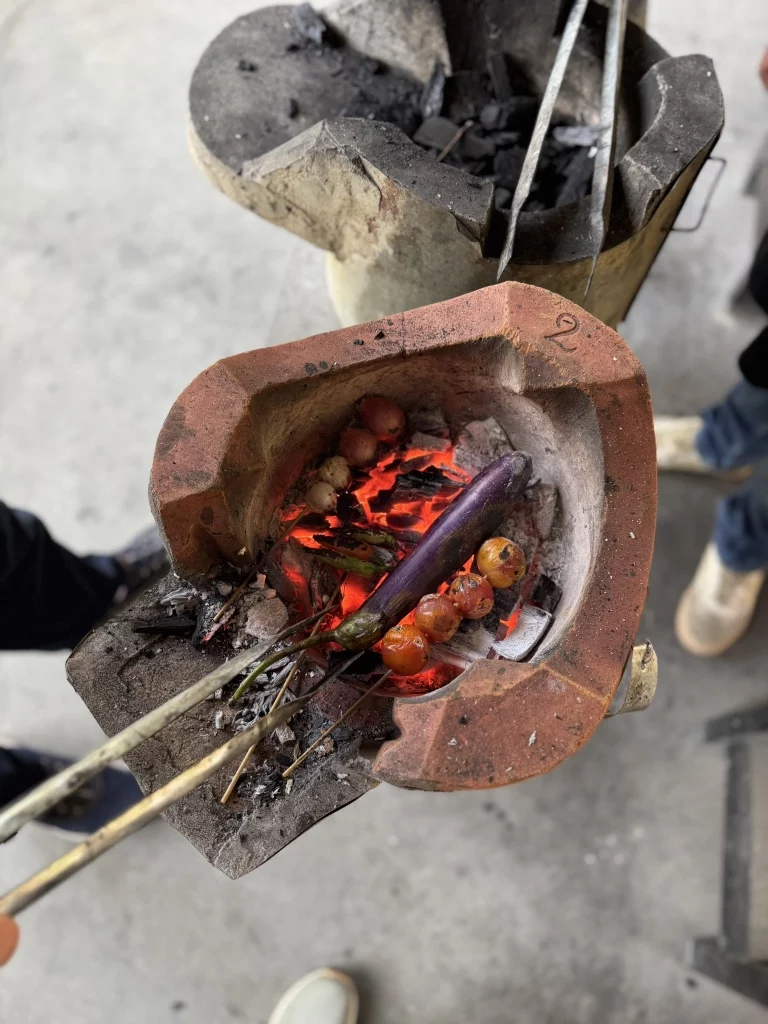
We thread all the other ingredients – tomatoes, chillies and shallots – onto skewers and roast them. Once we’ve removed the charred bits, we put everything into the mortar, along with a little salt and lime juice. Some members of the group learn the hard way that the chillies, which are already very hot – and which you can of course adjust to your own taste – become even hotter the more you pound them in the mortar.
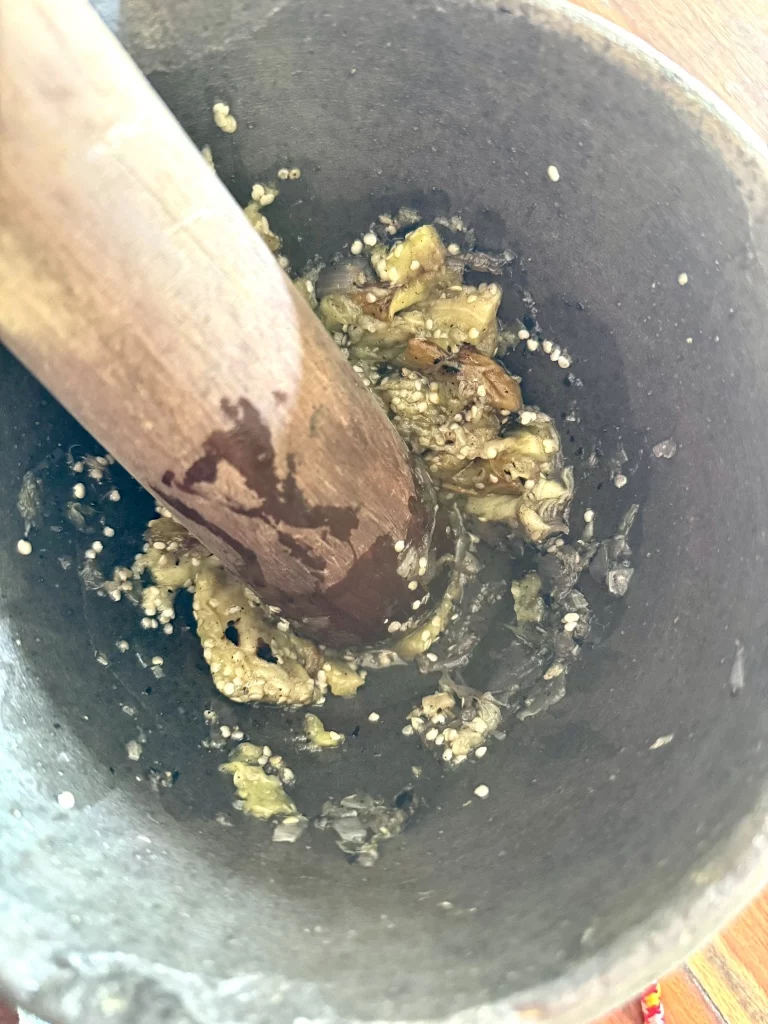
The dip tastes earthy, fiery, and deep. Wonderful.
Next up is river fish wrapped in banana leaves. Laos has no access to the sea, so there isn’t a huge amount of fish, and it isn’t of the very best quality, but the tilapia from the Mekong being cooked today tastes absolutely delicious. We singe the banana leaves over the fire until they become soft and pliable. The fish is cut into small pieces and seasoned with finely chopped shallots, spring onions, kaffir lime leaves, chilli and lemongrass – an essential ingredient in Laos – as well as plenty of dill and Thai basil; a little rice flour helps to bind the mixture together.
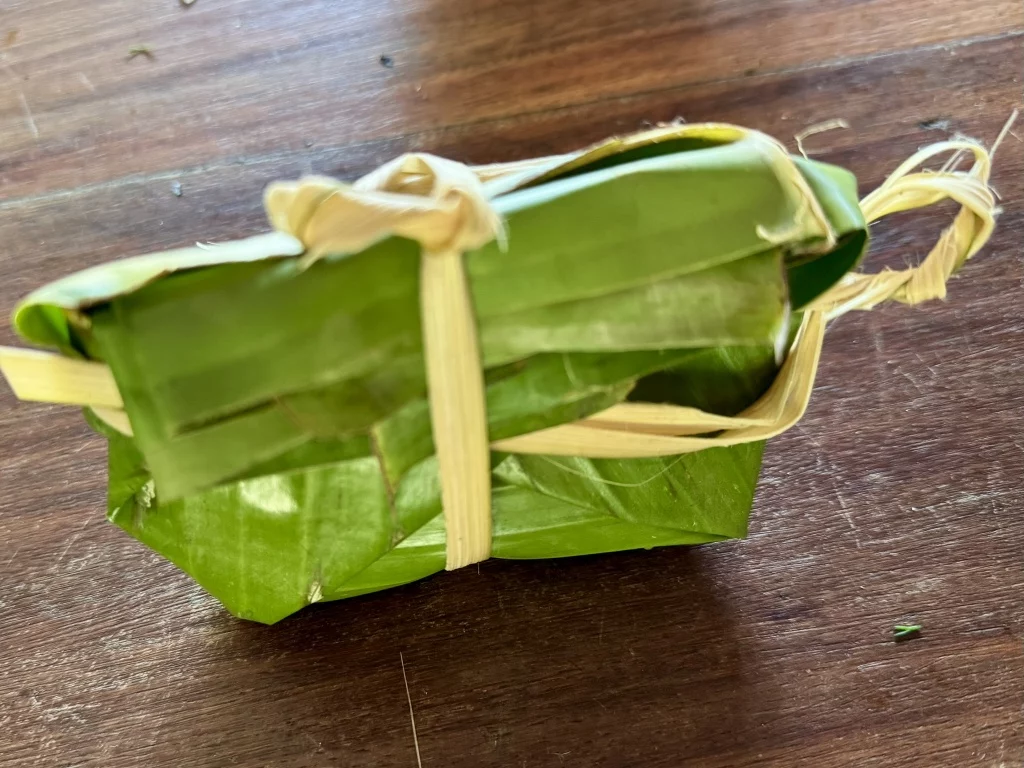
The fish stays juicy and tastes simply wonderful with the herb mixture.
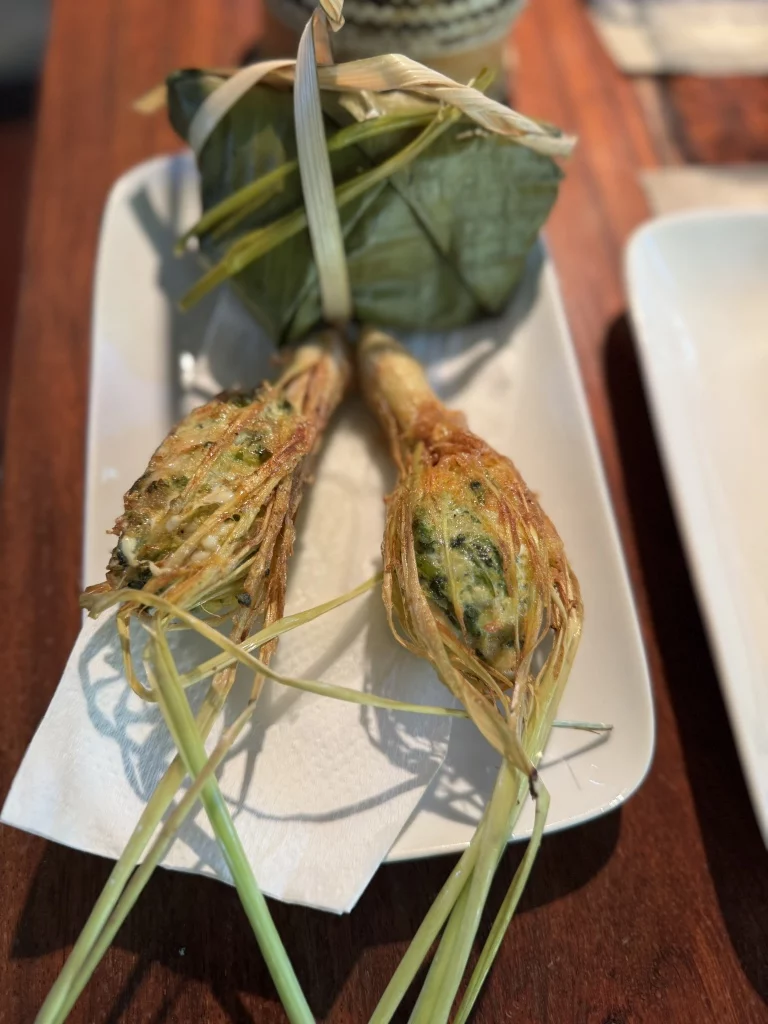
Stuffed lemongrass is the signature dish at Tamarind Restaurant – and rightly so! A delicious and truly special dish. We make a finely diced tartare from chicken breast fillets, which is seasoned with a mixture of garlic, spring onions, coriander and kaffir lime leaves, all crushed in a mortar, along with a little salt. Now it gets exciting. Sit patiently shows us how to first work the thick end of the lemongrass with the pestle of the mortar to soften it, and then, using a very sharp small knife, artfully and carefully make a few lengthwise cuts along the thick end. You can now squeeze the stalk together to form a sort of basket, which you then fill with the chicken tartare using a teaspoon. It’s amazing how much fits in there if you do it properly, but it takes a bit of practice. The finished lemongrass baskets are dipped in beaten egg and then deep-fried in oil.
Laab (also known as Larb) is another national dish in Laos, probably partly because it allows many different types of meat to be prepared in this way. In this case, water buffalo meat is minced and fried very briefly in small pots over the fire with a little oil. Depending on your taste, kaffir lime leaves, lemongrass, chilli, coriander, galangal, mint, a little sawtooth coriander – which we haven’t seen in Europe yet – and lime juice are then pounded together in a mortar to form a spice paste – and beef bile, if you fancy it. You read that right – the bitter taste of the bile is said to complement this dish particularly well. After holding our noses to the 1.5-litre plastic bottle containing the grey-brown liquid, we decided to give it a miss. But of course, everyone can decide for themselves. We did, however, use Laotian fish sauce. It looks more or less the same and has nothing to do with the clear products you can buy in bottles – but it actually tastes even better than those. Finally, we add a few mung bean sprouts. If you get the chilli right, it makes for an extremely herby and refreshing dish, which is considered a kind of salad in Laos.
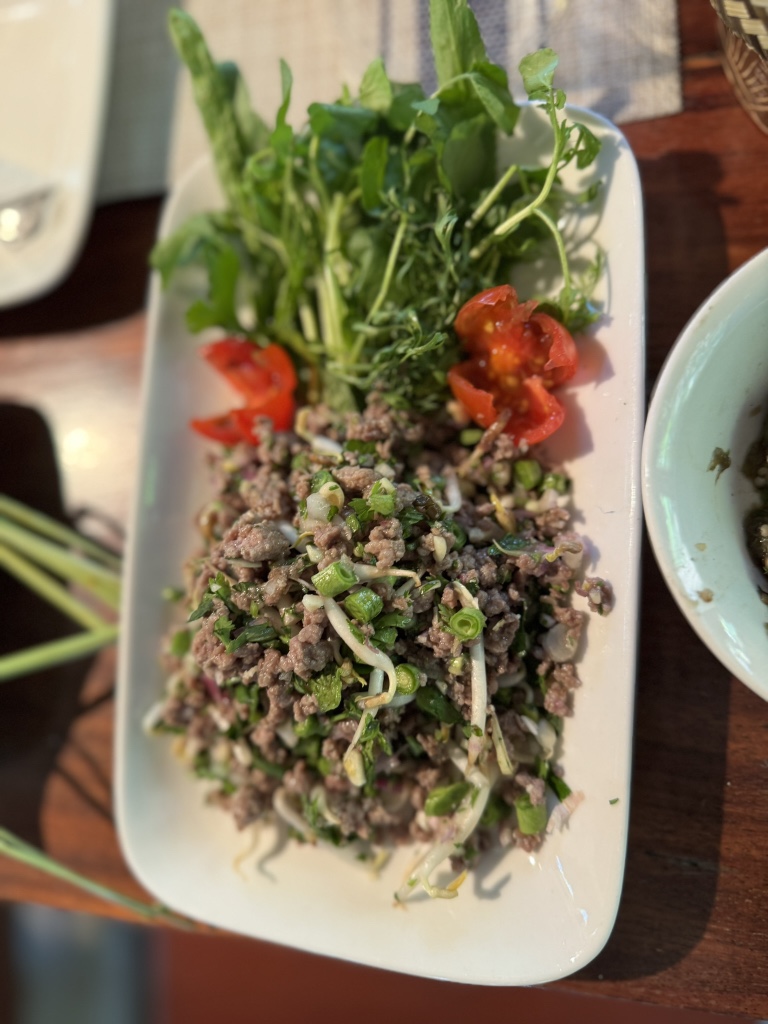
The version you get in Laotian restaurants, on the other hand, is often incredibly spicy and therefore not to everyone’s taste.
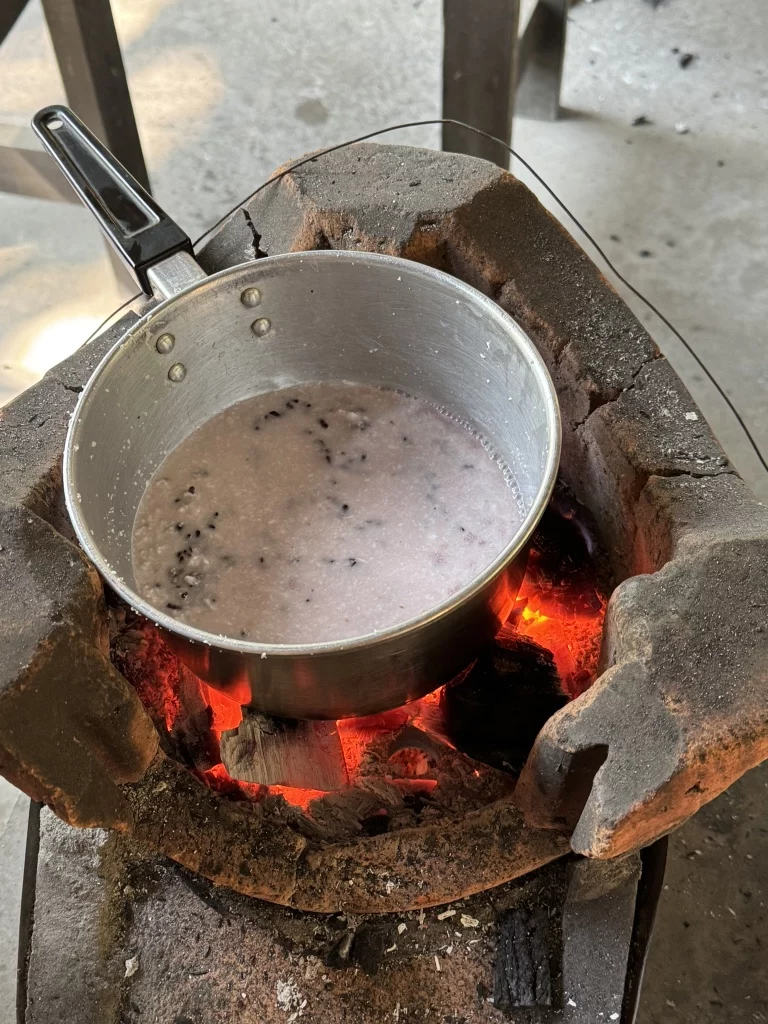
Now all that’s missing is the dessert, which comes as a thoroughly pleasant surprise. We’re not huge fans of rice pudding, but this one… is simply incredibly delicious. Perhaps even the highlight of the cookery class. Grated coconut is squeezed by hand to produce coconut milk. Then a reddish-brown rice, reminiscent of Camargue rice, is cooked with the coconut milk, a good spoonful of sugar and a little tamarind. Very quickly, a rice pudding emerges that still has a bit of bite and a rich nutty aroma, and tastes simply indescribable. The distinctive flavour of this rice variety combined with the sweetness of the sugar and the hint of bitterness from the tamarind – a whole new taste experience.
There’s fruit to go with it.
We eat at a long table set simply and naturally until we can’t eat any more. The portions were really very generous! Then it’s back to Luang Prabang, full of new experiences and determined to be more mindful of the limited resources in this poor but wonderful country.
Cookery course approx. €30 per person, including a shuttle service and a really good recipe booklet.
Tamarind Cooking School, Luang Prabang, Laos. www.tamarindlaos.com
