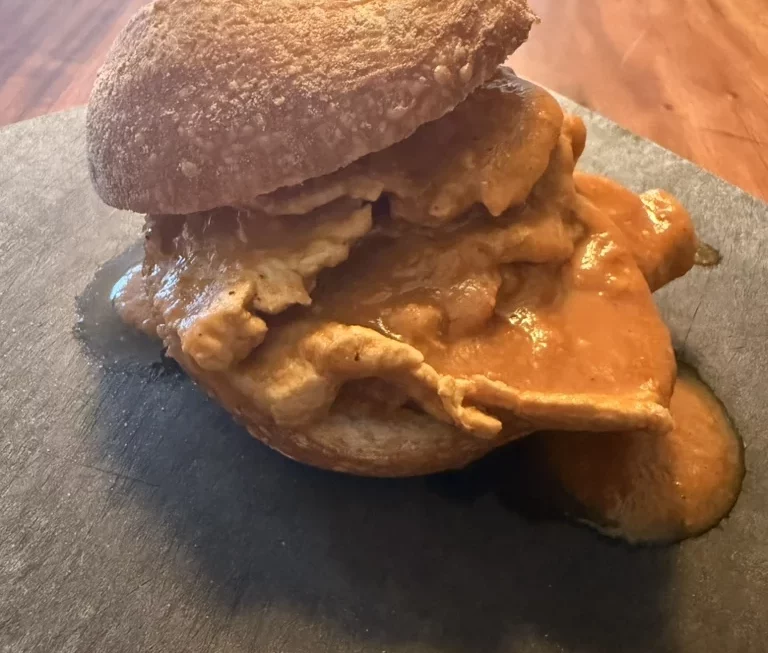
Bifanas are thought to have originated as a quick, inexpensive and filling meal for the working class. The Alentejo is considered their region of origin; specifically, the small town of Vendas Novas, east of Lisbon, is often cited. Over the course of the 20th century, the dish spread throughout the country via small, traditional eateries – the ‘tascas’ and cafés – following a typical trajectory from a regional everyday dish to a national institution.
Lisbon
In Lisbon, this has developed into a style of its own, which differs clearly from the northern variant, which originated in Porto. The Lisbon bifana is the more subtle of the two: thinly sliced, marinated pork, fried quickly over a high heat, served with a sauce featuring garlic and bay leaves, which is intended primarily to flavour the bread rather than soak into it.
What both traditions have in common is the use of as few ingredients as possible, combined with maximum reliance on technique: the bifana does not forgive any sloppiness when it comes to the marinade or frying, because there is simply nothing to hide a mistake behind.
Speaking of mistakes: what the famous Gordon Ramsay shows in this video has absolutely nothing to do with Portuguese bifanas, anywhere in the country.
The list of ingredients is short, but each item has a clearly defined function:
Pork loin (‘lombo’) or pork cutlets (‘febras’), thinly sliced or tenderised, plenty of garlic, bay leaves, sweet paprika (‘pimentão doce’), mustard (as part of the marinade and later as a condiment), dry white wine and beer, as well as salt and pepper. We add a little thyme and a pinch of hot paprika.

Ideally, the meat should be cut into slices less than 1 cm thick and then tenderised until even flatter. You can do this using a suitable kitchen tool or even the base of a handled saucepan.
All the other ingredients are mixed together to form a marinade, into which the meat is placed for at least 4 hours, but ideally overnight; we put it in the fridge the day before. The marinade seasons the meat, but the wine and mustard also help to tenderise it.

Next, remove the meat from the marinade and pat it dry, as it is now to be seared in a heavy frying pan over a high heat on both sides. In Portugal, this is often done in lard; we use just a few drops of olive oil. The aim is not to cook the meat through, but to trigger the Maillard reaction on the outside and bring out the associated flavours.

Set the meat aside and pour the marinade, along with the garlic and herbs, into the pan. Reduce it over a medium-high heat, stirring constantly, to loosen the flavours from the bottom of the pan and incorporate them into the liquid. This is the most important step. A creamy sauce must form; only then is the meat returned to the pan, where it is coated in the sauce along with the garlic cloves and cooked through.

In Portugal, it is eaten in a ‘papo-seco’, a bread roll with a thin, crisp crust and a soft, airy crumb. Given the range of bread available for us in Germany, it’s no problem to find something very similar.
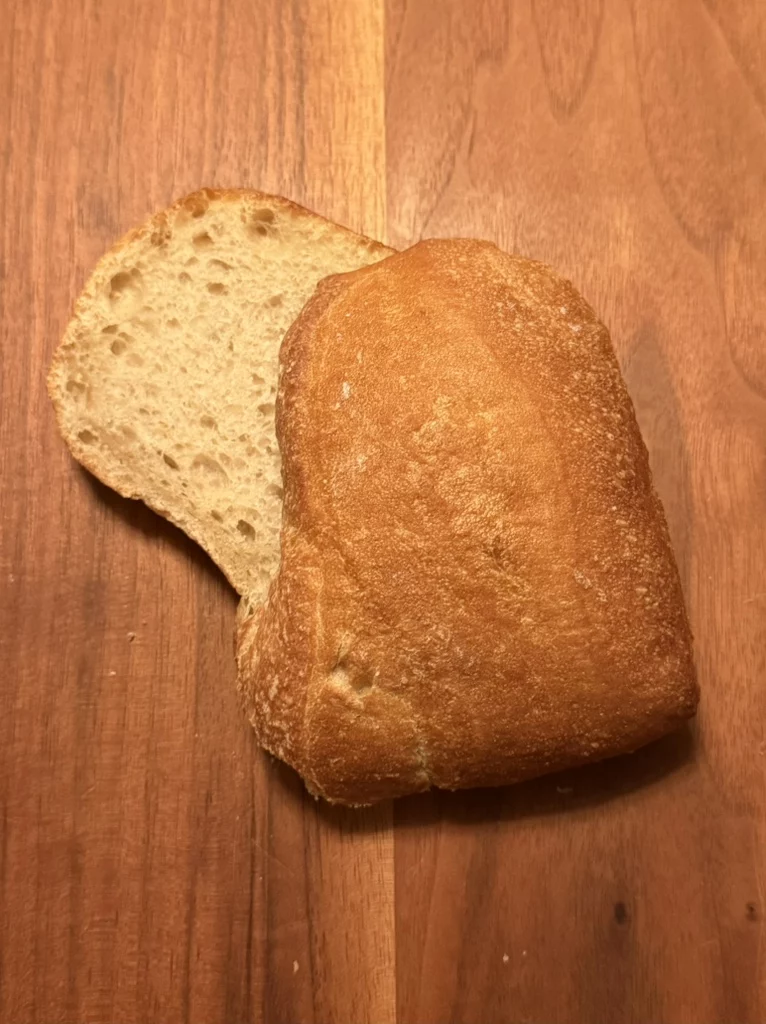
Dip both halves of the roll into the sauce or spoon some of it on top – ideally using a clove of garlic. Only then do you top it with meat.

The result is a very flavourful dish, but not greasy. If you like, you can add a bit more mustard.

Ingredients (for 4 bifanas):
500 g pork loin or cutlets, thinly sliced
4 cloves of garlic
2 bay leaves
Optional: 2 sprigs of thyme
3 tsp sweet paprika powder
1 tsp hot paprika powder
2 tbsp mustard
150 ml white wine
100 ml beer
A little fat or oil for frying
4 fresh bread rolls
Porto
The Porto-style dish follows a different approach to the Lisbon version: rather than searing the meat and reducing the sauce separately, the meat is cooked directly in a puréed, creamy sauce – closer to a stew than a fried steak sandwich. The result is correspondingly different: a rich, full-bodied and more complex sauce with onion, tomato and cumin, which literally soaks into the bread.
The meat is sliced even thinner, almost like ham. You either need to ask the butcher to do this for you, or freeze the meat slightly so that it becomes firm and is easier to slice thinly. We also tenderise it a little to flatten it further.
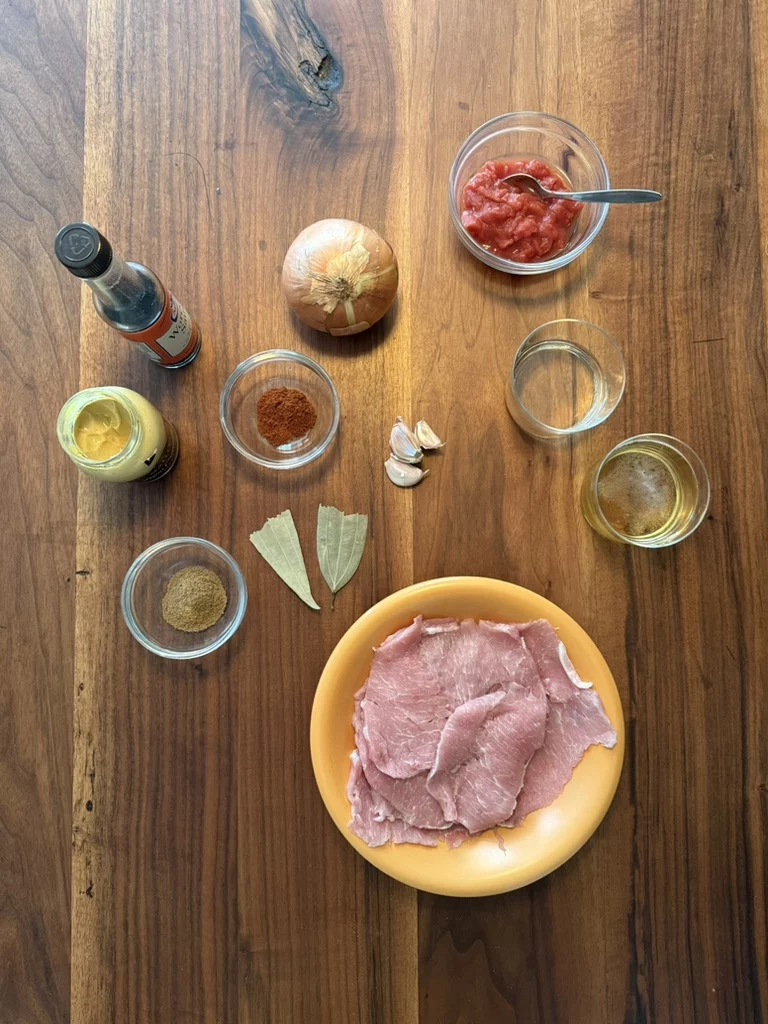
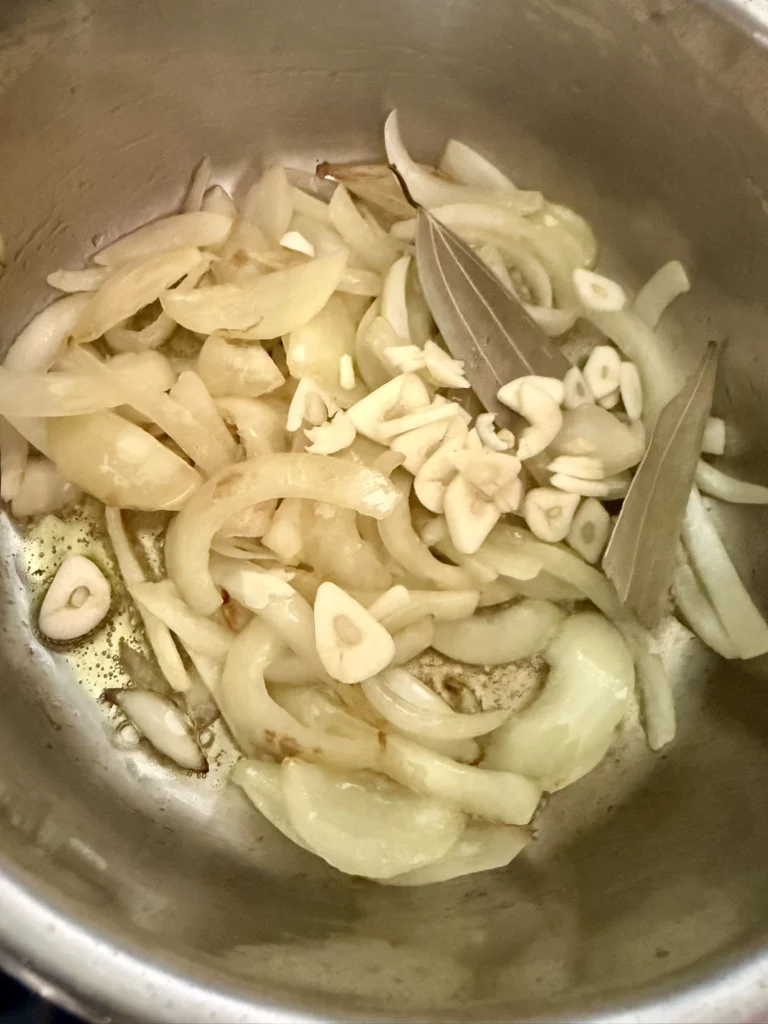
First, slice the onions into strips and fry them in a little lard or olive oil over a medium-high heat until translucent. After about 3 minutes, add the sliced garlic and bay leaves. The garlic must not brown, otherwise it will become bitter.
Then add sweet paprika and cumin, as well as tomato purée or chopped tinned tomatoes. Fry everything briefly so that the spices release their flavour.

Now deglaze with white wine and beer. A little mustard and Worcestershire sauce round off the flavour profile. This sauce is now left to simmer uncovered over a medium heat for about 10 minutes, until the onions are completely soft.
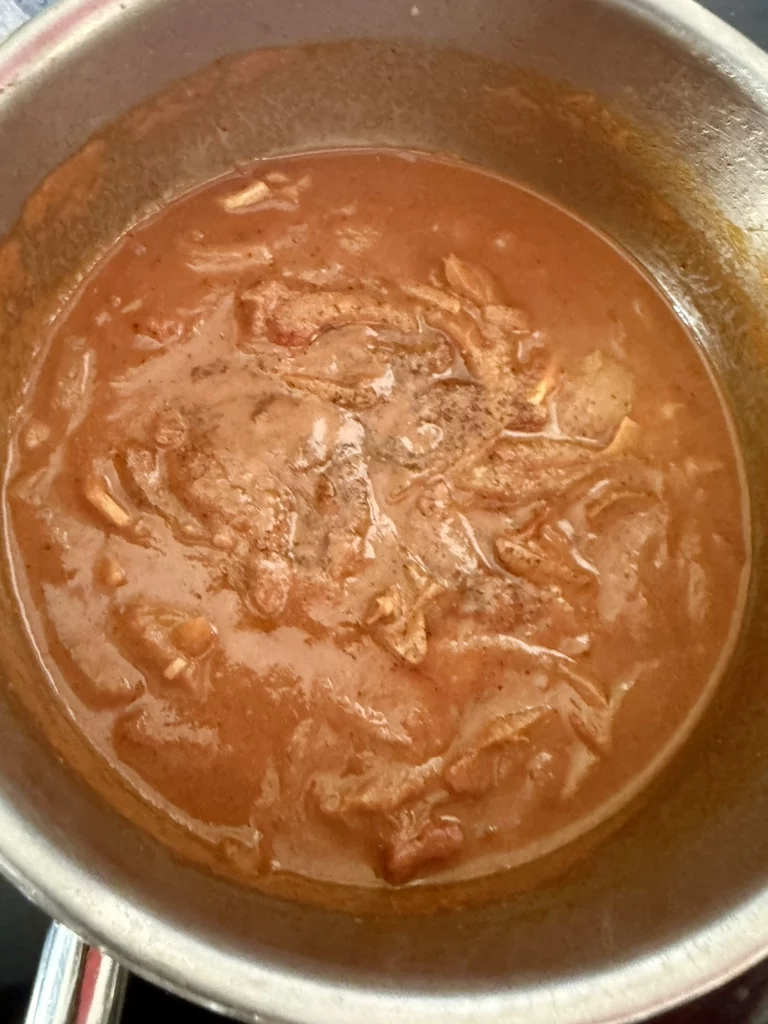
The key difference from the Lisbon style is that the sauce is now puréed until smooth using a hand blender – no more visible pieces of onion or slices of garlic, but a smooth, creamy base. Only now is the thinly sliced meat added, and it is cooked over a medium heat until it is completely tender. This takes around 5 minutes.

The whole thing is served in a bread roll, which is deliberately doused generously with sauce so that it soaks right through. Unlike in Lisbon, there’s no need for mustard here to add extra flavour – the sauce takes care of that.

Enjoy.
And may the taste be with you.
Ingredients (for 4 bifanas):
500 g pork loin or cutlets, sliced very thinly
1 large onion
3 cloves of garlic
2 bay leaves
2 tbsp lard or olive oil
1.5 tsp sweet paprika
1.5 tsp ground cumin
2 tbsp tomato purée (or 1–2 peeled, chopped tomatoes)
1 tbsp mustard
100 ml white wine
200 ml beer
2 tsp Worcestershire sauce
Salt and freshly ground black pepper
4 fresh bread rolls