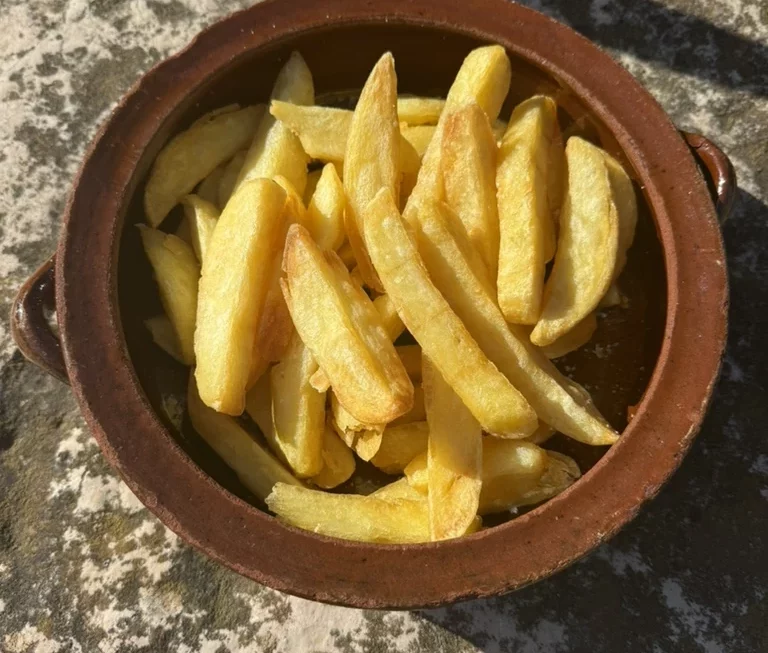
Chips or French fries have a lot in common with omelette: they’re known everywhere, simple yet delicious, and seriously tough to get right. As the very best chips are deep-fried – not hot-air fried – many people are put off by the effort and the hassle of dealing with oil heated to high temperatures.
So we made the most of a day off under the Spanish sun to describe in detail three ways to make perfect chips. It was great fun, a lot of work, but also a real treat, and so this is going to be a rather long article.
Pommes frites – France or Belgium?
The potato arrived in Europe from the New World in the 16th century. It was probably inevitable that, at some point, people would start frying them in hot oil. Who did it first – the French or the Belgians – remains a subject of serious debate to this day. It is claimed that the Belgians invented chips sometime in the 17th century, when the River Meuse was frozen over and people threw potatoes into hot oil instead of fish, but there is no evidence to support this. What is clear is that Belgian chips are quite different from French ones, and today we’ll explain both varieties. Plus, a special third version from a special chef.
What all three ways have in common
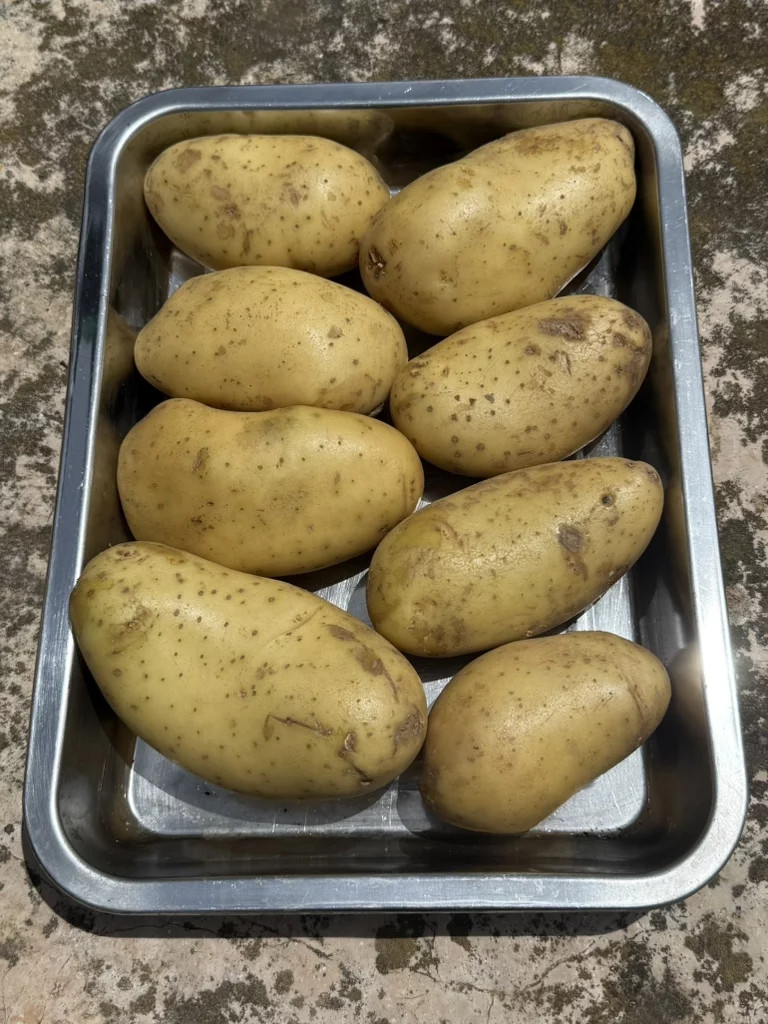
Floury potatoes with a high starch content. That’s non-negotiable. Bintje, Agria, Maris Piper – varieties with low water content and high starch content. Waxy varieties such as Nicola produce soft, pale results, no matter what you do with them. Also, the potatoes should, of course, be as large as possible; otherwise, you won’t be able to cut nice long chips from them.
Furthermore, the basic principle always applies: cooking and browning are two separate processes that should not be carried out at the same time. The fat first acts as a cooking medium, then as a means of forming a crust. Once you’ve grasped that, you’re halfway there.
Classically French
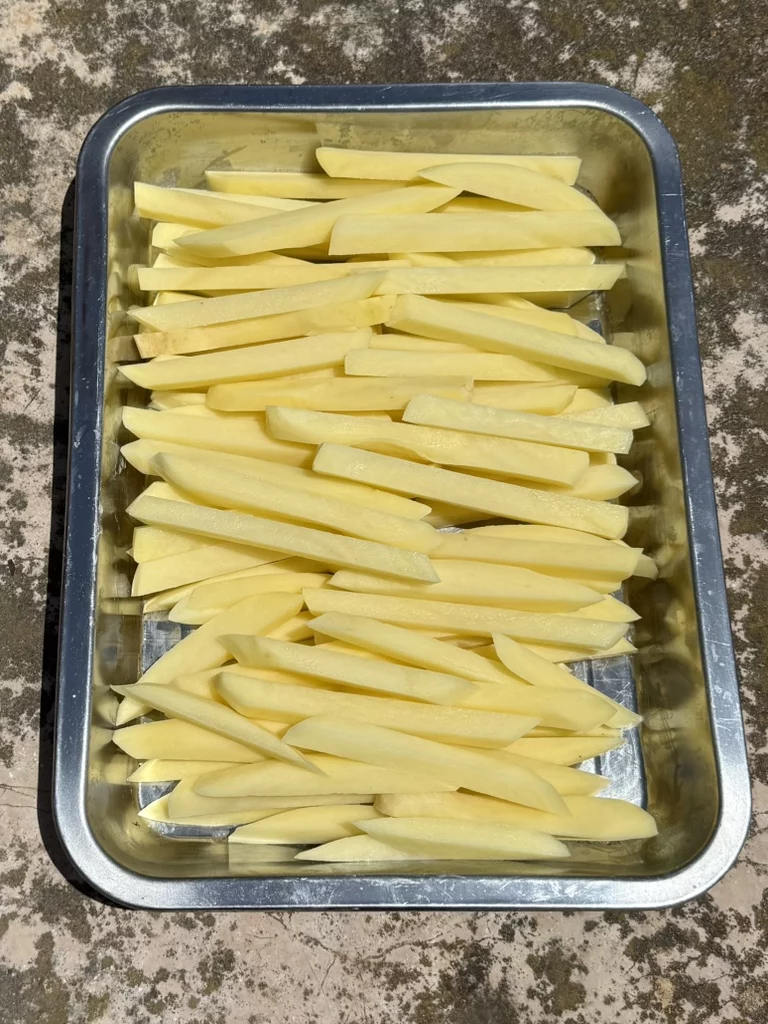
Thickness: 6–8 mm square. That’s thinner than many people realise. This stick is a true bistro classic: crispy on the outside, creamy on the inside, and not solid. Incidentally, they become even thinner in the ‘allumette’ cut.
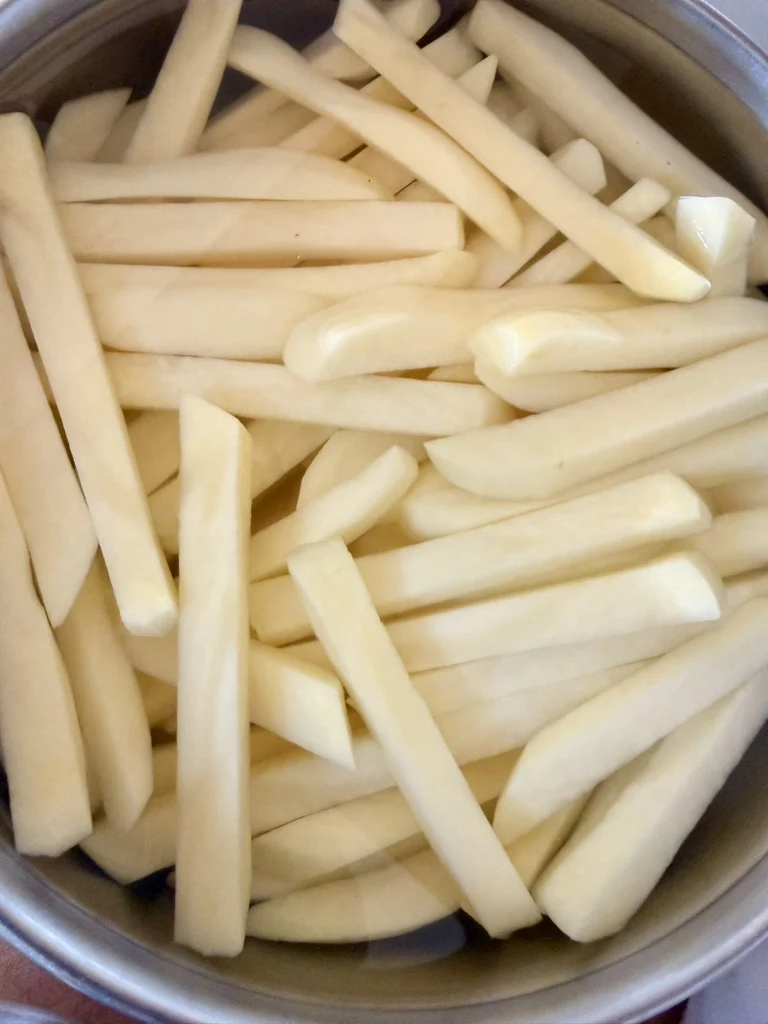
After cutting, place the sticks in cold water for 30–60 minutes. This washes away the surface starch, which would otherwise brown too quickly and cause the chips to stick together. Change the water once or twice at the start until it remains clear.
Dry thoroughly – first with a kitchen towel, then leave to air-dry briefly. Drying is more important than the exact duration of watering.
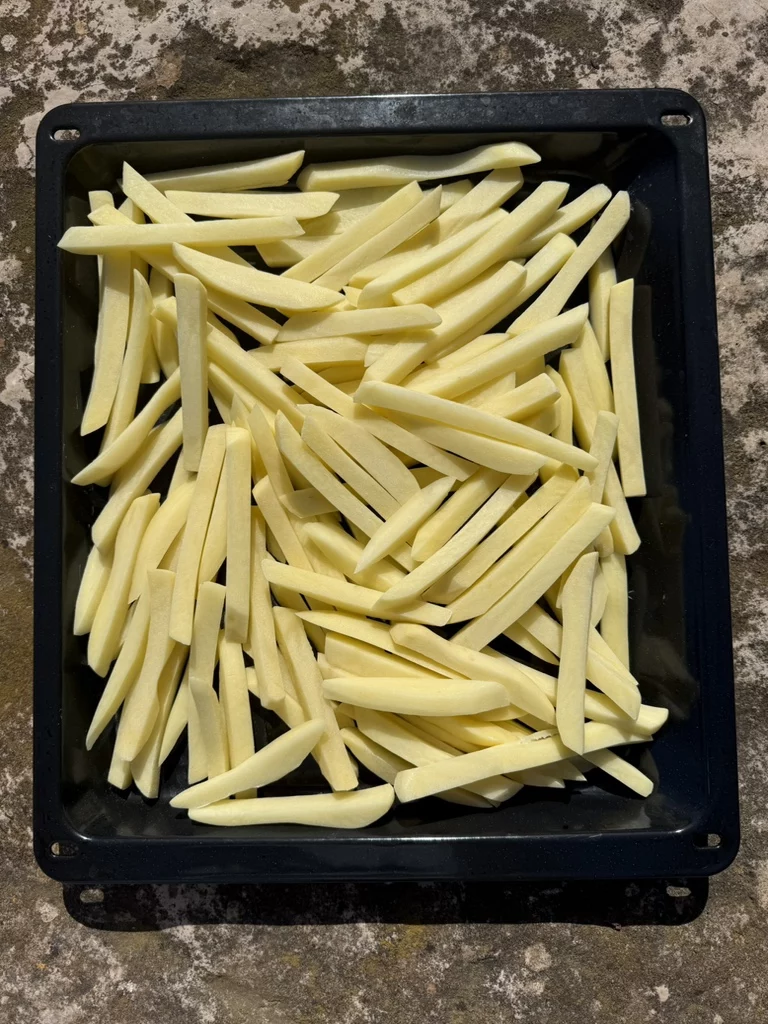
Then comes what many people dread: deep-frying.
It’s not as scary as it might seem – here are the most important tips:
Firstly, use a wide, deep pan; this way, you can fry many chips at once using relatively little oil, ensuring they don’t all lie on top of one another and that the oil is deep enough in the pan for your safety. Then fry in batches. Secondly, you need precise temperatures, and there’s no sensible alternative to this device here. We already explained this last week in our recipe for Merluza a la Gallega. It makes controlling the oil child’s play. Bring the temperature to 10–15°C above the target temperature; the potatoes will then cool it down to the desired level.
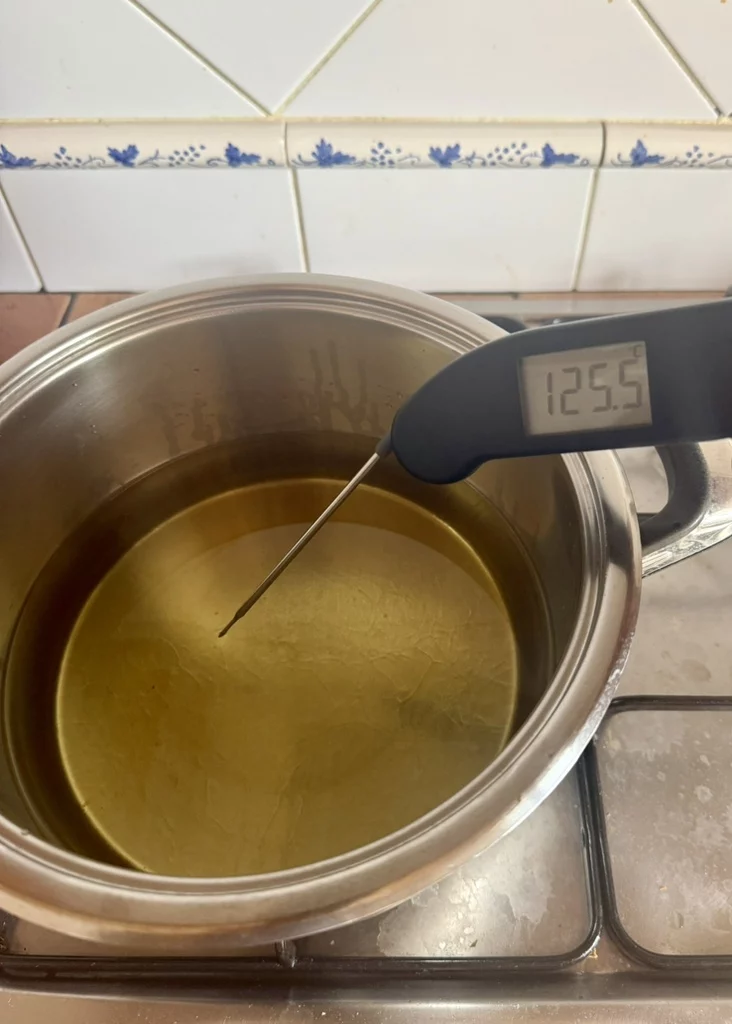
Thirdly, of course, you don’t throw the oil away after a single use, but reuse it (after straining it through a fine sieve). Anyone who finds it difficult to store liquid oil once it has cooled (decanted into a clean container, sealed and protected from light) should simply buy vegetable fats that are solid at room temperature instead of oil. These become solid again when they cool, making them easier to store.
First frying stage: 150°C, 5–7 minutes. Fry in high-temperature-resistant, neutral fat or oil. In other words, refined, not virgin or cold-pressed oil. It doesn’t matter whether it’s made from peanuts, sunflowers or rapeseed.
The chips cook through but remain pale. Remove them, drain them and leave them to cool for at least 15–20 minutes. Some bistros prepare the first course at lunchtime for the evening service. Want to treat your guests to some brilliant chips? Prepare them up to this stage the day before.
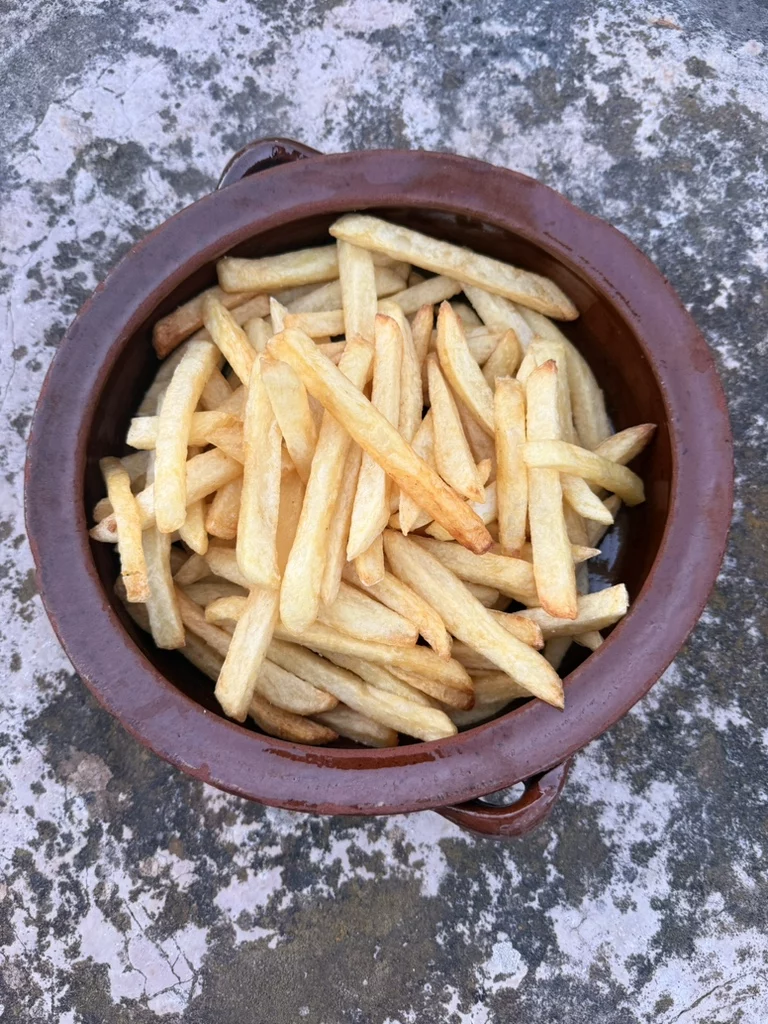
Second frying stage: 180°C, 2–3 minutes. Now it’s all about colour and crispness. The centre is cooked; the heat is now forming the crust. If it takes a bit longer to reach the desired colour – never mind.
Classically Belgian
First things first: authentic Belgian chips are fried in beef fat – ‘blanc de bœuf’, or ‘ossewit’ in Flemish. It has a higher smoke point and a flavour that simply cannot be achieved with vegetable oil. Many good restaurants insist on using it. But that doesn’t make much sense at home, unless perhaps you make chips on a regular basis.
Thickness: 10–15 mm, closer to 15. Significantly thicker and much more substantial than their French counterparts. This is a different product – more potato, softer centre.
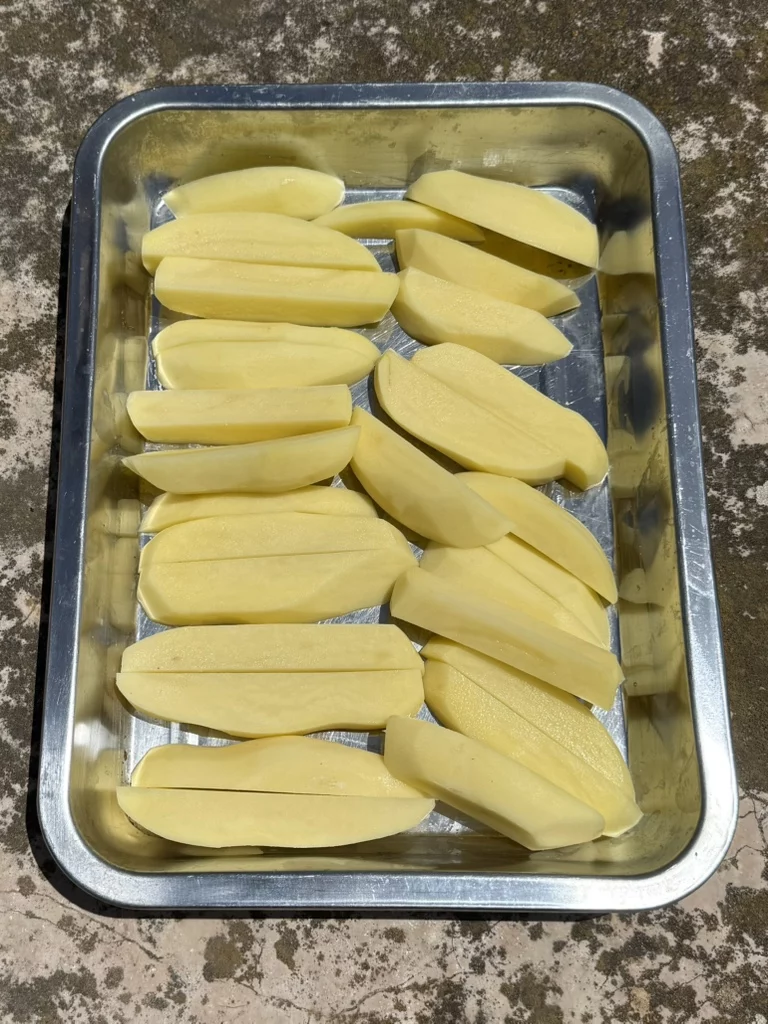
Water as before, dry as before – see above.
The difference lies in the first frying stage: 130–140°C, 10–12 minutes. With this thickness, it takes time and a low temperature. If you’re impatient and fry at too high a temperature, you’ll end up with a browned exterior and a raw centre.
Second frying stage: 180°C, slightly longer than for the French-style method.
But let’s take a look at another version from Michelin-starred cuisine:
Triple Cooked Chips – Heston Blumenthal
Blumenthal has not so much invented a new technique as taken an old one to its logical conclusion: ‘Triple cooked’ does not mean frying three times, but rather three separate cooking processes: one boil, two fries. If you want to follow his method to the letter, take a look here.
For home use, we’ll allow ourselves a little more flexibility, as follows. If you just want to make chips, you can stop reading here.
Cut: 12–15 mm, more rectangular than square.
Step 1: Boil in well-salted water for 15–25 minutes, until they are just about to fall apart. The surface should become slightly rough and look floury.
Bild Kochen
We’ve already explained something very similar here – for the oven – namely classic roast potatoes. Just don’t take the cooking of the potatoes too far, or as far as Heston does. What he produces is brilliant, but who would sensibly risk the dish going wrong in everyday cooking just for the sake of the last 3 per cent? Not us. So we keep a close eye on them from minute 15 onwards and take them out sooner rather than too late. The result is still brilliant.
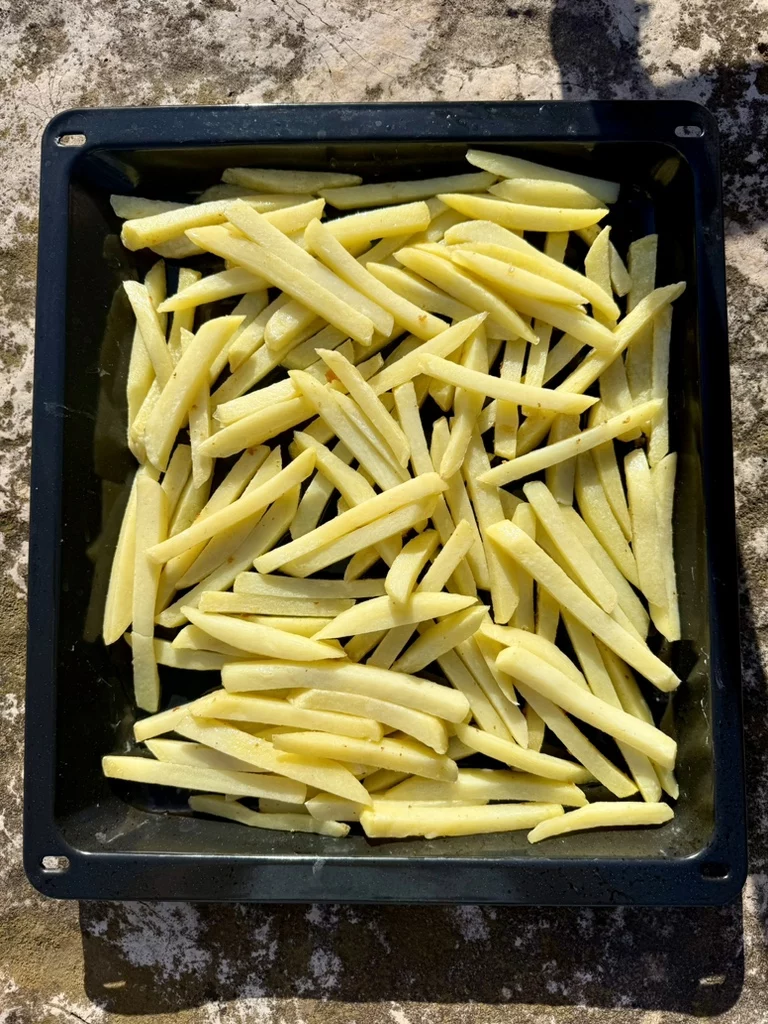
You need to let the butter-soft potatoes steam off properly now. And then dry them. The best way to do this is to place an oven rack on a baking tray and carefully spread the potatoes out on it. We put them out in the hot sun, but as mentioned, we’re in Spain at the moment.
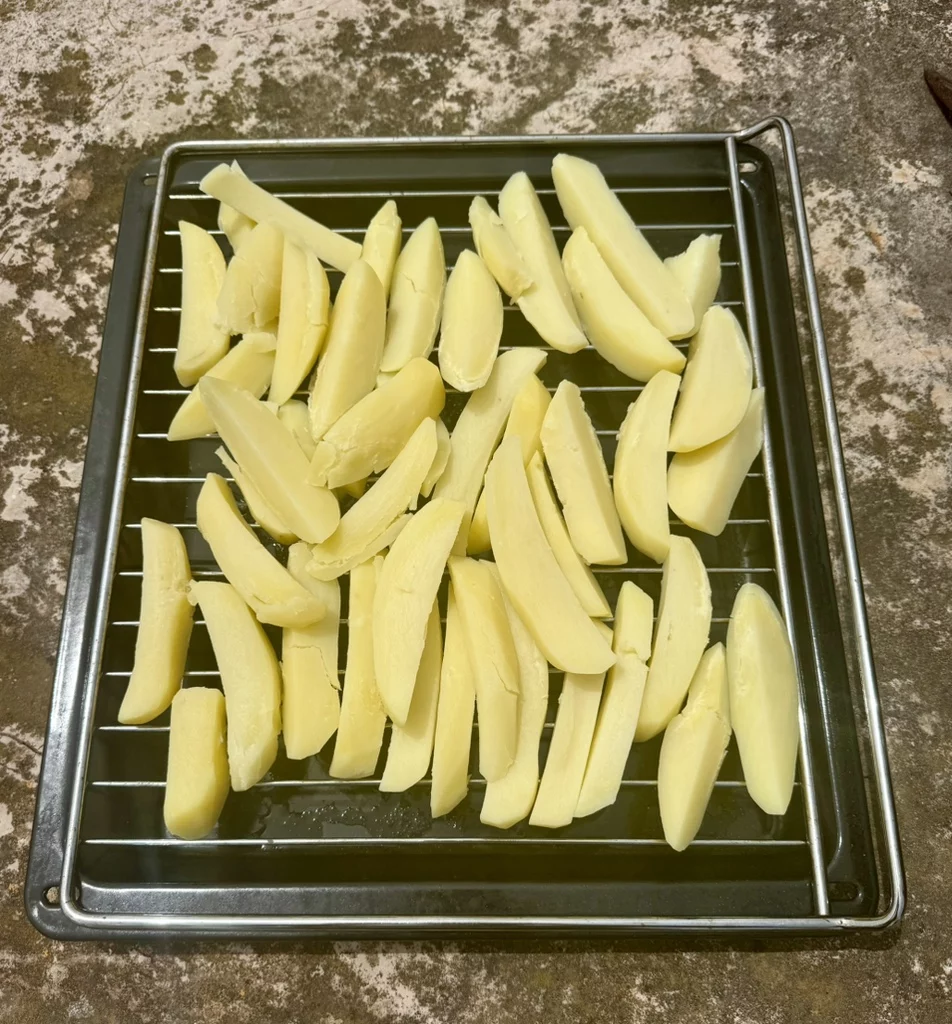
Elsewhere, the process simply takes longer. Blumenthal dries them using extreme cooling, which removes moisture and results in an extremely crispy crust later on.
First frying stage: 130°C, approx. 5 minutes. Remove whilst still pale. Leave to cool again.
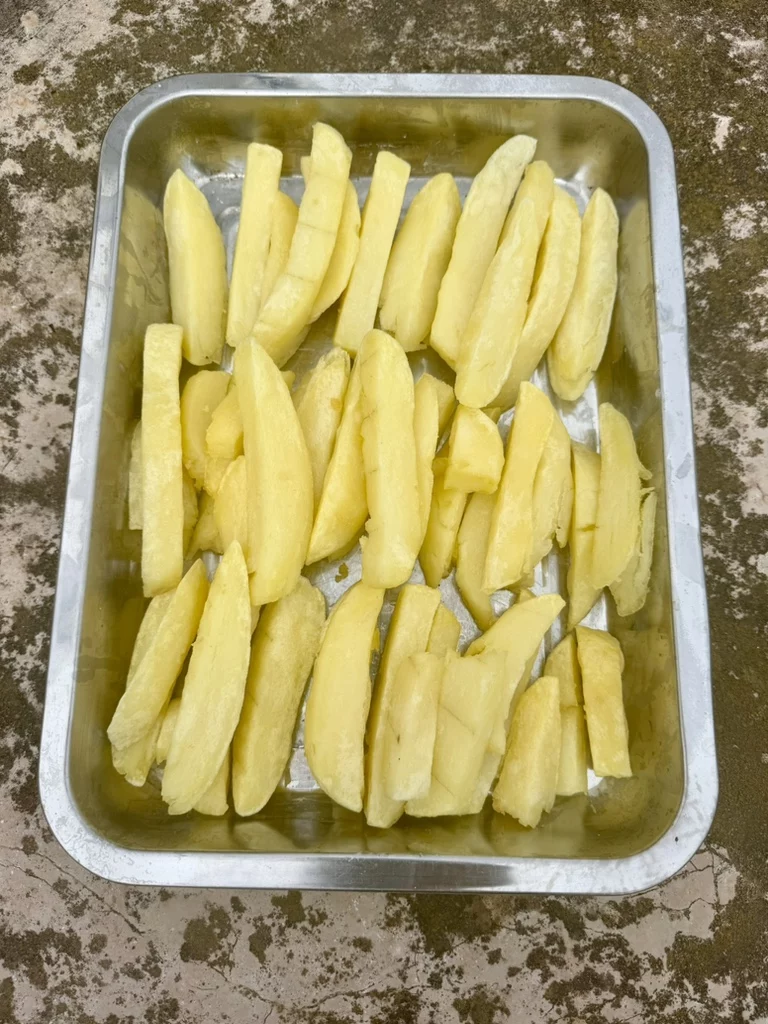
Second frying stage: 180–190°C until the desired deep golden colour is achieved. This happens quickly, as all the preparatory work has already been done.
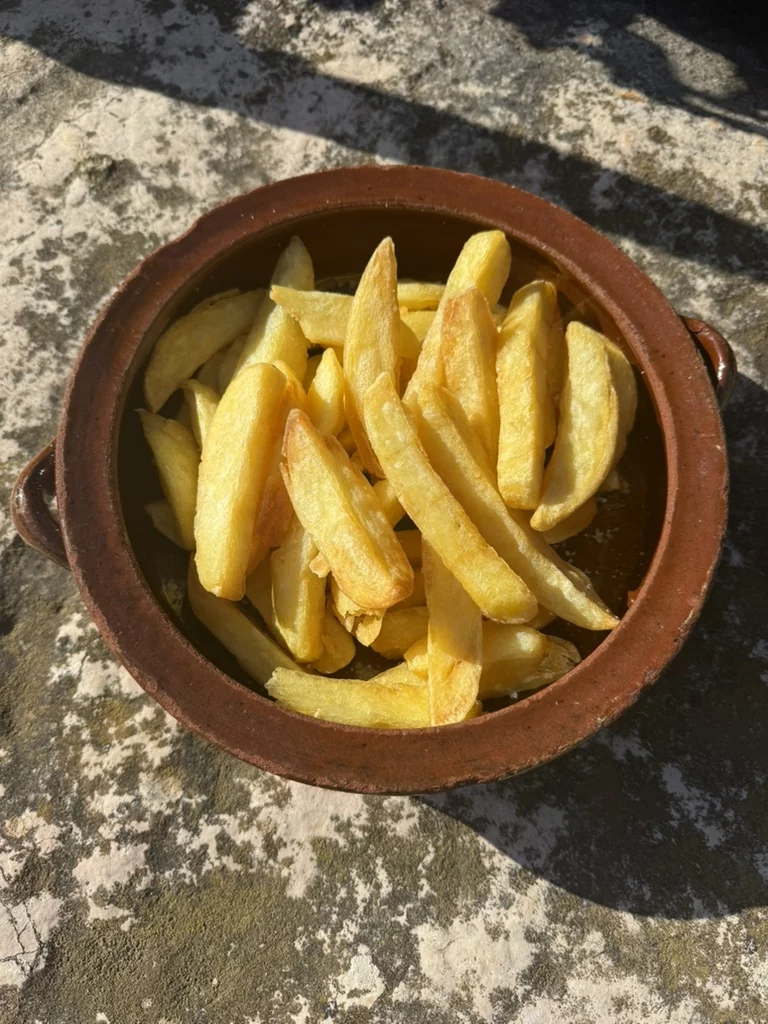
The result of these three methods is three products that are almost entirely distinct, not only in terms of technique, but also in texture, appearance and character. The French stick is elegant and precise. The Belgian Friete is rustic and hearty. Blumenthal’s chip is a little marvel with a crust that cracks like glass.
Enjoy.
And may the taste be with you.
