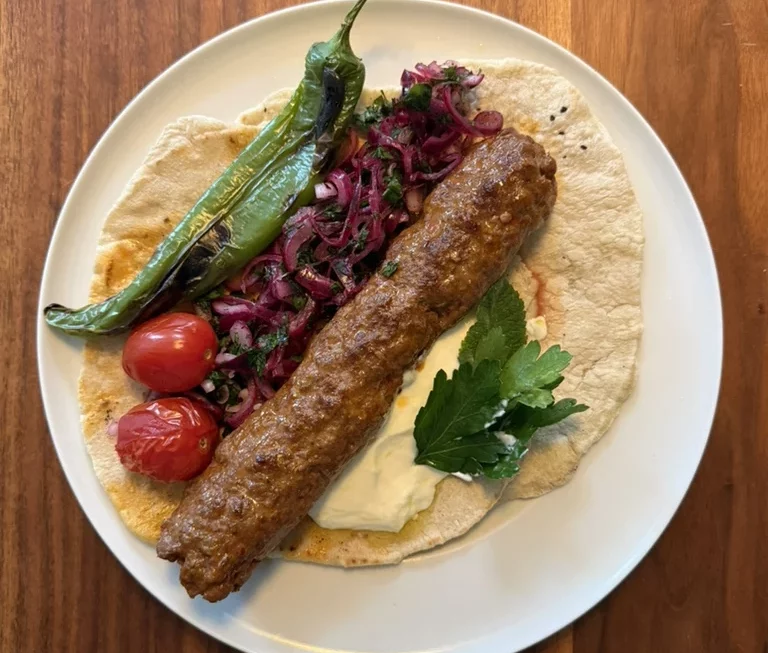
Adana kebab originates – surprise, surprise – from Adana, a major city in southern Turkey, near the Syrian border, in the fertile Çukurova plain. The region is known for its agriculture – cotton, cereals, sheep farming – and for a cuisine shaped by Arabic, Kurdish and Armenian influences. The kebab itself is closely linked to the culture of the butchers and chefs of this city, who for generations have had to earn the title of ‘Usta’ (master) before they are allowed to serve a genuine Adana kebab.
In 2005, Adana kebab was granted a geographical indication in Turkey – comparable to the European PGI label. Since then, there have been strict rules governing what constitutes a genuine Adana kebab: it must be made exclusively from lamb, hand-minced, and seasoned with lamb tail fat, red peppers from the region and pul biber. Strictly speaking, anything else is a different kind of kebab.
At home, this is a useful guide, but not a rule set in stone. If you can’t get – or don’t want – pure minced lamb, you can use a mixture of beef and lamb – the important thing is that the fat content is right. Twenty to twenty-five per cent isn’t a recommendation, but a technical necessity: if there’s too little fat, the kebab will fall off the skewer or dry out on the barbecue.
The seasoning is minimalist. No onion, no garlic, no baharat (a spice blend from the Turkish and Arab worlds), and no sumac in the meat.
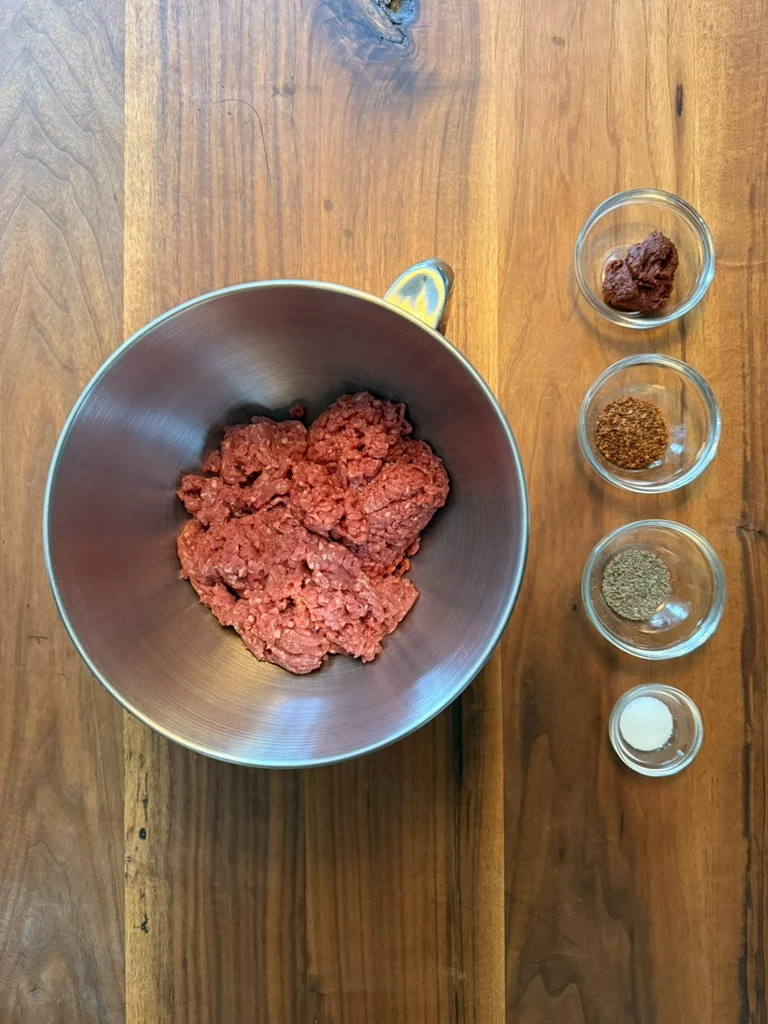
We ask the Turkish butcher to put the meat together for us and mince it. Alternatively, we do it ourselves, but of course you need the right equipment for that.
We replace the peppers, which are not available here, with salça, a concentrated Turkish vegetable paste made from tomatoes, peppers or a mixture of both. It is available in jars, in both a spicier and a milder version.
The dish is seasoned only with pul biber (not overly hot chilli flakes, also available as Aleppo chilli), pepper and salt.
This now needs to be mixed thoroughly, so that the meat changes its texture and binds together without the need to add egg or anything similar. You can knead it vigorously or, as is customary in Asia, stir it in a circular motion in one direction only until the protein forms strands. By hand, this takes 5 to 10 minutes; we’ll let the food processor do the job on a low setting.
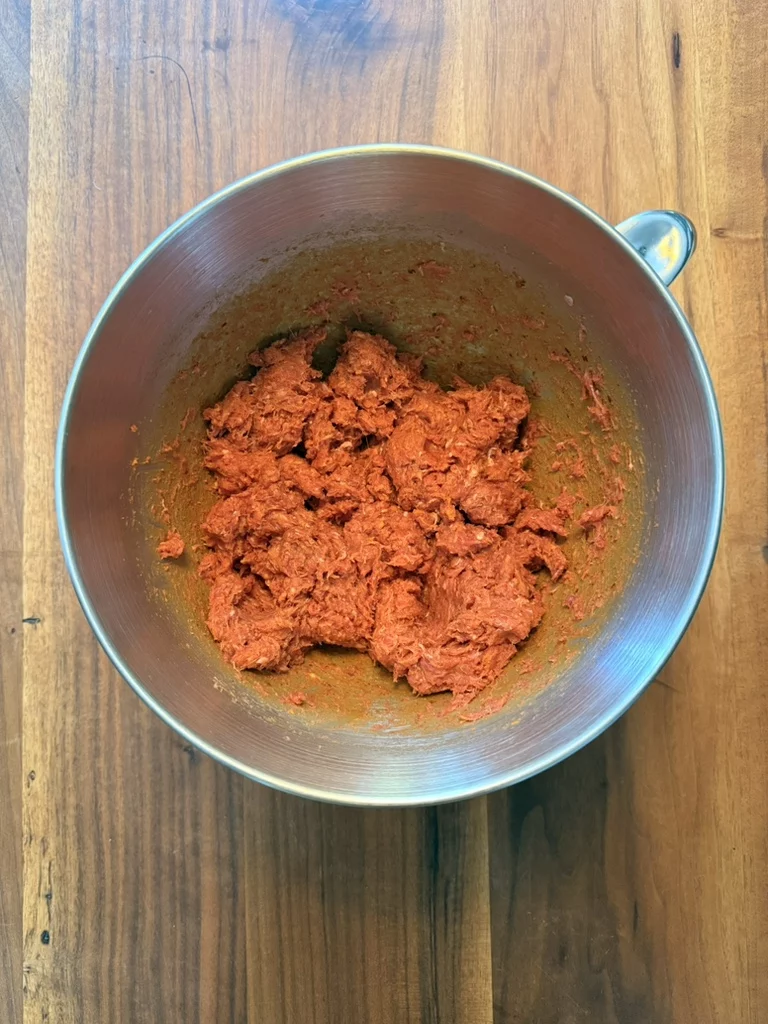
The meat needs to marinate; four hours is the minimum. It’s best to prepare it the day before and leave it in the fridge overnight.
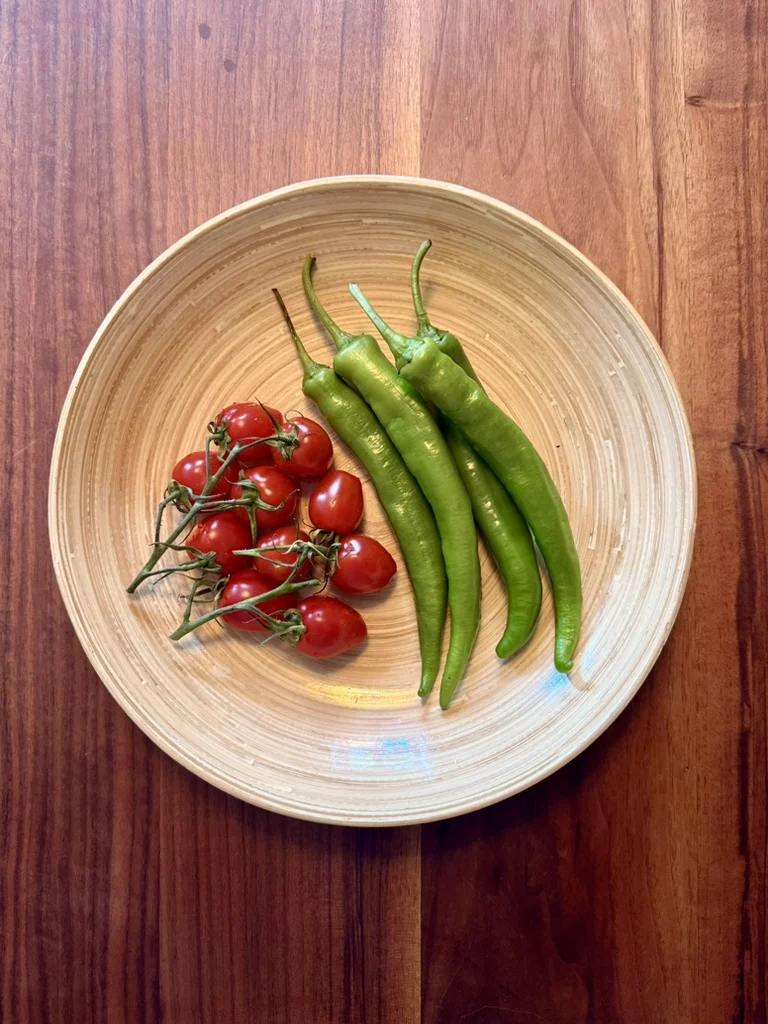
You’ll definitely need ripe tomatoes – we like to use smaller ones here – and green pointed peppers, known as ‘sivri’. These are the typical vegetable accompaniments for this dish, and they just need washing; no further preparation is required.
An onion salad is also an essential accompaniment to the original dish. The ingredients are red onions, salt and sumac (a tart spice derived from the sumac tree or sumac shrubs), as well as pomegranate syrup and parsley. The syrup is available from Turkish or Arabic food shops under the name ‘Nar Ekşisi’.
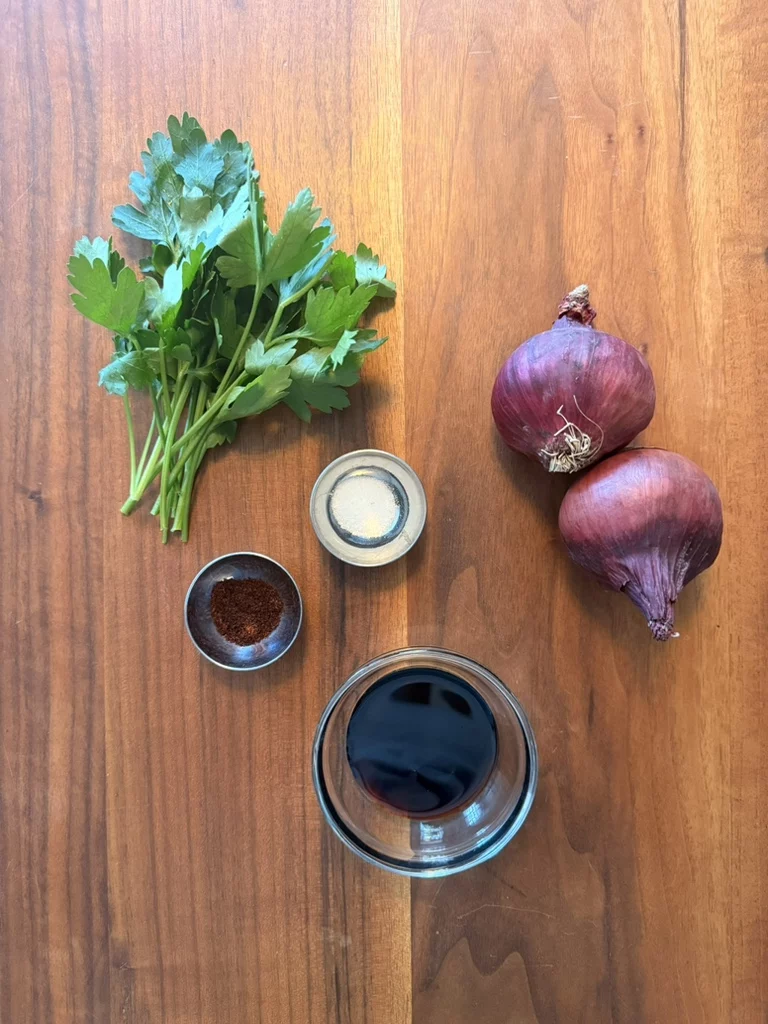
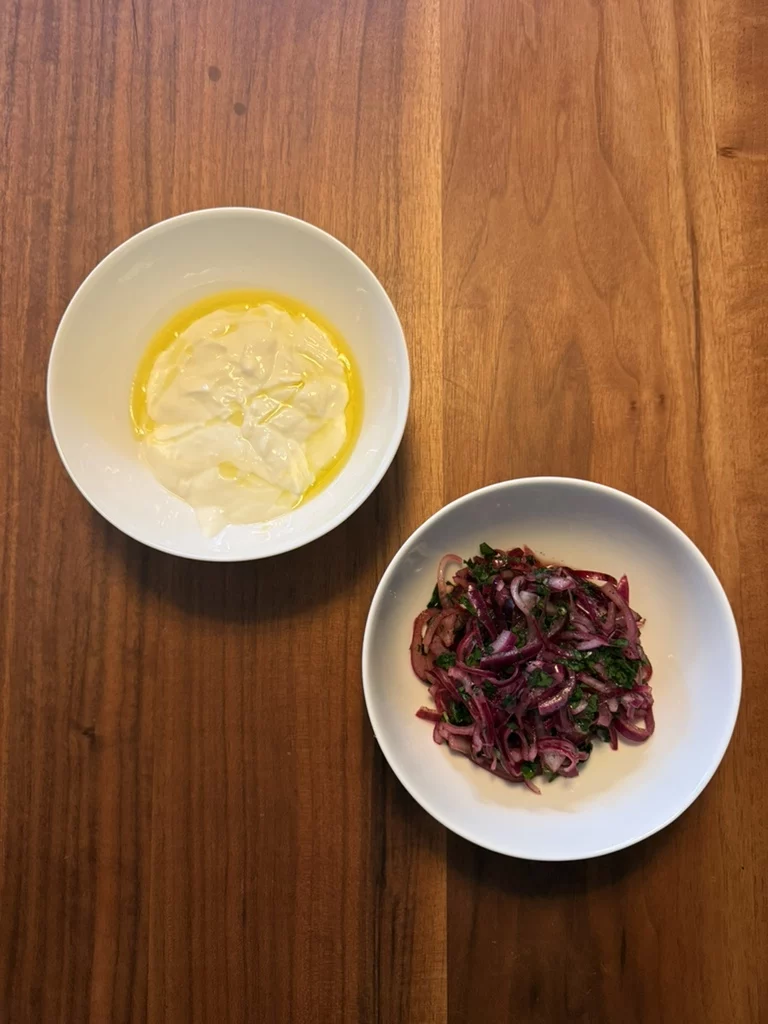
All you need to do is peel the onions, cut them in half and then slice them lengthways into strips, wash the parsley and chop it roughly, and then mix all the ingredients together. It’s best to do this well in advance, put the salad in the fridge and give it a stir every now and then so that the onions lose their raw taste.
The final accompaniment is a simple garlic yoghurt. Mix thick Greek yoghurt with a little salt, finely grated garlic and a dash of olive oil – and it’s ready.
Adana kebab is served on flatbread, known as lavash. We’ve explained here how you can easily make it yourself, and for the sake of simplicity we’ll refer you to that guide rather than repeating it here.
Final step: assembling the skewers.
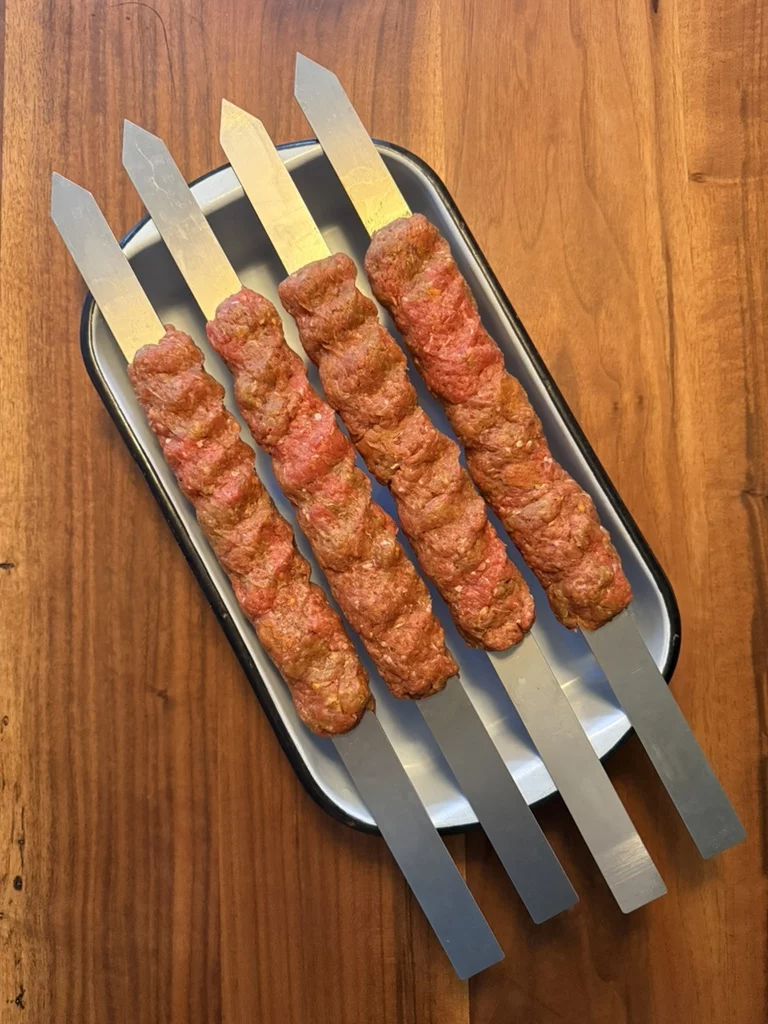
Adana kebab is grilled over charcoal. For this, you’ll need very wide steel skewers, which are suitable for a whole range of Turkish dishes and can be bought very cheaply. However, it’s not entirely straightforward to thread the meat onto the skewer correctly so that it doesn’t fall off. Here are some step-by-step instructions on how to do it properly. And here’s how the professionals do it. Using the quantities given, one skewer is prepared per person.
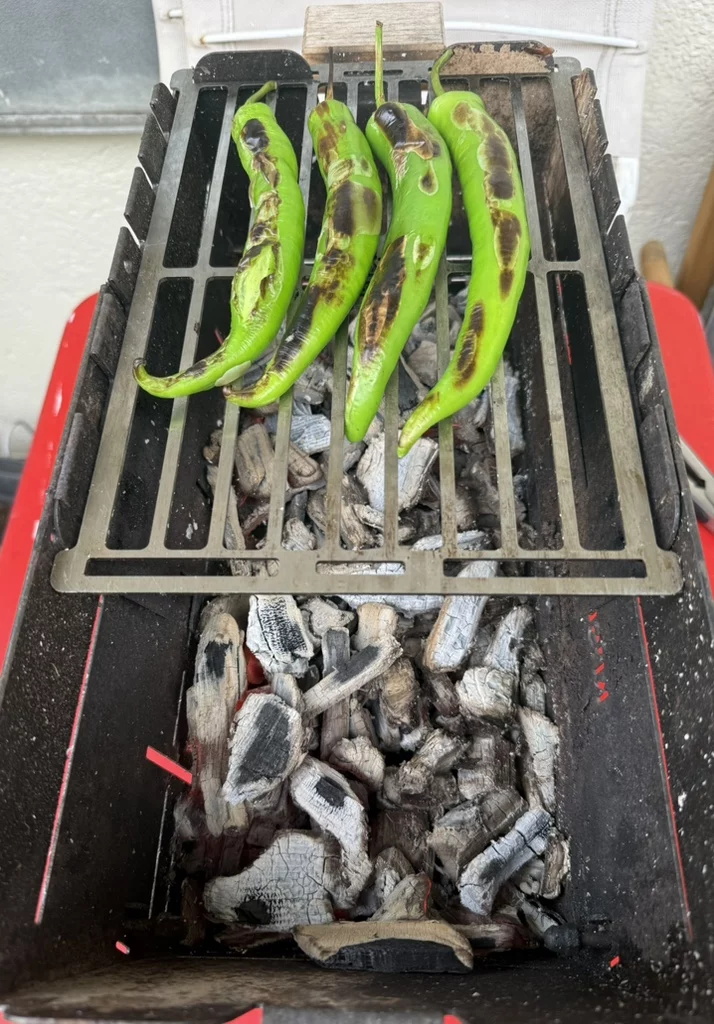
First, we grill the pointed peppers until they’ve turned dark on both sides; by then, the flesh will be cooked through. Next come the tomatoes, which are only grilled on one side. Don’t grill them for too long, otherwise they’ll fall apart.
The cooking time for the Adana skewers varies depending on the heat and the distance from the coals; 3–4 minutes on each side is a rough guide.
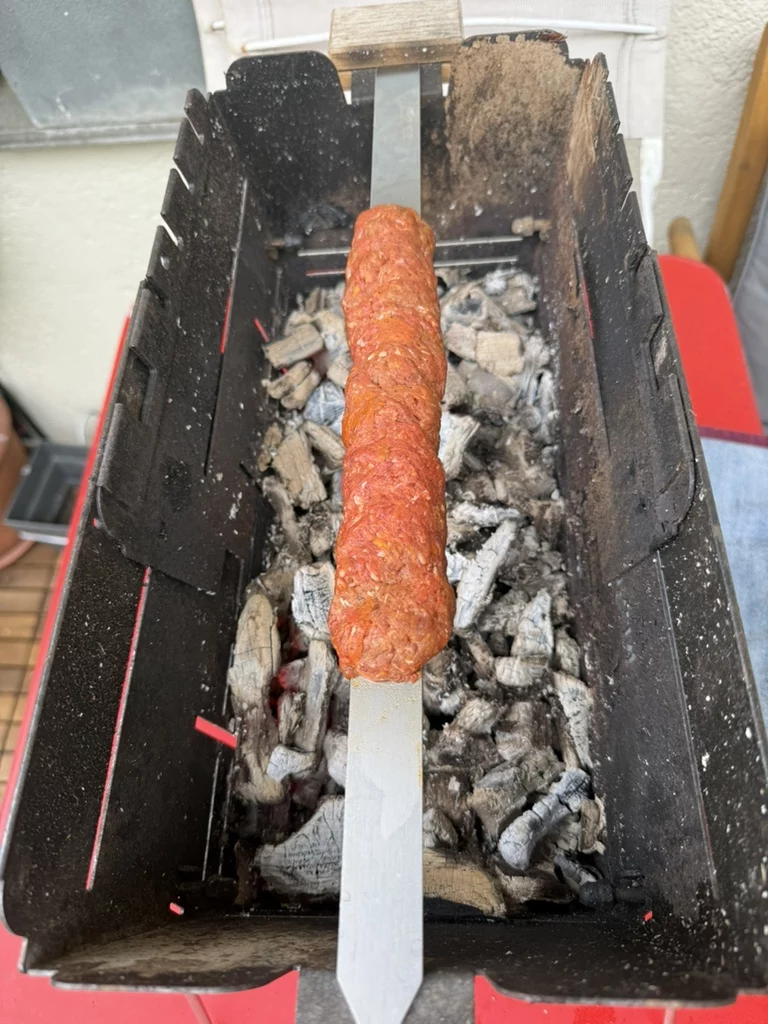
At some point, the skewers start to drip onto the coals. This causes smoke and flames, which, on the one hand, is desirable for the flavour, but on the other hand, can quickly become too much of a good thing. So you take the skewers off the barbecue briefly and dab them on the lavash bread. That’s all good flavour.
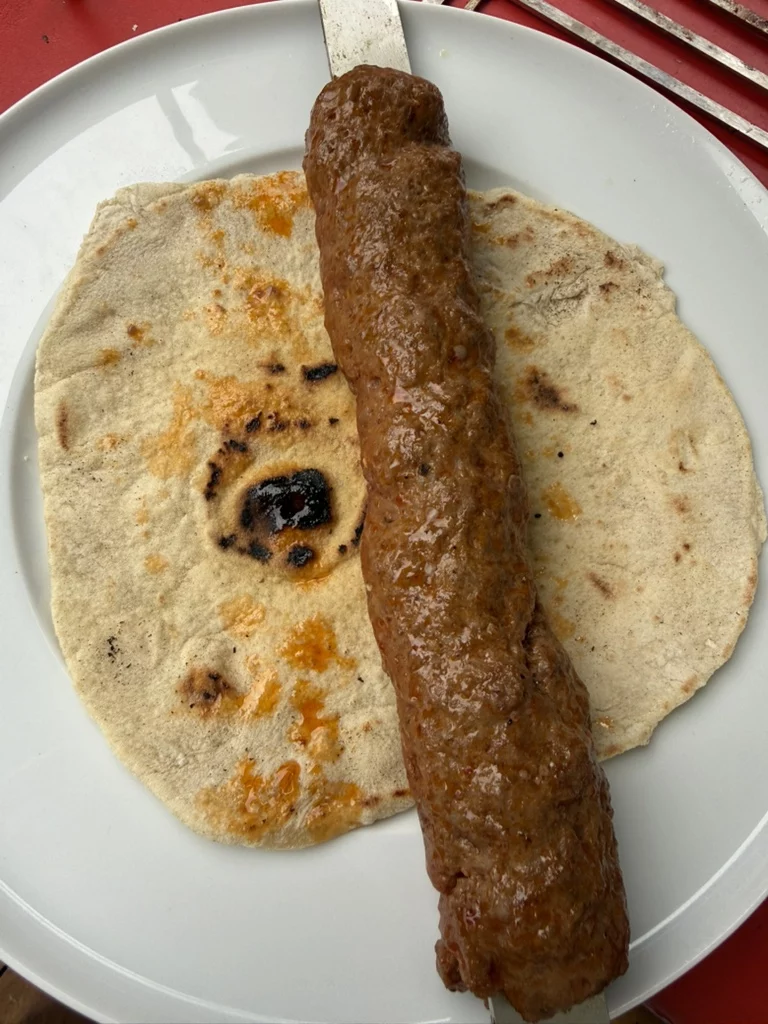
Finally, you take a piece of bread, use it to grab the meat and pull it off the skewer. Then it’s ready to serve. An absolute delight.
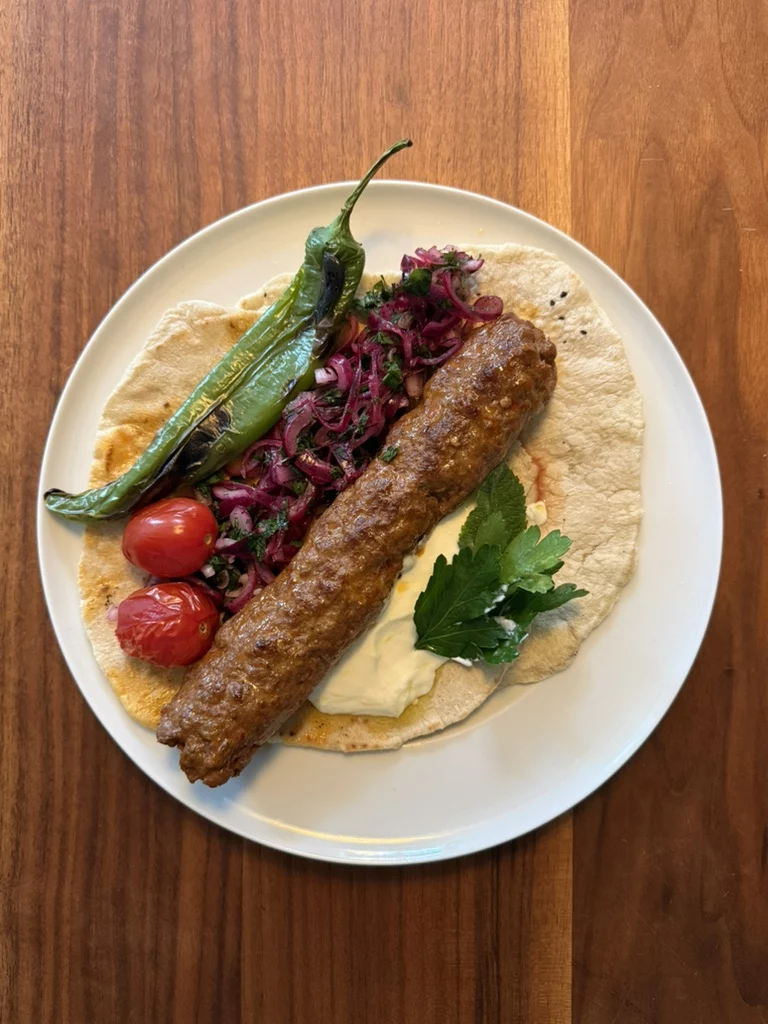
It’s best enjoyed with ‘Ayran’, which is a divine drink in hot weather. Simply mix the specified quantities of yoghurt, water and salt, and enjoy it as cold as possible.
Enjoy.
And may the taste be with you.
Ingredients (for 4 people):
For the kebab:
500 g lamb, roughly minced (20–25% fat)
500 g beef, roughly minced (20–25% fat) – alternatively, lamb only
2 tbsp Turkish chilli paste (‘Biber Salçası’)
3 tsp Aleppo chilli (‘Pul Biber’)
2 tsp freshly ground black pepper
8 g salt
For the lavash (8 pieces):
300 g flour (suitable for pasta, e.g. Tipo 00)
200 g lukewarm water
7 g dried yeast
1 tsp sugar
1 tsp salt
For the onion salad:
250 g red onions
1.5 tsp sumac
3 tsp pomegranate syrup (nar ekşisi)
½ tsp salt
Some fresh flat-leaf parsley, roughly chopped
For the garlic yoghurt:
250 g Greek yoghurt
1–2 cloves of garlic, grated
½ tsp salt
2 tsp olive oil
From the barbecue:
Ripe small tomatoes (we use cherry tomatoes)
4–8 long green Turkish pointed peppers (‘Sivri’)
Optional but recommended – Ayran:
500 g Greek yoghurt
500 ml cold water
½ tsp salt
