Hambagu (ハンバーグ) is part of yōshoku – Western-style cuisine, or more specifically, Japanese adaptations of Western dishes that emerged from the Meiji period (1868–1912) onwards, when Japan opened up to foreign culture and cuisine after centuries of isolation.
The name itself is derived from the German ‘Hamburger Beefsteak’ or the English ‘Hamburg steak’, a meatball-like dish that became known in Japan in the 19th century through German and, later, American influences.
In Japan, this dish with its origin in the West evolved into a distinct, clearly recognisable version, comparable to other dishes in this category such as karē raisu.
First, finely chop onion, melt a little butter in a frying pan and sauté the diced onion over a medium heat for about 15 minutes, until it is sweet, soft and lightly browned.
Meanwhile, mix panko with milk and leave it to soak. Panko is a Japanese breadcrumb made from bread, without the crust.
You’ll need minced meat, ideally a mixture of beef and pork. Using beef alone wouldn’t give the typical texture. Standard recipes vary between 70:30 and 50:50; we use two-thirds beef and one-third pork.
Season with salt, black pepper and grated nutmeg. We like to add a little Japanese Worcestershire sauce as well. This, too, is an adaptation of the Western import. Alternatively, you can of course use the British version.
Finally, you’ll need an egg and, in our case, a little mayonnaise as well.
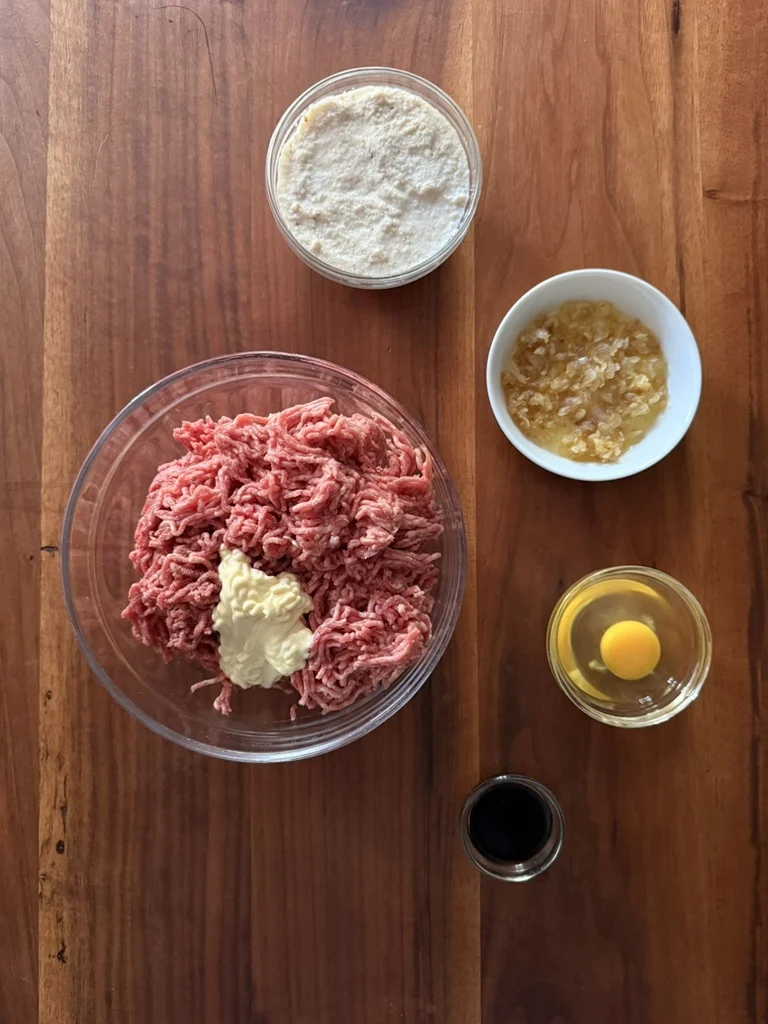
Mix this together in a large bowl, thoroughly but without compacting the mixture too much. Then simply stir everything in a circular motion in one direction for three or four minutes, until the mixture starts to come together. We have explained this Asian technique here before.
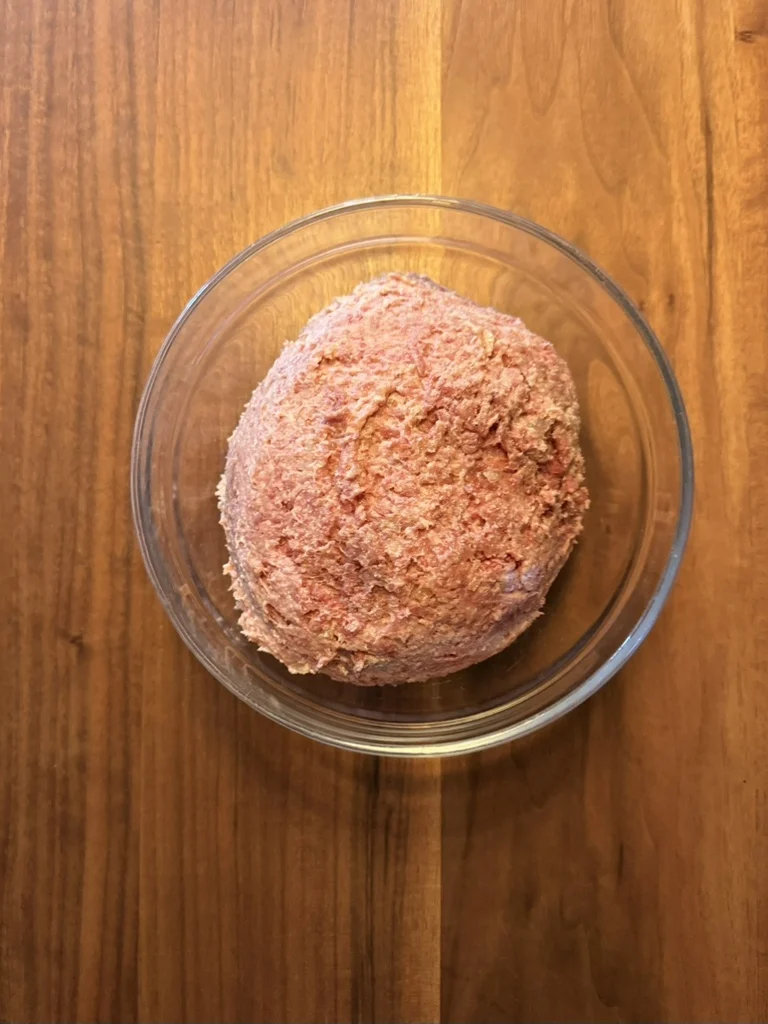
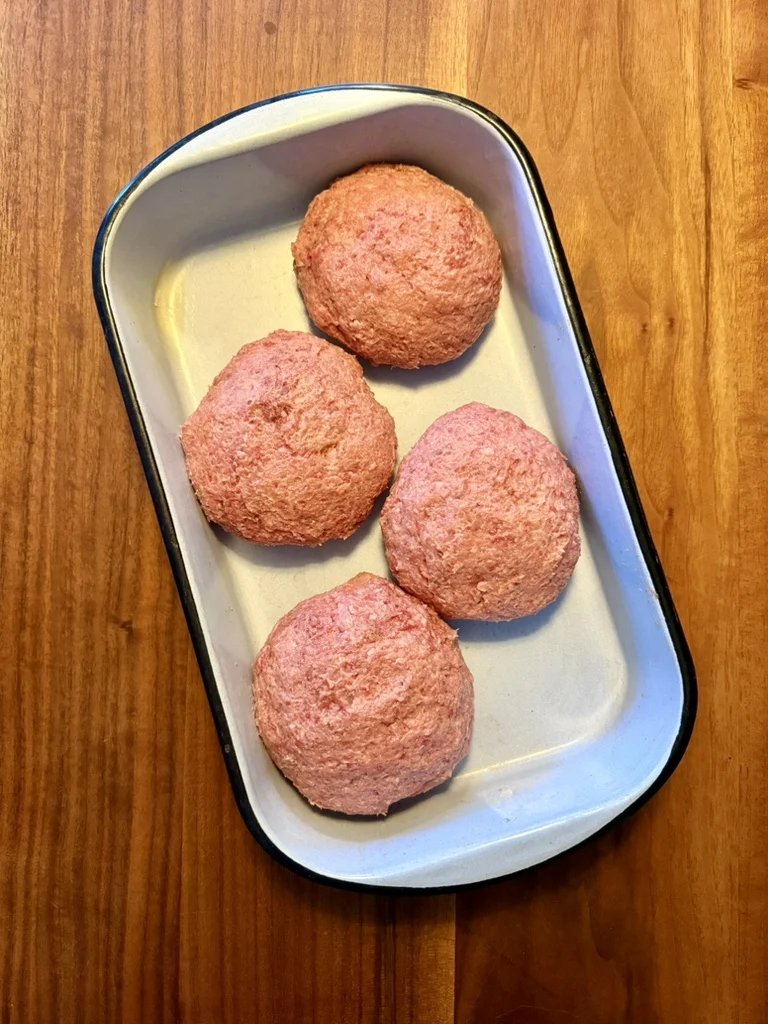
Shape the mixture into patties, each weighing about 150 g and at least 2 cm thick. They will look large, but they will shrink during frying. In Japan, they insist on vigorously slapping the mixture from one palm to the other at least five times – or more – to ensure no air is trapped inside, and that’s just what we do before placing the shaped patties in the fridge so that they firm up and hold their shape well later on.
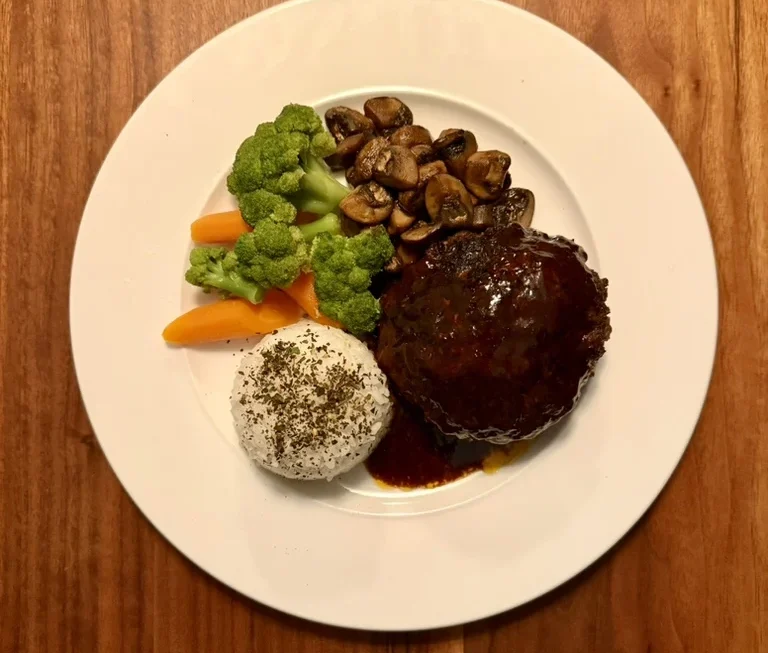
We separate broccoli into florets and peel and chop carrots. The pieces should be roughly the same size so that they cook in the same amount of time. Then we steam the carrots first for 7–8 minutes and the broccoli separately for 4–5 minutes. The vegetables should be tender but still have a bit of bite. If you don’t have a steamer insert or a bamboo steamer, you can simply place a fine-mesh metal sieve in a saucepan, bring a small amount of water to the boil in it, and cook the vegetables in the sieve with a lid on top.
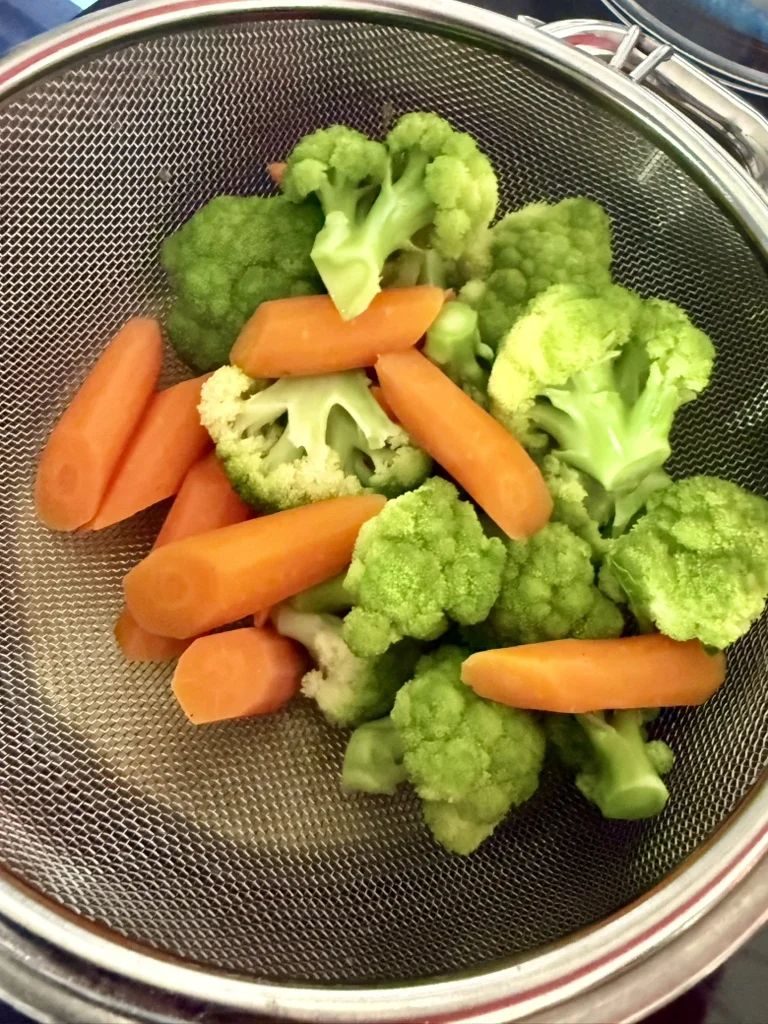
Just before serving, mix the vegetables with a little sesame oil and salt.
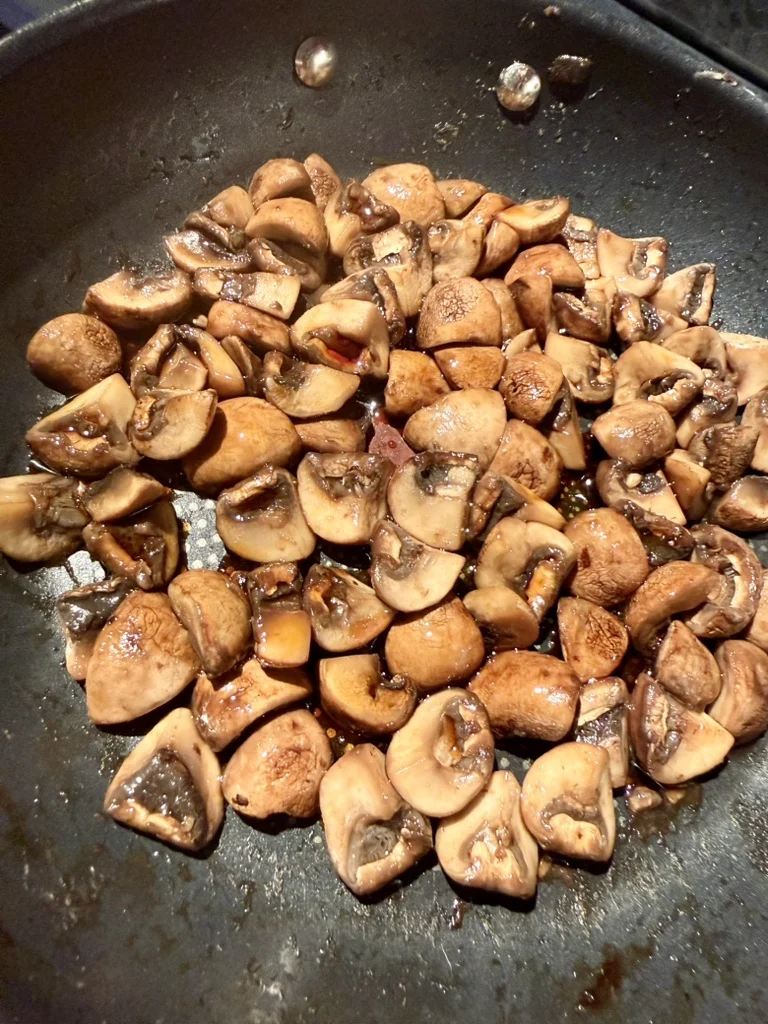
We think mushrooms go perfectly with this dish; it’s also a common variation in Japan. You can use all sorts of varieties, such as shimeji, enoki, shiitake or king oyster mushrooms, but even plain button mushrooms will do.
You can either add the mushrooms to the sauce or cook them separately: sauté them dry over a medium-high heat in a non-stick frying pan until they release their liquid and take on a little colour. Then add a little butter and finely chopped garlic. Finally, add a dash of soy sauce and allow this to soak in. If desired, sprinkle with finely sliced spring onions.
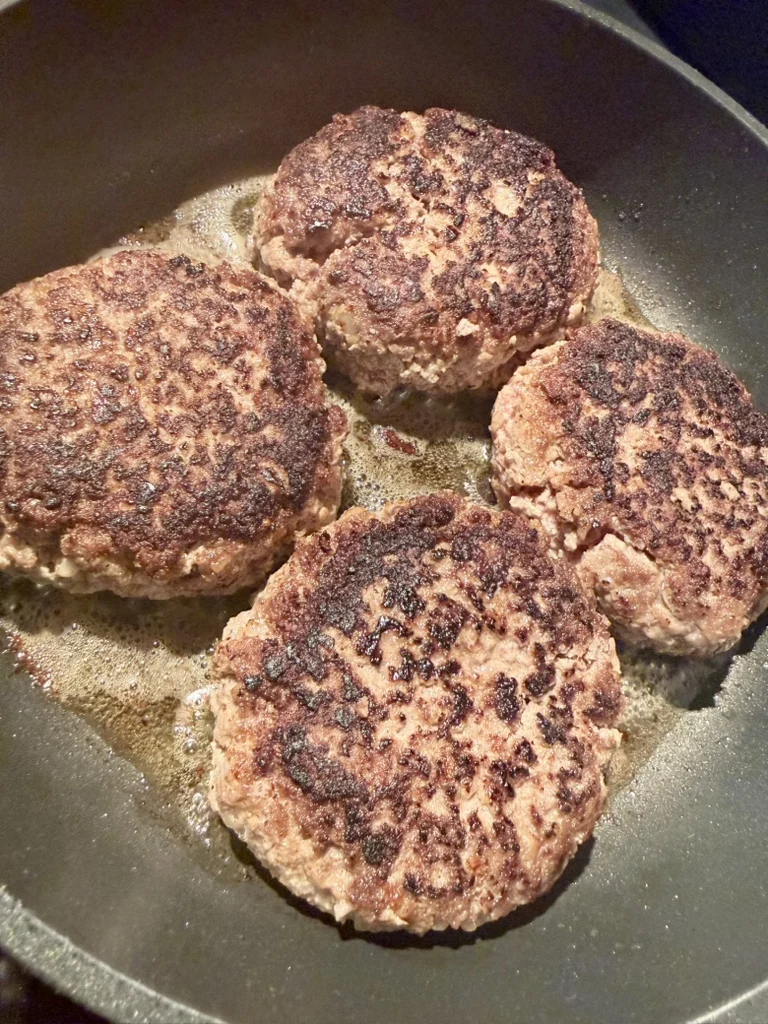
Heat some neutral oil in a frying pan over a medium-high heat, then sear the patties for about 3 minutes on each side; they should take on a deep colour but, of course, mustn’t turn black.
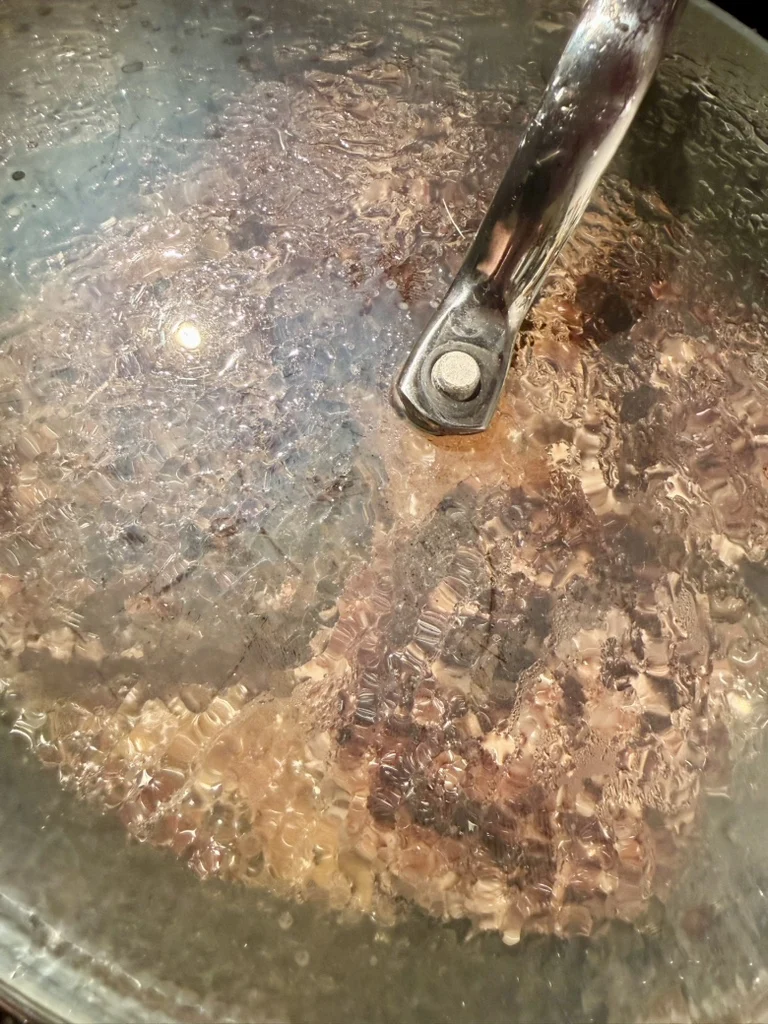
Once this has been done on both sides, add a little water to the pan, put a lid on straight away, and then reduce the heat to medium. This allows the hambagu to steam for about 8–10 minutes. The aim is to reach a core temperature of 71–74 degrees, and as always, we measure this with a kitchen thermometer. Alternatively, you can insert a toothpick into the patties; the juice that runs out must be clear. However, this method is considerably less reliable.
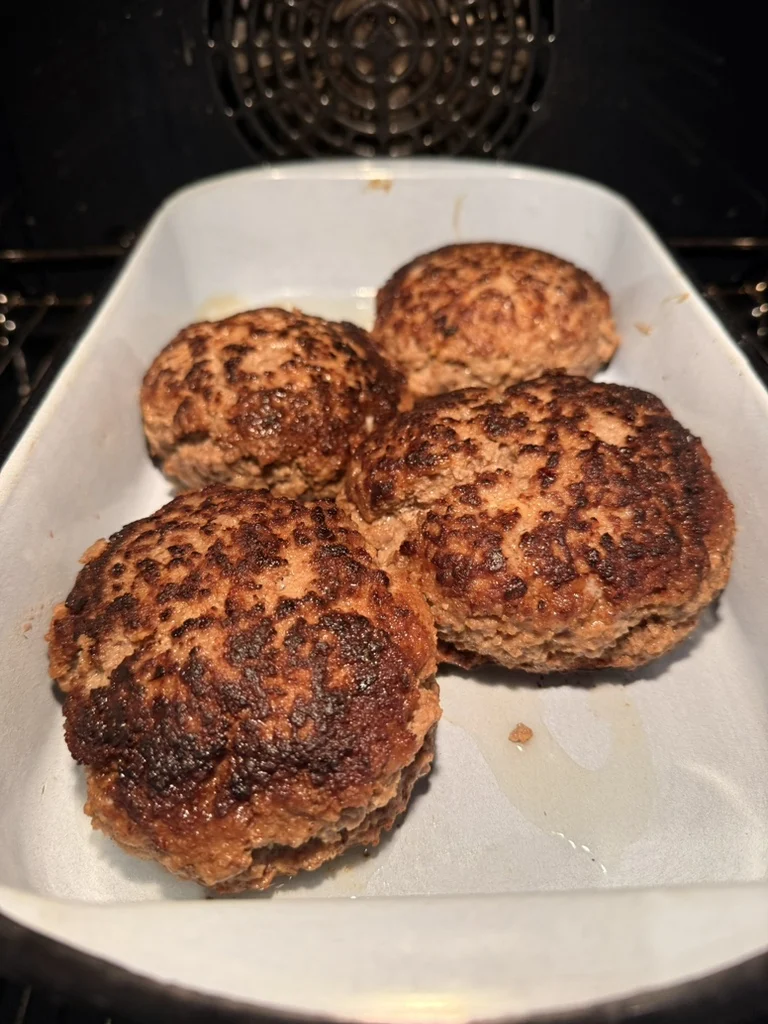
All that’s missing now is the sauce. Whilst we’re making that, we’ll leave the hambagu to rest in the oven at just 50 degrees, so they don’t go cold.
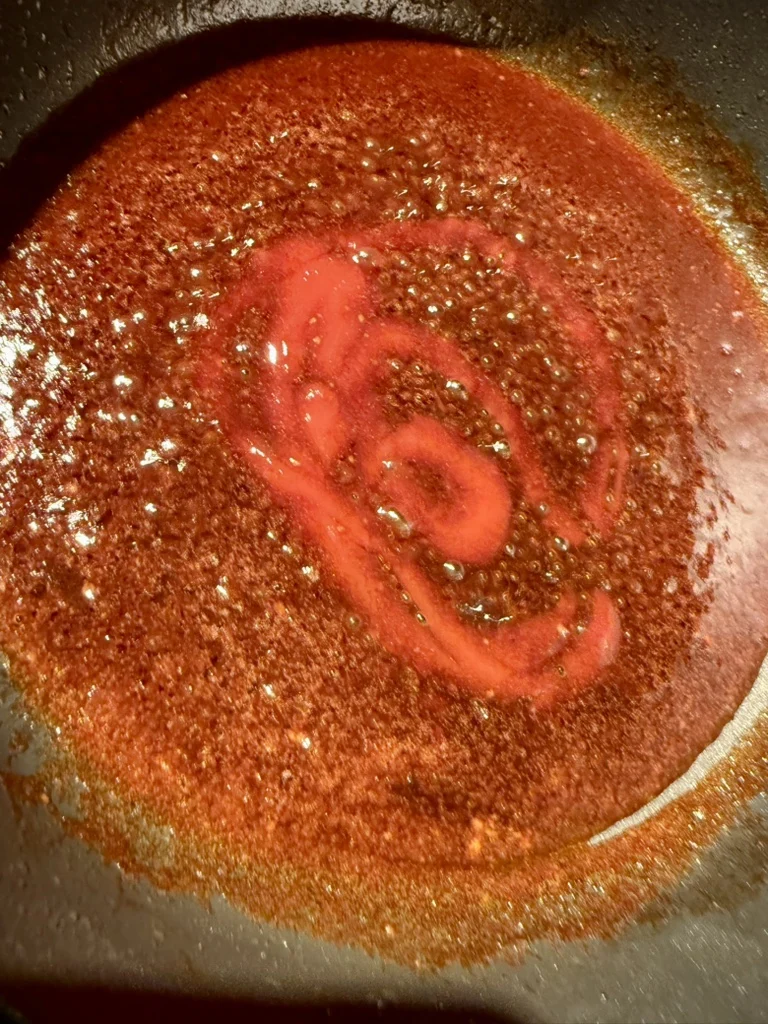
In the pan with the roasting juices, mix together sake, Worcestershire sauce and ketchup. You can also add red wine, though we like to replace it with a little pomegranate syrup. A touch of Dijon mustard works well too – feel free to experiment here. Let it reduce a little, then add a knob of cold butter at the end; this thickens the sauce and gives it a lovely sheen.
Serve with Japanese plain rice, we sprinkle a little furikake on top.
Only the hambagu are coated in the sauce. You should be able to taste the other ingredients on their own. A real treat, and pretty to look at too.
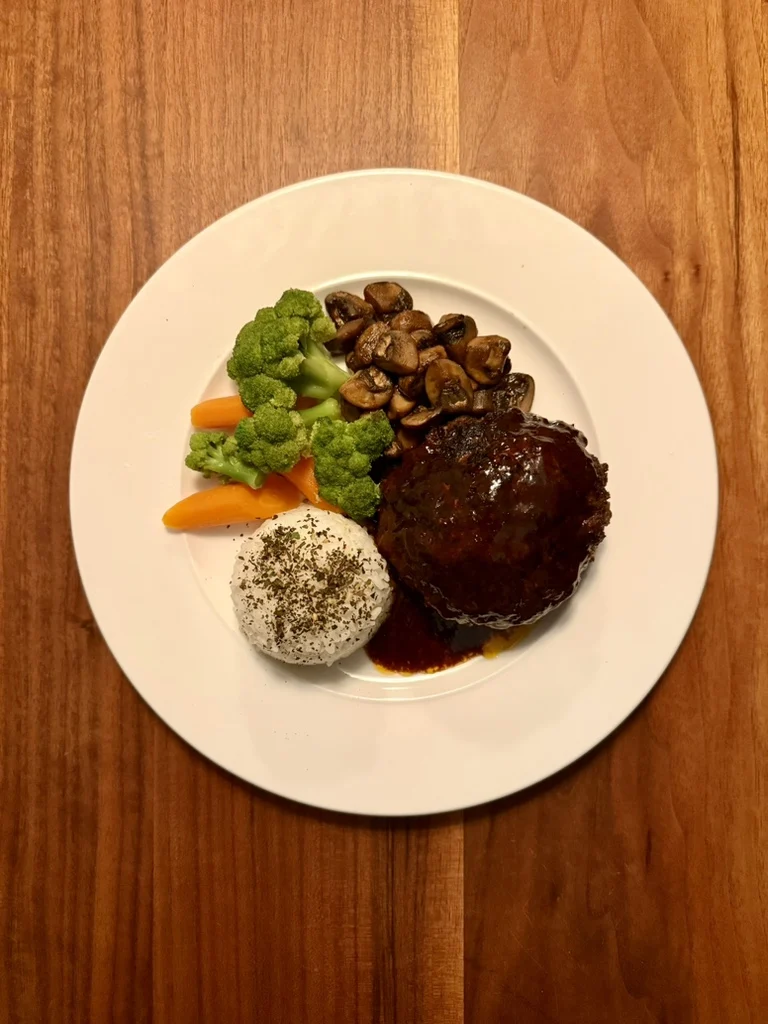
いただきます – Itadakimasu!
And may the taste be with you.
Ingredients (for 4 people):
Hambagu:
2 medium onions, finely diced
2 tbsp butter
400 g minced beef
200 g minced pork
70 g panko or breadcrumbs
50 ml milk
1 tbsp mayonnaise (we use Japanese Kewpie)
1 egg (size M)
1 tbsp Japanese Worcestershire sauce
3/4 tsp salt (6 g or 10 g per 1 kg of meat)
1 tsp black pepper
2 pinches of nutmeg
2 tbsp neutral oil (for frying)
50 ml water (for steaming)
Pan sauce:
3 tbsp red wine or 1 tbsp pomegranate syrup
3 tbsp ketchup
2 tbsp Japanese Worcestershire sauce
1 tbsp sake
1 tsp sugar (only if using red wine; otherwise omit)
2 tsp butter
Japanese rice:
240 g Japanese short-grain rice (e.g. Koshihikari), washed and cooked according to the instructions on the packet
Optional: furikake to sprinkle on top
Steamed vegetables:
200 g broccoli, cut into florets
200 g carrots, peeled and cut into bite-sized pieces
1 tbsp sesame oil
Salt
Optional: toasted sesame seeds
Mushrooms with garlic and soya sauce:
400 g mushrooms of your choice, cleaned and cut into bite-sized pieces or strips
1 tbsp butter
2 cloves of garlic, finely chopped
2 tbsp soya sauce
Freshly ground black pepper