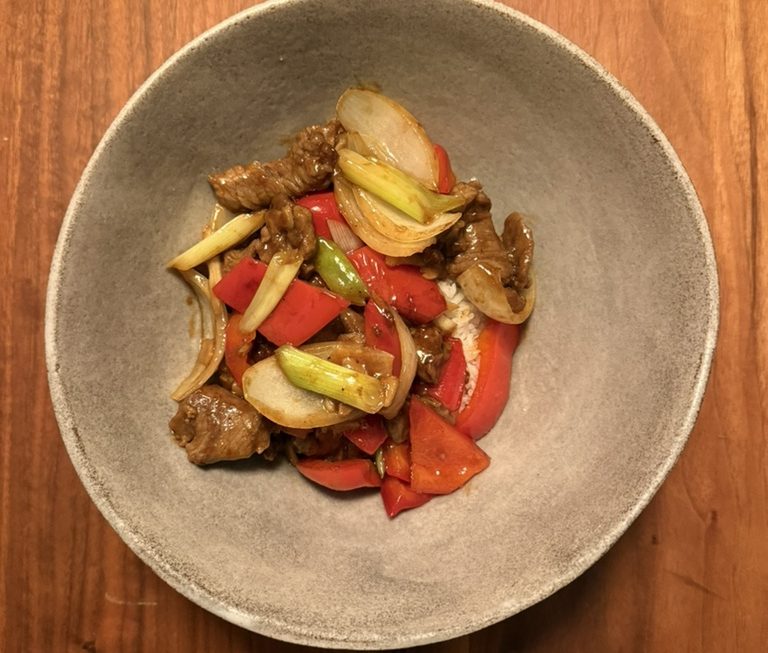
Under the tag “China” we have already presented a number of dishes from this vast country with its many different cuisines.
However, there is also a huge diaspora in which Chinese dishes or their culinary influences are developing in other directions. We have described an example of Indo-Chinese cuisine here.
A significant fusion is the development that Chinese dishes have undergone in the US, and that is where Beijing Beef comes from, not from China or even Beijing itself. Chinese-American cuisine has been evolving for over a hundred years, and in its more recent form, it has become what we now know as “Chinese-American takeout.” The chains P. F. Chang’s and Panda Express are examples of mass production. But unlike what seems to be half the internet, we don’t cook Beijing Beef the way they do.
These dishes are by no means “unauthentic,” but have evolved from migration and social relationships. The cooking technique is very Chinese, but the composition strongly reflects US food culture: speed, visual impact, consistent results, and catchy flavours, plus beef.
The meat must be from a cut that is suitable for tender quick frying. We use beef fillet here. It is cut into 3 mm thin strips, against the grain. Then the beef is thoroughly mixed with a little neutral oil, soy sauce, Chinese cooking wine, cornstarch, and egg so that it is completely covered with a milky white coating.
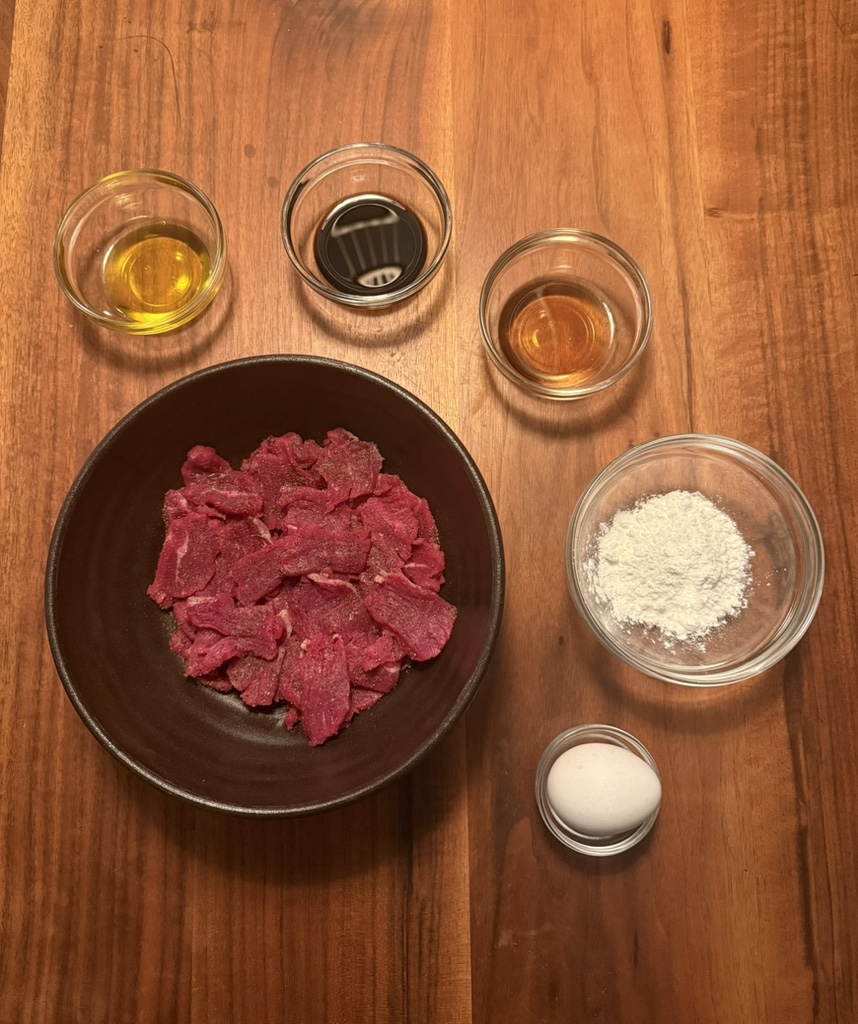
Marinating doesn’t take any longer than preparing the other ingredients. Our rice cooker is already running at this point.
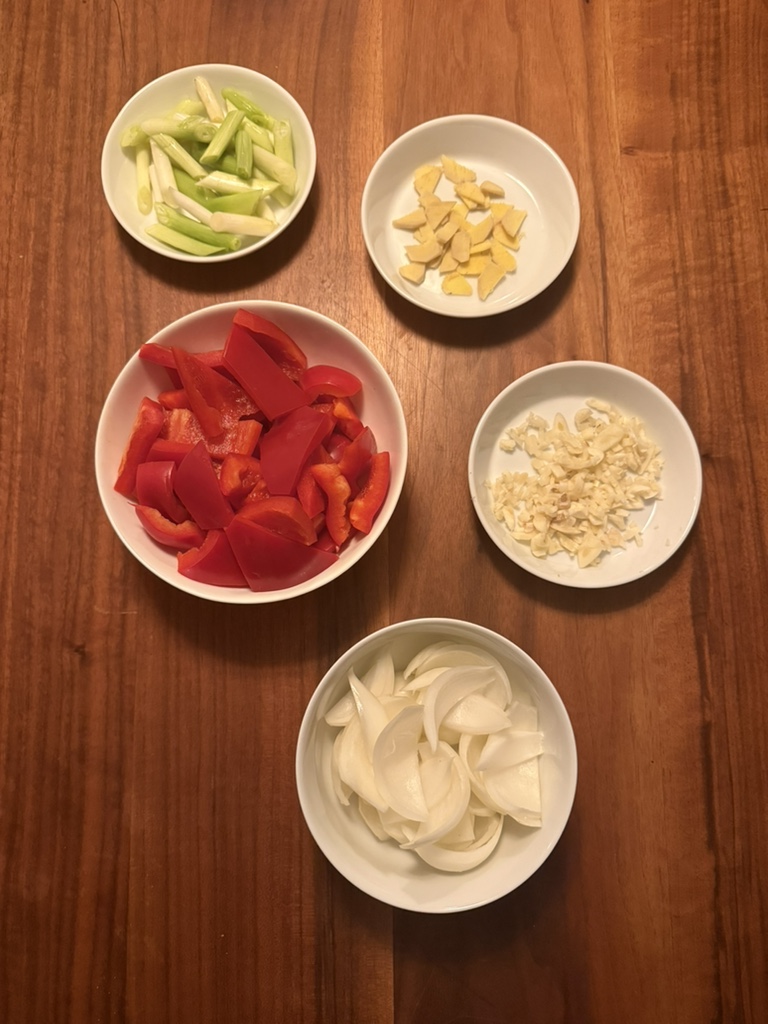
Peel and roughly chop or finely slice ginger and garlic so that you can taste them later individually. Cut spring onions and onion into large pieces or strips so that they can be picked up with chopsticks. Red bell pepper is the last vegetable to be cut, also into strips.
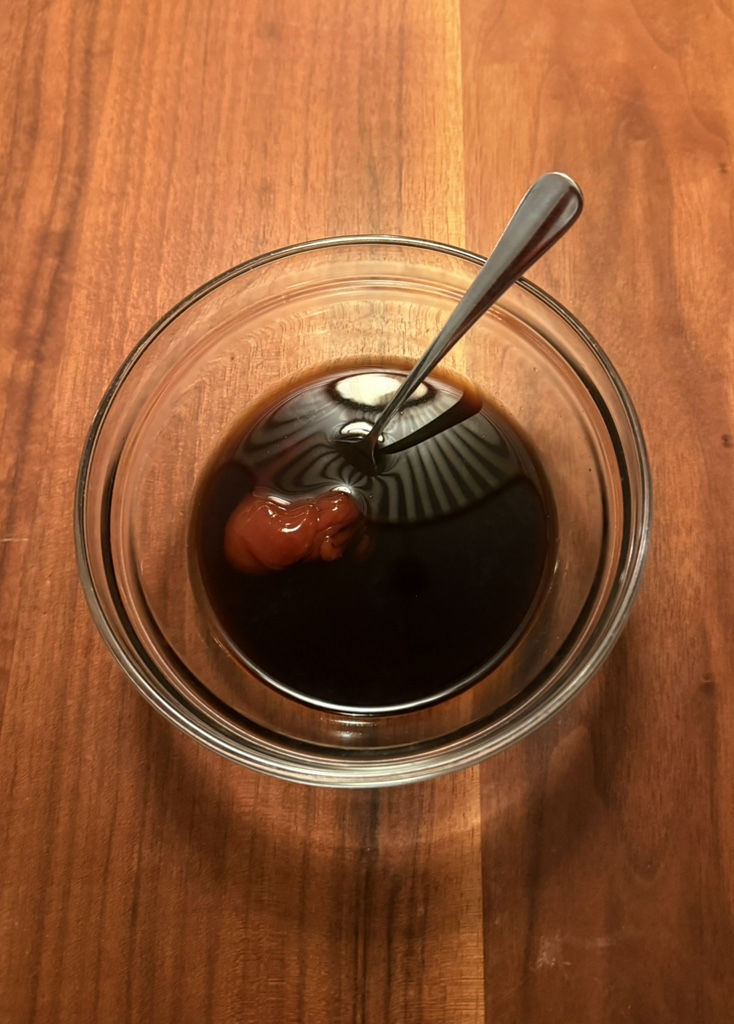
Then mix together a seasoning sauce made from oyster sauce, soy sauce, Chinese cooking wine, ketchup, vinegar, and sugar. Dissolve cornstarch in the mixture to thicken the sauce later. If you like it spicy, add chili to taste.
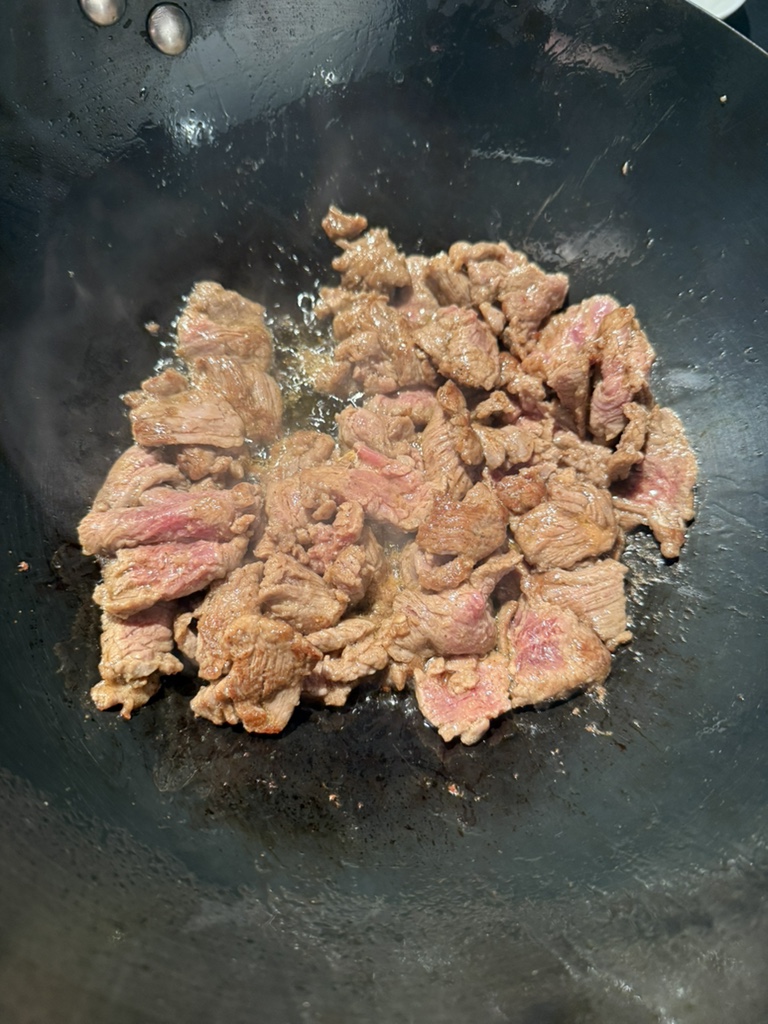
The preparation is as simple and quick as is almost always the case with wok dishes. A small amount of neutral oil is heated to a very high temperature and the meat is seared for just 30 seconds, stirring constantly. It should take on color, because that’s where the flavor comes from. However, it must still be pink inside. The meat is immediately removed from the wok and spread out on a cold plate so that it does not continue to cook in the residual heat.
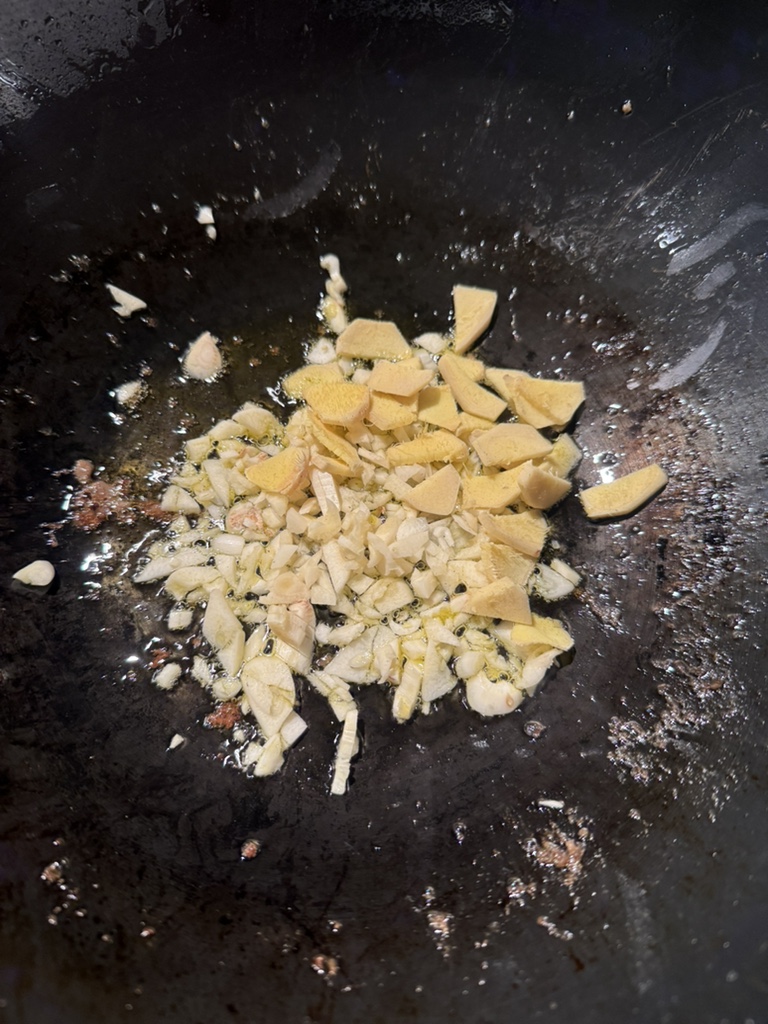
Next, sauté the ginger and garlic until they release their intense aroma. Neither should brown, and this also takes no more than 30 seconds in a hot wok. Then add both to the meat.
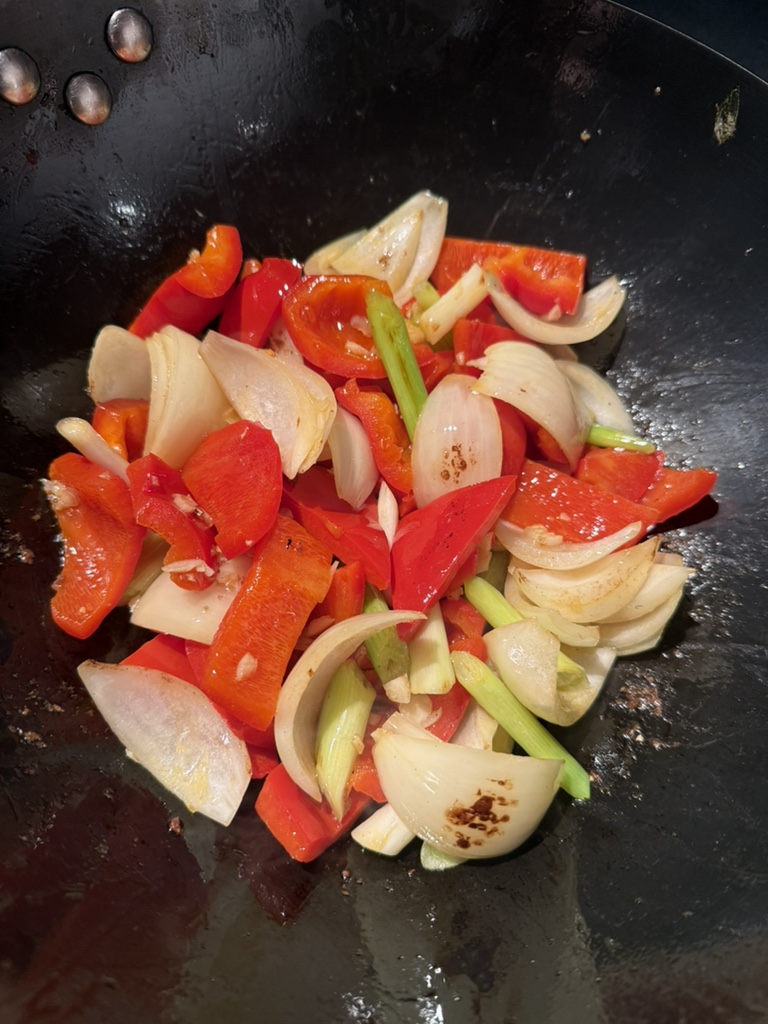
Follow with the remaining vegetables. Now stir less frequently, as the occasional roasted spot contributes greatly to the desired flavor. This may take up to 3 minutes, depending on how crisp you want the veggies to be.
Now add the meat, ginger, and garlic back to the wok and heat briefly…
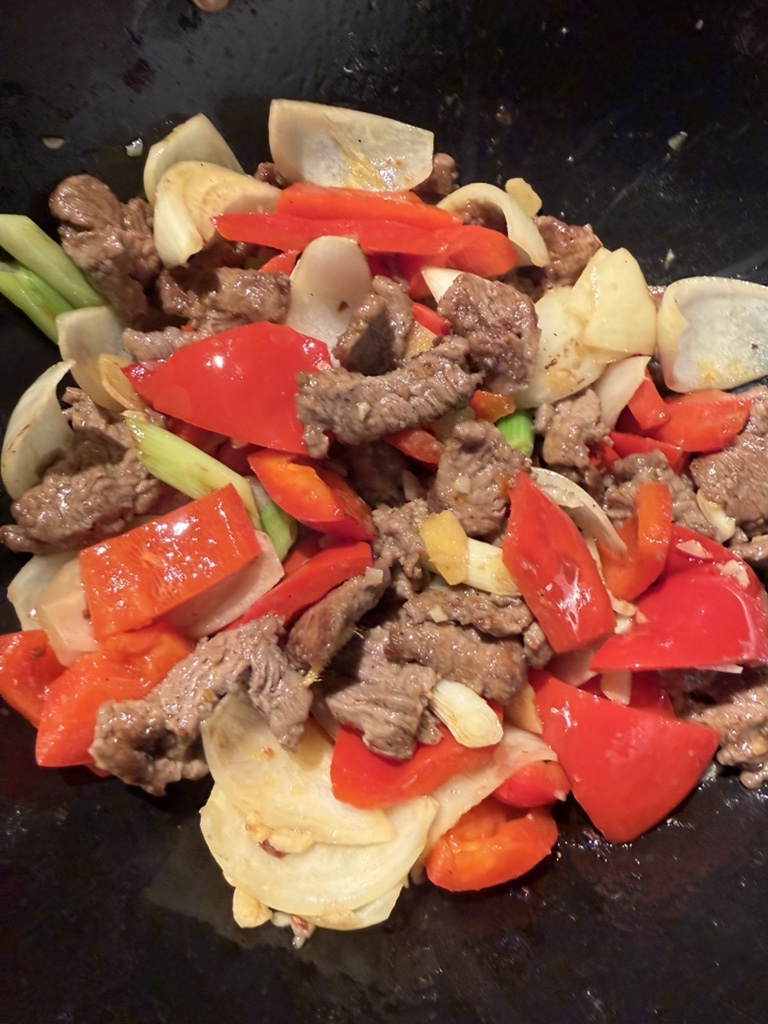
… before stirring in the seasoning sauce, which thickens almost immediately due to the starch.
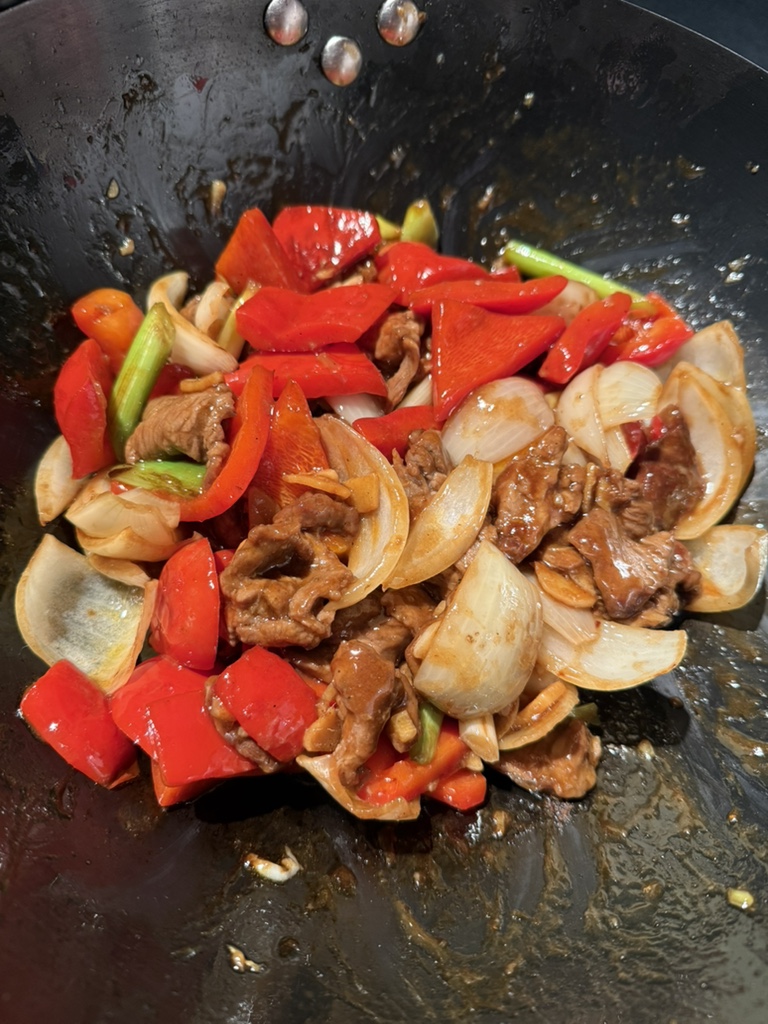
That’s all there is to it. Serve on rice.
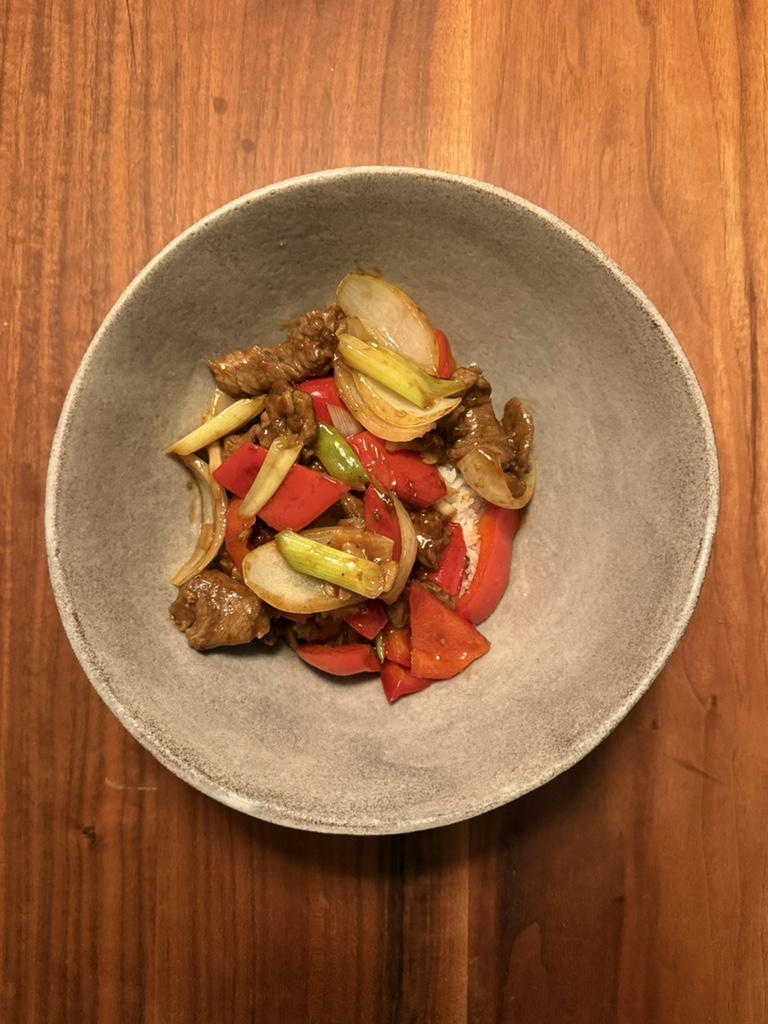
Enjoy.
And may the taste be with you.
Ingredients (for 2 people):
Marinade:
300 g beef for quick frying (we use fillet)
1 tbsp neutral oil
1 tbsp soy sauce
1 tbsp Shaoxing cooking wine
2 tbsp cornstarch
1 egg
Optional: ½ tsp baking soda
Vegetables:
2 cloves of garlic
3 cm ginger
3–4 spring onions
1 onion
1 red bell pepper
Seasoning sauce:
1 tbsp soy sauce
2 tbsp oyster sauce
1 tbsp Shaoxing cooking wine
1 tbsp ketchup
½ tbsp Chinkiang vinegar (Chinese black vinegar)
1 tsp sugar
2 tsp cornstarch
Optional: Chili of your choice and quantity
Rice pairs well with this dish, of course