Fasnet – the Swabian-Alemannic carnival – has just ended.
A time between the end of winter and the beginning of Lent, historically shaped not only by jesters and masks, but also by rich, fatty cooking: whatever butter, lard, and eggs were still on hand was used up before the fasting period. It’s no coincidence, then, that this carnival season is the season of deep-fried pastries.
“Nonnenfürzle” (in Swabian), also called “Nonnenfürzchen” (Standard German), really do have a strange name. Taken literally, it would translate “little nun farts” (with -le/-chen as diminutive endings: “little/small”). It’s been suggested that the word is a folksy distortion of the Middle Low German “nunnekenfurt”, which is said to mean something like “made by nuns”. The only problem: Middle Low German wasn’t spoken where Nonnenfürzle are made today. So: we don’t actually know – and probably nobody knows for sure. At some point, a jokester seems to have taken over the original term.
Apart from the fact that we’re from southern Germany, we’re writing about this preparation because it teaches you what classic choux pastry is. And that’s something you should know: choux pastry is delicious, and the foundation of many classics – from Burgundian gougères to “Windbeutel” in the German-speaking world to éclairs (for which, however, a different dough composition would be chosen, namely with less flour).
You only need a few ingredients: flour, milk, butter, and eggs. A pinch of salt is common but not strictly necessary. A little baking powder can make handling easier.
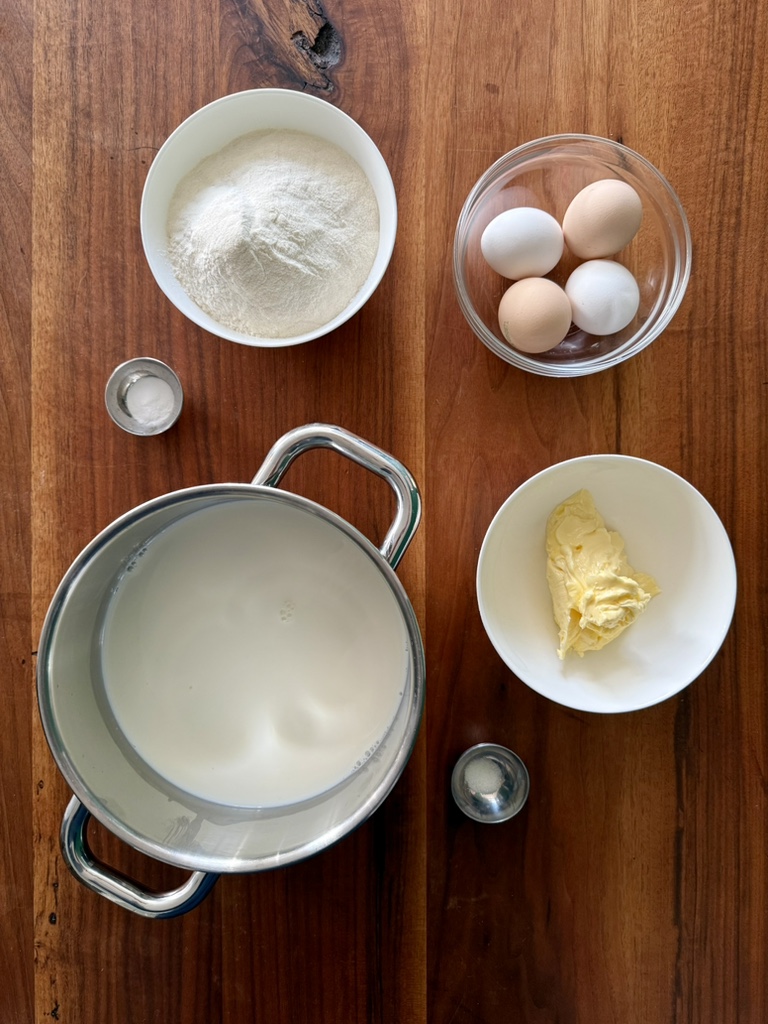
At the end, as always, you’ll find quantities – for two versions: a more robust one with baking powder, and a finer one without, where half of the milk is replaced with water, but the butter content is increased significantly. You can tell already: that one is more French.
What matters most is using a heavy pot and a cooking spoon – ideally wooden. Don’t try to do this with a whisk; it won’t work. Making choux pastry is quite some work, and you shouldn’t hand it off entirely to a food processor. Where it could be of help however, we’ll explain in a moment.
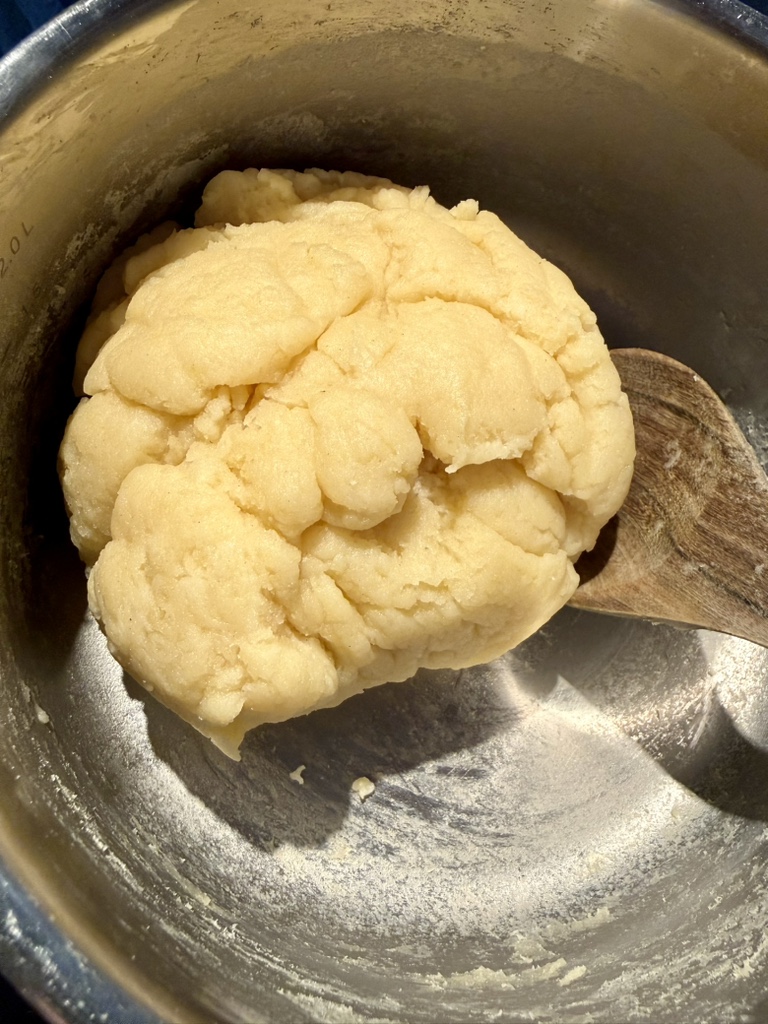
Heat milk (or milk and water), but don’t bring it to a boil. Melt butter in it until completely liquid. Then reduce the heat to low, add all the flour at once, and stir very thoroughly with the spoon while holding the pot steady with your other hand. The flour must combine homogeneously with the liquid and be cooked out so it loses its raw taste and hydrates properly. This easily takes four arduous minutes. Only when the dough forms a ball and no longer sticks to the pot is this step done.
Now turn off the stove – but the dough must still be worked while warm. From this point on, you can use a food processer. Doing it by hand is possible too, but it’s even more work than what you’ve already done. Crack eggs one by one into a separate bowl first, so you can remove any shell if needed. Then add one egg to the dough and stir until fully incorporated. Only once everything has come together do you add the next egg. This process, when done by hand, replaces the gym.
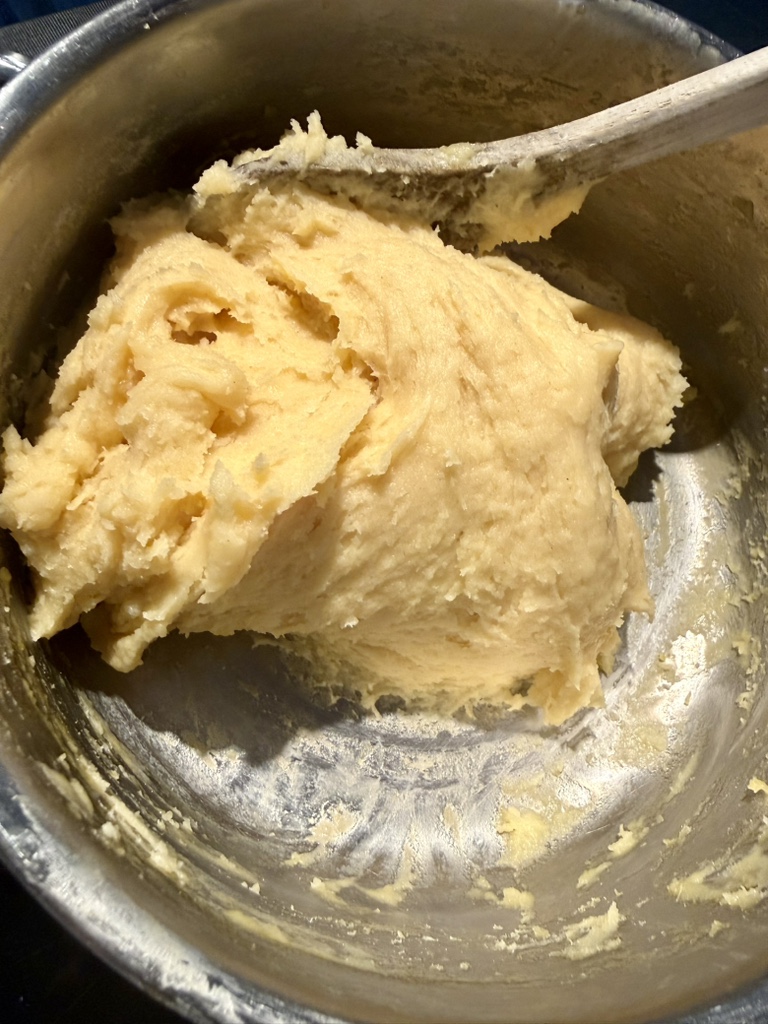
Once everything is homogeneous again and the surface looks glossy, the choux pastry is finished. Unlike many other doughs, it doesn’t need to rest – you just shouldn’t work with it further until it has cooled to at least lukewarm.
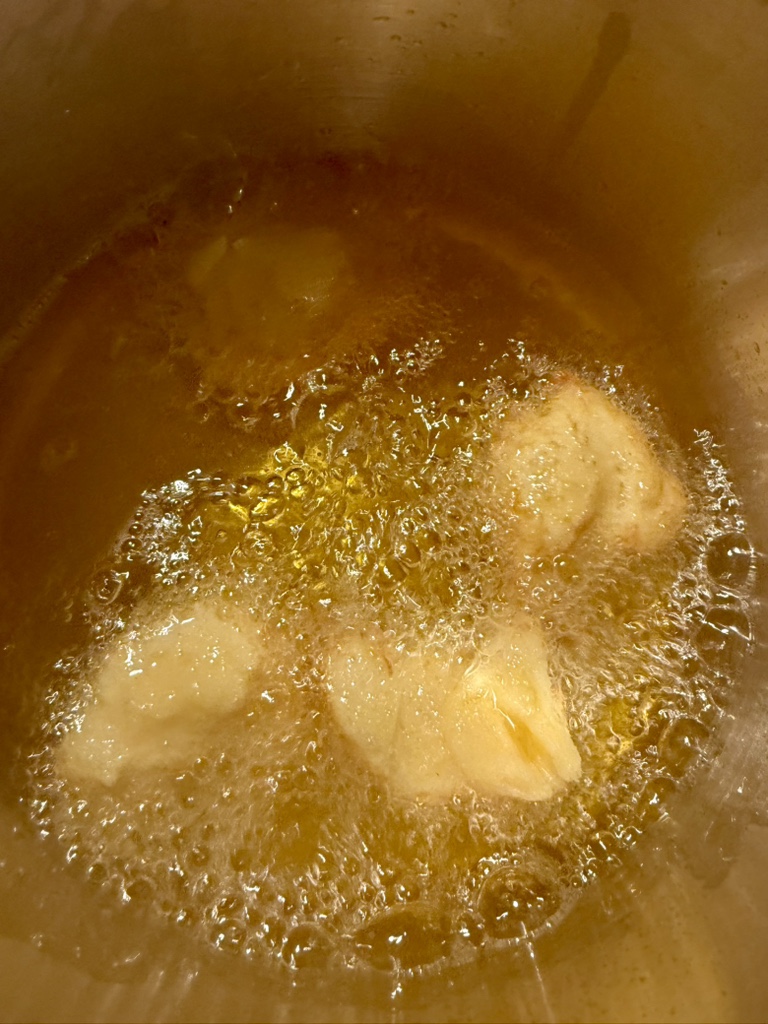
Heat lard, vegetable fat, or a neutral oil in a small pot to 160 – 170 C°. Keep a glass of water next to the stove, for dipping two small spoons. With a wet spoon, take a small portion of dough and use the other spoon to shape it into a small ball, then drop it into the hot fat and fry until golden-brown, about 4 minutes. During that time, turn the “Nonnenfürzle” once or twice so they’re evenly exposed to the heat – but this isn’t a precision exercise.
To cool, place the pastries on paper towels to absorb excess fat.

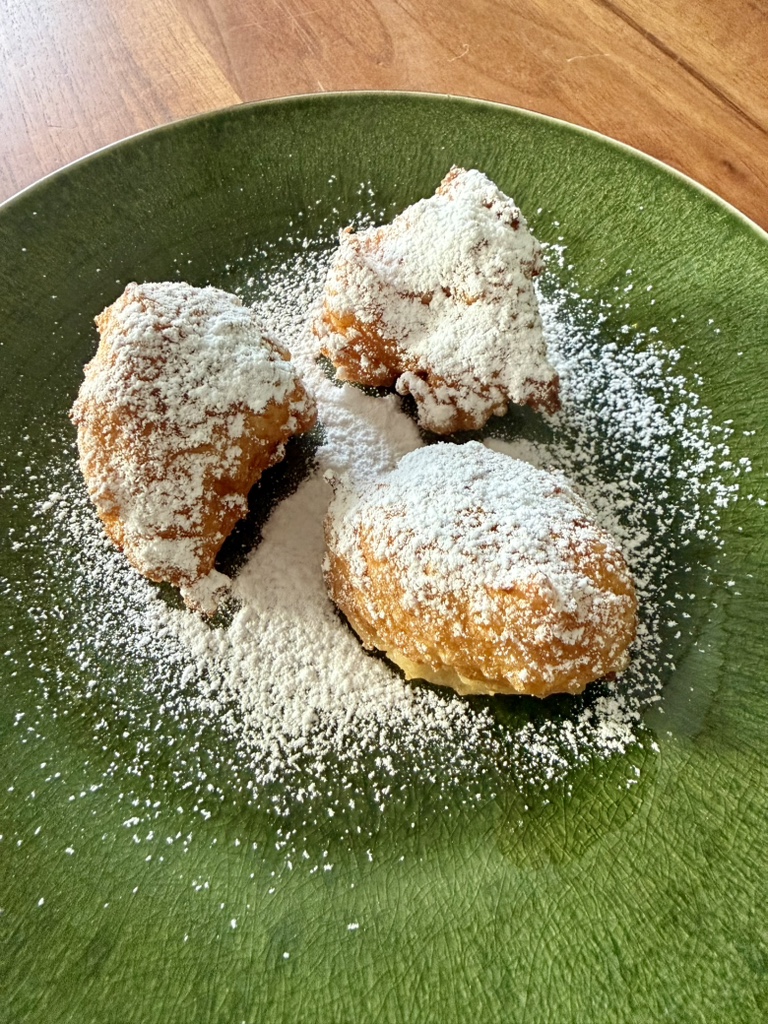
You should eat “Nonnenfürzle” as fresh and warm as possible. They’re often tossed in a mixture of cinnamon and sugar, but we like to dust them very lightly with some icing sugar.
Enjoy.
And may the taste be with you.
Ingredients (for 4 – 6 people):
Robust version:
250 g flour
400 ml milk
100 g butter
4 eggs (size M)
1 pinch of salt
1/2 tsp baking powder
Finer version:
250 g flour
200 ml milk + 200 ml water
180 g butter
4 eggs (size M)
1 pinch of salt
lard or vegetable fat or neutral oil, for frying
icing sugar, or a mixture of sugar and cinnamon