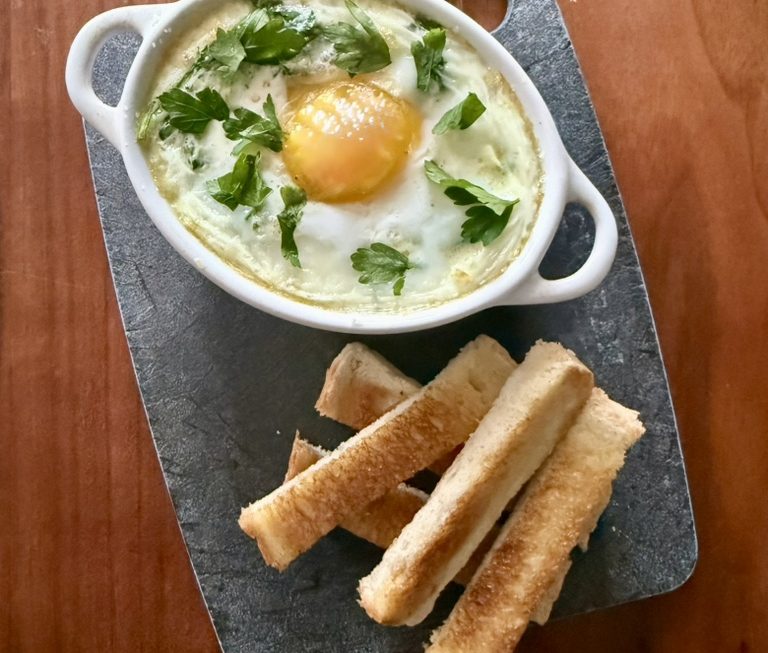
Eggs are probably the most versatile of all foods. Entire books have been written about what you can prepare with eggs. Therefore, we also attach importance to explaining the different basic preparations of eggs one by one. We have already done this for boiled eggs, poached eggs, fried eggs and eggs in a basket. More will follow over time.
Today we follow up with a charming preparation from France that can be used to cook extravagant breakfast eggs, but also beautiful appetizers – Œuf Cocotte.
The word “cocotte” has a double meaning. For one it is an older, colloquial and affectionate expression for a chicken. But it also refers to a casserole in which food is cooked in the oven. They range from very large to very small. In French cuisine, this developed into the technique of cooking eggs in tiny casseroles.
Of course, this is not possible without small cocottes, but they are also available in inexpensive versions and we recommend simply buying small porcelain molds, internationally called ramekins. They are less decorative but very useful, especially for the preparation of soufflés and desserts.
The technique is simple: the egg is placed in the buttered dish, usually with a little cream or crème fraîche, herbs and other ingredients, and then poached in a water bath or the oven. This keeps the egg tender and creamy.

The egg can be combined with an almost endless number of other ingredients. Spinach, cheese, salmon, ham or chorizo are popular, for example, but also (boiled) potatoes, mushrooms, onions, leeks or tomatoes. Chives, parsley, tarragon and chervil are herbs that go particularly well with this preparation.
Cocottes or ramekins are spread with soft butter, which is quite easy to do with kitchen paper, for example. Then they are filled according to your mood, although you have to keep in mind that the cooking time depends on the egg. Any ingredient that takes more time must be pre-cooked.
We have left over boiled potatoes, cut them in small cubes and put them at the bottom, followed by stripes of cooked ham. We quickly sauté finely diced shallots in little butter before sprinkling them over together with a little grated Parmigiano Reggiano, which provides umami.

We bring cream to a boil in a small saucepan and season with salt, black pepper from the mill and freshly grated nutmeg. This is the classic spice combination for Oeuf Cocotte. Then we divide it up: in one half of the cream we let fresh, washed spinach wilt briefly. In the other we let pieces of chorizo (without skin) steep so that they cook and release their intense flavor to the cream. We fill each mold with the result and finally top it with an egg.
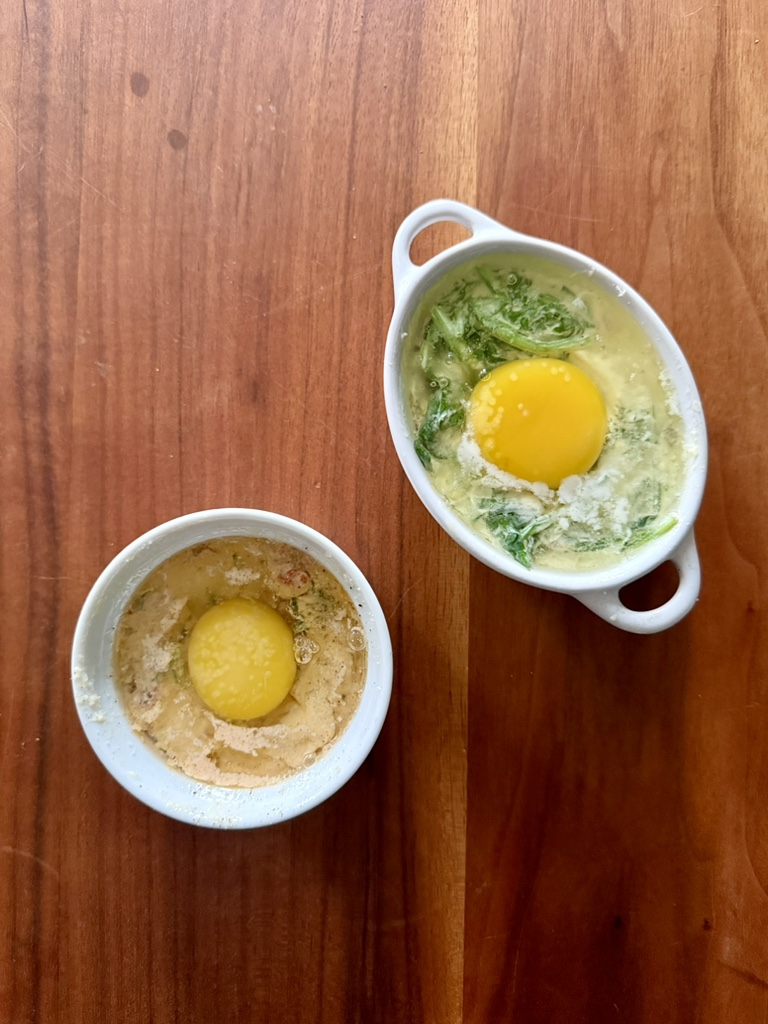
As said, pretty much anything is possible, especially crème fraîche brings a completely different consistency and fine acidity. Just try everything that interests you.
Cooking is either done in a water bath, for which we would recommend a pot. Place the ramekins in the pot and pour hot water next to them so that they stand a little more than half in it. Then put a lid on and bring to a boil. This now makes a lot of rattling noises because air bubbles form under the molds and lift them constantly.
Or (and this is how we usually do it) you put the molds in the oven preheated to 160 °C with convection (without convection 180 °C) and watch the egg from minute 8 (10 – 12 minutes is the usual cooking time). Remove when it looks almost perfect for you – it will cook a little more in the heat of the mold.

This is served with “mouillettes”, which are strips of baguette or toast, cut about finger’s width, roasted and lightly buttered. You can then dip them wonderfully into the liquid egg yolk.
Enjoy.
And may the taste be with you.