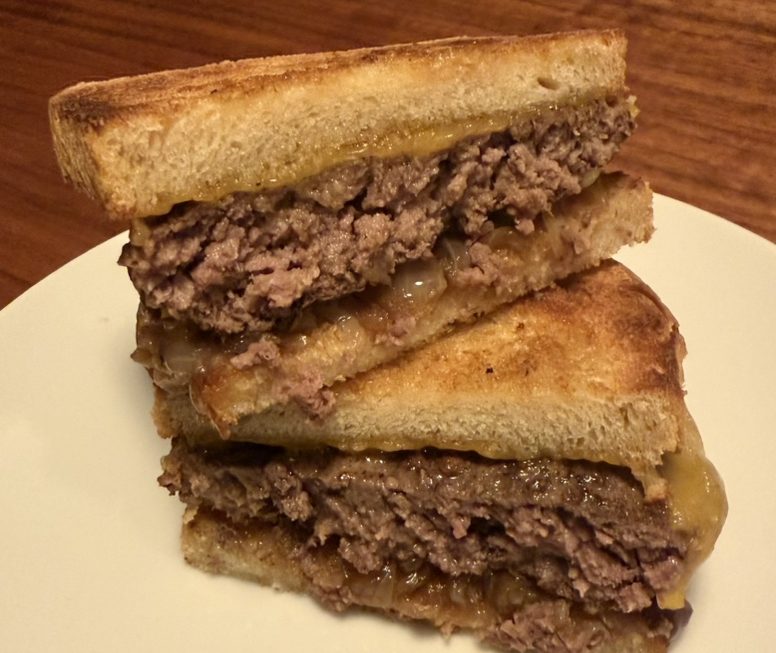
There aren’t many reasons to voluntarily engage with the United States these days, given its bitter present. But perhaps that’s all the more reason to engage with its past. With gritted teeth, we hereby present our preparation of a patty melt. That, too, is culinary history.
A patty melt is a sandwich and somewhat similar to a burger, yet it is something unique. It originated in American diners, and while the hamburger has long since become a global icon of fast food, its slightly older, more down-to-earth relative has remained primarily anchored in the United States.
Instead of a soft, round bun, you get toasted bread, typically made from rye. Instead of lettuce leaves, tomatoes or mayonnaise, it is the combination of melted cheese and sweetly braised onions that gives the dish its depth. The patty melt is all about the combination of savoury, sweet and roasted flavours. It is a dish made in a pan, not on the grill.
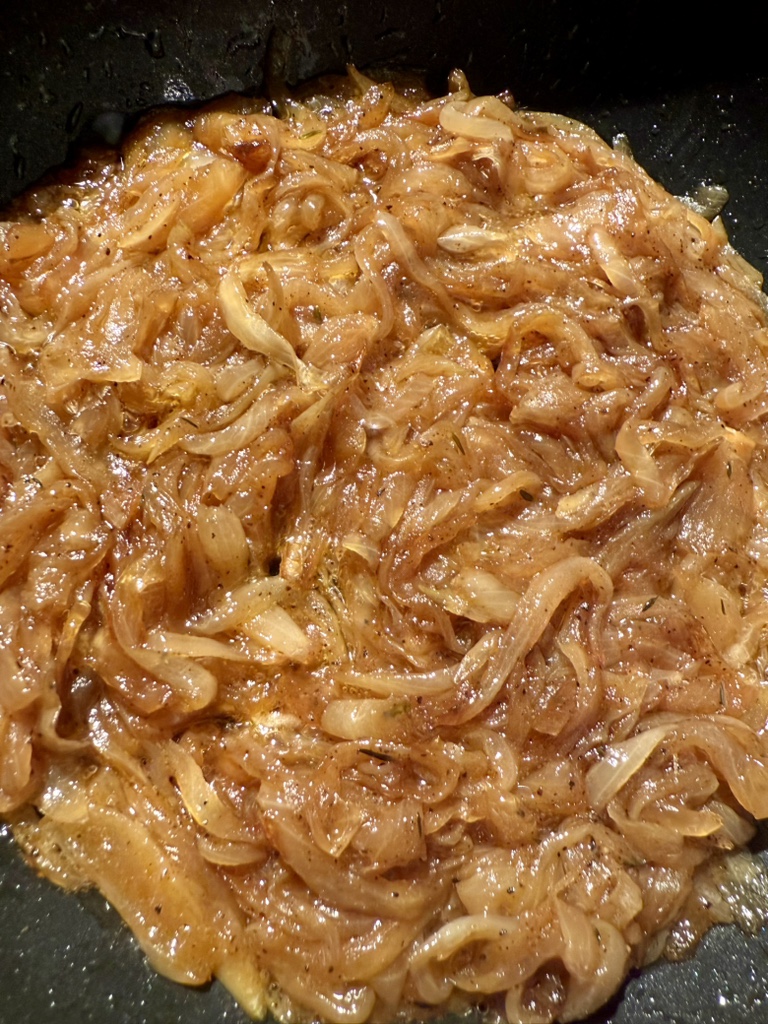
We peel and halve a large quantity of onions, then cut them lengthwise into fine strips. We sauté them in a pan with salt, pepper, thyme and bay leaves over medium heat in plenty of clarified butter.
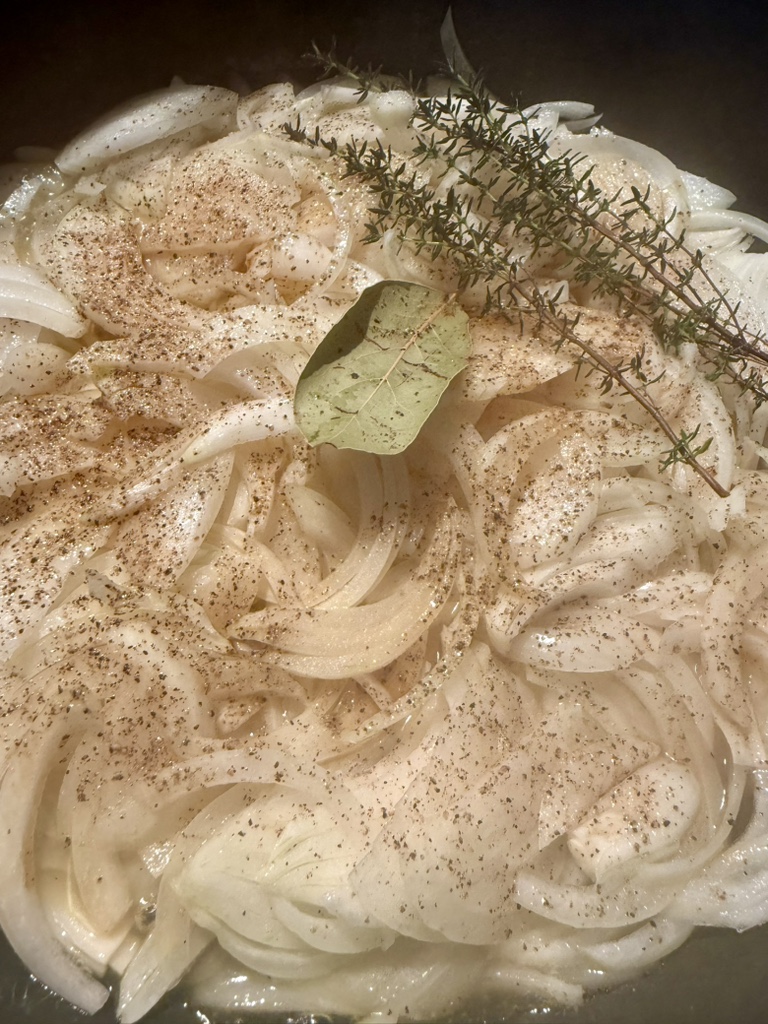
It takes 15–20 minutes for the onions to lose enough liquid to start taking on colour. During this time, they only need to be stirred occasionally. From now on, they are covered with a lid, as they are not supposed to dry out any further.
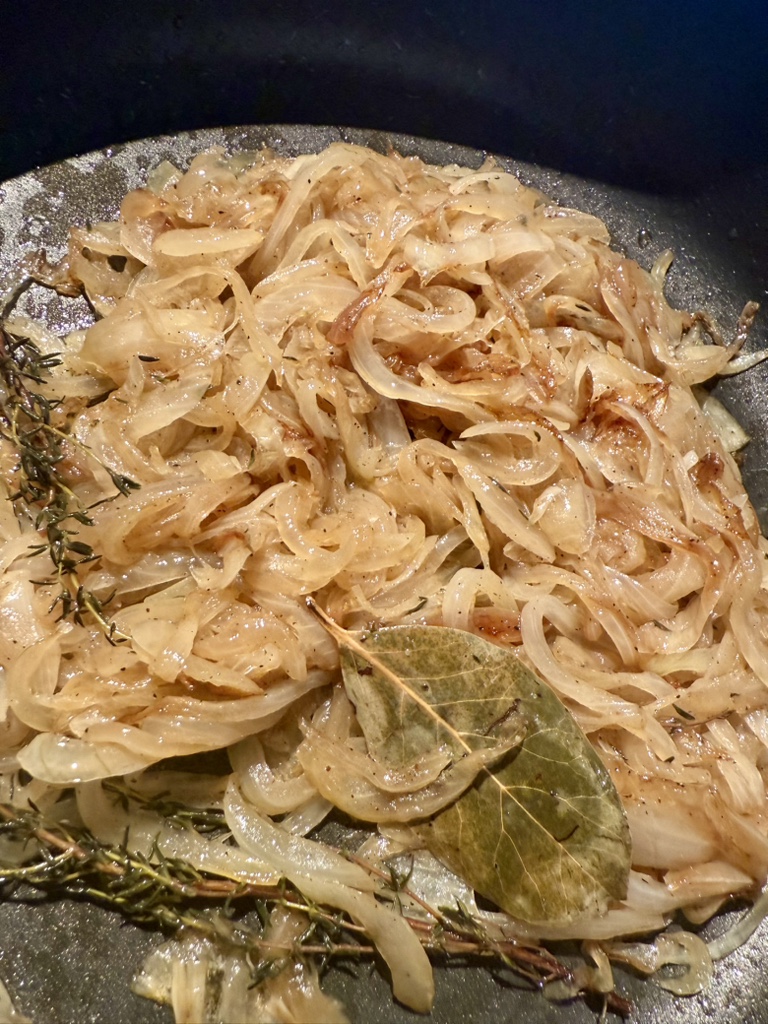
After 30–40 minutes, the onions are brown but not roasted, rather braised, and have taken on a consistency reminiscent of jam. This is an essential ingredient for a really good patty melt.
As is often the case with popular dishes, its exact origins are not fully documented. What is certain is that the patty melt became popular in the United States in the 1940s and 1950s, presumably on the west coast, in the wake of the blossoming diner and lunch counter culture. The name William ‘Tiny’ Naylor is often mentioned: a restaurateur who ran a drive-in restaurant in Los Angeles and probably added the patty melt to his menu – perhaps even invented it.
During this period, American tastes underwent a radical change: the idea of the ‘all-American meal’ emerged, characterised by industrially available products (such as American cheese). Patty melt was, so to speak, a transitional dish between the sandwich culture of the 1930s and the burger boom of the 1960s.
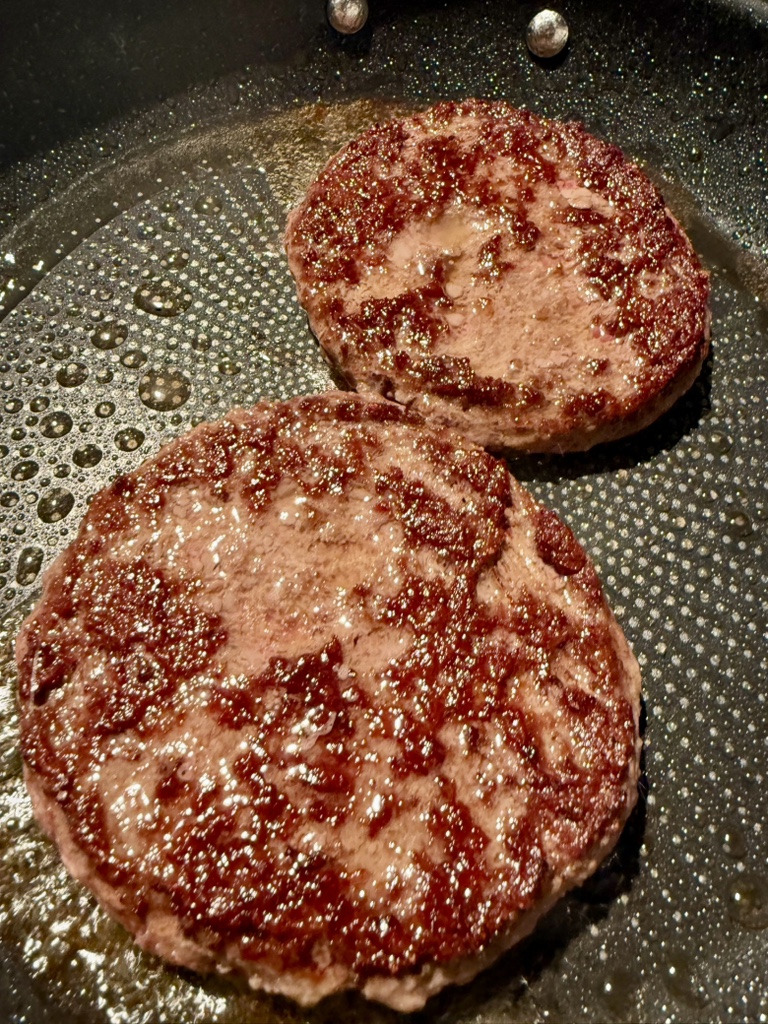
The classic way to make a patty melt is to create a crispy crust: the meat is seared and the bread is toasted in butter. We do both in a pan, first the bread, then the patty. For the meat, we use just a few drops of neutral oil and high heat so that the surface caramelises quickly and thoroughly.
In many cultures, steaming meat is not uncommon. In parts of China and Southeast Asia, for example, minced meat is cooked over steam, often together with onions or broth. In the USA, this method is less common, but not unknown. In parts of the Midwest – such as Iowa or Ohio – there are local specialities such as the ‘loose meat sandwich’, in which minced meat is cooked in broth. The famous ‘steamed cheeseburger’ from Connecticut also uses steam: here, the patty is cooked in a small stainless steel chamber, the cheese is melted next to it, and then everything is served on a bun – a contrast to the usual burger texture.
We now apply this technique to the patty melt. Instead of continuing to fry the patty, we pour brown veal stock into the pan. If you don’t have this, you can also use beef stock, but the flavours will be less intense.
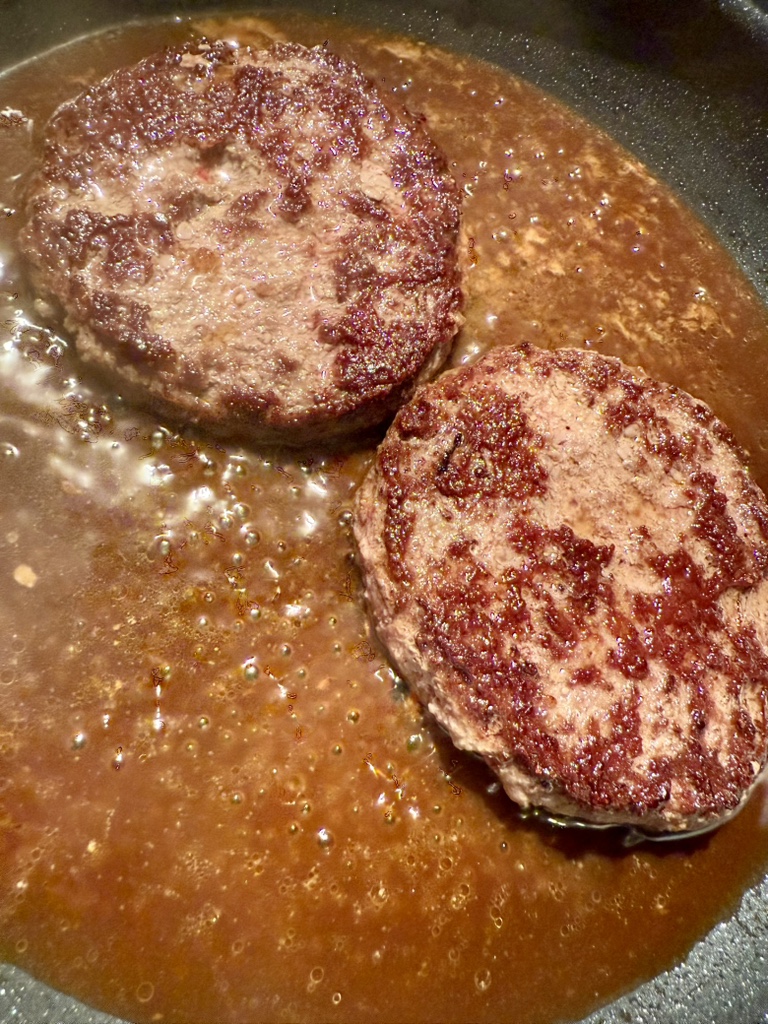
We continue to slowly steam the meat while it is flavoured and kept moist by the stock. You can cut into the centre of the surface with a sharp knife to check how far the meat has cooked inside.
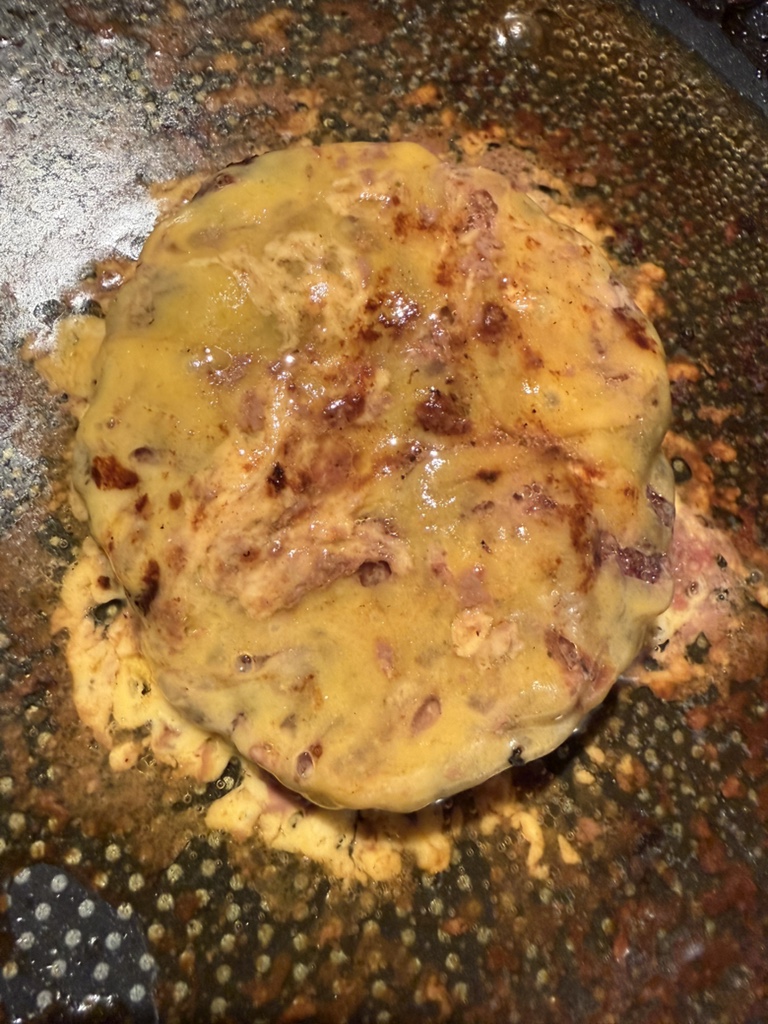
When it has almost reached the desired point, we place slices of cheddar on the meat and put a lid on the pan. This way, the cheese melts in no time.
Now all that remains is to assemble everything on the toasted bread.
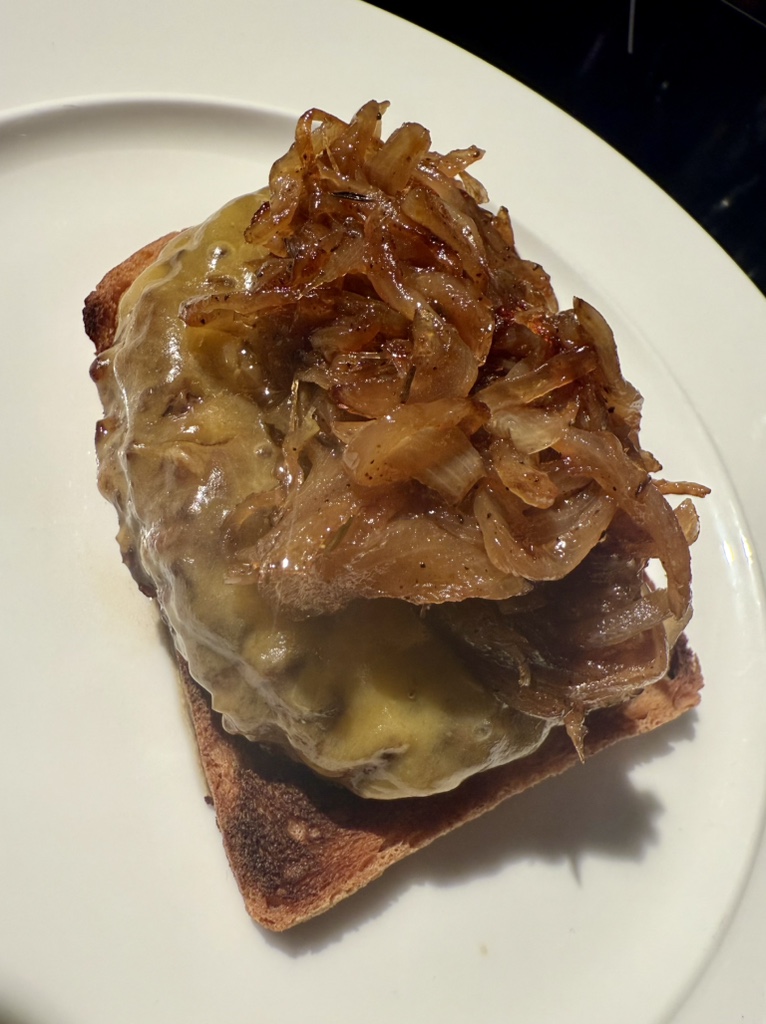
In our opinion, the result has a much better bread-to-meat ratio than a burger and also tastes much juicier. More flavours are not necessary at all.
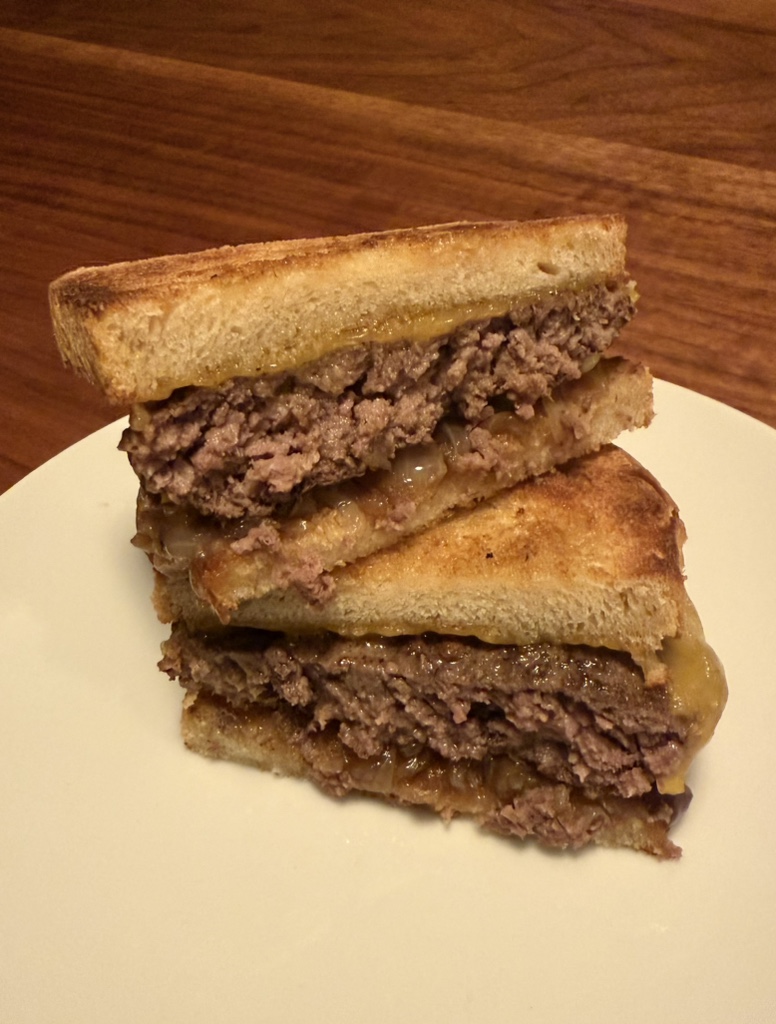
Enjoy.
And may the taste be with you.