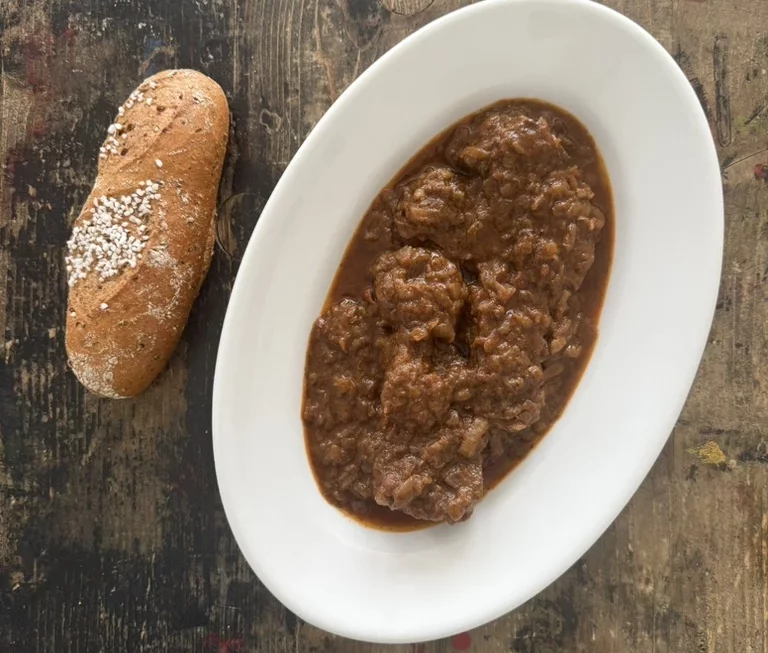
The Viennese Saftgulasch – what you might call a Viennese beef goulash – is something else entirely.
Anyone who savours a Viennese goulash in the exceptionally beautiful city of Vienna, in one of those old pubs where time seems to have stood still sometime in the 1950s, will immediately realise that this is something quite different from what is usually served under the name ‘goulash’.
The sauce is dark, almost blackish-brown, rich without any thickening agents, and has a depth of flavour that cannot be achieved by taking any shortcuts. The meat falls apart, yet retains its texture. And the flavour is intense, yet surprisingly subtle.
In Vienna, we recommend visiting the restaurant ‘Zur Eisernen Zeit’ at the Naschmarkt and ordering a Saftgulasch (you should book in advance, as there are very few seats and it’s not exactly a hidden gem). The restaurant has been around since 1916 – it is the oldest restaurant on the Naschmarkt and was opened back then to feed the construction workers who moved the market to its current location. Since then, it has survived two world wars, the post-war reconstruction and even the boom in tourism. The Saftgulasch there is served just as it should be: no frills, and served with your choice of Serviettenknödel (bohemian dumplings), Nockerln (kind of Viennese spaetzle) or Gebäck (a bread roll).
Leave the Fiakergulasch – which is also on the menu and served with a fried egg, sausages and gherkins – to the other tourists, who are ordering it en masse.
The Wiener Saftgulasch differs from other goulash recipes in one crucial respect that surprises many people: the meat is not browned. The entire roasted flavour comes solely from onions that have been sweated very patiently until they are very dark.
We have already described a goulash here and stand by this recipe wholeheartedly – it is delicious. However, Viennese goulash is a different dish, despite all the similarities.
The best cut of meat to use is beef shank. Otherwise, you need a cut with plenty of connective tissue, as is usually the case with braising. You’ll also need onions, tomato paste, white vinegar, paprika, caraway, marjoram, salt and water. That’s all.
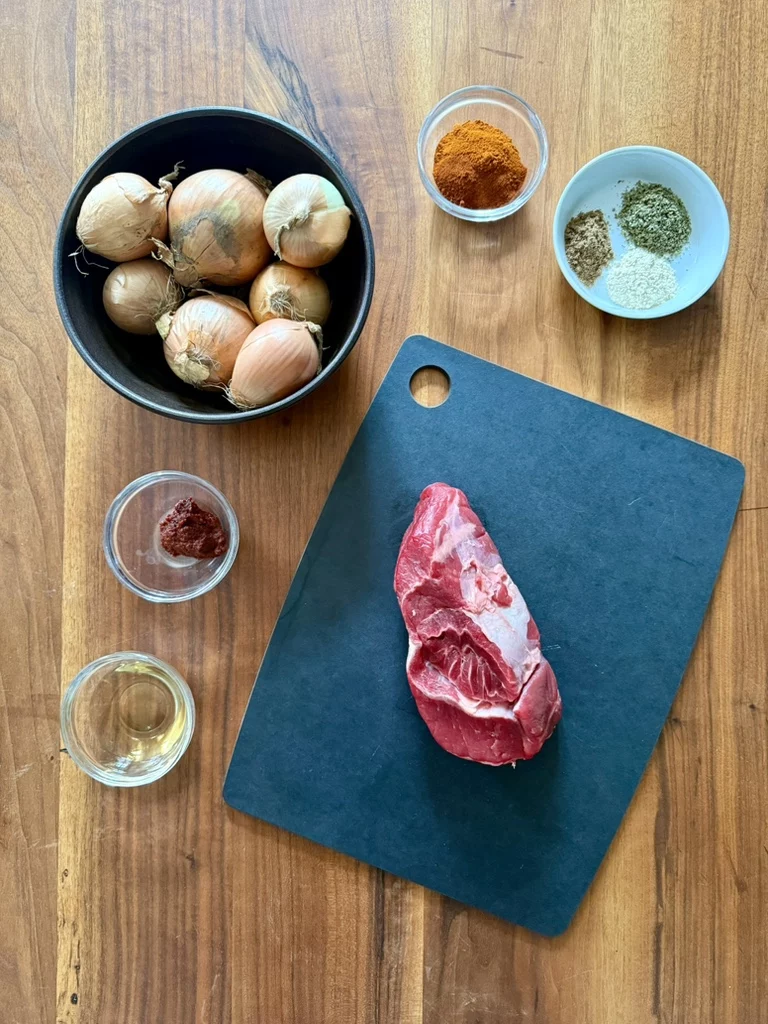
A note on the quantity: you should never make too little goulash. You need a certain amount for the flavour to develop properly. Any leftovers taste even better the next day or are ideal for freezing.
Cut the meat into cubes of 4 – 5 cm, as uniform in size as possible. Halve the onions, peel them and slice them crosswise into strips 2 – 3 mm thick.
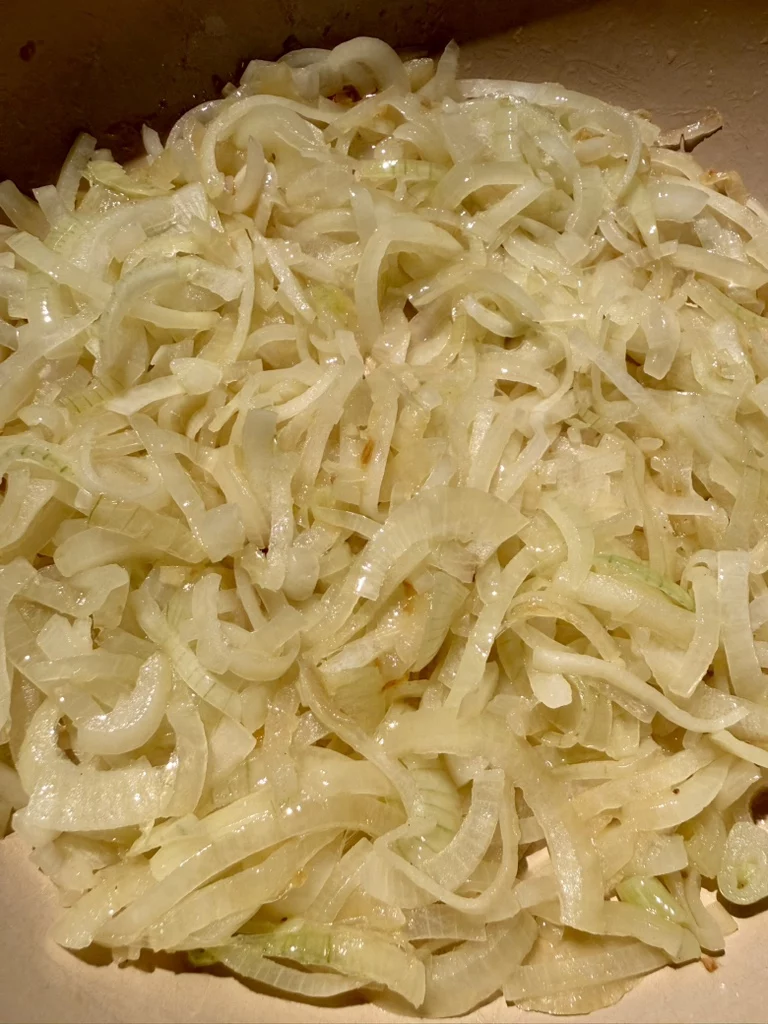
Traditionally, lard is used. Clarified butter or a neutral oil are the alternatives. Heat the fat in a heavy saucepan or roasting tin over a medium heat only – the heat must not be any higher, otherwise it won’t work. Add the onions and sweat them very slowly and patiently, stirring occasionally, until they are deep brown. This takes closer to 45 minutes than 30. If you stop too soon, you’ve already lost.
After 5 – 10 minutes, the onions will become translucent:
They will start to brown after about 30 minutes.
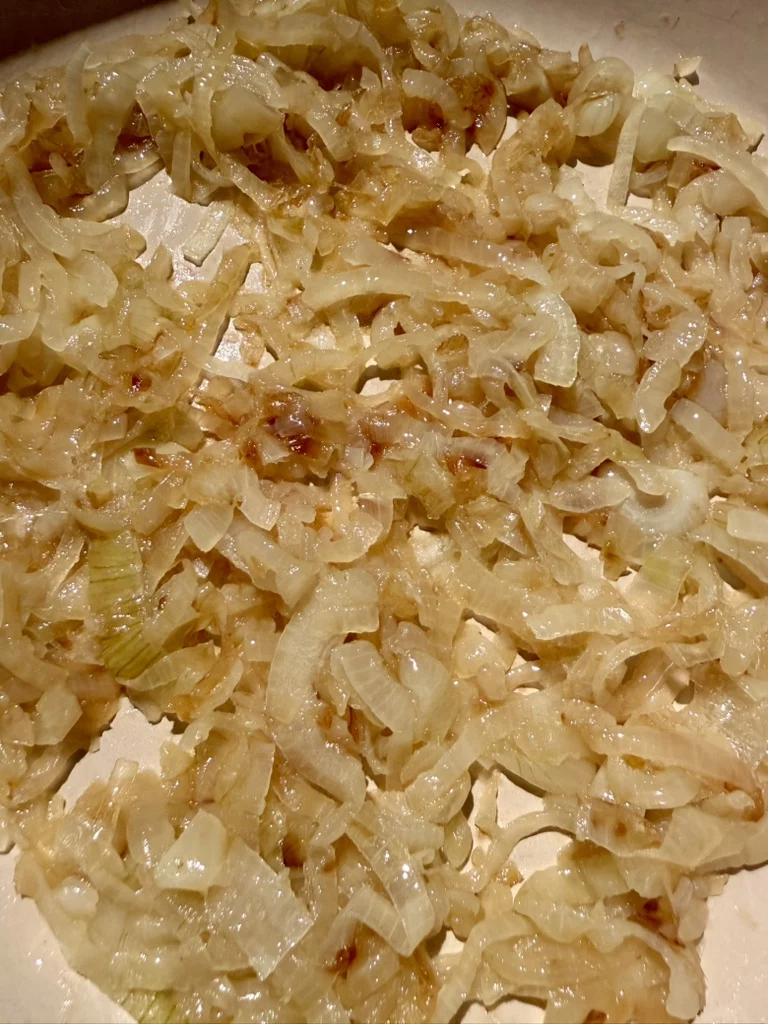
Only once they have turned mostly bronze in colour, after 30 – 45 minutes (they mustn’t turn black, of course, which is why we use a low temperature!), stir in a generous amount of sweet paprika. If you like, you can also add a little hot paprika – and we always do.
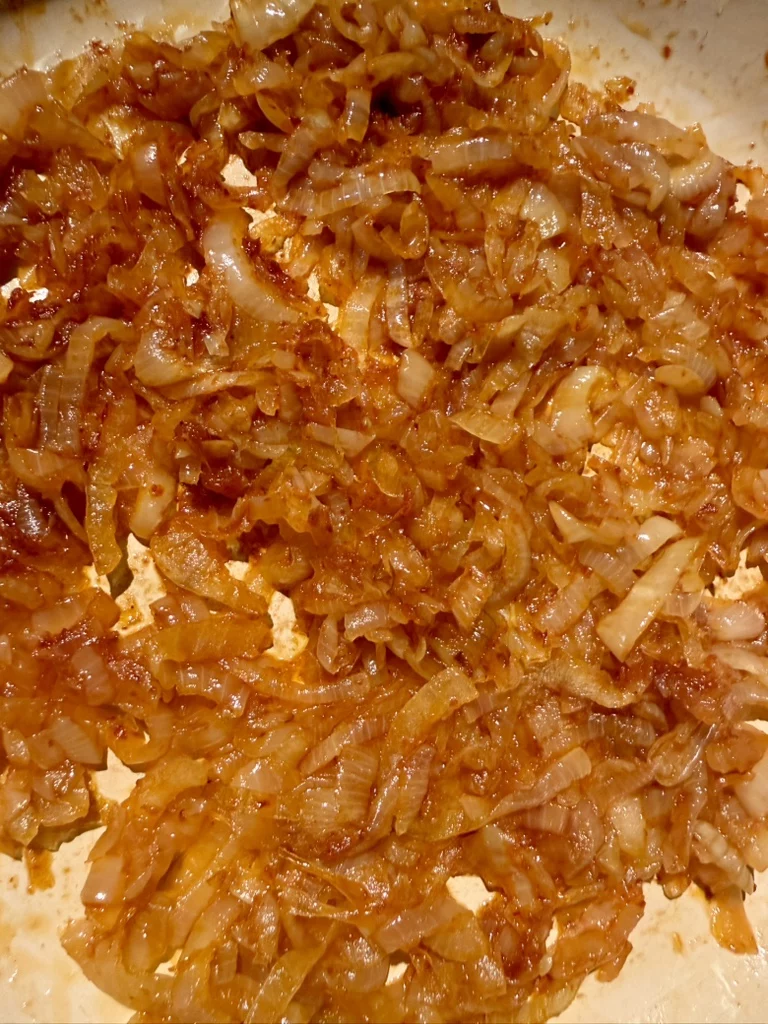
After 2 minutes, once everything is coated in paprika, add a little tomato purée and stir it in thoroughly. It should be sautéed for 3 – 4 minutes.
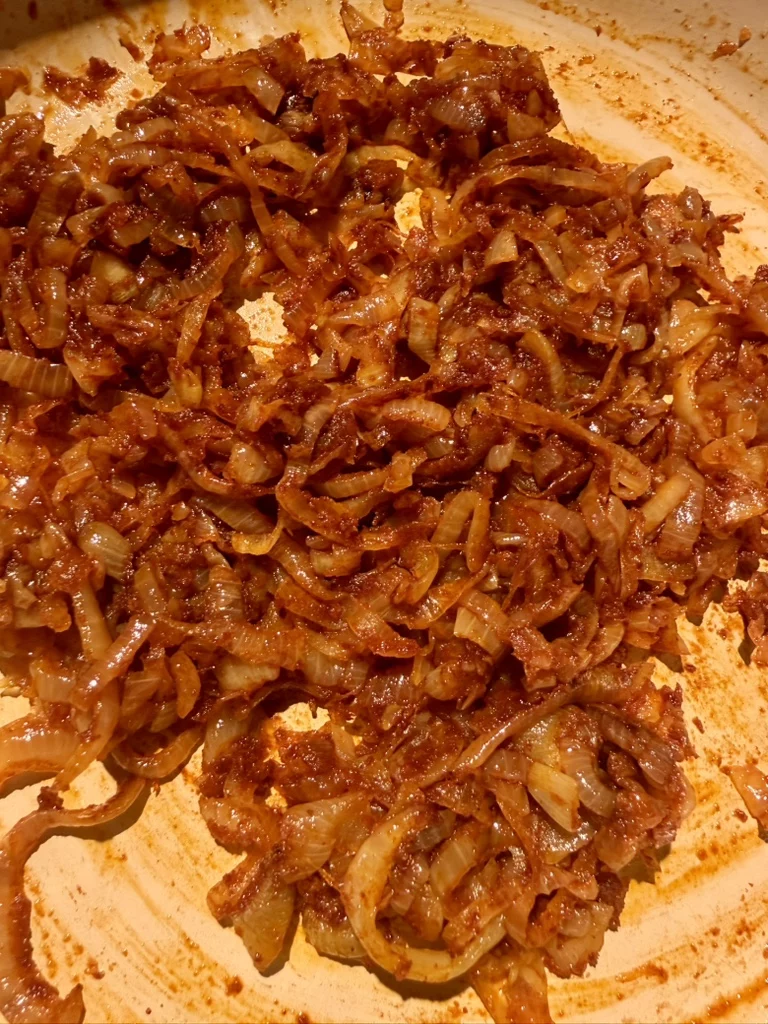
Next, add caraway and marjoram, along with a dash of light vinegar, which you can use to loosen the bits stuck to the bottom of the pan. Anyone reading here will of course be well aware of this – it’s called deglazing.
Water is then added and a very small amount of salt is stirred in. The heat is turned up so that the mixture comes to the boil.
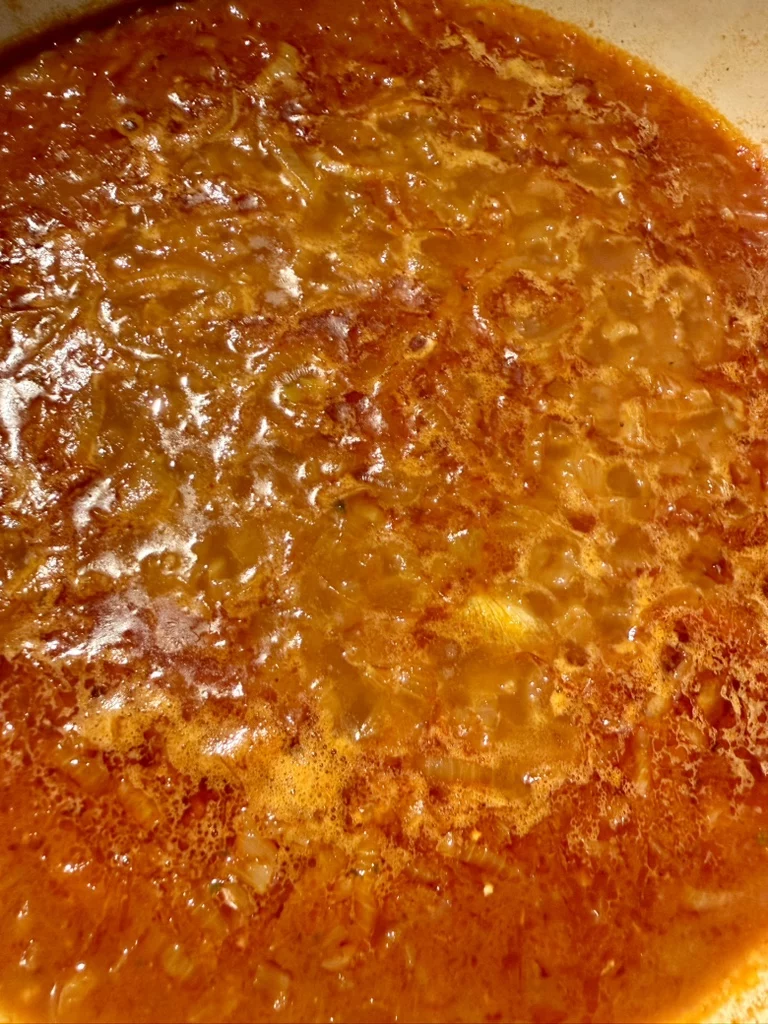
Only then is the meat – raw, without having been seared – added and stirred in, which immediately cools the liquid. From this point on, the dish is braised, meaning it is cooked over a low heat for a long time, always just below the boiling point (otherwise the meat would become dry and tough). The meat must be covered with liquid – if not, add a little water.
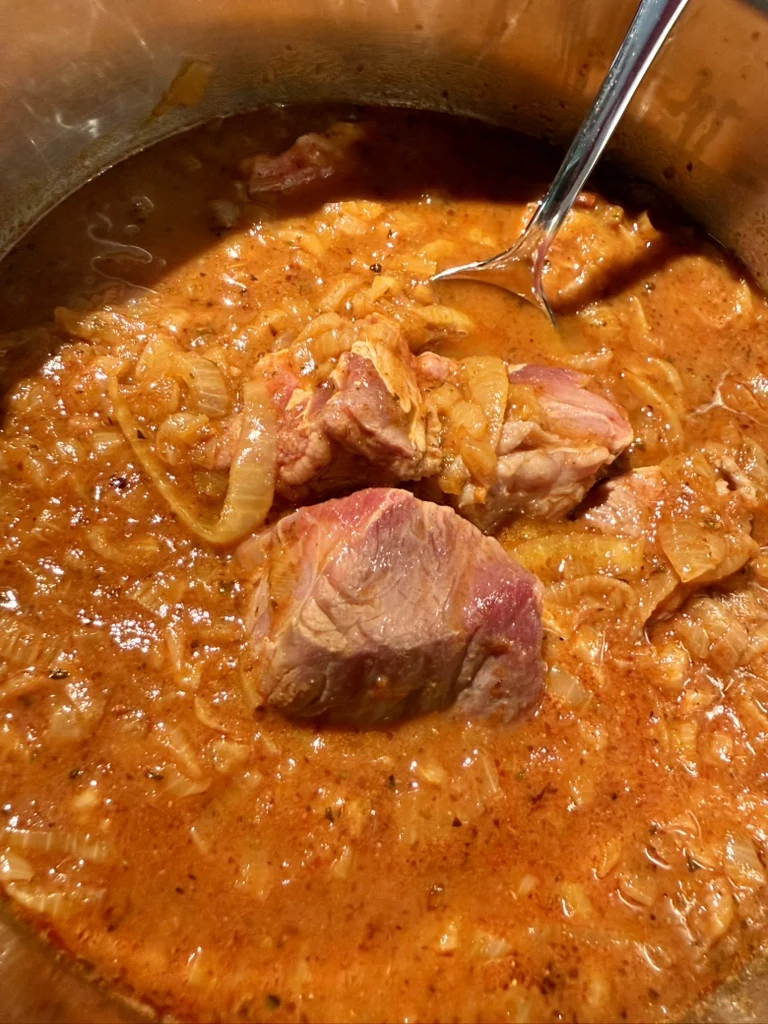
Place a lid on the pan – but don’t close it completely; leave a small gap. Set the temperature so that there is just a slight movement in the pan, but nothing is boiling. If you’re using an oven: 140°C without fan.
This takes at least 4 hours, but for us it’s always 5 – and this is what it looks like afterwards:
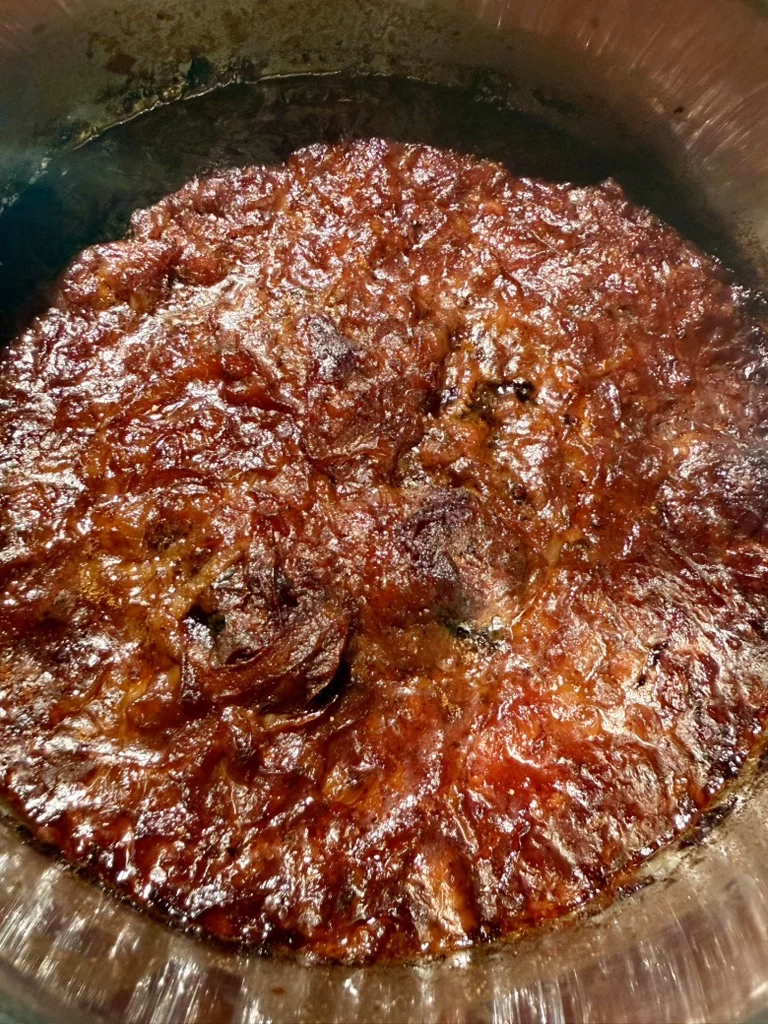
Season with salt to taste, and it’s ready to eat. We always serve it with bread roll and no other side dishes.
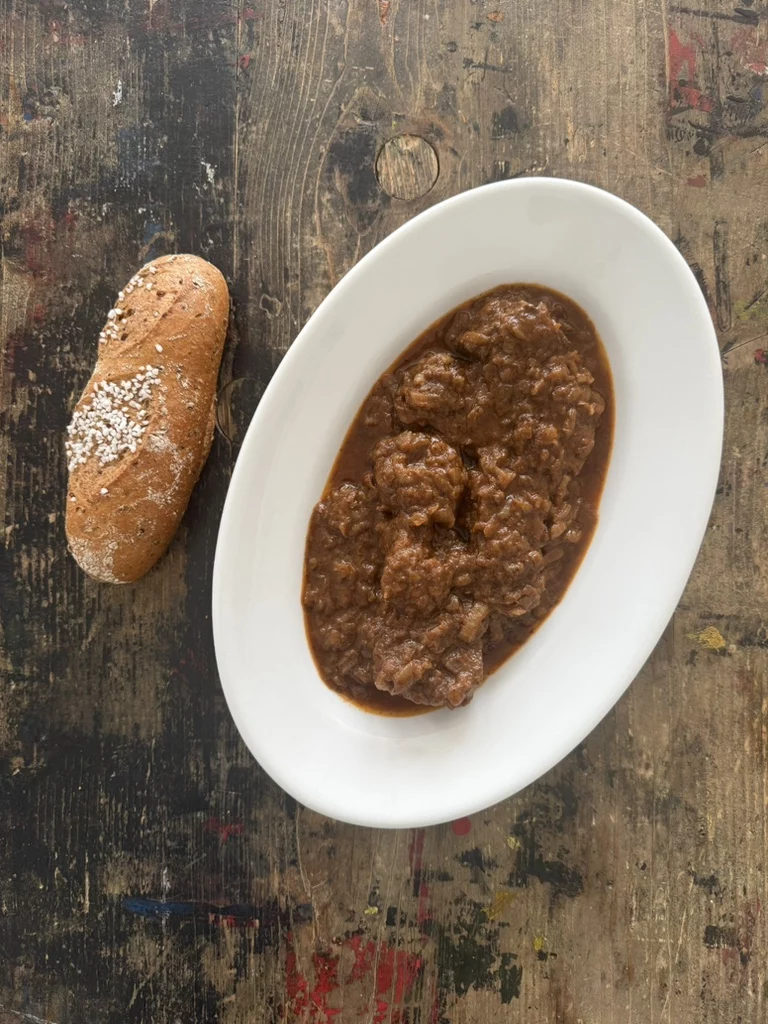
Enjoy.
And may the taste be with you.
Ingredients (for 4 – 5 people):
1 kg beef for stewing (ideally shank)
800 g onions
80 g lard, alternatively clarified butter or neutral oil
40 g sweet paprika powder
10 g hot paprika powder (optional)
1 tbsp tomato paste
2 tbsp white wine vinegar
½ tbsp (coarsely) ground caraway seeds
½ tbsp dried marjoram
800 ml hot water
Salt to taste
