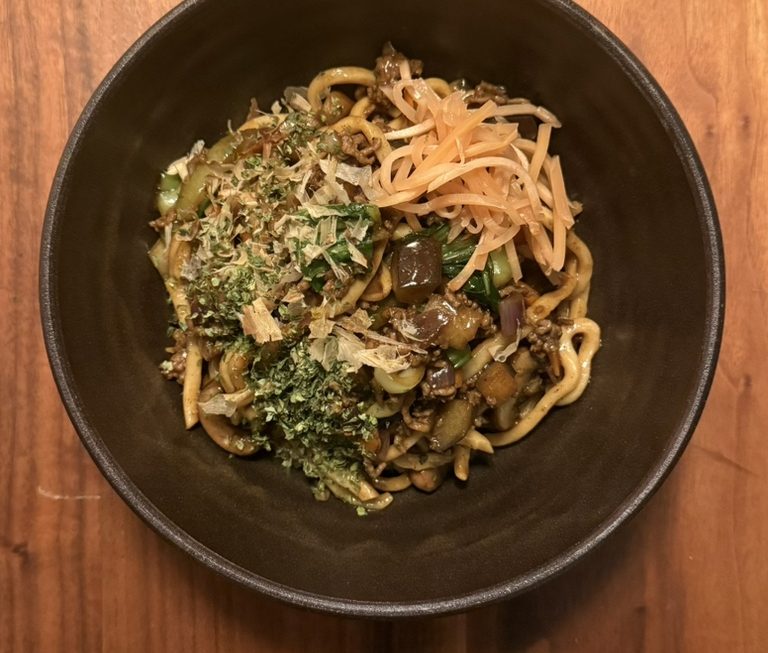
When you think of udon noodles, you often think of broth, but yakiudon is the opposite: fried and hearty from the pan. And that’s exactly why it’s so popular in Japan: as a quick meal or an improvised dinner made from whatever’s in the fridge.
‘Yaki’ (焼き) means ‘fried’ or “grilled”, and ‘udon’ refers to thick, white wheat noodles, one of the oldest types of noodles in Japan. The noodles are fried in a pan with meat, vegetables and a sauce that is sweet, salty and savoury all at once. If you don’t want to eat meat, simply leave it out. Yakiudon is a completely flexible dish, just like yakisoba.
It is closely tied to the world of izakayas – Japanese pubs where small dishes are served with beer or sake. It is straightforward, quick to make and filling. The version presented here incorporates aubergine, which is based on a recipe by a German-Japanese chef whom we think is brilliant (3 stars Michelin is quite something, isn’t it).
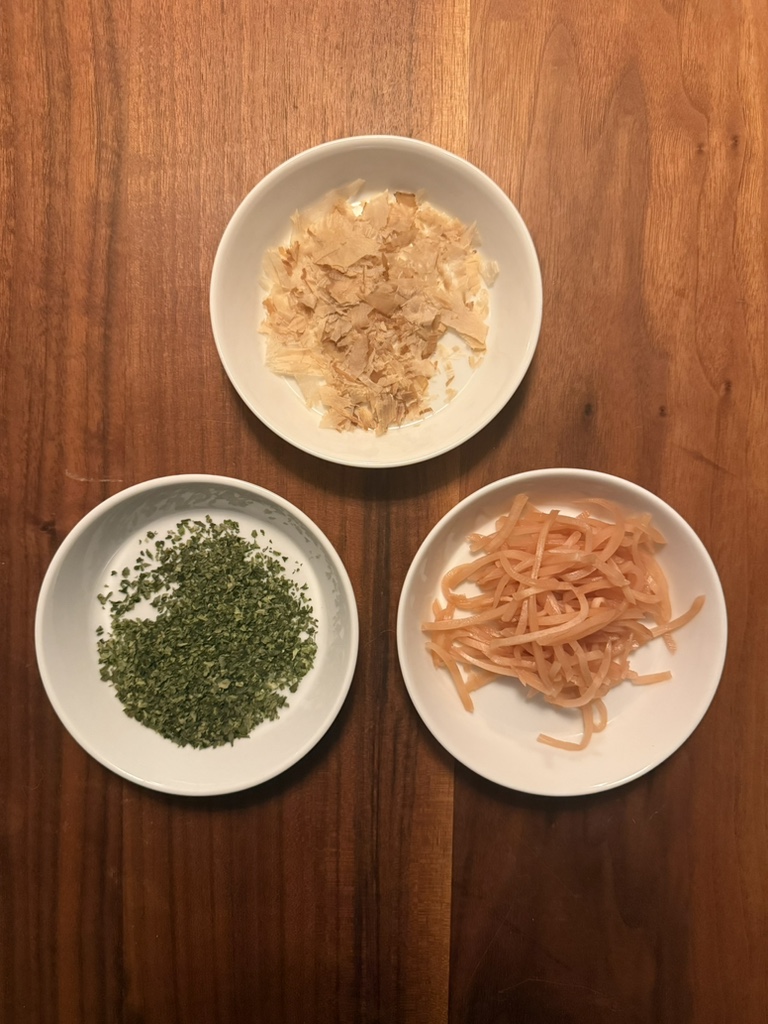
Of course, you can’t do without udon noodles. You can buy them pre-cooked with a long shelf life, otherwise you have to cook dry ones. We also use minced beef, but proteins such as those used in yakisoba would be just as traditional. Onions and garlic are essential, and we also cook with carrots (finely sliced), pak choi and mushrooms (roughly chopped) and aubergine (diced). Use whatever you like or whatever is in season, just make sure you cook each ingredient to its individual cooking point.
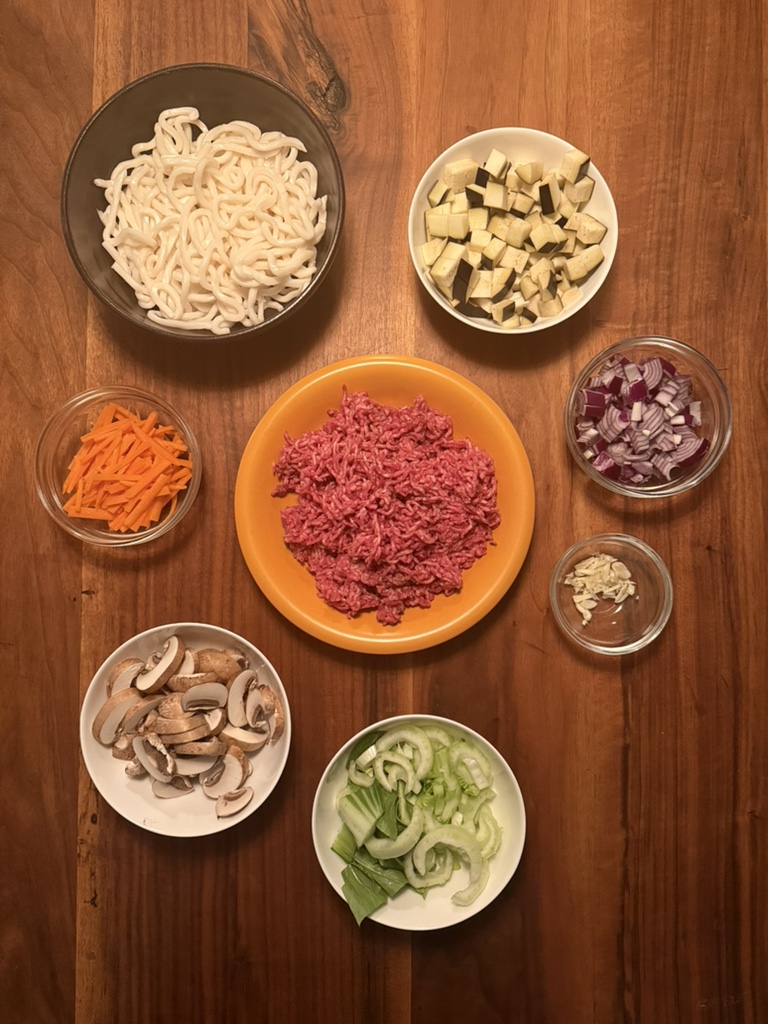
Finally, we will garnish and add typical Japanese flavours with bonito flakes (katsuobushi) and ground dried seaweed (aonori) for a taste of the sea and umami, as well as with benishoga, pickled red ginger, which adds acidity, freshness and even a hint of spiciness.
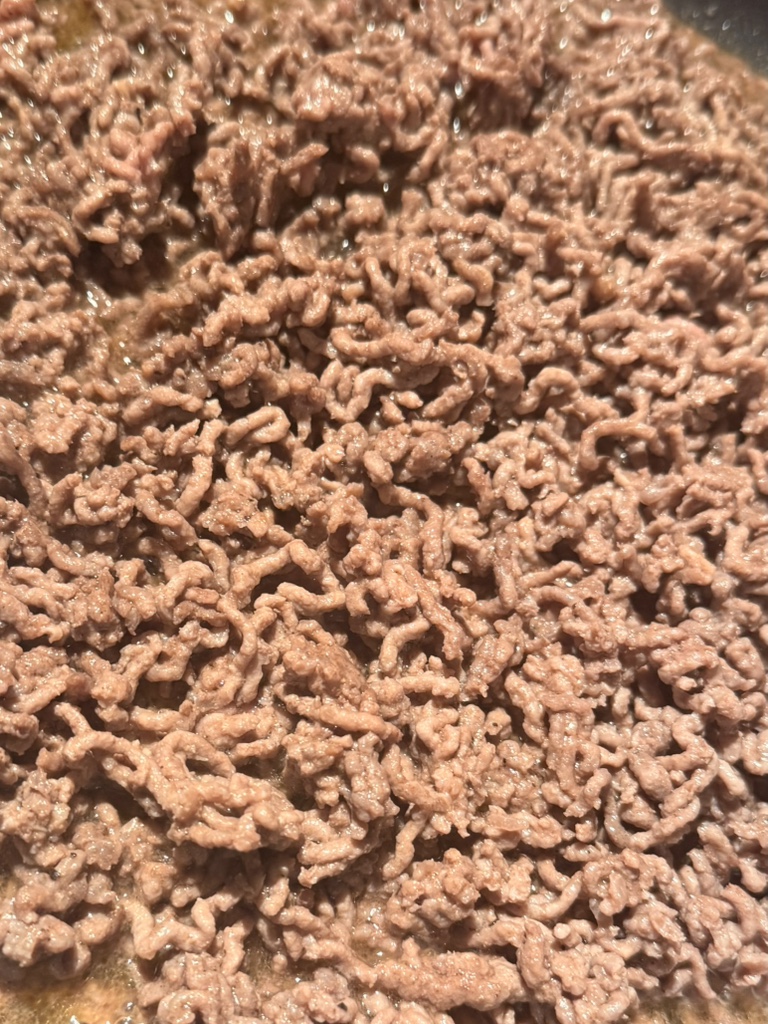
Brown the minced beef briefly in a little neutral oil in a hot pan. Place it in the hot pan and leave it to sear. Only when it has browned well on the bottom of the pan should it be turned. Then season with salt and pepper (both black and white work well here), leave it to cook again, and only now should you use a wooden spoon to break it up into crumbs and then immediately remove it from the pan.
For our version, we now add the diced aubergine to the still hot pan with more oil and fry for at least 5 minutes. Aubergine takes a little time to cook, only stirring occasionally. Then we add onion, garlic and carrots, which are fried for a shorter time as they should not brown. Stir a little more often now or toss the pan.
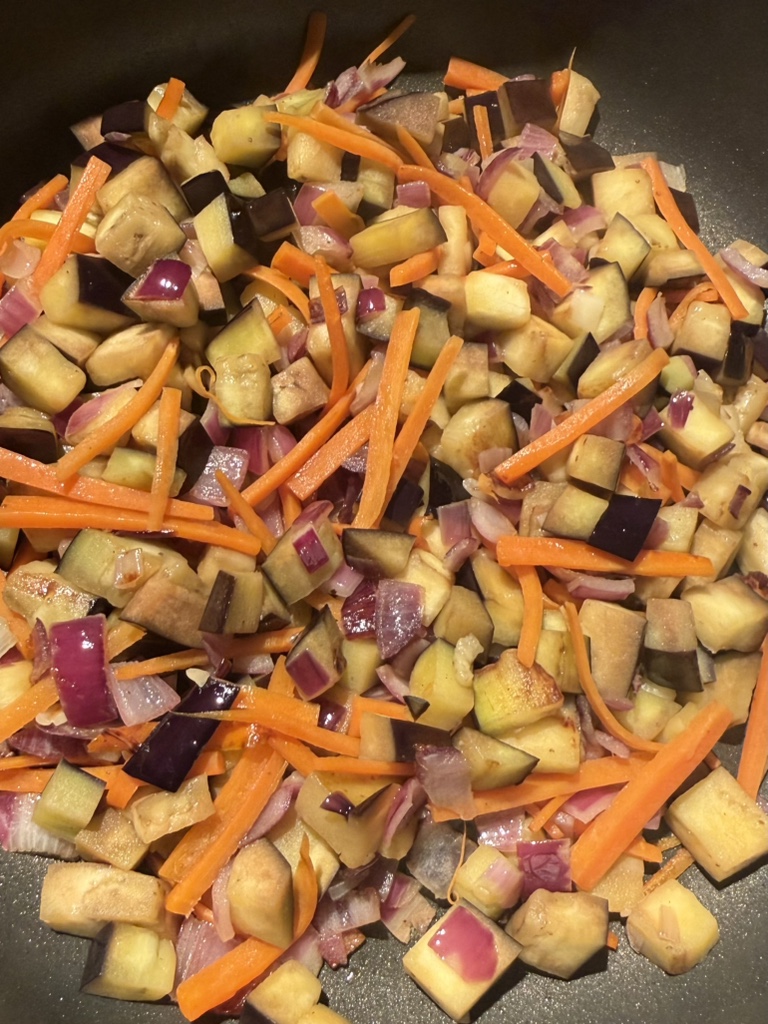
Once the onions are translucent and the carrots have softened a little, add the more delicate ingredients, in this case mushrooms and pak choi.
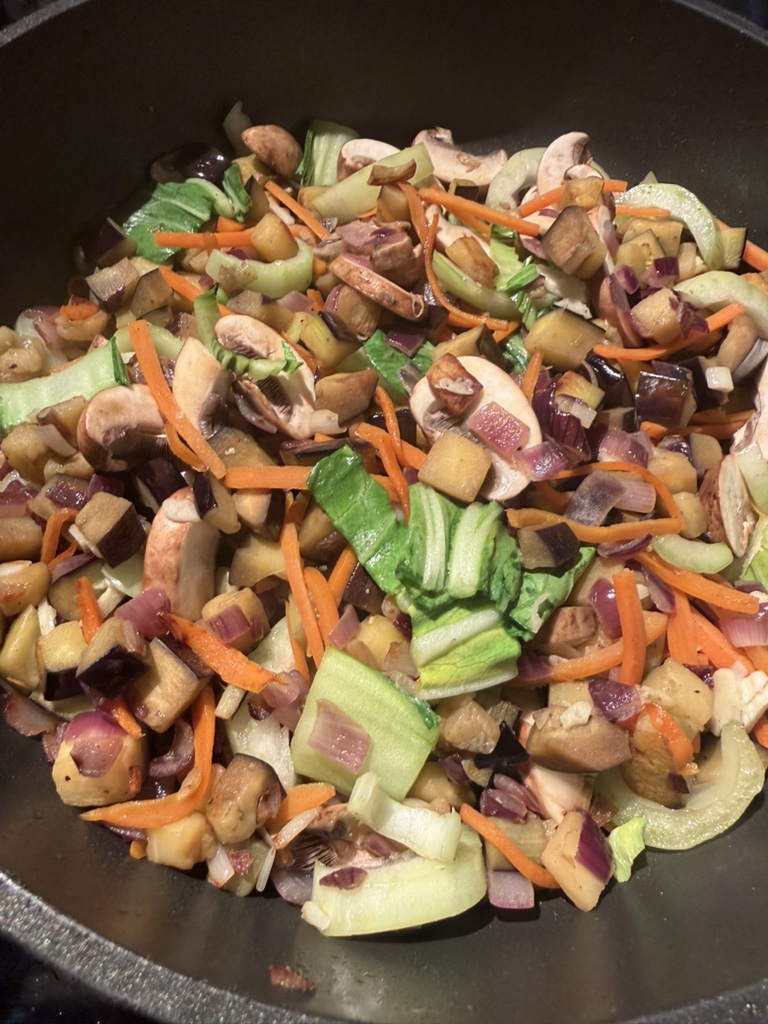
Now fry briefly as you would in a wok, stirring the vegetables over a high heat so that they cook quickly but remain crisp. Then add the cooked udon noodles and immediately add the sauce, for which there are several preparation options. The versions we show at the end of the recipe in the ingredient list do not use ready-made Japanese sauces such as tonkatsu sauce, but you could also use these.
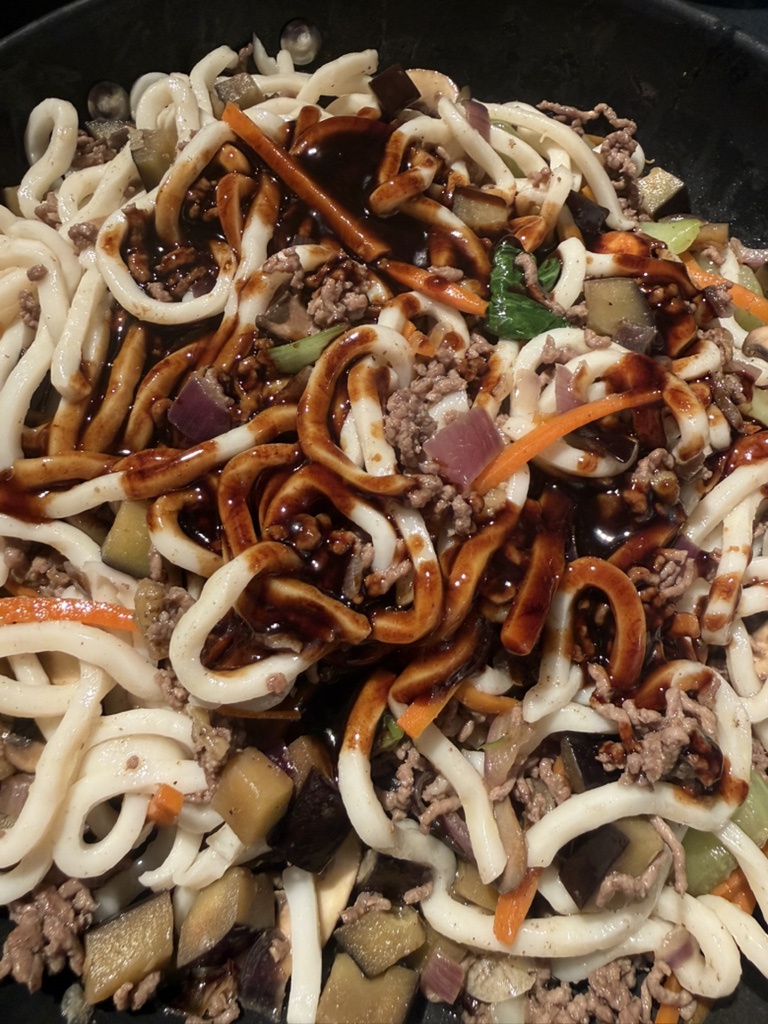
Now all that remains is to mix everything together well and heat it up; there is no more cooking to do. Then we serve in pre-warmed bowls and sprinkle with our seasonings: katsuobushi, aonori and benishoga.
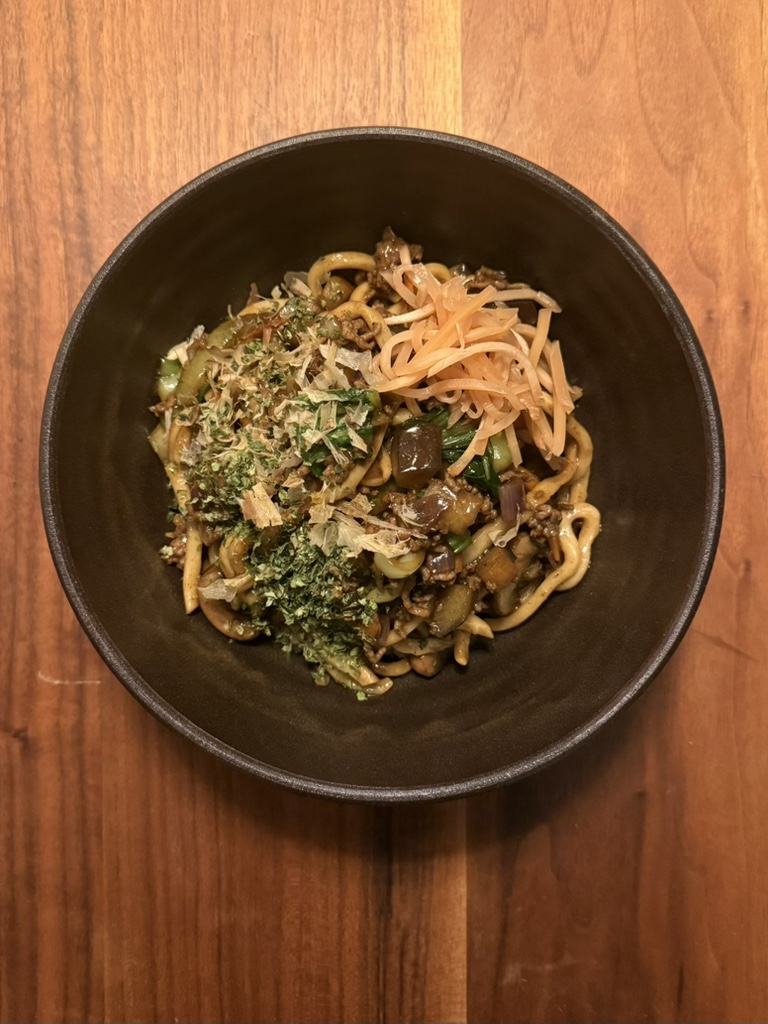
Enjoy.
And may the taste be with you.
Ingredients (for 2 people):
Meat (optional):
1 tbsp neutral vegetable oil
180 g minced beef
Salt and black pepper
Vegetables (for example):
2 tbsp neutral vegetable oil
1 aubergine
1 onion
1 clove of garlic
1 large carrot
1 pak choi
1 handful of mushrooms
Obviously non-negotiable:
400 g cooked udon noodles (or 200 g dry noodles, cooked)
Sauce:
3 tbsp soy sauce
1.5 tbsp oyster sauce
1.5 tbsp ketchup
1 tbsp Worcestershire sauce
Alternative: Mentsuyu according to this recipe
Toppings:
2 tbsp katsuobushi
1 tbsp aonori
2 tbsp benishoga