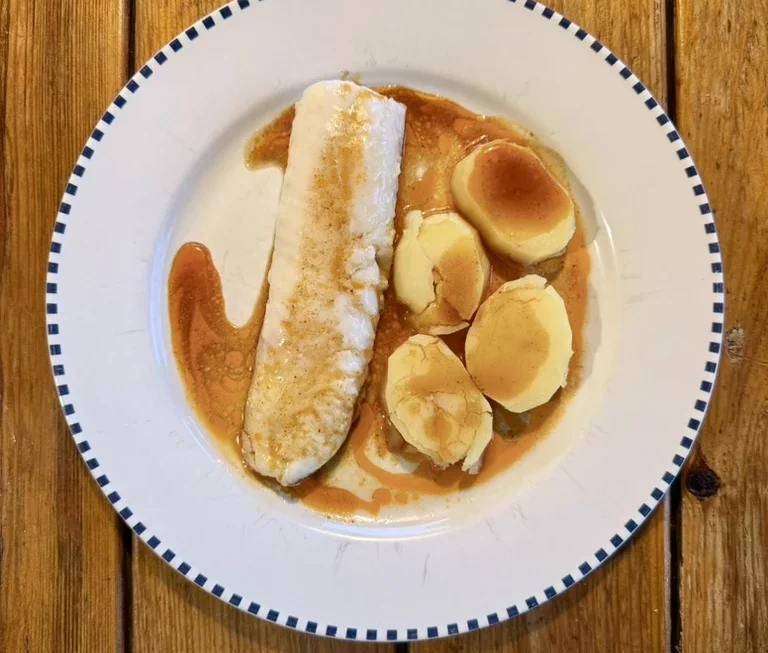
Galicia – known in Galician as the Comunidade Autónoma de Galicia – is an autonomous community in the far north-west of Spain, north of Portugal. It is a very different Spain from the one many people know: damp and green, with an Atlantic climate. And it is incredibly rich in fish and seafood. Galician hake, or merluza, is considered one of the finest white fish.
The a la Gallega method describes a very simple yet all the more delicious combination. It epitomises Spanish cuisine like few other dishes do. At its heart lies the so-called ajada, a blend of the finest olive oil, plenty of garlic and Spanish paprika (pimentón).
All of this is Galician through and through – though, historically speaking, it hasn’t been the case for very long: the potato arrived in Europe from the New World after the 16th century. Pimentón is more Spanish than the potato, but only just: chillies reached Europe via Extremadura following the Conquista – the monasteries of Guadalupe and Yuste cultivated and dried the pods and developed the technique of smoking them over oak wood.
Traditionally, sweet, unsmoked paprika – ‘dulce’ – is used for ajada, but anyone familiar with the smoked variety will understand why there is some debate about this. We prefer to use smoked paprika, specifically Pimentón de la Vera.
It is also traditional to use the fish as rodaja – thick slices cut across the fish, including the central bone and skin. Hake has particularly tender flesh that falls apart easily; the central bone holds it together. People also like to buy the whole fish, or at least the head, so that they can make a fish stock from the carcasses.
The lomo – the boneless fillet – is a different choice. It has no central bone and is thicker, firmer and slightly more expensive. However, it can be cooked more precisely, and that’s what matters to us, so that’s what we’ll go for. As this leaves us with no fish bones, we’ll also buy some fish stock, though the dish would still be delicious if prepared with just water. But stock simply means more flavour.
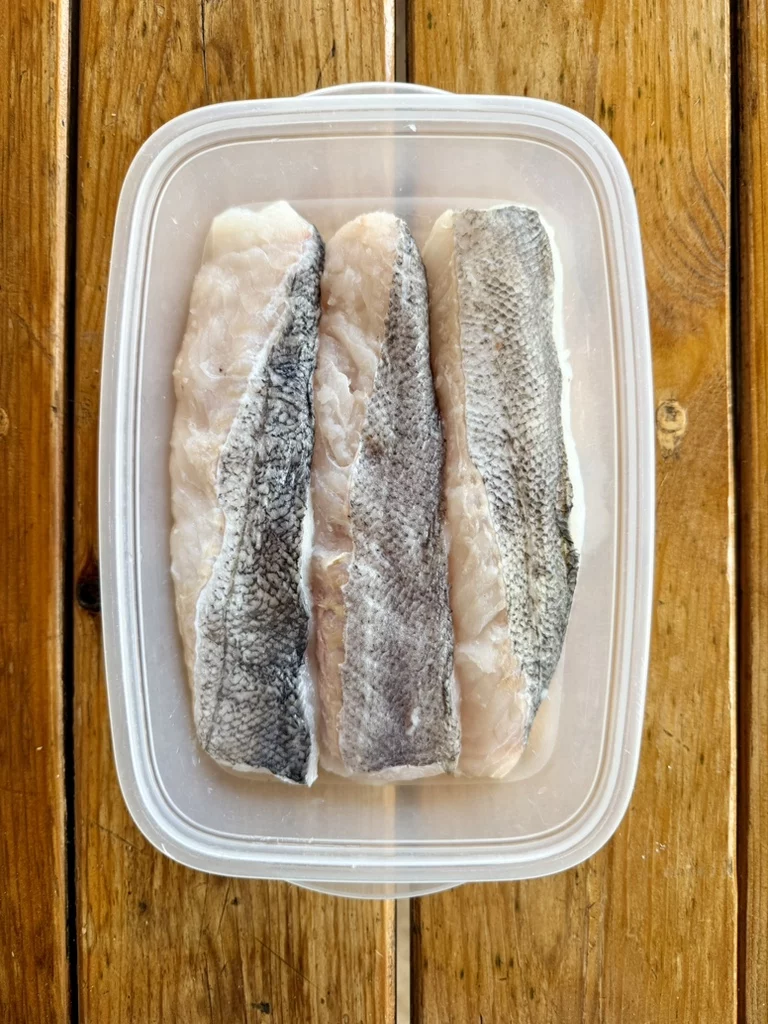
What is definitely not traditional is that we cure the fish before cooking by placing it in a 3% salt solution in the fridge for 20 minutes. Simply add 30 g of salt to a litre of cold water. This concentration is close to the natural salinity of seawater. Up to around 3%, the result is juicier after cooking. If you brine it for longer or use a higher concentration, the protein in the fish will denature too much, the flesh will become tough, and ultimately more water will be released than is retained. After brining: pat dry, then ideally place it back in the fridge uncovered for a short while so that the skin’s surface is completely dry before cooking.
We peel large potatoes, preferably medium-starch (or even floury), and cut them into slices of uniform thickness; 2 cm is ideal. Thinner slices would fall apart later on. We bring them to the boil together with a peeled and halved onion and some bay leaves. You can do this in salted water (ideally with the fish head added) or in fish stock.
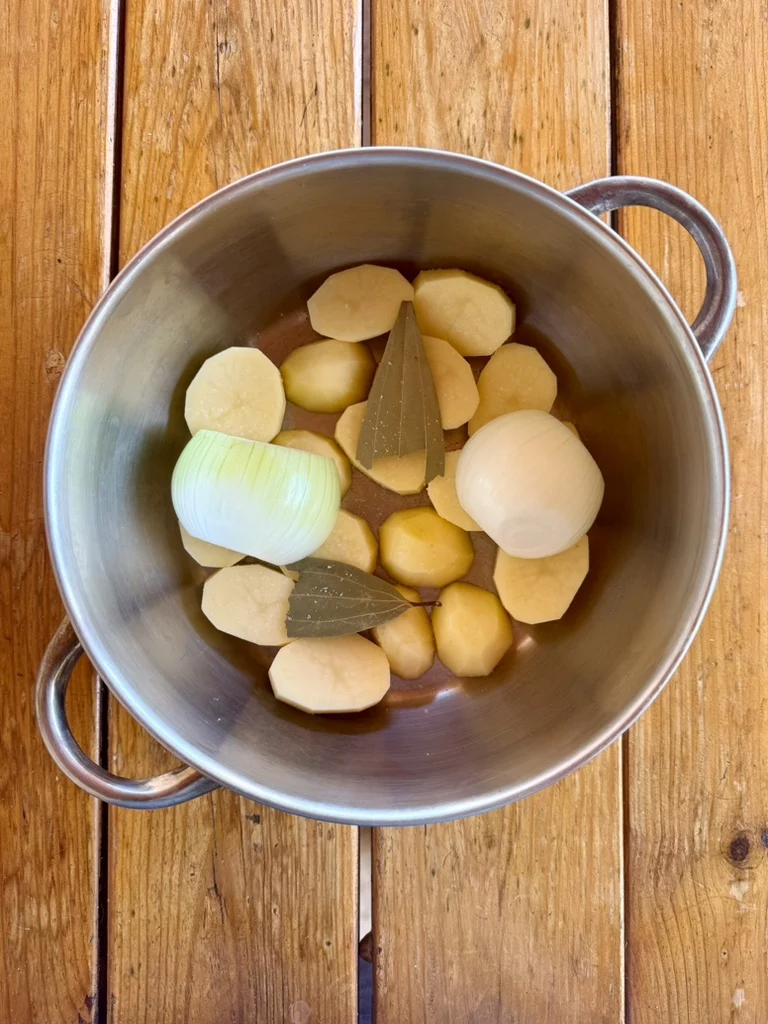
Depending on the type of potato, they take between 15 and 20 minutes to cook. From the 12-minute mark onwards, you should check how soft the potatoes are every now and then with a knife. We love them nice and buttery soft, so that they just about hold their shape.

Meanwhile, prepare the ajada. Peel plenty of garlic and slice it, not too thinly. It needs to have a surface area to release its flavour into the oil, but must under no circumstances burn and become bitter. Heat the olive oil over a medium heat and add the garlic straight away. Now you need to be careful – as soon as the garlic starts to turn a bronze colour, remove the pan from the heat and take the garlic out of the oil immediately. A small sieve works very well for this.

Then add the paprika to the oil, which must not be piping hot under any circumstances, as the spice would burn, lose its flavour and also become bitter.

Stir it in with a whisk, adding a small amount of the fish stock – which now, of course, also contains the flavour of onion and bay leaf – as well as a little starch from the boiled potatoes. After a minute or two of vigorous stirring, this special sauce is ready; the starch causes it to emulsify slightly. Some people add a small splash of vinegar – you could give that a go.

Now for the fish. Traditionally, it is simply poached with the potatoes – that is, added to the same pot after a while, based on feel and experience. We prefer to make use of various cooking techniques that ensure a particularly tender and reliable result. After the brining and drying process described earlier, we first heat a little olive oil over a medium-high heat and then place the fish, skin-side down, into the pan. The skin protects the delicate flesh.
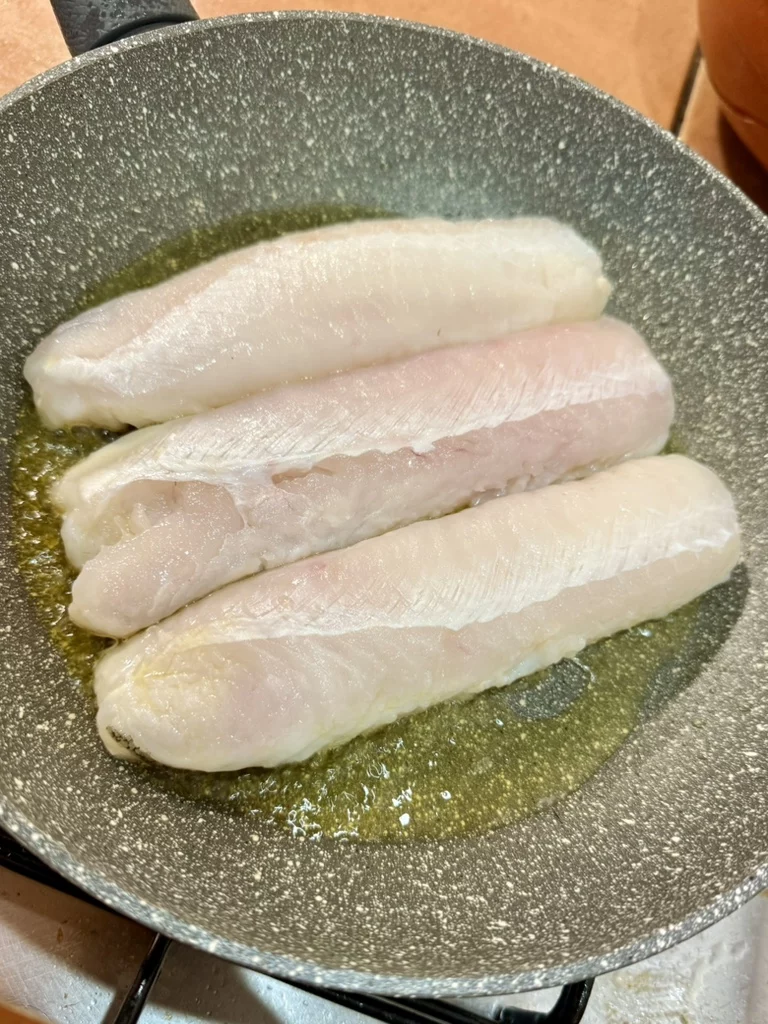
There’s no need to worry too much, as the skin isn’t eaten in this case. So it may well turn dark. What you can see very clearly, however, is how the fish slowly cooks from the bottom up. As it does so, the flesh turns white and becomes less translucent. A piece like this is 3–4 cm thick, and cooking it using only the direct heat from below wouldn’t work. That’s why, after about 3–4 minutes, you simply pour a little of the fish stock over it to create extra steam, which helps the fish to cook further.
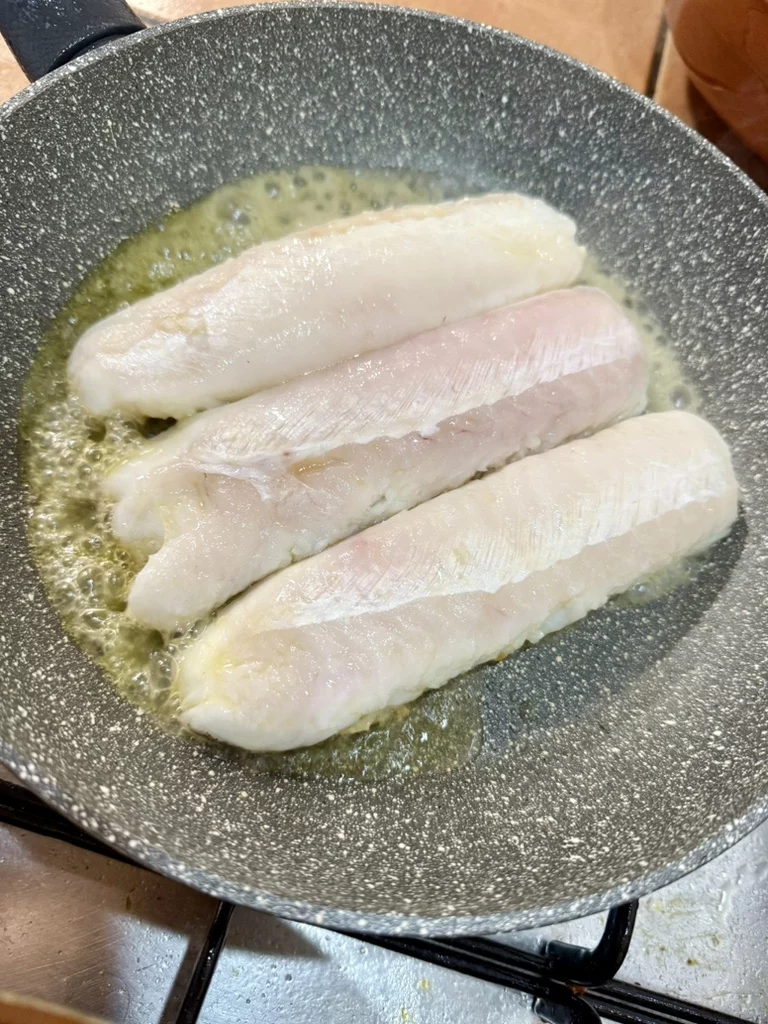
Using a tablespoon, keep spooning some of the cooking liquid over the fish so that it comes into contact with the heat – and the flavour – on all sides. It’s perfect at a core temperature of 55–58 °C. This takes about another 4–5 minutes. At 60 °C, the fish starts to become dry and stringy. The easiest way to check this is with a kitchen thermometer – specifically a Thermapen ONE; no professional would recommend anything else. This isn’t an advert, just our honest opinion, and we don’t get paid for it.
If you really love cooking and do it a lot, go and buy one of these. Otherwise, trust your eyes to see how the fish gently changes colour and texture, and press it with your thumb. It should still give way slightly, but feel a little firmer under pressure than the raw fish did. You’ll get a feel for it over time, but a thermometer works straight away.
Then it’s time to serve. Slices of potato, cooked until very soft. Next to them, or even on top, place the fish, whose skin can now be peeled off very easily. Then pour some delicious ajada over the whole thing. That’s all it takes.

If you absolutely must have a side dish on your plate, peas would be a classic choice. For us, a large salad beforehand or on the side is enough.
Enjoy.
And may the taste be with you.
Ingredients (for 4 people):
Hake, with skin (and, depending on the cut, with central bone): 4 pieces, 180–200 g each
Optional: Salt brine: 3% = 30 g salt to 1 litre of cold water
600 – 800 g medium-starch or even floury potatoes
600 – 800 ml fish stock (or the fish trimmings, particularly the head)
1 large onion, peeled and halved
2 bay leaves
Salt to taste
Ajada:
180 ml (12 tbsp) olive oil
8 cloves of garlic, sliced
4 tsp (approx. 10 – 12 g) pimentón dulce (unsmoked) or pimentón de la Vera dulce (smoked, mild)
4 – 5 tbsp potato cooking liquid
