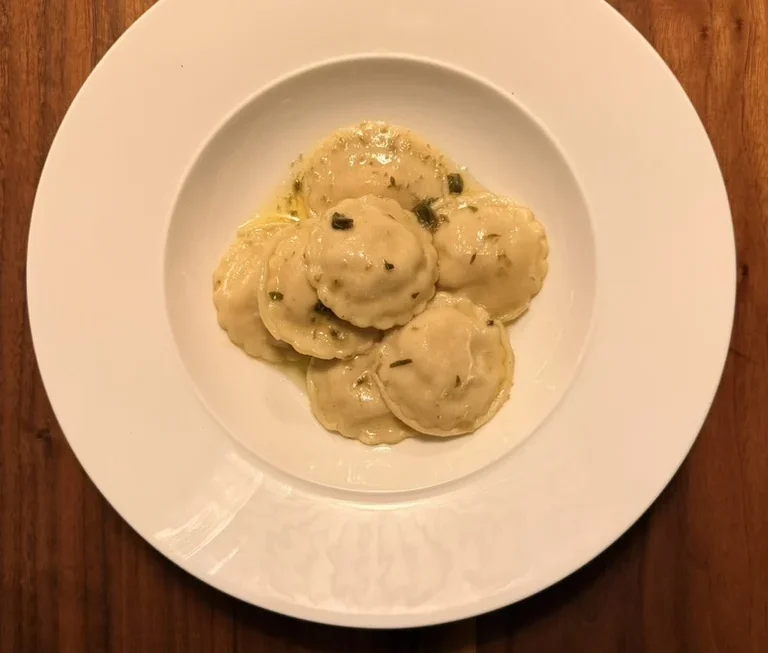
Ravioli are, in essence, a type of filled pasta, usually – though not always – square in shape. You can buy them as fresh, factory-made pasta, and here in Germany, dreadful ready meals in tins are available in shops to this day. However, we’re interested in how to make ravioli by hand.
References to this type of pasta date back to the 16th century and even further, but its exact origin is unknown. One theory suggests that ravioli became particularly popular in the north, at the courts of the aristocracy in Milan and Mantua. Over time, they are said to have found their way into the homes of the lower classes, who served them on festive occasions. This would tie in with the fact that ravioli are not a simple dish that can be whipped up in a hurry.
What we now call ‘ravioli’ has numerous regional variants, such as agnolotti in Piedmont or tortelli in Lombardy, Emilia-Romagna and Tuscany.
There are countless fillings to be found everywhere, so we’ve opted for an unusual – but also exceptionally delicious – one: smoked fish.
It doesn’t matter which fish you use. We bought char straight from the smokehouse. You’ll also need ricotta, grated Parmigiano, lemon zest and egg yolk to bind the mixture.
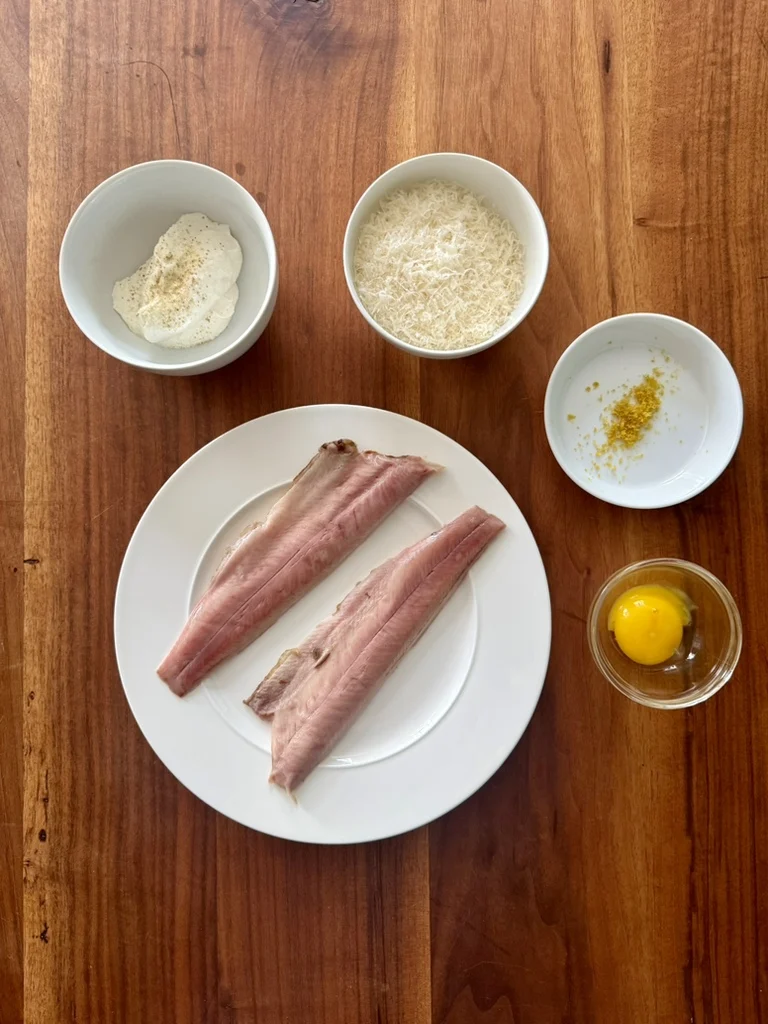
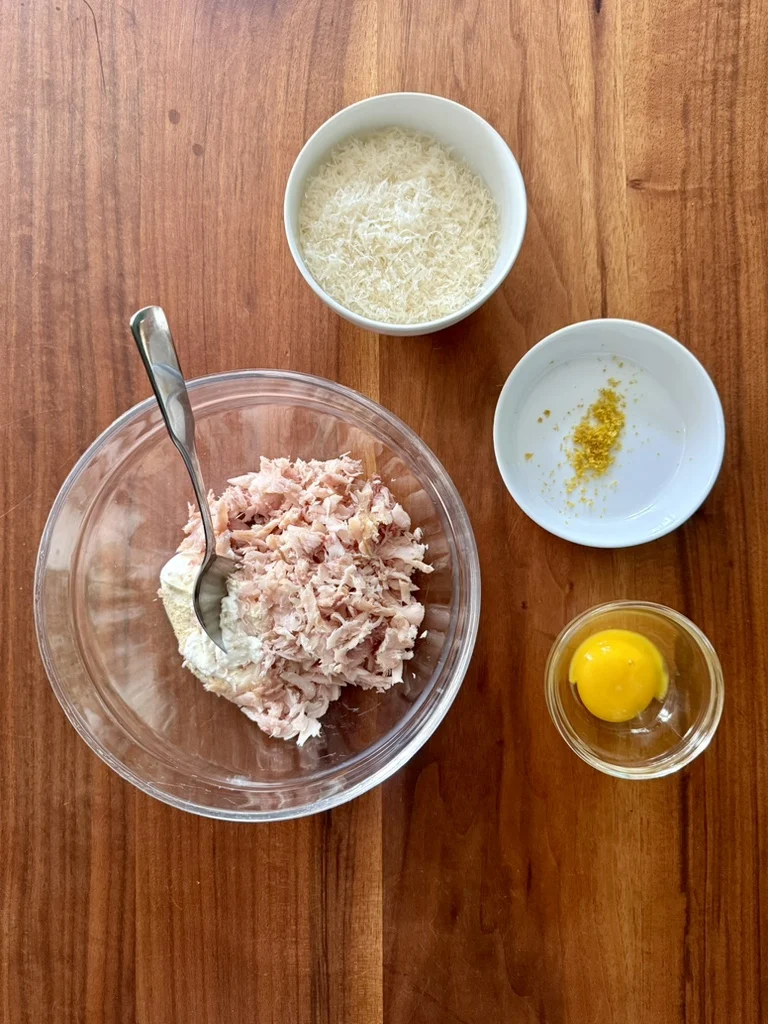
The fish flesh – without the skin – is finely flaked with forks and mixed with the remaining ingredients; the result is then gently seasoned with salt and white pepper.
We have already explained how to make pasta dough by hand, as well as how to roll it out by hand in the traditional way to make ‘sfoglia’, using a ‘matarello’:
It’s quicker to roll out the dough using a machine, and some of you may have a mechanical dough roller or an attachment for your food processor at home. When rolling out the dough with a machine, shape a piece of dough into a thick cylinder and pass it through the thickest setting, 1. Then work the sheet of dough through the settings one by one. For ravioli, the setting 6, works very well.
A common problem is that the strips of dough end up being very long but also very narrow. Tip: Roll out a piece of dough on setting 1 and then fold it into thirds:
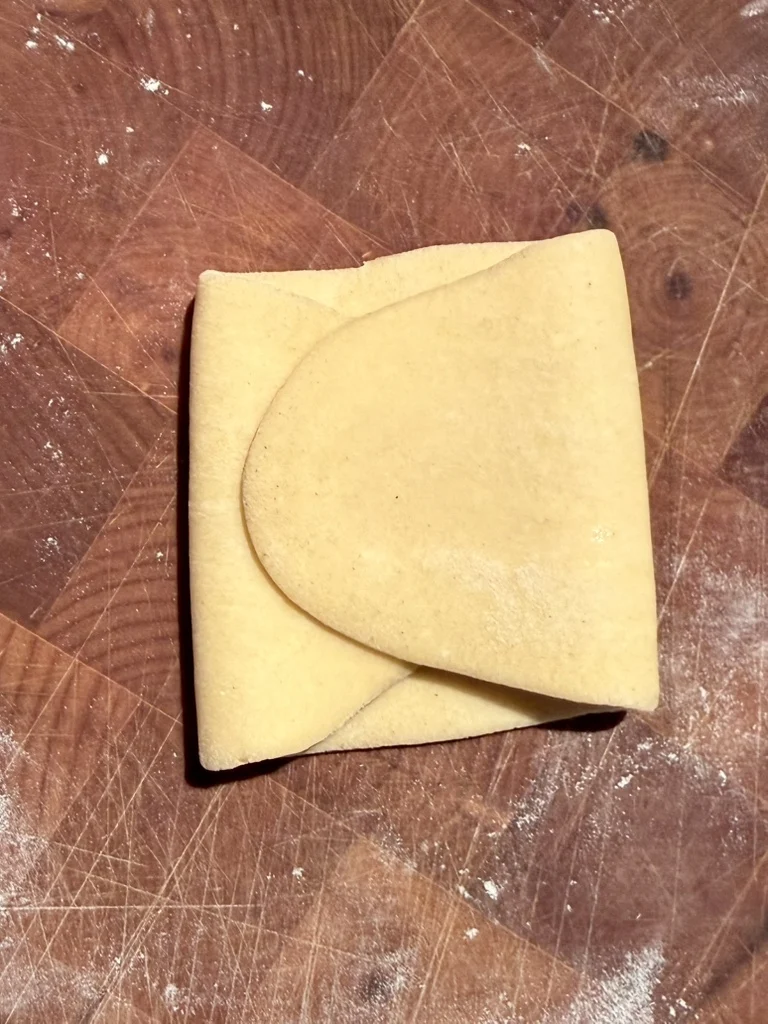
Now pass it through setting 1 again crosswise. The dough will already have become wider, so you can make full use of the entire width of your rolling pin as you continue.
Suitable tools include cookie cutters or a pasta wheel, which gives the edges a nice texture straight away. If you don’t have one, you can press the edges with the prongs of a fork after cutting. There are also ravioli cutters that look like stamps.
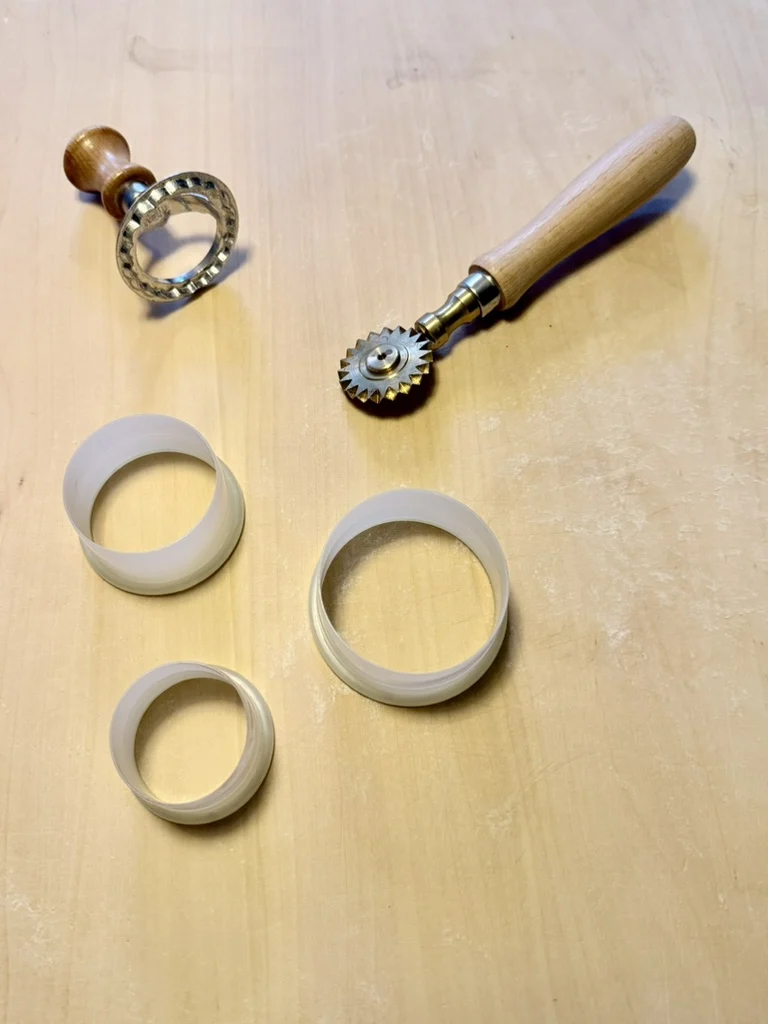
We only make one sheet of dough at a time and work with it before rolling out the next one – that way, the dough doesn’t dry out.
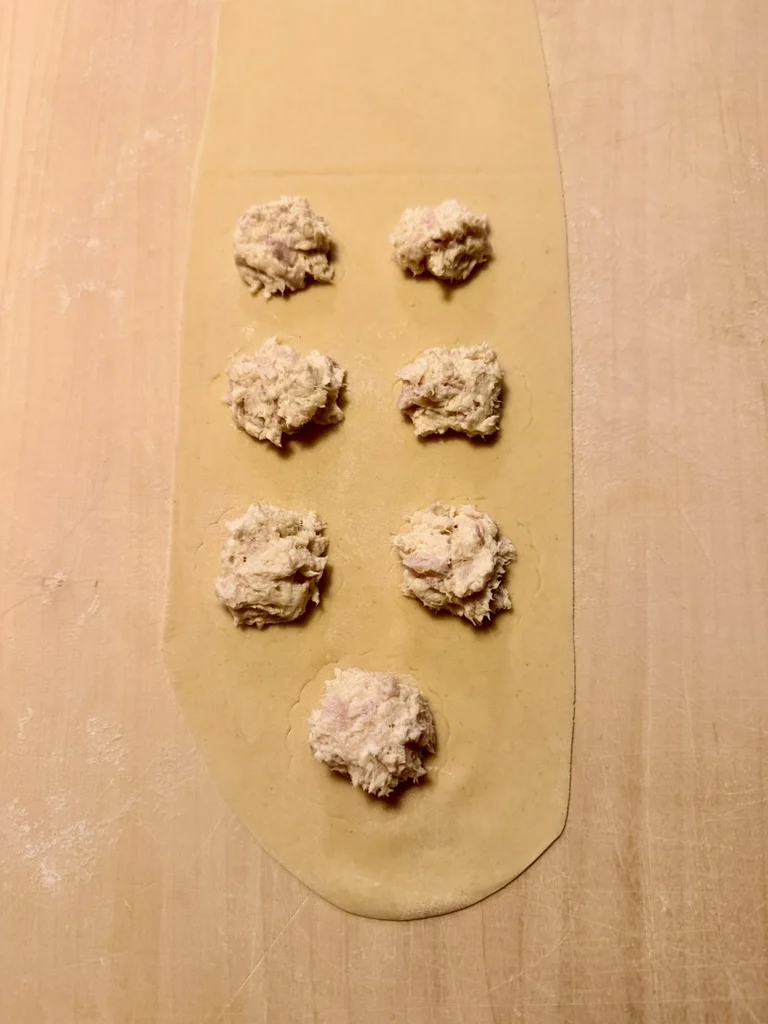
Place one half of the sheet over the other and fold it over so that you can see the centre. Now arrange the filling on one half. This is best done using two teaspoons. The amount of filling you use determines how big your ravioli will be. For us, half the size of a ping pong ball is a good portion size, which results in pasta about 4 cm wide.
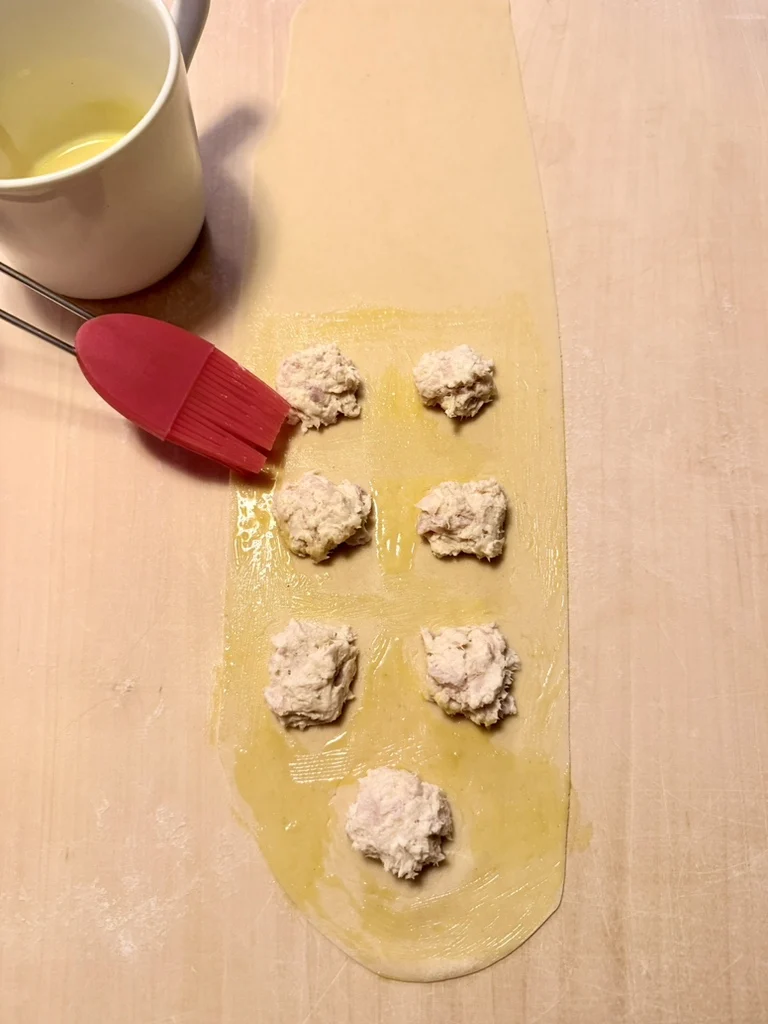
Brush the exposed dough with egg yolk to ensure the pasta is sealed tightly.
Then place the other half of the sheet of dough loosely on top and slowly and carefully press the dough down around the filling. Always start right at the filling and work your way round in a circle. Make sure you don’t trap any air inside, as this could cause your ravioli to burst during cooking. Take your time with this step – it’s the most important one. Only once everything has been pressed down firmly and neatly should you cut or cut out the ravioli.
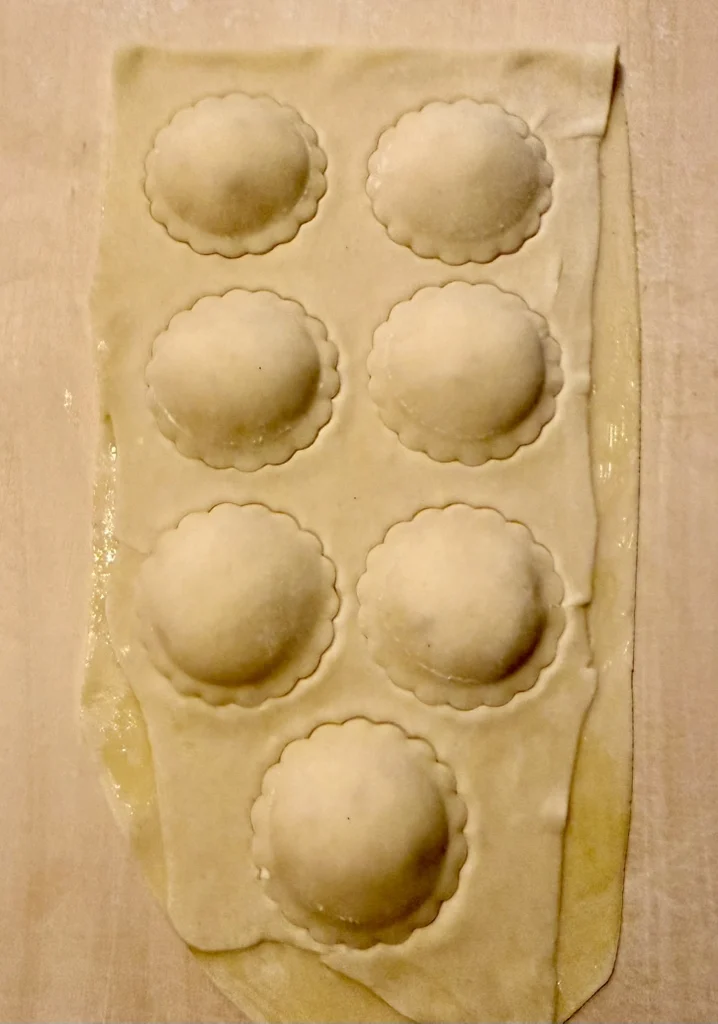
The round shape is very pretty – but it also produces the most offcuts.
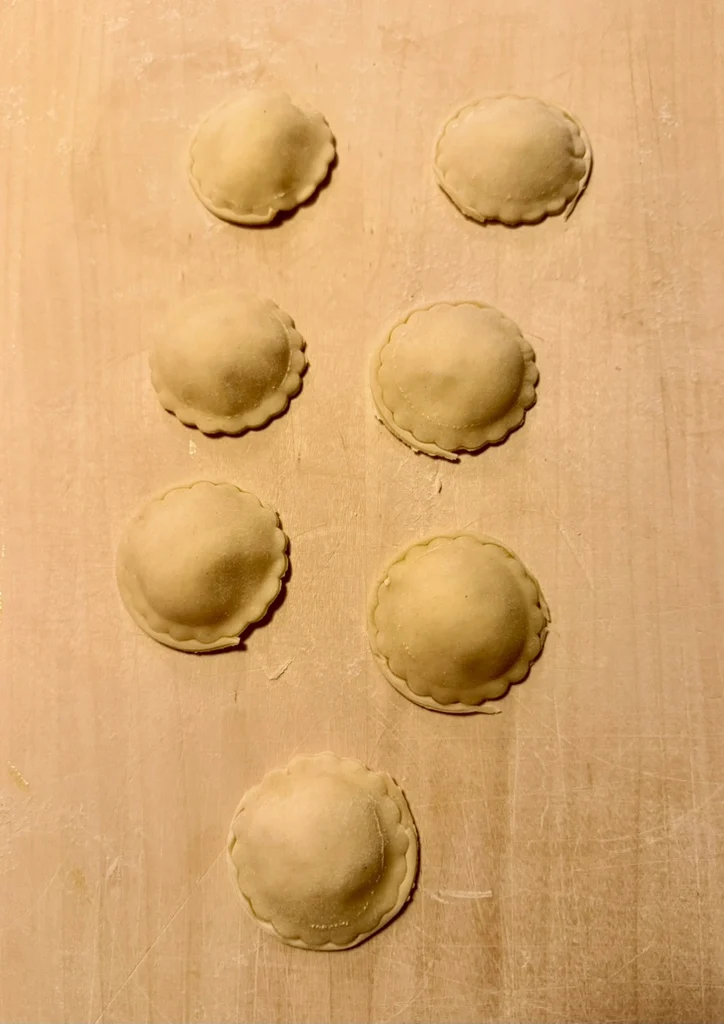
That’s why we usually run the pasta wheel along all the edges of the sheet of dough and then cut out squares around the fillings – square ravioli.
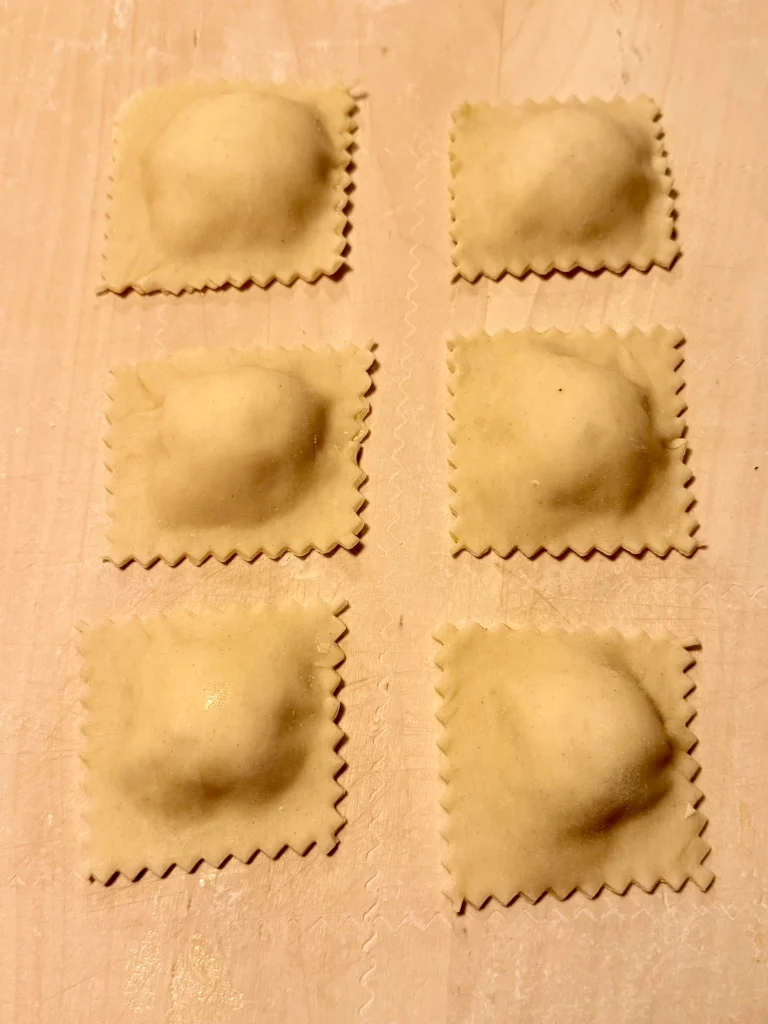
It doesn’t take long and, above all, it’s great fun – and before you know it, you’re standing there with your harvest.
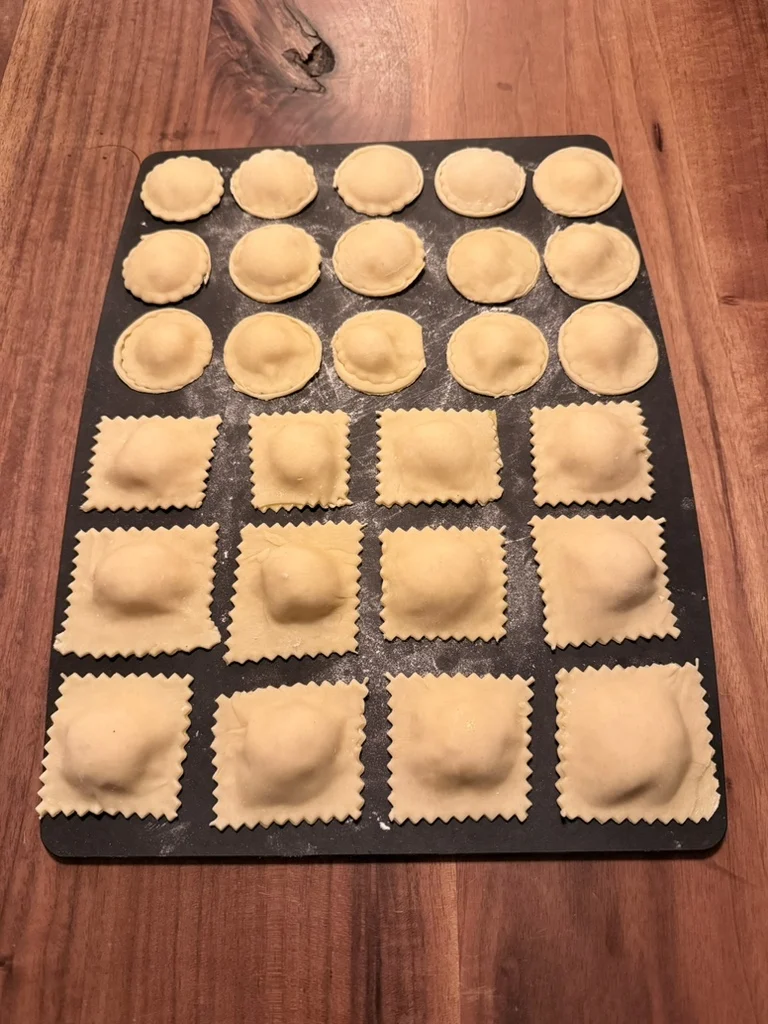
As with all fresh pasta, cooking is very quick – just let them simmer for four minutes in gently bubbling salted water – and they’re ready. Whilst the water is heating up, melt some butter in a frying pan until it begins to brown slightly, then remove it from the heat and stir in some roughly chopped capers, along with a dash of lemon juice.
The cooked ravioli are simply tossed briefly in the mixture on both sides – that’s all there is to it.
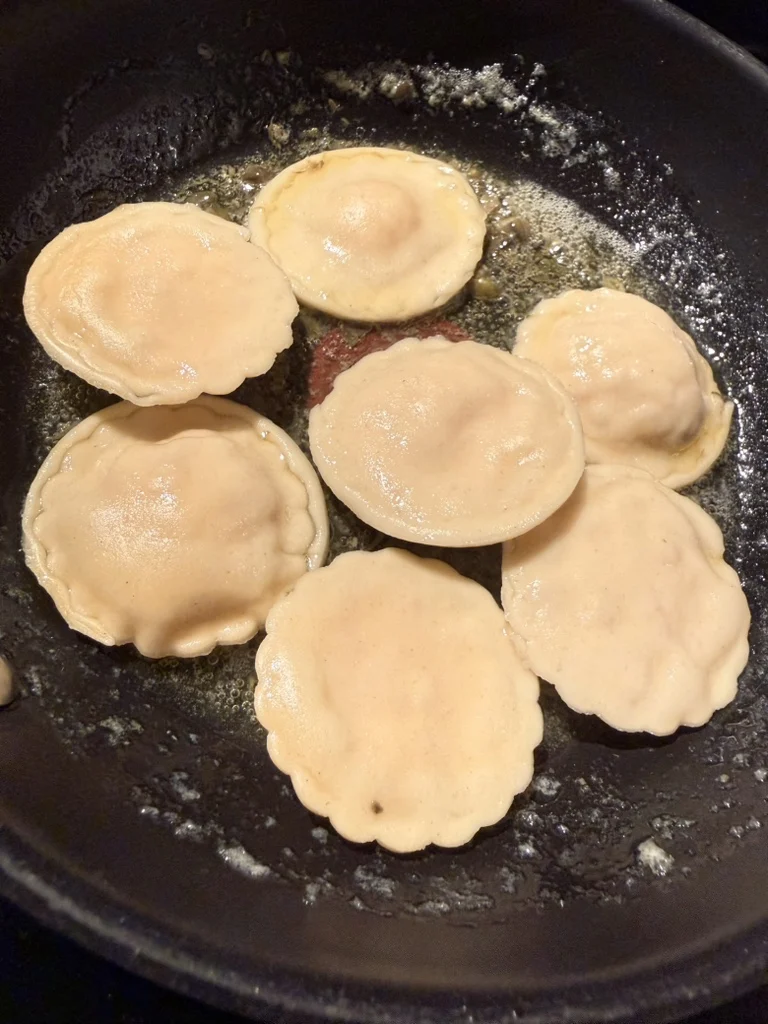
This dish really doesn’t need anything else – not even a sprinkling of cheese on top.
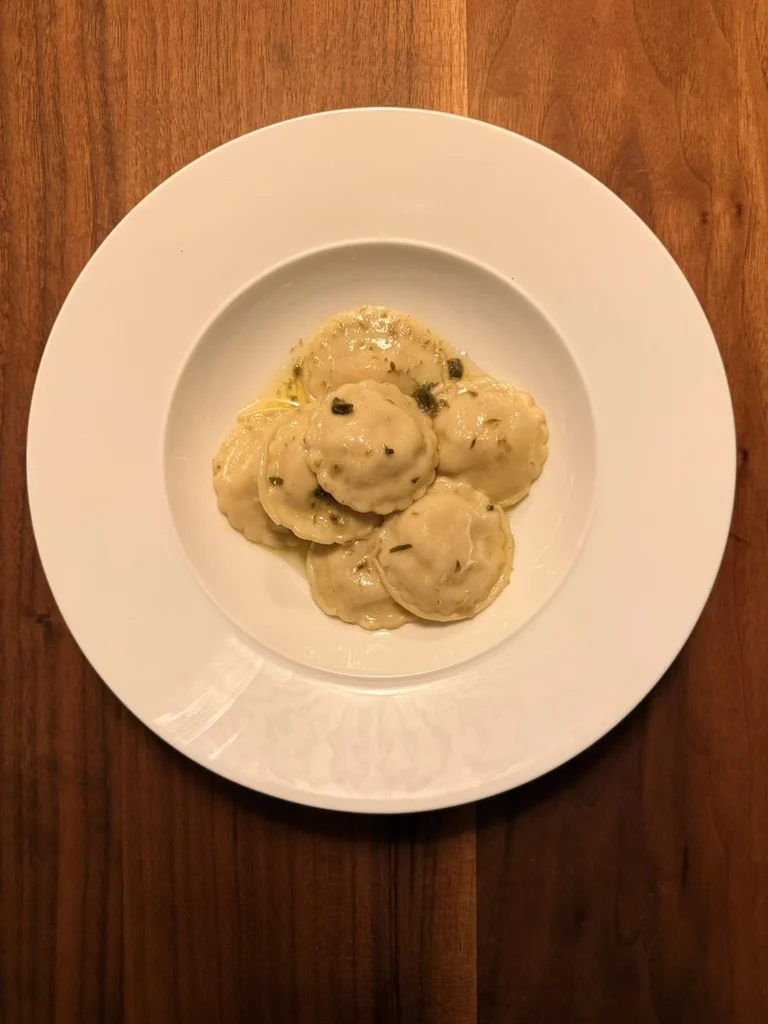
Enjoy.
And may the taste be with you.
Ingredients (for 2 people):
For the pasta dough:
200 g pasta flour (Tipo 00)
2 large eggs
1 pinch of salt
For the filling:
150 g smoked fish, skin and bones removed
100 g ricotta
30 g Parmigiano Reggiano, finely grated
Zest of 1 organic lemon
1 egg yolk (to bind)
Season to taste with salt and white pepper
For the caper butter:
80 g butter
2 tbsp capers, drained and roughly chopped
a few dashes of lemon juice to taste
