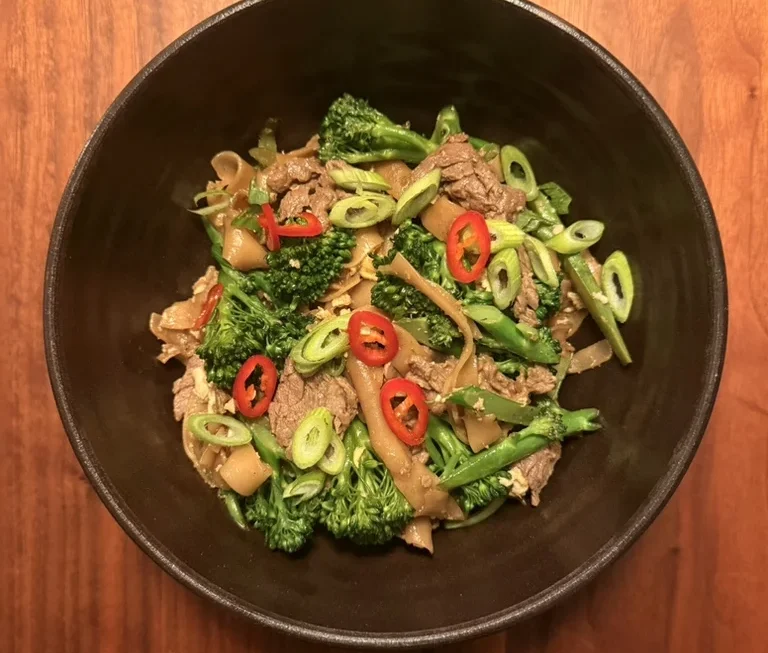
Whilst Pad Thai has been elevated to the status of a national dish, Pad See Ew remains what it has always been: an everyday street food. The name describes the dish quite simply: ‘Pad’ means ‘fried’, and ‘see ew’ means ‘soy sauce’. Pad See Ew therefore means ‘stir-fried with soy’.
It’s a simple dish with just a few ingredients, but there are a few pitfalls to watch out for when preparing it. As well as the noodles, it’s all about the wok and the heat – and at home, what’s missing most of all is a large gas burner. Pad See Ew is stir-fried very quickly over a very high heat, and that’s key to its characteristic flavour. So you have to cook it portion by portion, which means it isn’t really suitable for larger groups. We ourselves would only cook it for four people at most.
In Thailand, they use fresh rice noodles called sen yai, which are 2–3 cm wide. If you can get hold of them – brilliant. However, this won’t be possible almost everywhere, so use the widest dried rice noodles you can find and rehydrate them. We’ve explained how to do this here. Alternatively, follow the instructions on the packet, but we always recommend not boiling rice noodles, but soaking them for a very long time in (hot) water. This is much more reliable.
When it comes to meat, we’ve mostly had chicken or beef in Thailand, but you can use any protein of your choice, particularly tofu, prawns or pork.
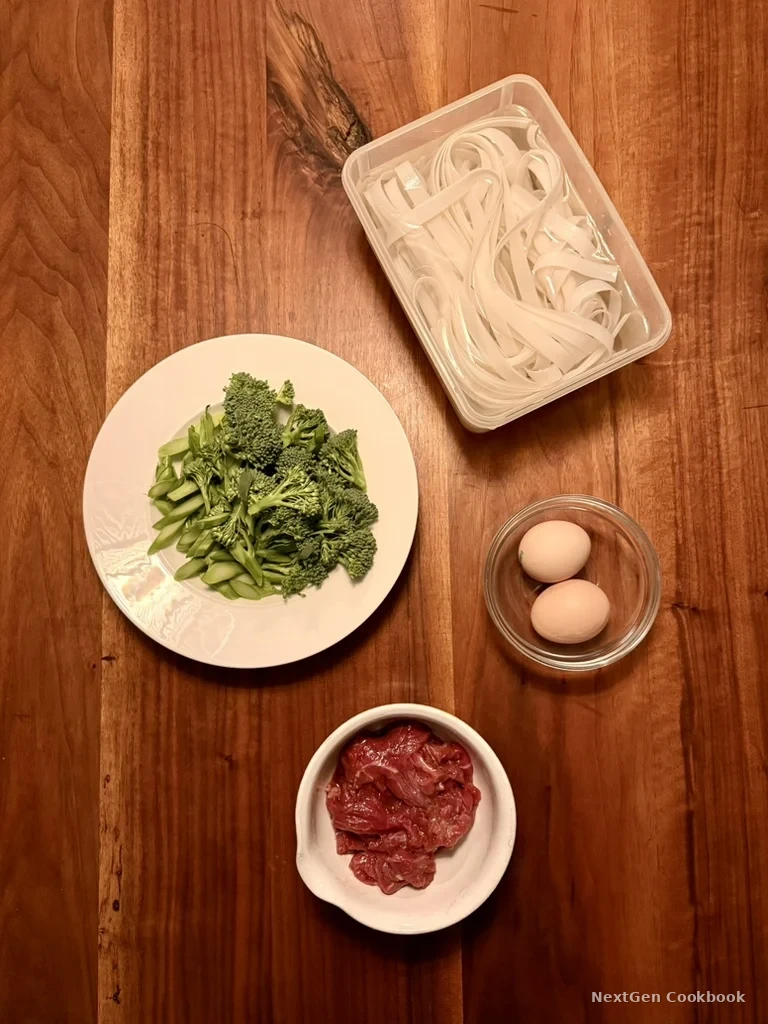
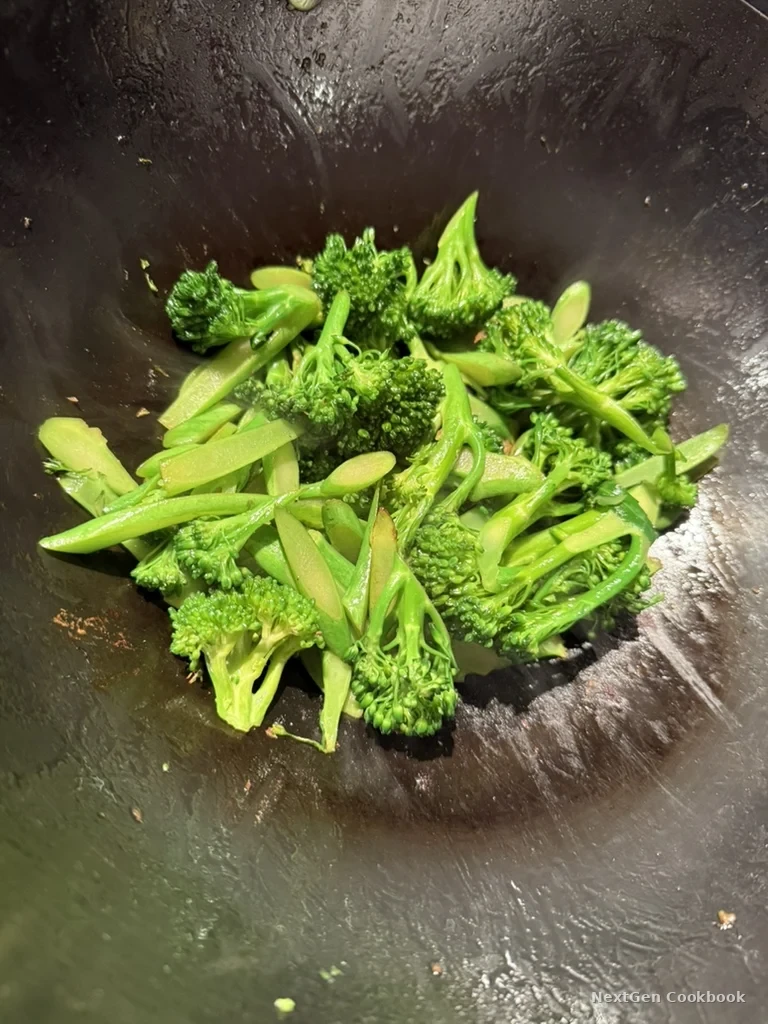
Eggs are just as much a part of it as gai lan, or Chinese broccoli. It has sturdy stalks, slightly bitter leaves and only a few small flower buds. You won’t usually find that either. The best alternative is broccolini, a hybrid of gai lan and broccoli. If you can’t get hold of that either, you can use cime di rapa. Pak choi is only a last resort. Always separate the stalks from the leaves, leaving the leaves in large pieces and chopping the stalks coarsely so that they remain crunchy.
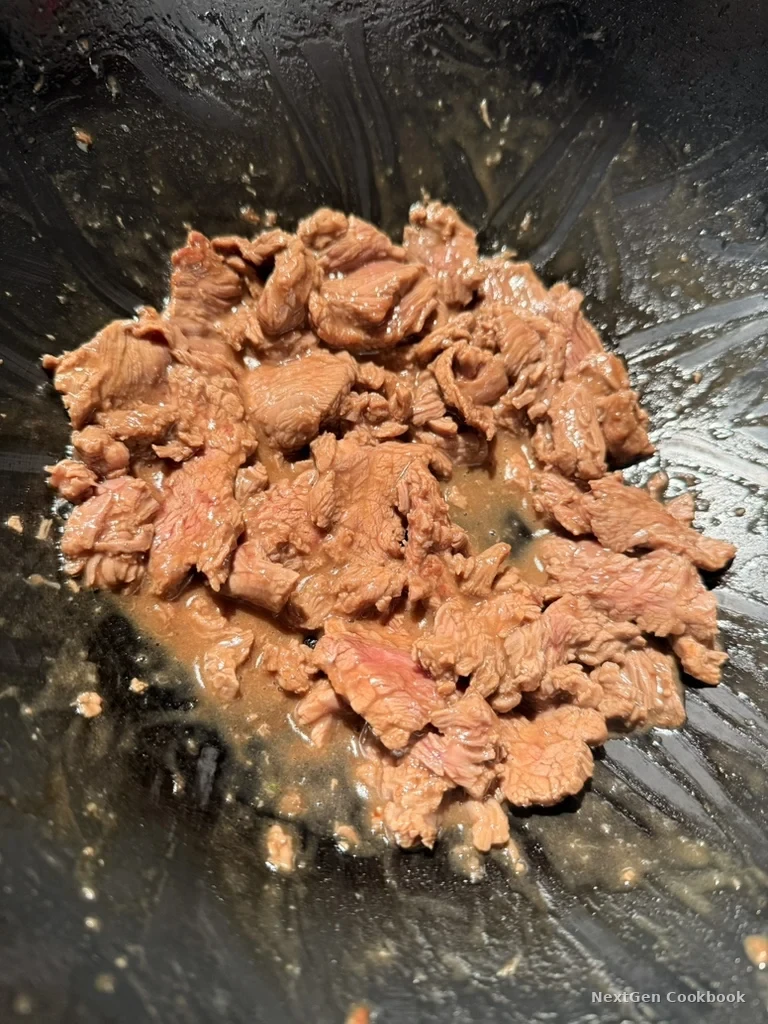
We’re cooking with beef, which we slice thinly across the grain and marinate for at least 15 minutes (as always, you’ll find the exact ingredients at the end). Which brings us to Golden Mountain sauce.
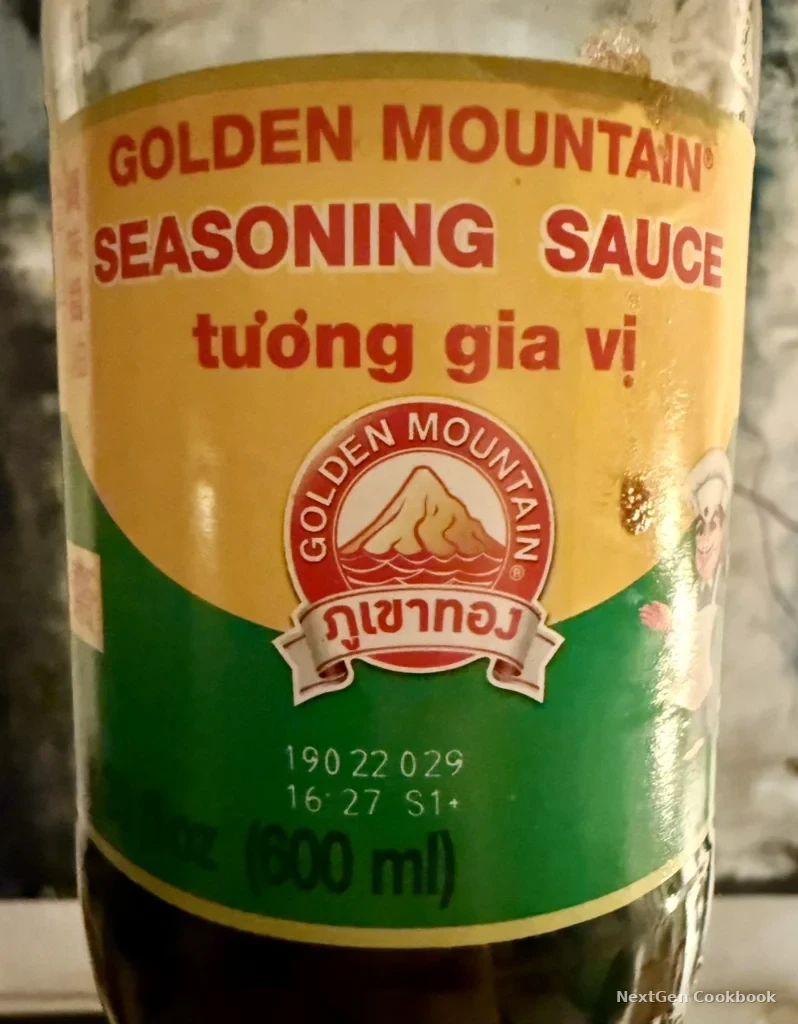
Maggi comes from Switzerland, and the manufacturers of such seasonings have long been active worldwide. Golden Mountain Sauce is the Thai equivalent, and we almost always have a bottle of it standing near the hob. This ingredient makes the dish taste just like it does on the streets of Thailand.
Golden Mountain consists mainly of fermented soya beans and salt. It has a richer flavour and is slightly saltier than ordinary soya sauce, and even just a few drops make a big difference. A little sugar also gives it a slight sweetness.
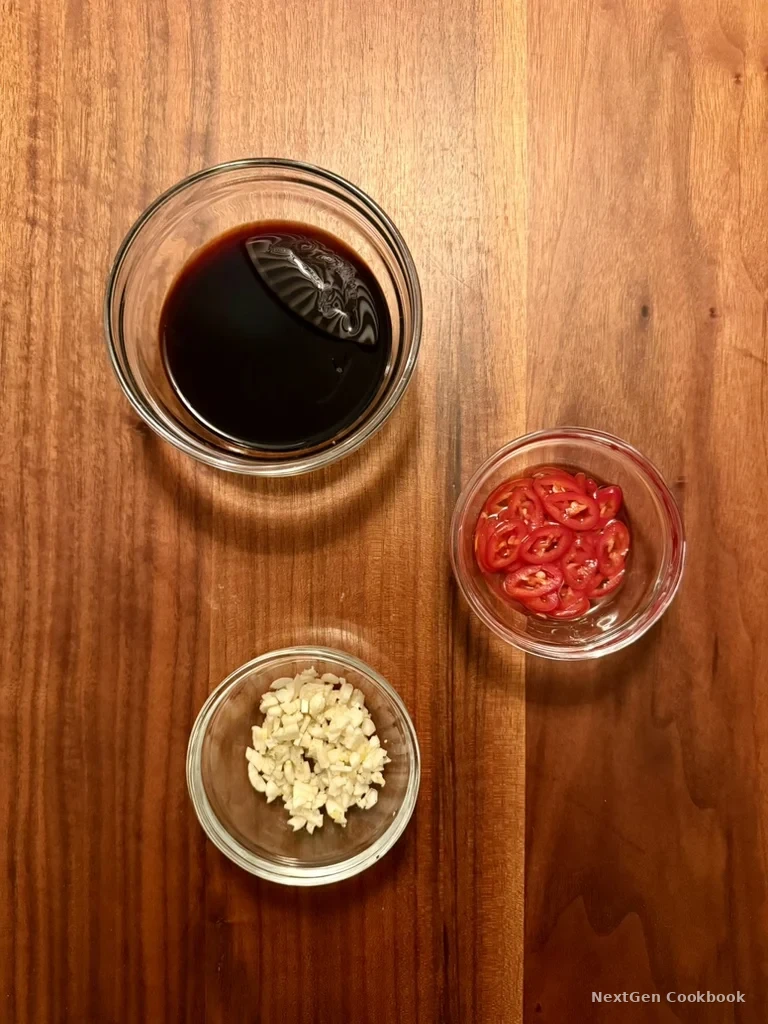
As always when cooking with a wok, everything needs to be prepared in advance because it all happens so quickly. This is particularly true of this dish. Whisk together a simple sauce made from oyster sauce, Golden Mountain, light soy sauce and a little fish sauce. Peel and slice plenty of garlic into thin slices or julienne strips. Prik Nam Som is a simple chilli vinegar – thinly sliced chillies are pickled in light vinegar. If you like it hot, use the fiery Thai chillies.
The actual frying only takes a few minutes. We recommend cooking the ingredients one after the other – this way, you can make up for the lack of heat compared to a wok on a powerful gas burner.
We start with the meat, which we fry in a little neutral oil over a high heat for one minute, then turn it over once. As soon as it has taken on a rich colour, we remove it from the wok (alternatively, you can prepare this dish in a heavy frying pan, non-stick recommended).
Using a little oil again, add the vegetables and stir-fry them very briefly. Then set these aside as well.
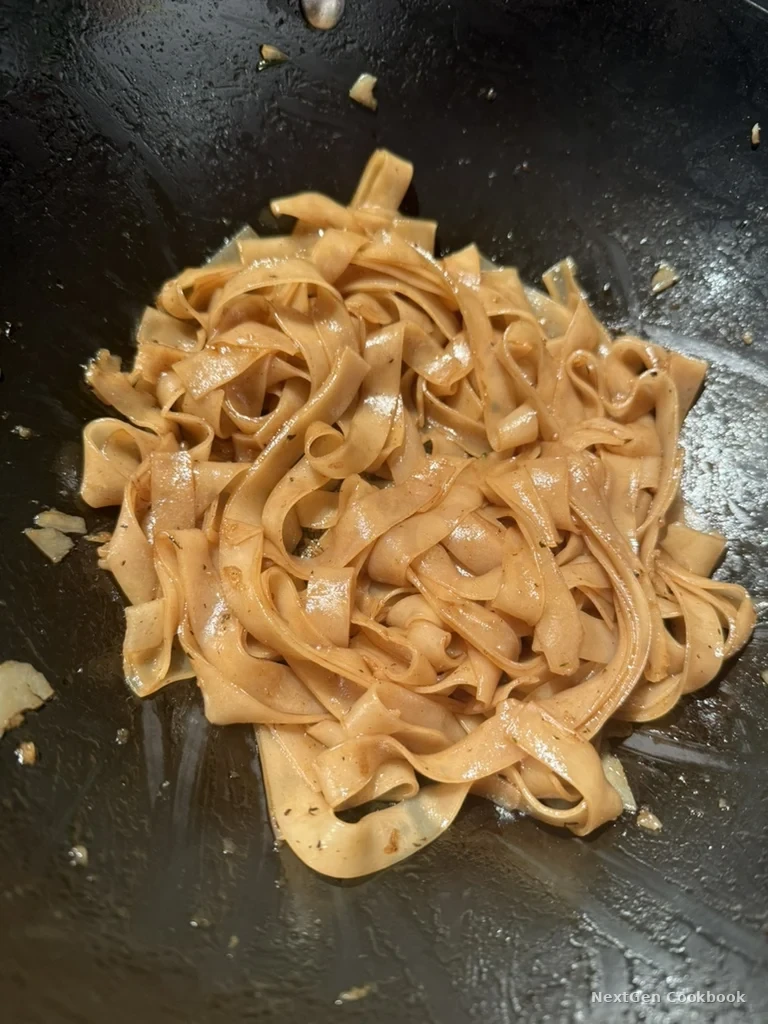
Next, add the noodles, again with a little oil and half the sauce. If you like, you can add a little sugar at this stage. Mix everything together and then leave it to brown the noodles slightly on the underside. Turn them over once and leave them to brown again.
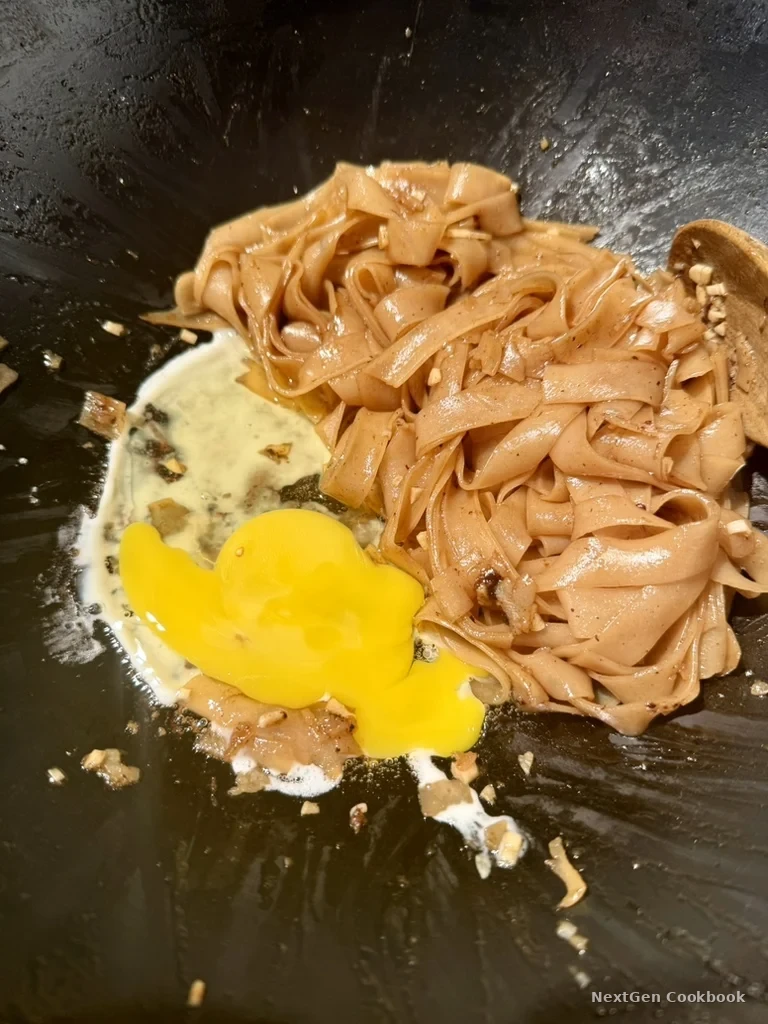
Push the noodles to one side and fry the garlic for 30 seconds in the empty space, adding a few more drops of oil if necessary. Then mix everything together, make some space again and fry the egg. Once it has set, we break it into rough pieces.
Add the prepared ingredients and the rest of the sauce, mix everything together thoroughly and heat briefly, then it’s ready to serve.
If you want it spicy, season with Prik Nam Som; if it needs more salt, add a few drops of fish sauce.
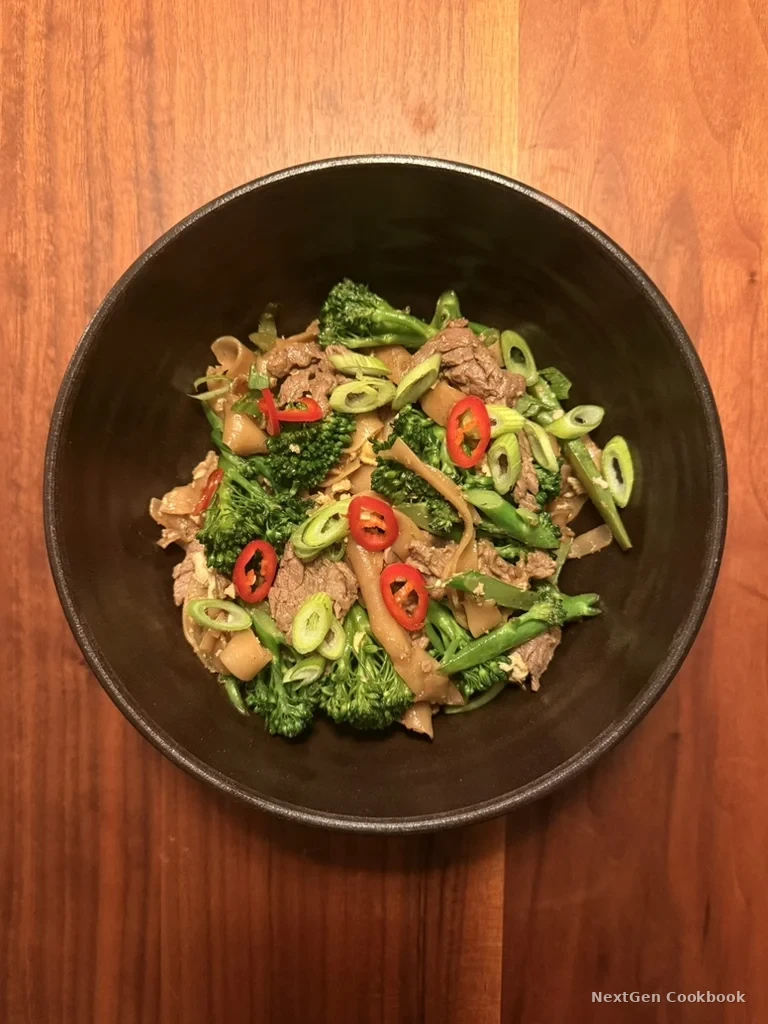
Enjoy.
And may the taste be with you.
Ingredients (for 2 people):
400 g fresh or 200 g dried rice noodles
Protein of your choice; we used:
200 g flank steak, bavette or rump, cut across the grain into very thin slices
marinated with 1 tsp each of light soya sauce, Golden Mountain sauce, neutral oil and cornflour
Sauce:
2 tbsp oyster sauce
2 tsp Golden Mountain sauce
2 tsp light soya sauce
1 ½ tsp fish sauce
For frying:
4 tbsp neutral oil
200 g Chinese broccoli or broccolini
4 garlic cloves, finely sliced
2 eggs
optional: 2 tsp sugar
Prik Nam Som (chilli vinegar):
4 tbsp white vinegar
2 red Thai chillies, cut into fine rings
