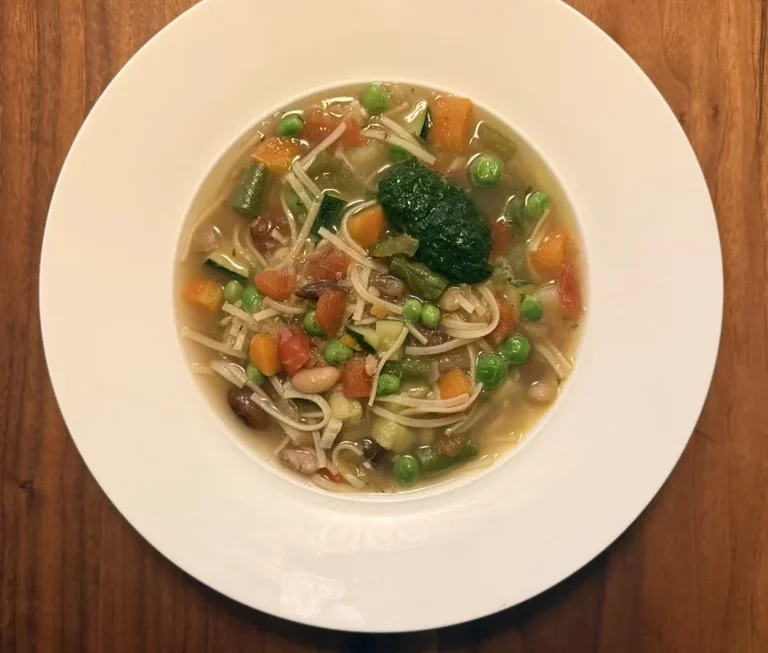
Soupe au pistou isn’t a recipe. It’s a principle that goes like this: take whatever the season has to offer, cook it gently in water, and finish it off with a mortar full of basil, garlic and olive oil.
The dish has deep roots in the Mediterranean region. The name ‘pistou’ is derived from the Occitan word ‘pistar’ – meaning ‘to pound’ or ‘to crush’ – and refers directly to the mortar in which the sauce is made. The similarity to the Ligurian Pesto alla Genovese is no coincidence: the coasts of Nice and Genoa have been part of the same cultural exchange for centuries. Herbs, oil, garlic – these are the ingredients common to both traditions. The key difference: pesto contains nuts, pistou does not.
Today, this soup is regarded as the signature summer dish of Provence, closely linked to the season for fresh broad beans, which can be found in every market in Nice or Aix from July onwards. Those who prepare it there in the height of summer use fresh, still tender beans – not dried ones. Outside France or outside the season, dried beans are used, which are soaked the night before.
We use equal parts of dried white Coco beans (or, alternatively, Italian cannellini beans) and light brown Coco rose beans (or, alternatively, borlotti beans). As well as these pulses, the soup also contains pasta. This can be small shells, but thin, short vermicelli is the traditional choice.
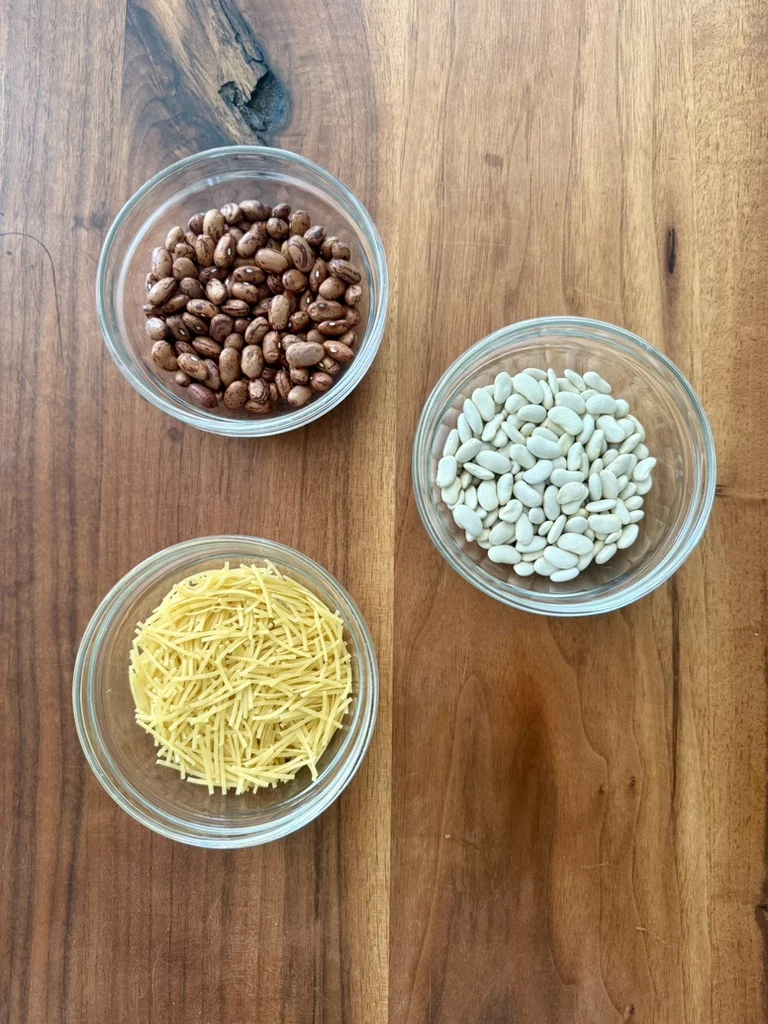
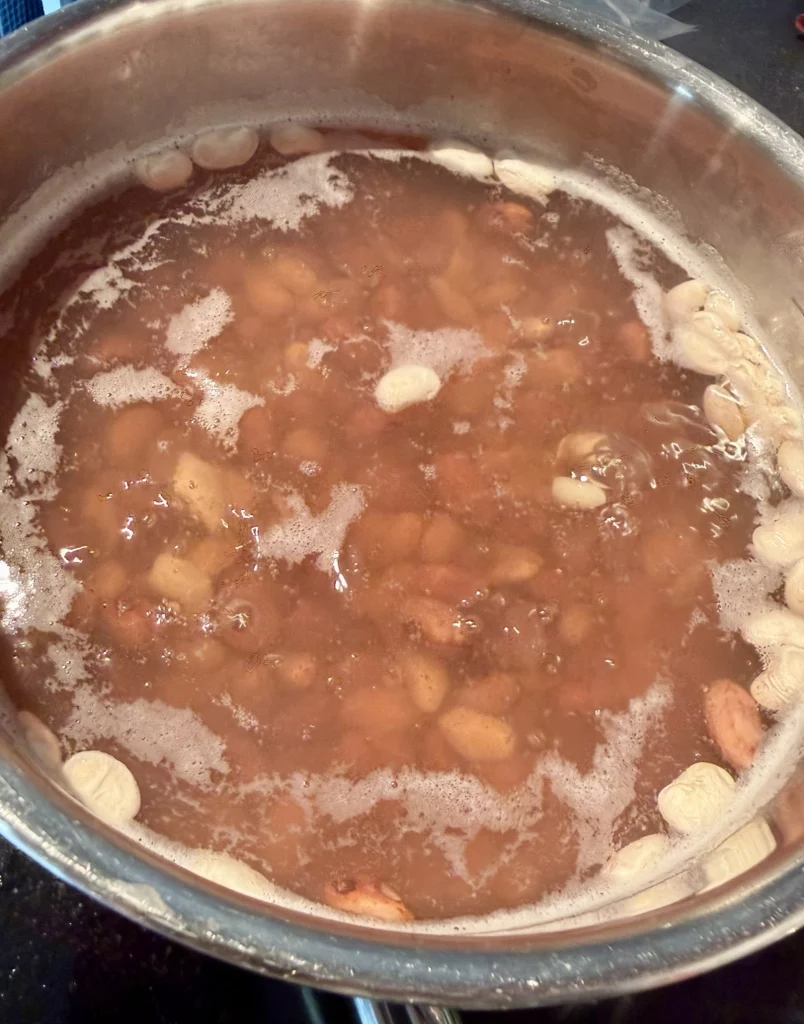
Soak the beans overnight in plenty of water and, the next day, boil them in fresh water for about an hour until they are just tender. As beans are a natural product, the cooking time can vary – it may take less or more time. You should start tasting them from the 50-minute mark onwards.
Now there are two different approaches: some cook all the ingredients directly in water, without sautéing them first. Others – and we prefer this method – sauté the root vegetables first to develop more depth of flavour. Both methods are authentic.
Onion, leek, carrot and celery are diced into 1 cm cubes. Celery does not feature in many traditional recipes – but it contributes significantly to the flavour of the stock.
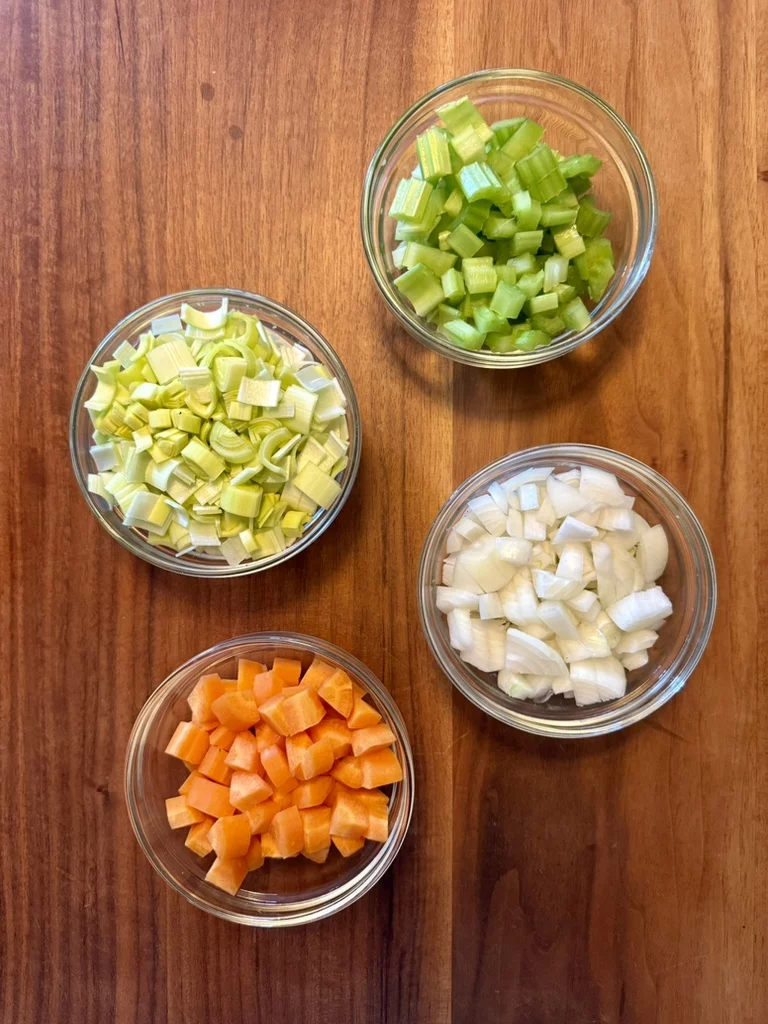
In a large pot, sauté these vegetables in olive oil over a medium-high heat for about 3 minutes, stirring frequently. Then add a few cloves of garlic, crushed and then chopped, along with bay leaves and thyme. We tie the thyme sprigs together so that they can be easily removed later.

Add the cooked beans and pour in water. Bring the mixture to just below the boil over a medium-low heat, so that only a few bubbles rise to the surface. The soupe au pistou should never be allowed to boil vigorously, but should develop slowly from the different vegetables.
The next vegetables are waxy potatoes, green beans, courgettes and peas. Apart from the peas, which you have to buy frozen for most of the year (please, no tinned ones – they’re a terrible product), these vegetables are also cut to the same size – all the pieces should be of the same size and roughly the same as the beans. This isn’t a matter of aesthetics, but a question of cooking time.
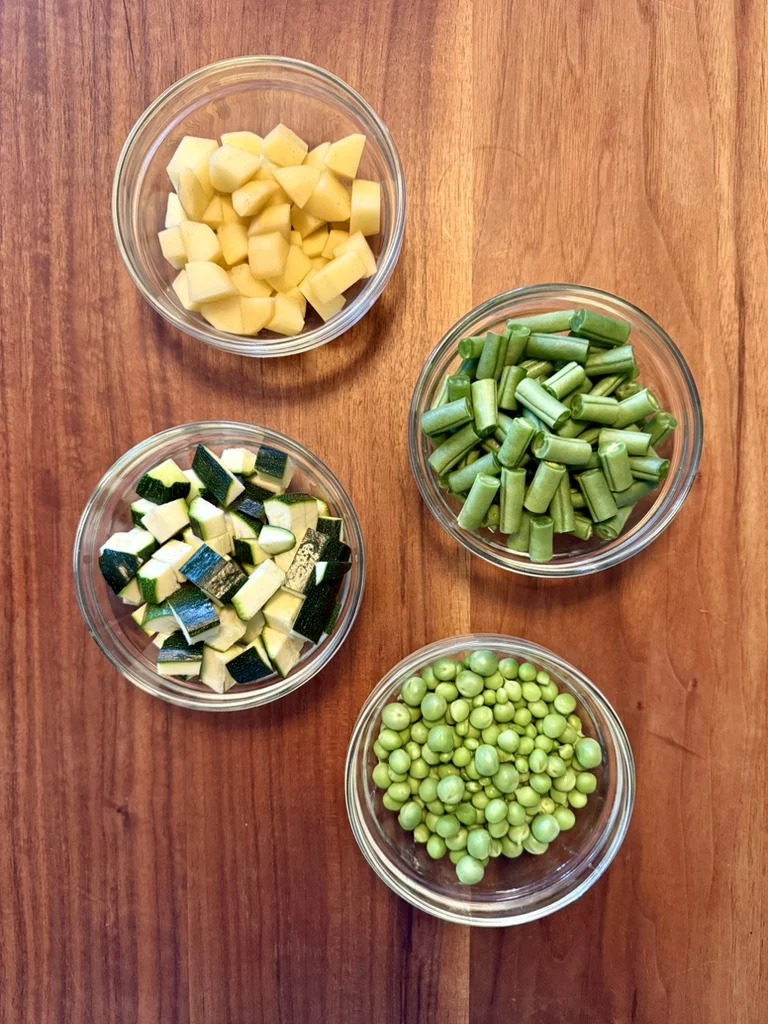
Add the potatoes to the soup first. Now season the soup lightly with salt and pepper for the first time.
After 10 minutes, add the green beans, and 10 minutes later, the courgettes. Add the pasta straight away and cook according to the instructions on the packet; this should take 8–10 minutes.
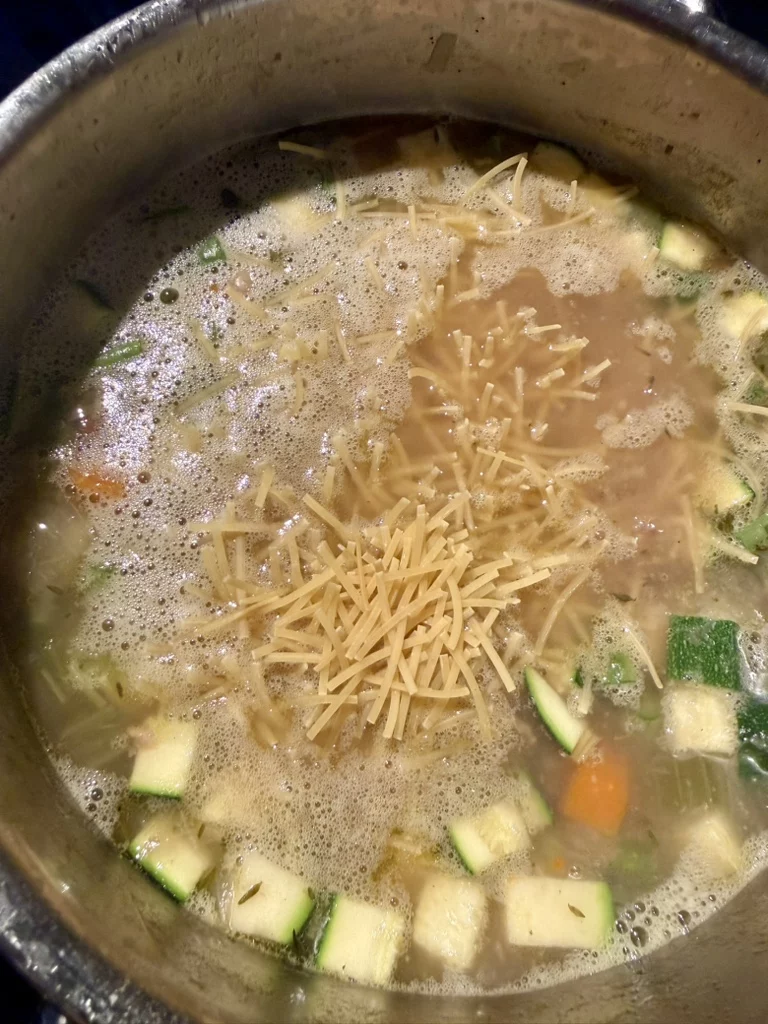
Add frozen peas 3 minutes before the pasta is cooked. Fresh peas take about 7 minutes.
Another topic is tomatoes. There are recipes with and without them; in some, they are sautéed very early on with the root vegetables (which allows them to become part of the stock), whilst in others they are added very late. We prefer the latter method and go to the trouble of peeling fresh, ripe tomatoes, removing the seeds and cutting them into small pieces.
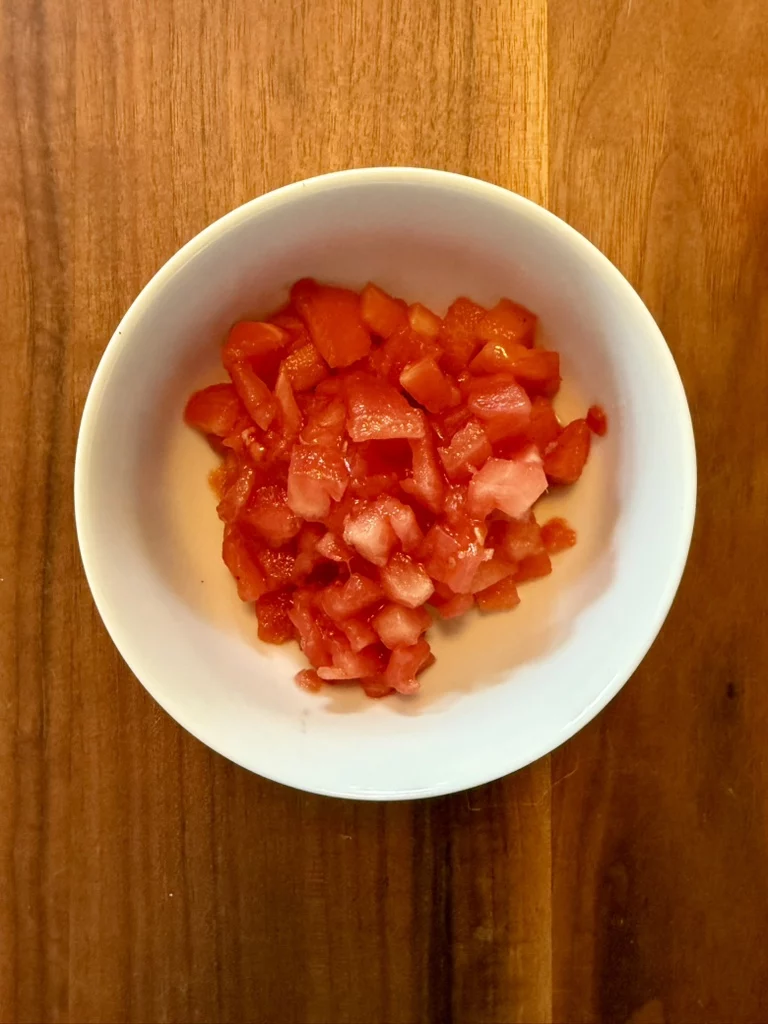
We add these tomato pieces to the soup last, along with the peas.
Finally, remove the bay leaves and sprigs of thyme, and season the soup to taste with salt and pepper.
The Pistou
We’ll have already made the pistou that gives the dish its name by then, and it’s quick to prepare. You can use a blender or food processor, but the result is better when made with a mortar and pestle.
First, crush and grind garlic with a pinch of salt into a fine paste. Then gradually add washed and roughly torn basil leaves. Finally, olive oil is incorporated in a thin stream. You can add a little grated Parmigiano for umami – this is (now) a legitimate, though not universally common, ingredient. However, this means the dish is no longer vegan.
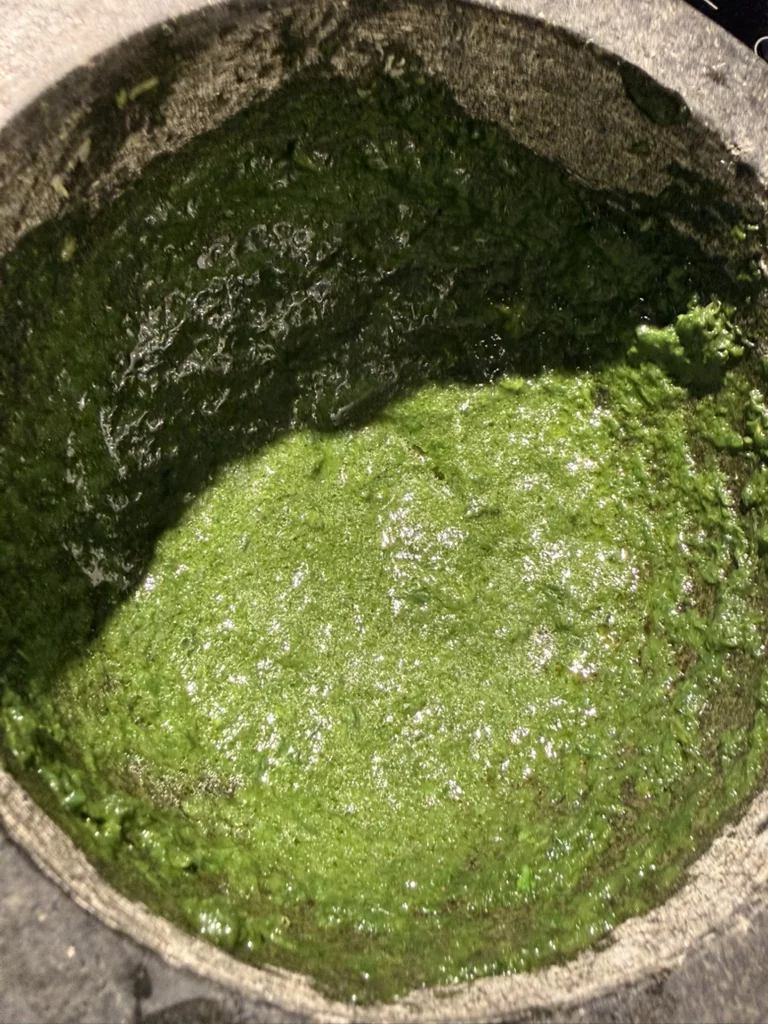
In some recipes, some of the pistou is stirred into the soup and the rest is served on the side to add to taste.
In our household, however, we don’t put the pistou straight into the pot. It’s served at the table – a generous dollop into the hot soup, which everyone stirs in themselves to taste.
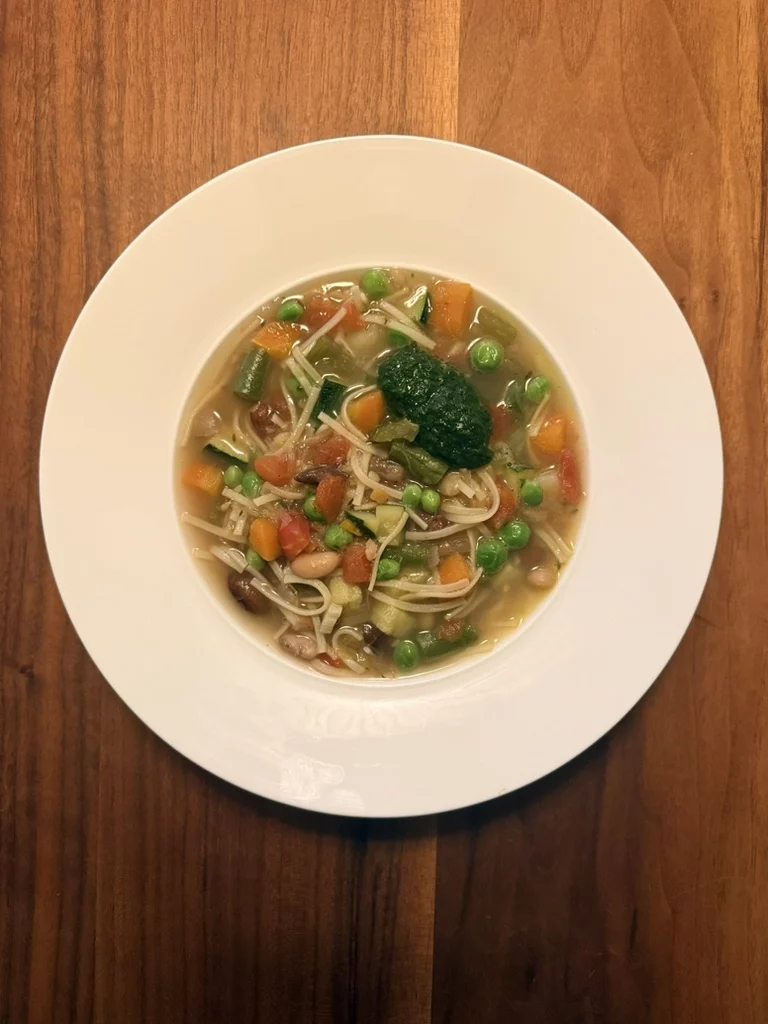
Enjoy.
And may the taste be with you.
Ingredients (for 4 people):
Note: These are (traditional) suggestions – use whatever is in season or whatever you particularly like.
125 g white beans (Coco / Cannellini)
125 g light brown beans (Coco rose / Borlotti)
4 tbsp olive oil
150 g each of onion, leek, carrot and celery
2.2 litres water
2–4 cloves of garlic, crushed and chopped, to taste
2 bay leaves and 4 sprigs of thyme
150 g waxy potatoes
150 g green beans
150 g courgette
80 g pasta – short vermicelli or small shells
150 g peas (frozen if necessary)
Optional: 200 g fresh tomatoes, peeled
Salt and pepper
For the pistou:
2 garlic cloves
1 pinch of salt
30–40 g fresh basil leaves
60 ml olive oil
Optional (but then no longer vegan): 40 g Parmigiano
