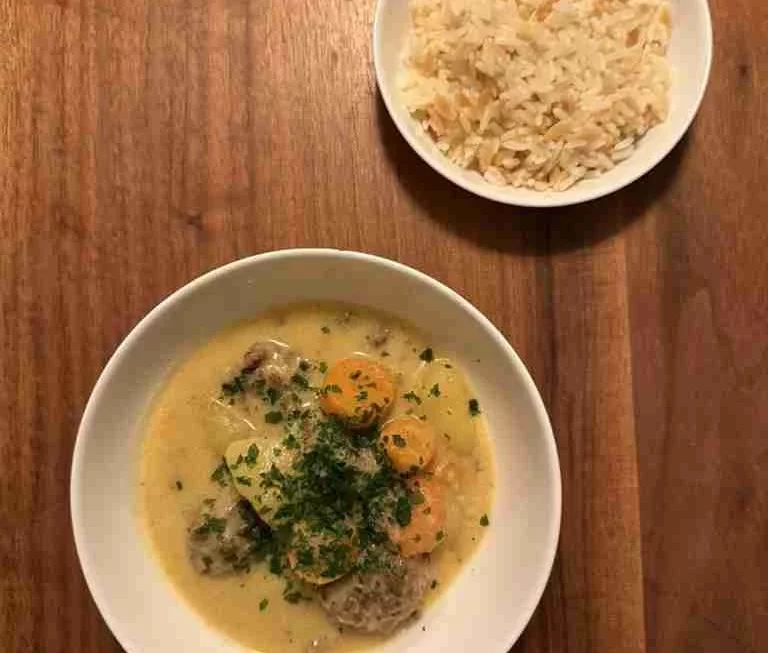
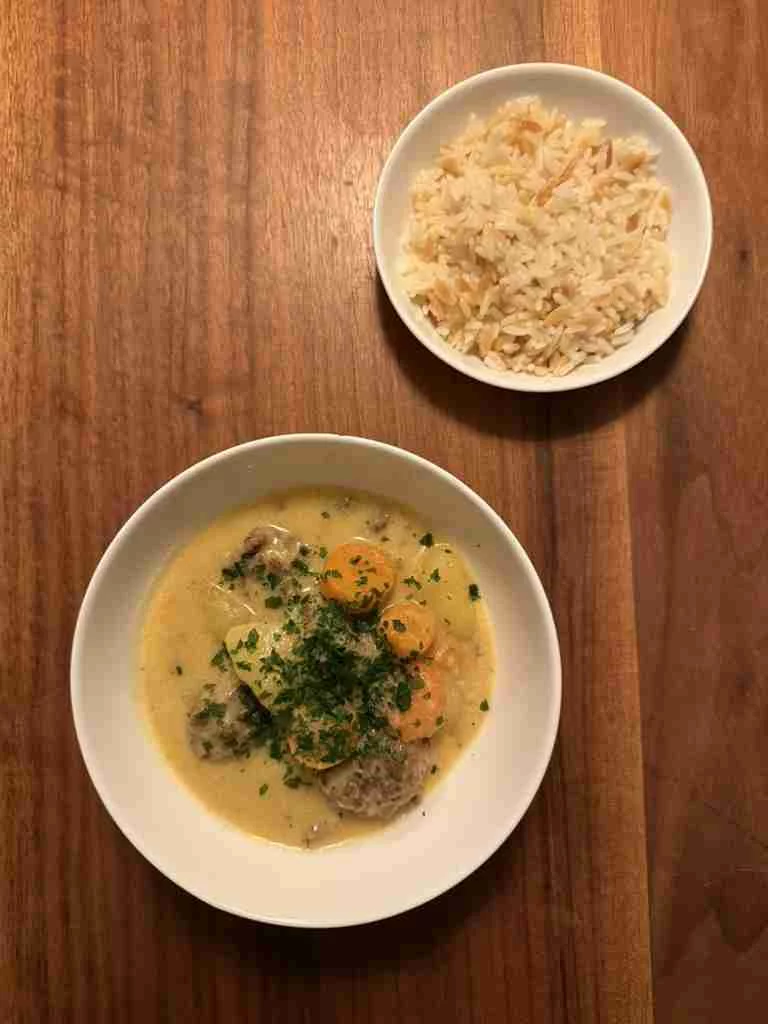
This dish, Ekşili Ve Terbiyeli Sulu Köfte, which can be enjoyed with or without rice, differs significantly from the sauce made with tomato and pepper purée that is commonly used in Turkish cuisine.
You can buy minced meat. It shouldn’t be too lean, so that the köfte don’t turn out dry. Both lamb and beef are suitable and commonly used. We recommend a ratio of one part lamb to one part beef.
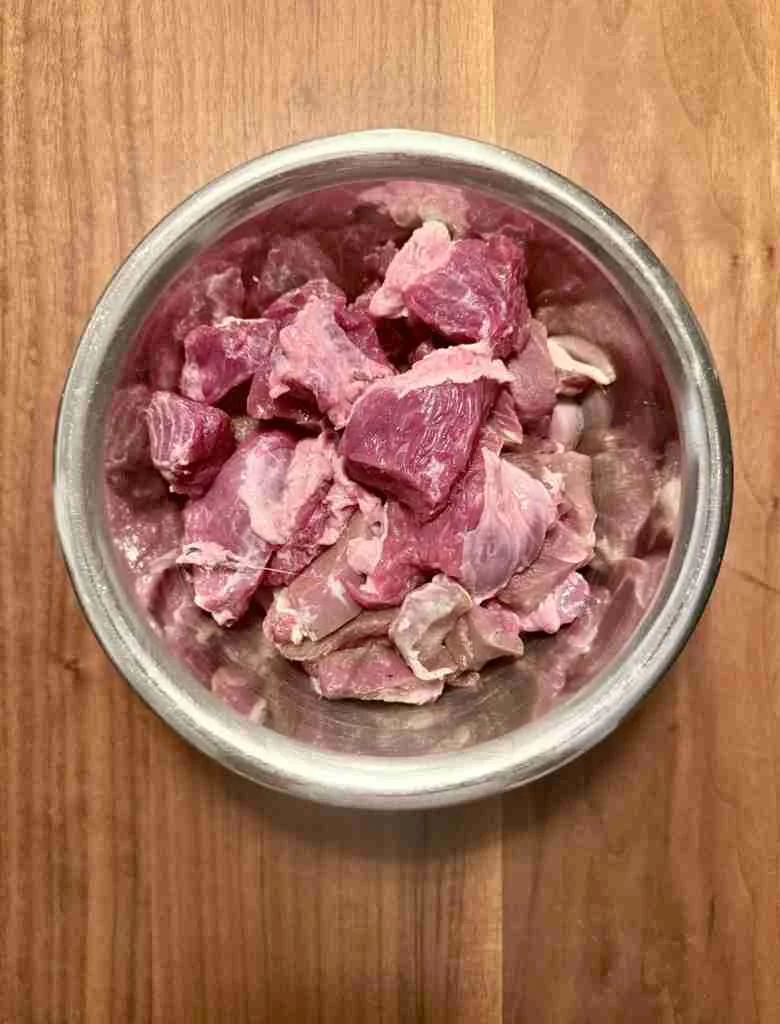
We have a meat grinder, so we like to buy our meat in one piece (that way we know exactly what we’re using), and we’re mincing ourselves today.
We also process a larger quantity in one go, as it’s easy to portion and freeze. This way, we produce the basis for several different dishes.
If you’re mincing the meat yourself, start by cutting it into pieces that will fit into the grinder. As the meat heats up during this process, it should be very well chilled before you start.
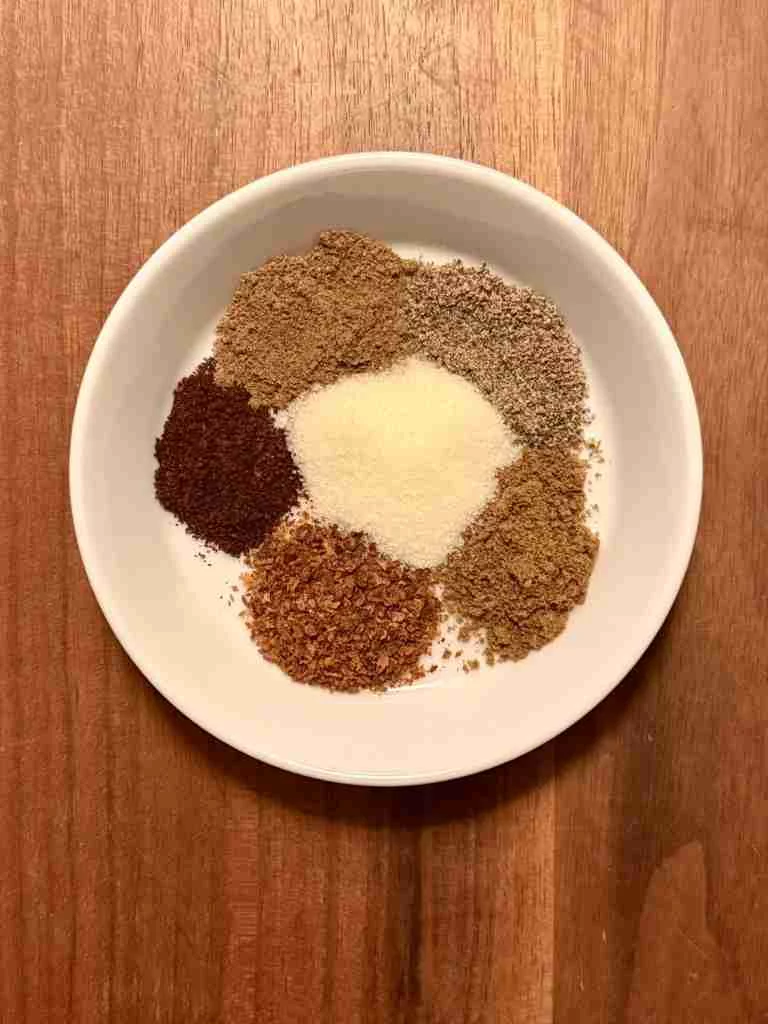
Every household uses different spices. For us, salt, black pepper, cumin, chilli (Pul Biber) and sumac are non-negotiable. We also use baharat, a spice blend that typically contains coriander, cloves, cumin, cardamom, nutmeg and cinnamon.
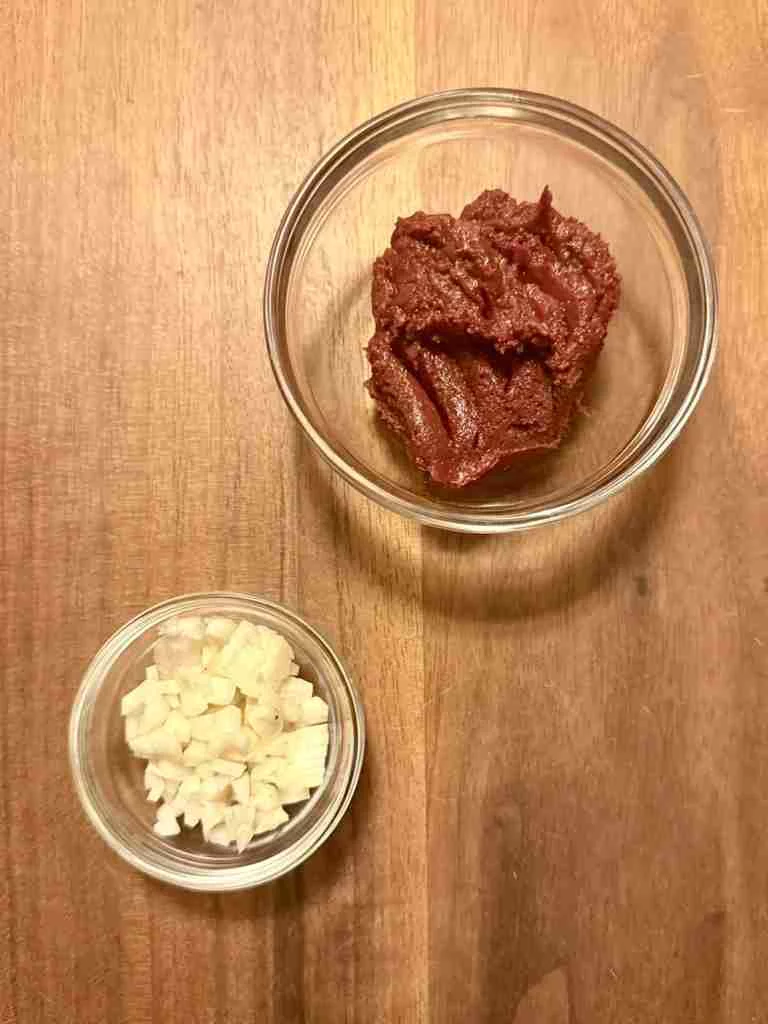
Garlic is a must, and we use one clove per person. As we’re mincing everything, it only needs to be roughly chopped. Otherwise, you should grate it so that it’s evenly distributed.
For even more flavour, we also add salça to the meat – this is a concentrated vegetable paste made from tomatoes, peppers or a mixture of both, which is used all the time in Turkish cuisine and can be bought in jars.
That’s a lot of spices, but the dish gets almost all its flavour from the köfte.

No binding agents are added to the meat – in particular, no egg and no bread. To ensure the köfte still retain their shape, knead the mixture until the proteins form strands and it becomes sticky. This takes a few minutes using your own strength, or you can use a food processor.
On the other hand, the köfte shouldn’t be too firm. Bulgur ensures this – specifically, the fine variety. It’s not without reason that it’s called ‘köftelik bulgur’ in Turkey. The coarse variety isn’t suitable for this.
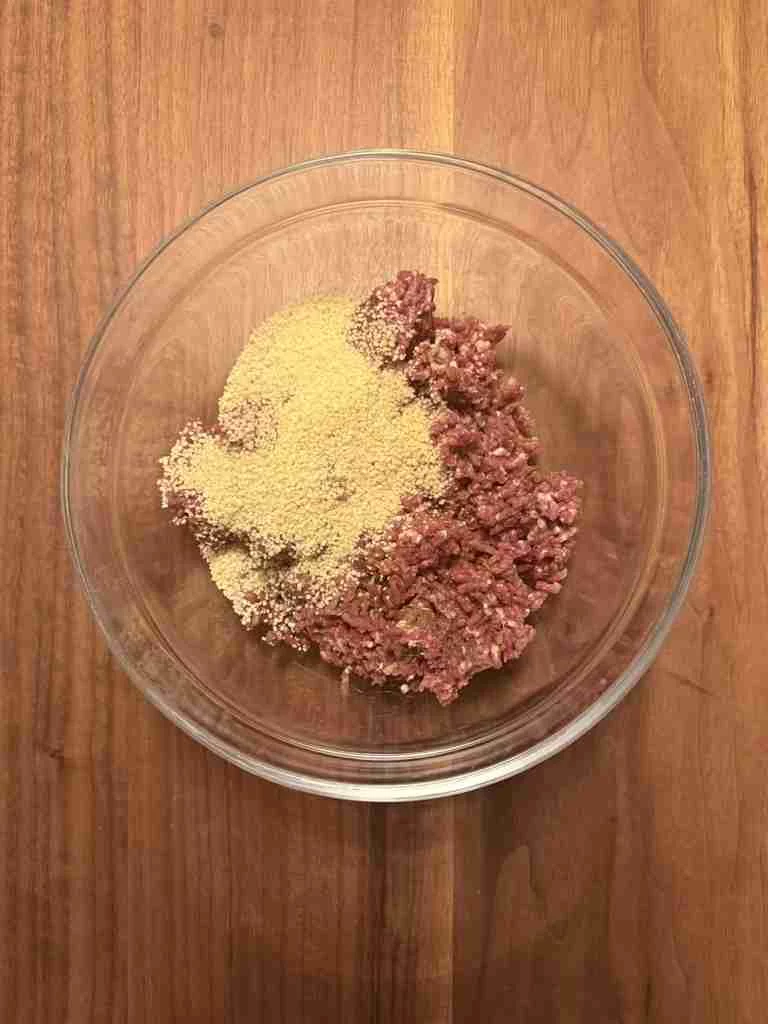
So mix everything together thoroughly and leave it to set in the fridge for at least four hours. Ideally, you should leave it overnight.
Then shape the mixture into small balls. They should fit on a spoon so that you don’t have to break them up to eat them comfortably.
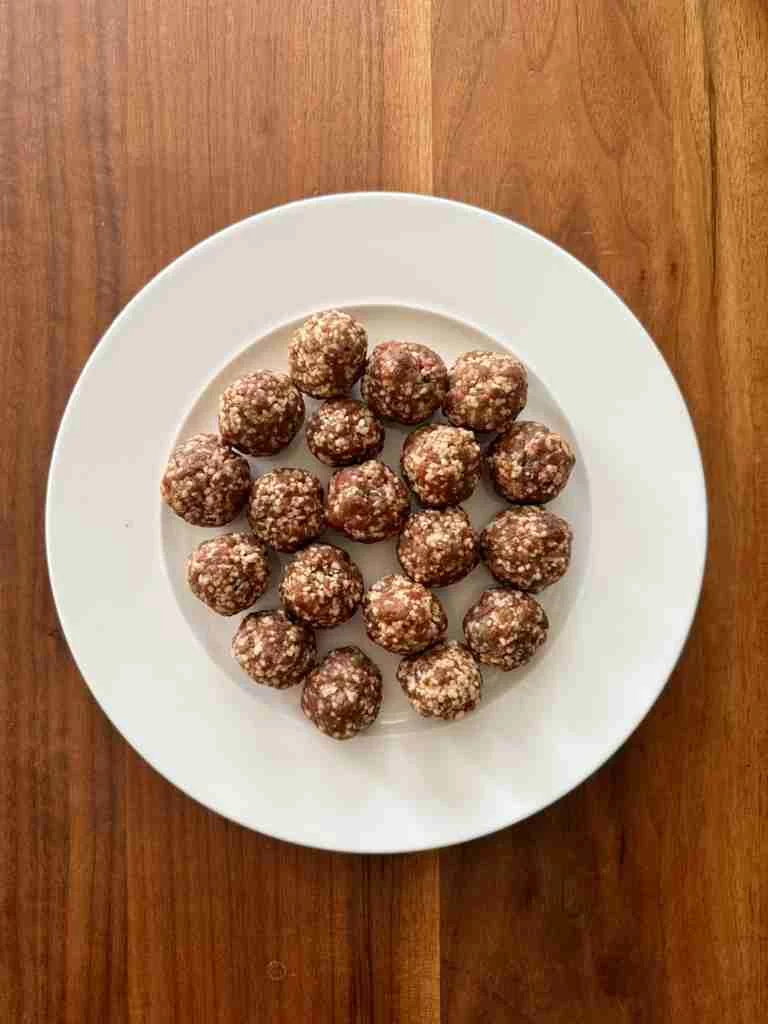
Now sprinkle a little flour around and over the balls and shake the plate until they are covered on all sides.
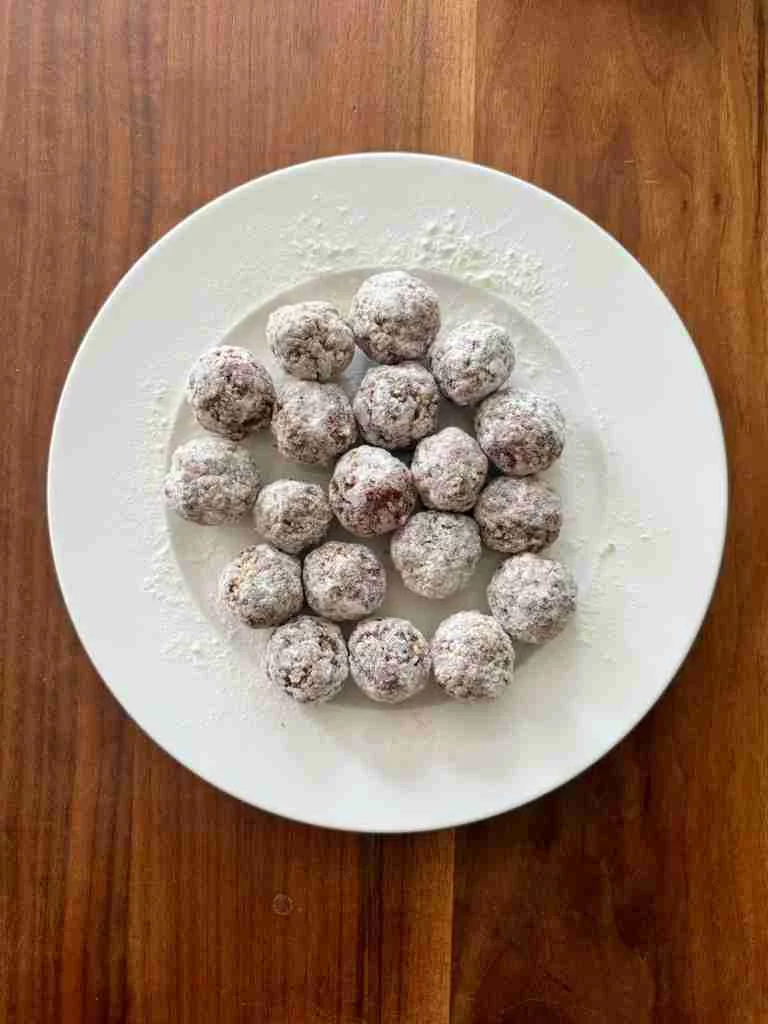
Return the köfte to the fridge.
Heat equal parts olive oil and butter over a medium-high heat…
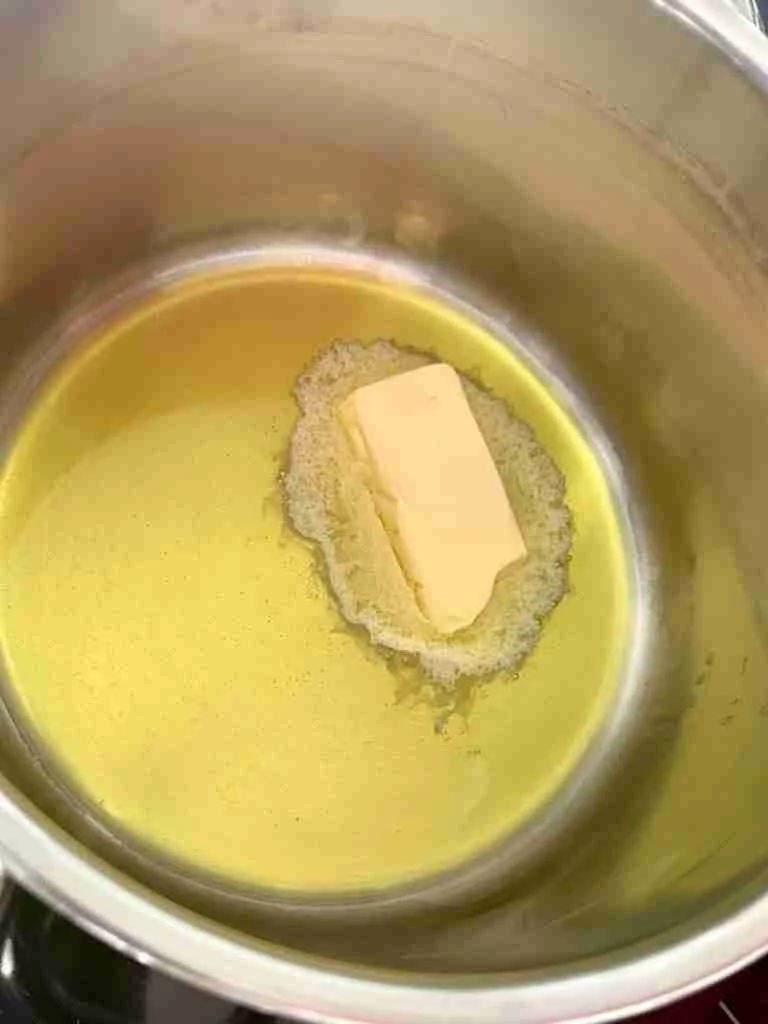
…then peel and dice potatoes and carrots and sweat them gently. The pieces should be the same size as the köfte.
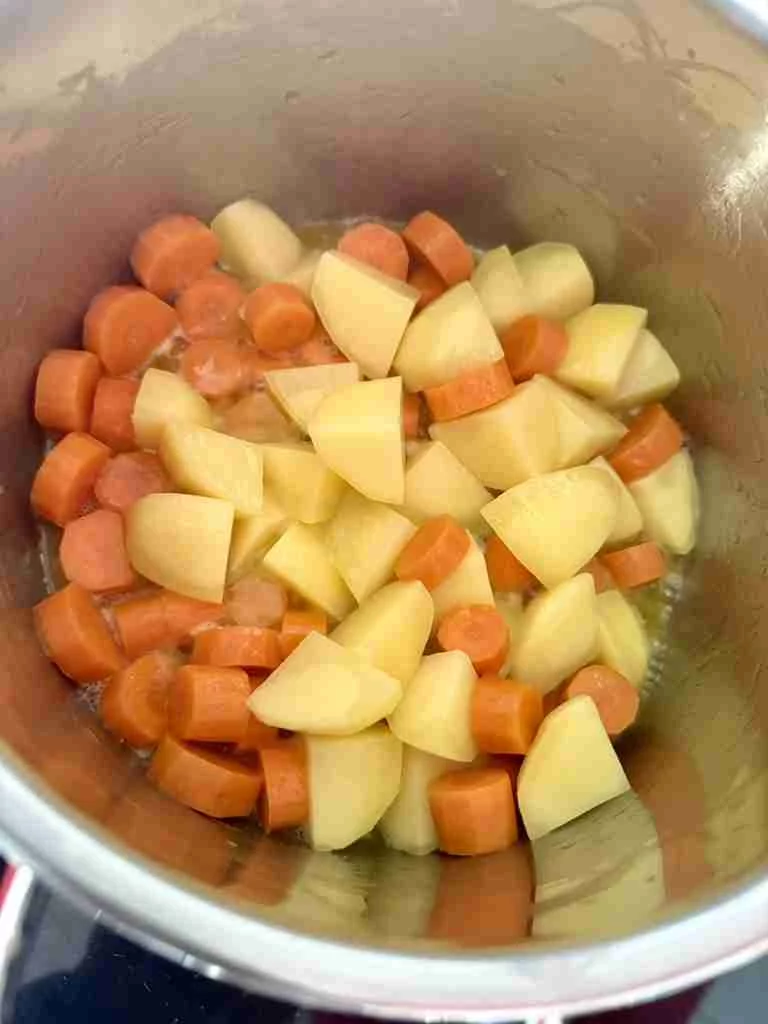
Stir occasionally for five minutes; the vegetables should not take on any colour.
In Turkish recipes, water is now almost always added. We want more flavour, so we use chicken or vegetable stock. There is a wide range of decent instant stock available without additives (above all, it should contain no yeast extract or other flavour enhancers and should be made from organic ingredients). It makes sense to keep some of this instant stock in the cupboard. After all, you can’t always be standing at the stove.
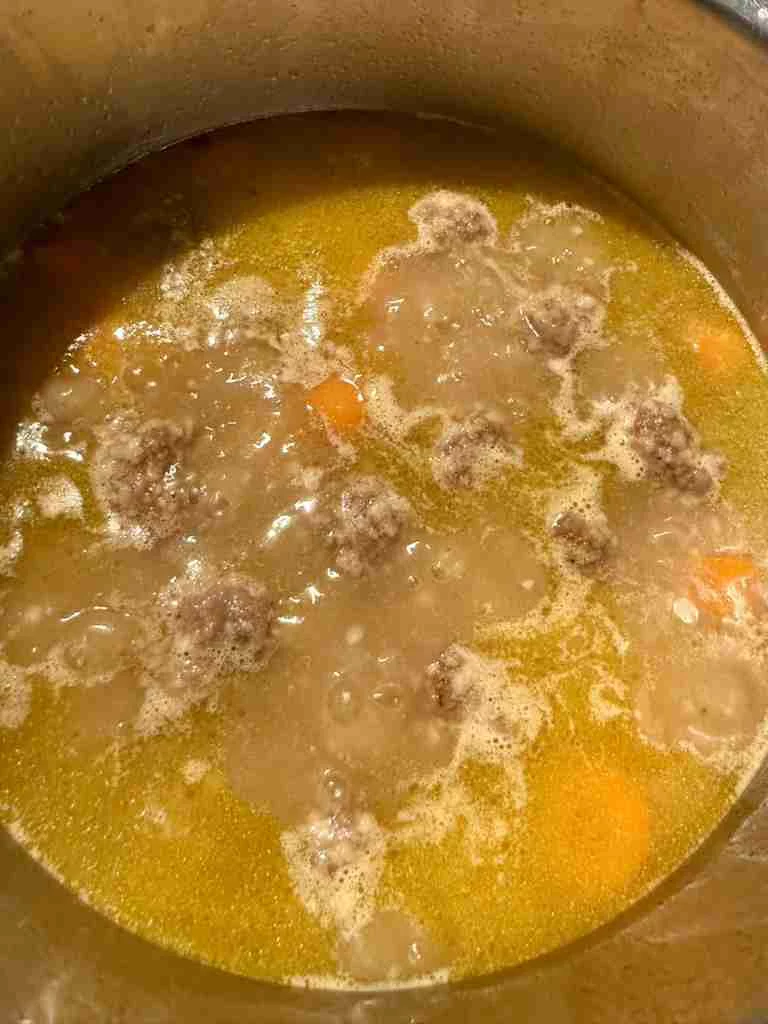
We’ll now leave it to simmer gently for 15 minutes. Then add the floured köfte and leave the whole thing to simmer gently for a further 20 minutes.
Squeeze lemon and separate egg yolks from the whites – a typical method for a preparation found throughout the Aegean Sea. Avgolemono is the Greek name; in Arabic it is known as Tarbiya and in Turkish as Terbiye. This dish also requires a little yoghurt.
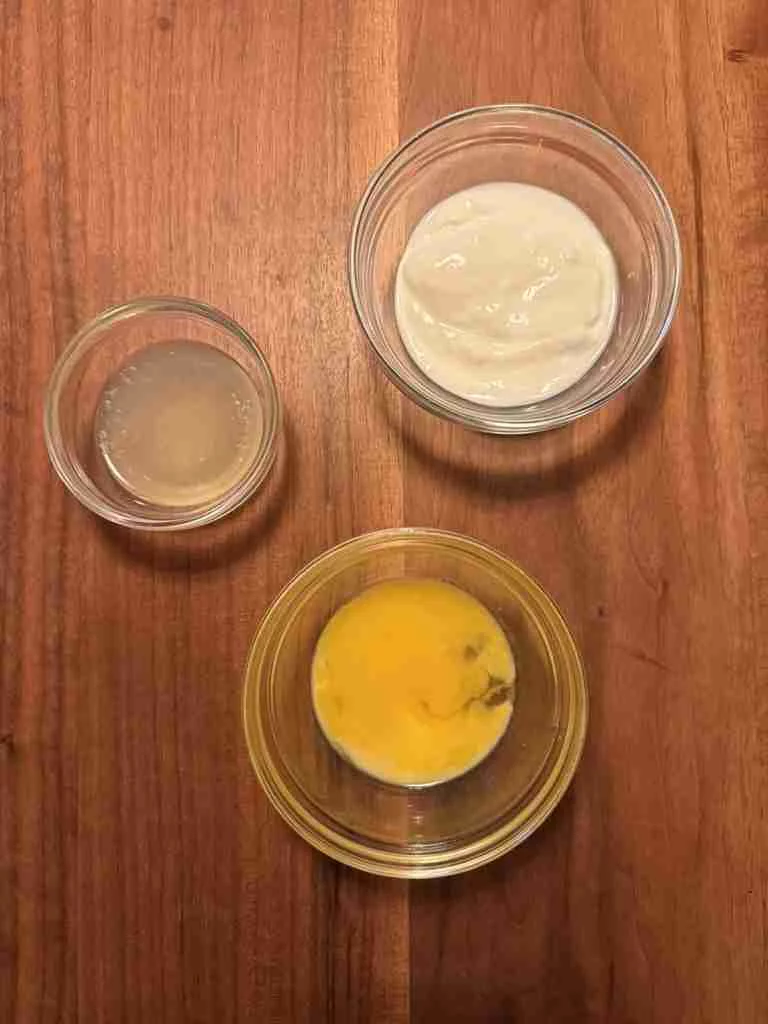
Mix these three ingredients until smooth, then add a little of the stock – not too much at once, so that the mixture doesn’t get too hot and the egg yolk doesn’t curdle. Stir, then add a little more stock until about one large ladleful has been incorporated. Adding the stock gradually ensures the egg yolks remain runny and the lecithin they contain can thicken the sauce later. Now combine everything in the saucepan.
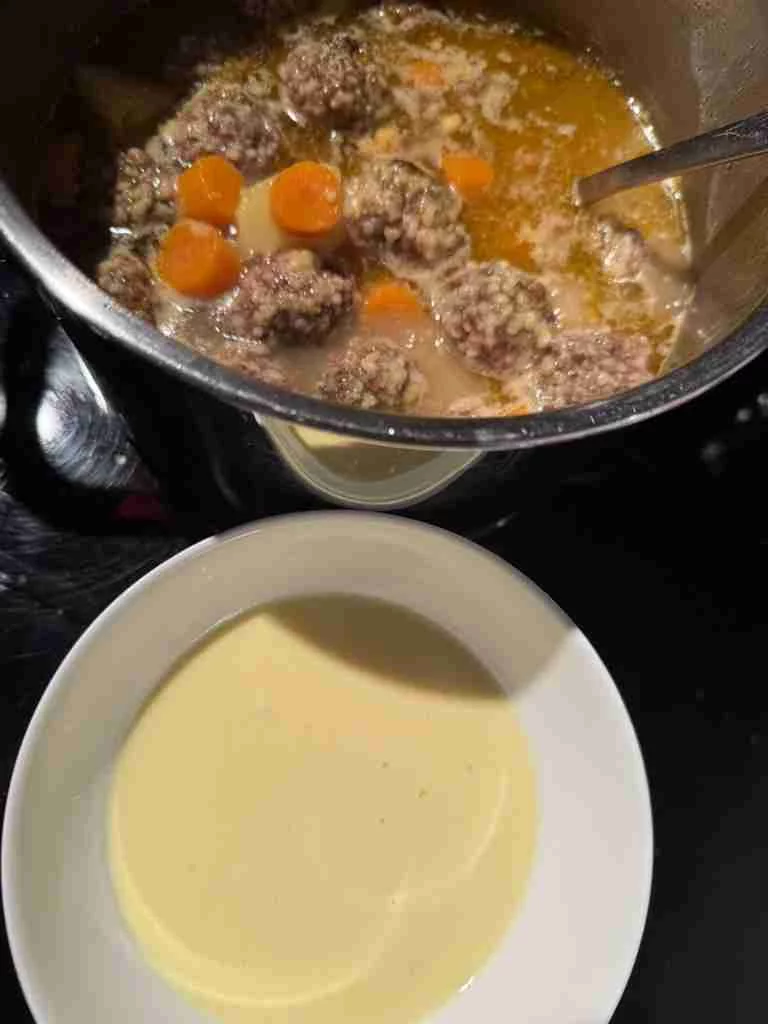
From this point onwards, the dish should only be gently heated and must not be allowed to boil, otherwise the egg will curdle. If the sauce isn’t thick enough for your liking, or if you want to make it keep longer – for example, because you want to eat the leftovers another day – then you can do the following:
Put a teaspoon of cornflour into a glass and add a tablespoon of cold water. Stir it together, add it to your dish and, whilst stirring, bring it almost to the boil. The cornflour will thicken your sauce further and the mixture will remain stable.
A little chopped parsley makes a very good garnish.
Ingredients (for 4 people):
For the köfte:
400 g organic minced lamb and/or beef
60 g fine bulgur (‚köftelik bulgur‘)
4 g salt
½ tsp black pepper
1 tsp each of cumin, pul biber (chilli flakes) and sumac
Optional: 1 tsp ‘baharat’ (an Arabic spice mix containing, for example, coriander, cloves, cumin, cardamom, nutmeg and cinnamon)
2–4 cloves of garlic
2 tbsp salça (concentrated Turkish vegetable paste made from tomatoes, peppers or a mixture of both)
1–2 tbsp flour
For the dish:
2 tbsp each of olive oil and butter
200 g waxy potatoes
200 g carrots
1.2 l stock (chicken or vegetable)
1 lemon
2 egg yolks
2 tbsp yoghurt
Parsley

2 thoughts on “Sulu Köfte”