
Poulet M’chermel literally means ‘marinated chicken’ – ‘chermel’ is derived from the Arabic verb ‘chermal’, which refers to marinating or seasoning. The name therefore describes a method of preparation: chicken that is marinated in chermoula – the North African spice paste made from herbs, spices, oil and lemon – and then braised.
Djej M’chermel, as the dish is called in Moroccan, is one of the most classic dishes in Moroccan cuisine and, in its simplest form, a demonstration of what chermoula can do: it is a marinade, a flavour base and a sauce all in one. The chicken is left to marinate in it for a day; it is then combined with stock and onions to form the braising liquid, and finally it gives the dish its distinctive character – lemony, warmly spiced, with the fermented tang of preserved lemon.
Chermoula
Chermoula can be used as a marinade for just about anything, whether it’s vegetables, fish, seafood or meat. It also makes a delicious seasoning for cooked dishes, much like you would use Argentine chimichurri. As is always the case with such mixtures, the variations are endless; here we describe the version we particularly like.
To make a basic preparation, mix the quantities specified at the end of the recipe of olive oil and lemon juice with finely grated ginger and garlic, cumin, pepper, paprika, and finely chopped parsley and coriander.

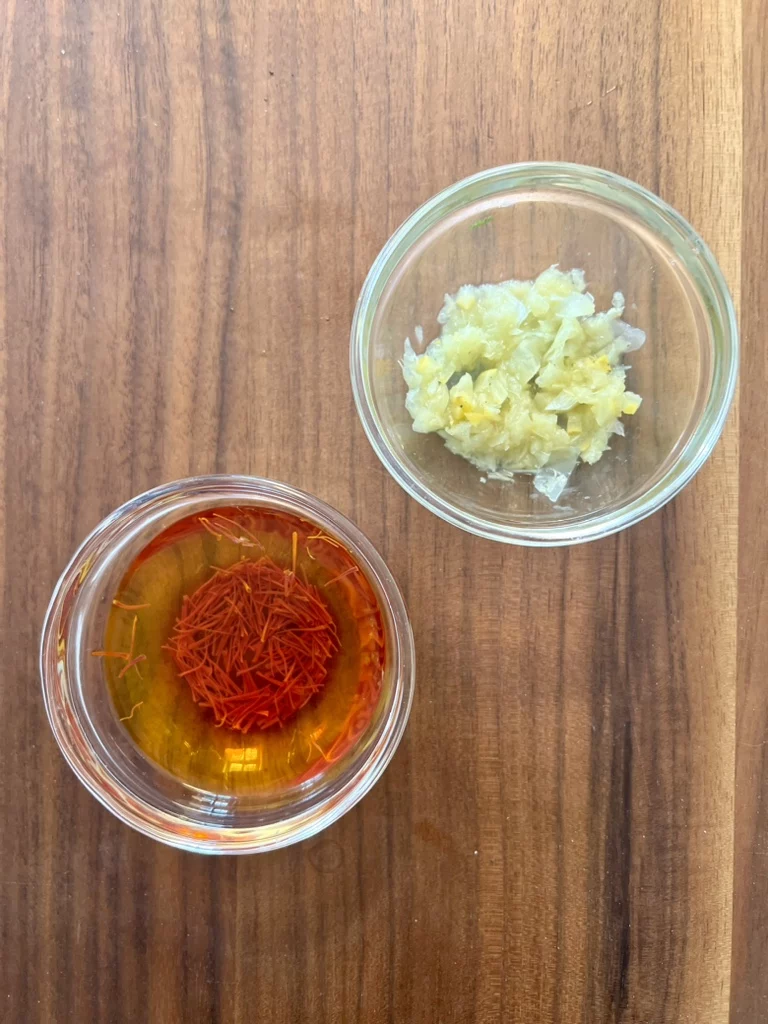
Chopped preserved lemon adds that special kick. If, as here, the chermoula is to be used in a braising sauce, saffron is also a good idea. To do this, pour a small amount of hot water over a pinch of saffron threads and leave them to infuse for 5 – 10 minutes until they release their full flavour. The saffron water, along with the saffron threads, is then added to the chermoula.
Wash and dry chicken thighs and drumsticks, then marinate them in this delicious mixture in the fridge for 12 – 24 hours.
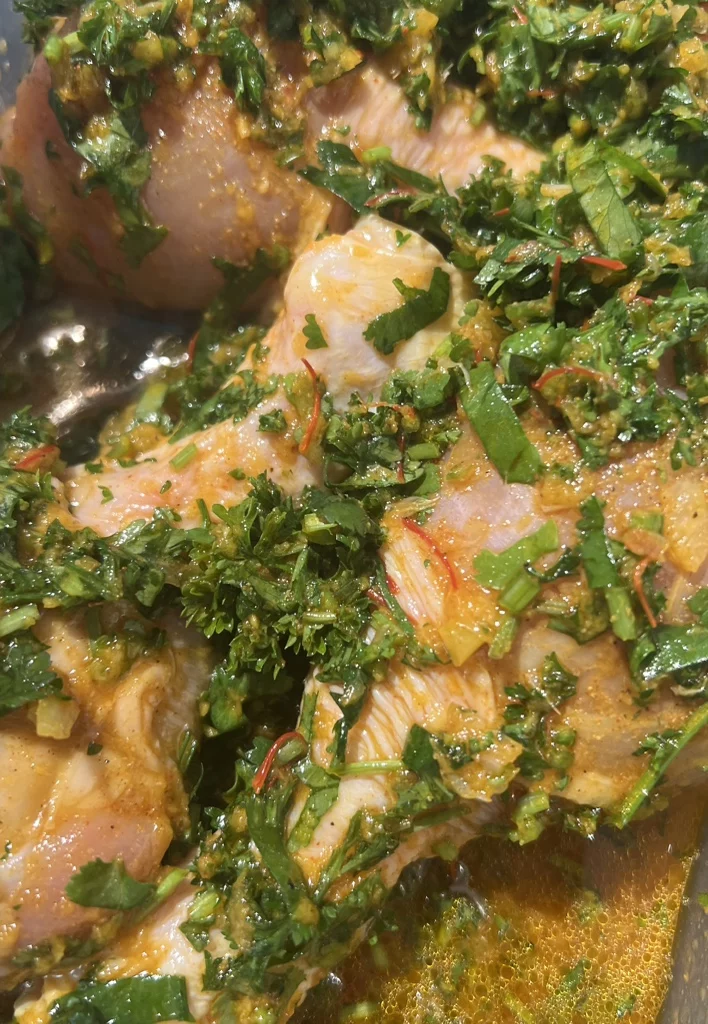
The next day, remove the meat from the marinade and pat it dry. Mix the marinade with a little harissa for a bit of heat and a little chicken stock; this will later form the braising liquid.
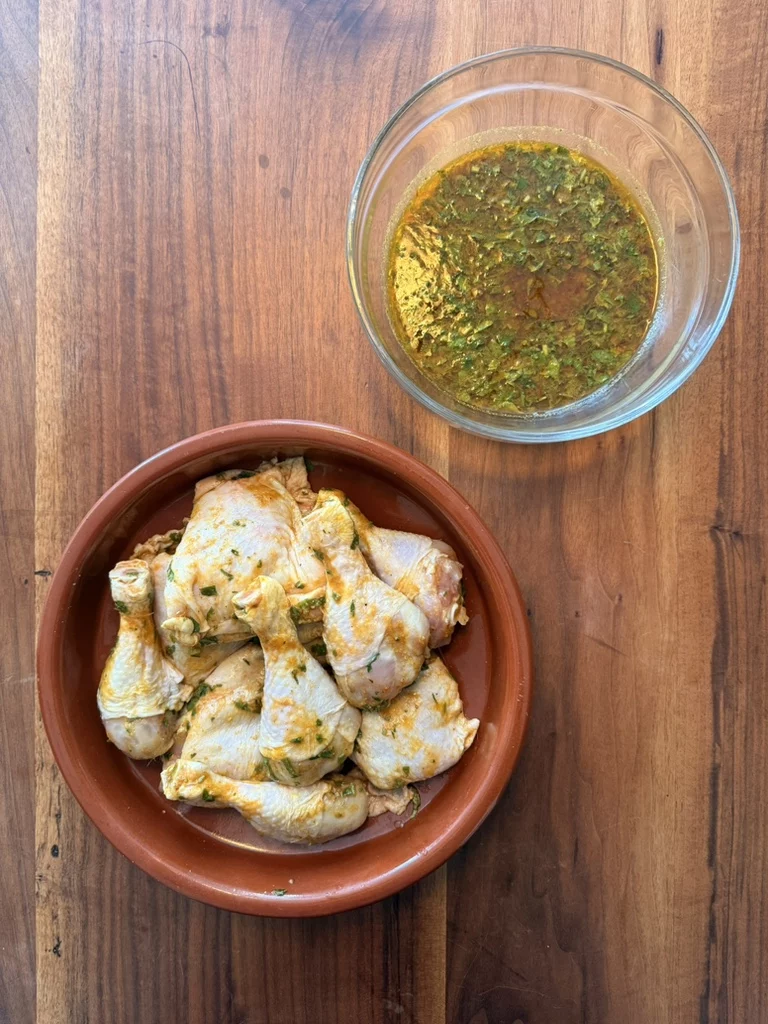
Now preheat the oven to 180 degrees Celsius, using top and bottom heat. Please note: we have a tagine and use it to cook the dish. If you don’t have one, you can use a saucepan with a lid, provided it seals tightly. If it doesn’t, you should cover the saucepan with aluminium foil before placing the lid on to ensure it seals properly. If using a saucepan, we would not cook the dish in the oven, but on the stove. As is always the case with stews, it must not boil, but simmer just below the boiling point. To achieve this, we would bring it up the boil once in the saucepan and then immediately turn the heat down to a very low setting (in our case: 2 out of 10).
Heat the olive oil in a frying pan over a medium-high heat. Then, in batches, brown the chicken briefly and thoroughly on both sides. The aim here is not to cook the meat, but to develop the flavour created by the Maillard reaction.
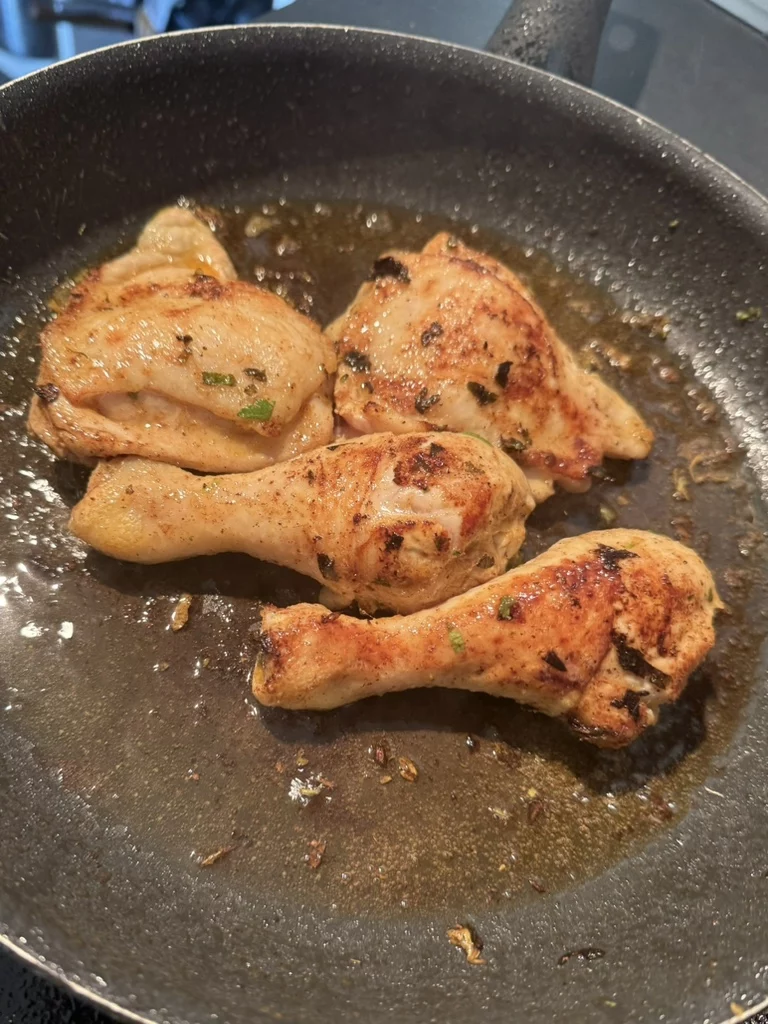
Set the chicken aside. As an exception, we’ll now wipe the bottom of the pan clean – even though it contains the chicken’s delicious flavour – because otherwise the dark bits left over from frying would turn black and bitter later.
Now, take plenty of onions, halve them and slice them crosswise to the grain. Sauté in olive oil over only medium heat, stirring occasionally, for about twenty minutes. They should be completely soft and sweet, without browning.

Pour the mixture of chermoula and chicken stock into the pan and mix it with the onions, then transfer everything – the meat, onions and sauce – into the tagine (or, alternatively, into your tightly-fitting saucepan).
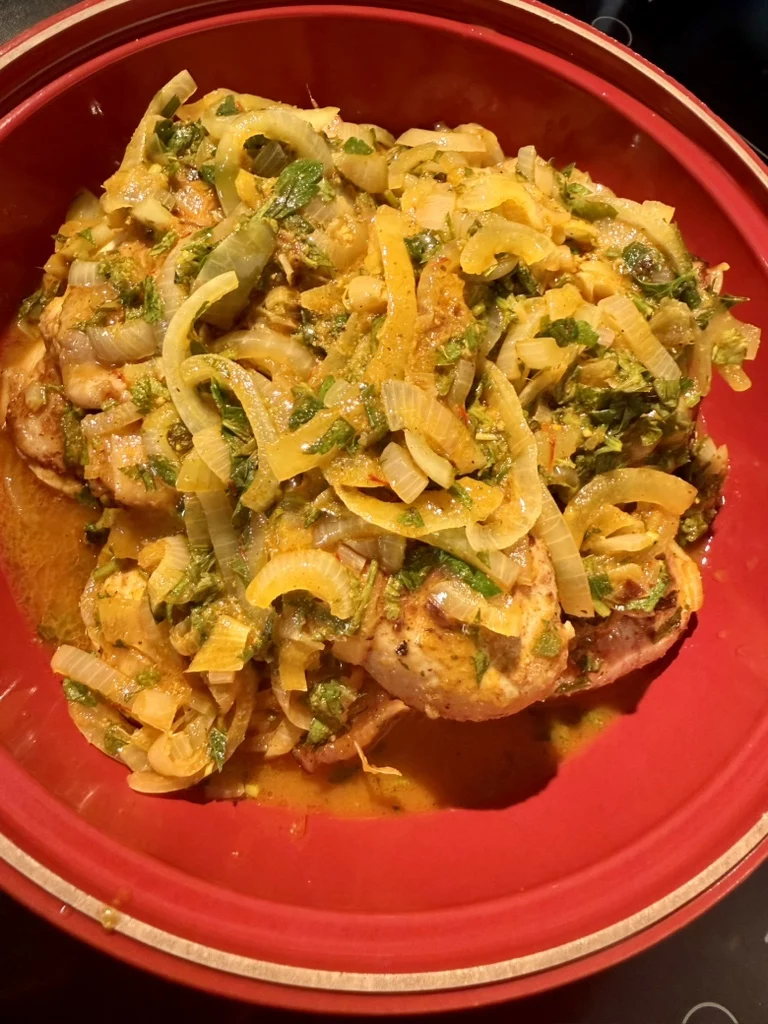
Cover the tagine and leave the dish to braise in the oven for an hour. You could leave it at that and serve it with bread or couscous.
If, like us, you want to add vegetables, cook them now according to their individual cooking times. We find that carrots and courgettes work best with this dish, so we cut both into larger pieces of about 2.5 cm. We remove the chicken from the sauce and keep it warm, wrapped in foil and covered with a tea towel.
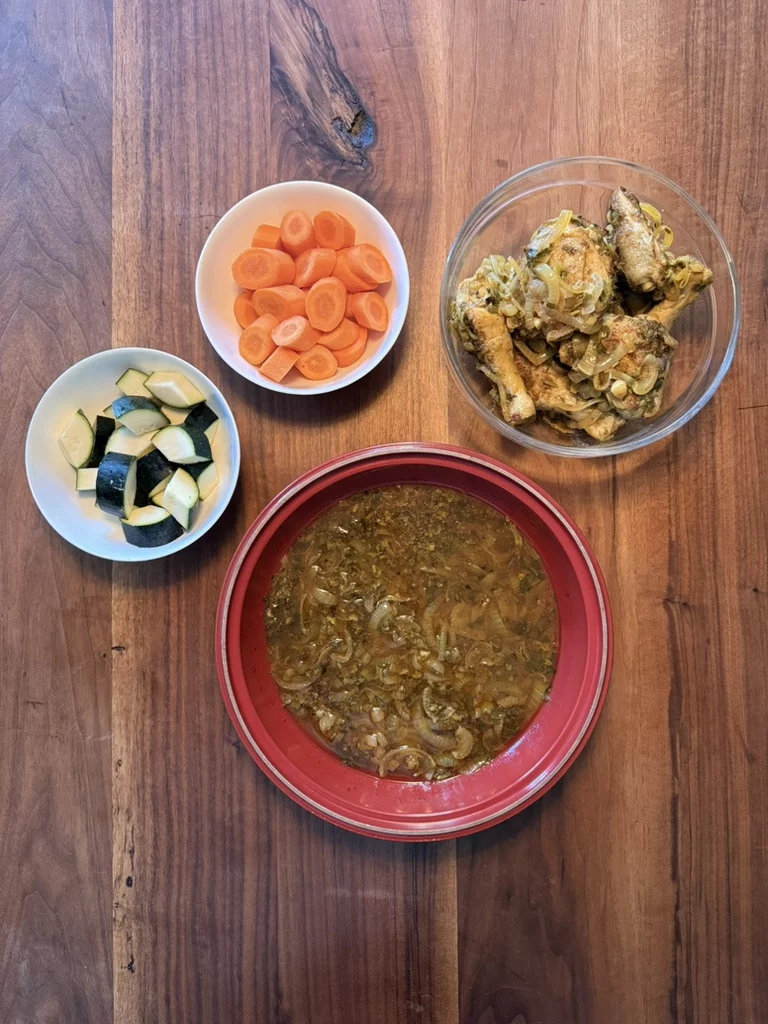
Add the carrots to the sauce and cook in the tagine in the oven for twenty minutes. Then add the courgettes and cook for a further ten minutes. The preserved lemons and olives are only added at this stage; they are simply meant to warm through and complement the flavours, whilst remaining fresh.
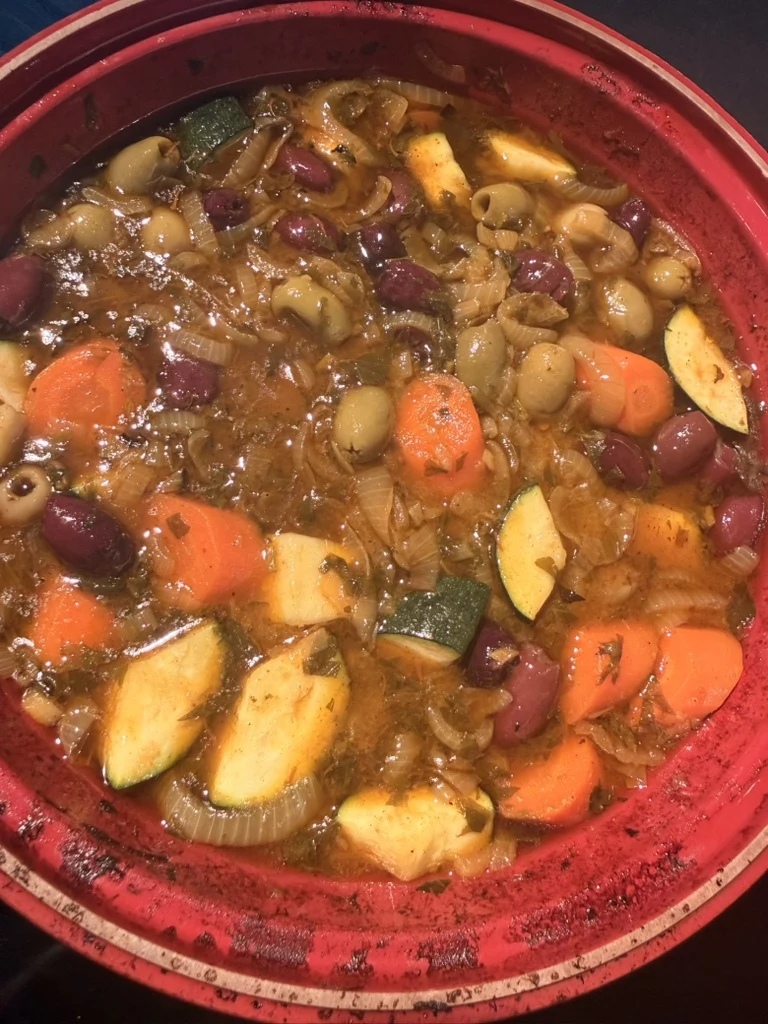
Now add the chicken back in. If you haven’t been able to keep it warm, leave it in the residual heat of the tagine for a good 5 – 10 minutes.
For us, couscous is an essential accompaniment to this dish.

Enjoy.
And may the taste be with you.
Ingredients (for 4 people) :
Chermoula:
4 tbsp top-quality olive oil
2 tbsp lemon juice
2 cm ginger, finely grated
2 garlic cloves, finely grated
1 tsp ground cumin
A little freshly ground black pepper
2 tsp paprika
25 g parsley, finely chopped
25 g coriander, finely chopped
40 g preserved lemons, chopped
Optional but recommended:
A pinch of saffron threads, steeped in hot water
Ingredients for the tagine:
1.2 kg chicken thighs and drumsticks, cut into pieces (at least 2 pieces, i.e. one whole leg per person)
1 – 2 tsp harissa, to taste
150 ml chicken stock
4 tbsp olive oil for frying (2 tbsp for the chicken and 2 tbsp for the onions)
400 g onions, sliced across the grain
Optional vegetables: 300 g each of carrots and courgettes
30 – 40 g preserved lemons
150 g mixed olives, green and black, pitted
