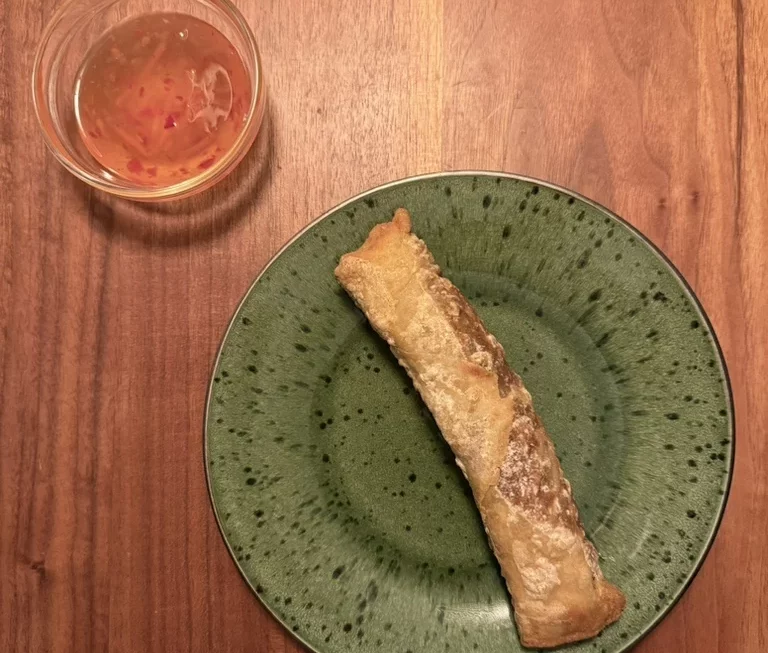
First of all: there are countless varieties of Chinese spring rolls, and their size and fillings vary considerably. So what we’re showing here are some possible ways of making them – one vegetarian and one with meat.
The basis for both is the same: strips of very finely chopped vegetables, and chopping them is the only time-consuming part. Everything else is much easier than you might think.
It is, of course, possible to make the dough yourself, but it is a challenging task. We therefore recommend buying the dough sheets; you can find them in Asian food shops, either chilled or frozen. Do take care, however, not to buy rice paper, which is used, for example, for non-fried rolls known as summer rolls or spring rolls.
The wrappers suitable for Chinese spring rolls are square, measuring 25 cm in length in the large version, and are usually made from wheat flour, although there are also gluten-free varieties made from rice flour.
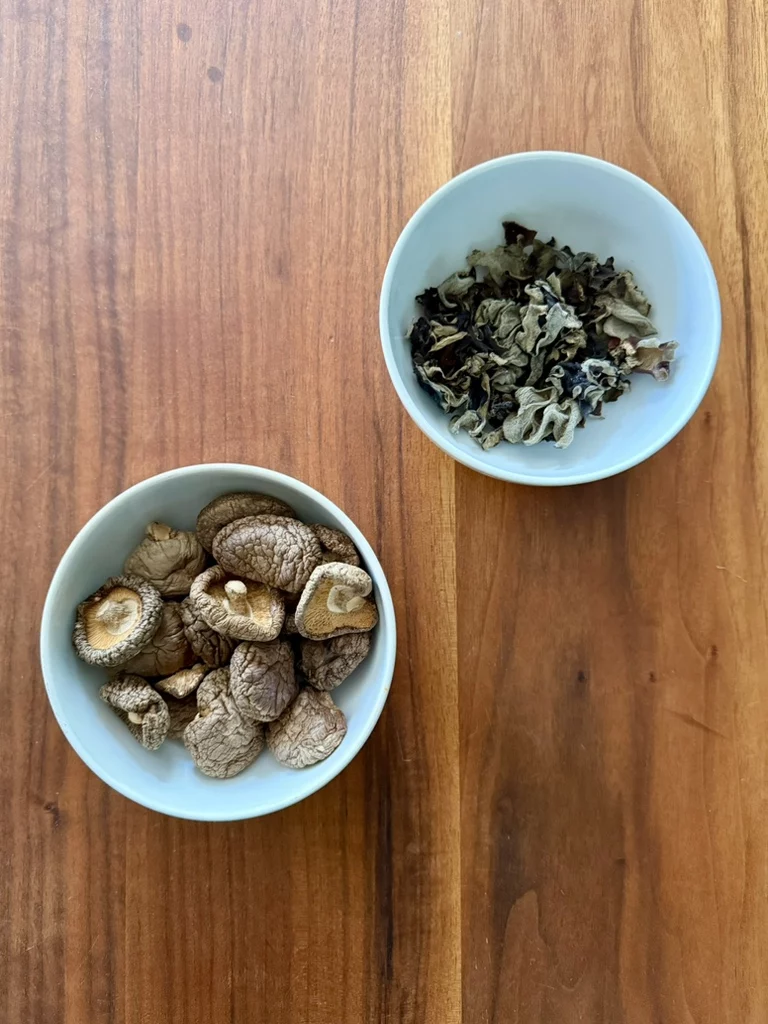
For the vegetarian version, we recommend dried shiitake mushrooms and/or dried mu-err mushrooms, both of which should be soaked and then squeezed out after 20 minutes. As always, you’ll find the quantities at the end of the recipe.
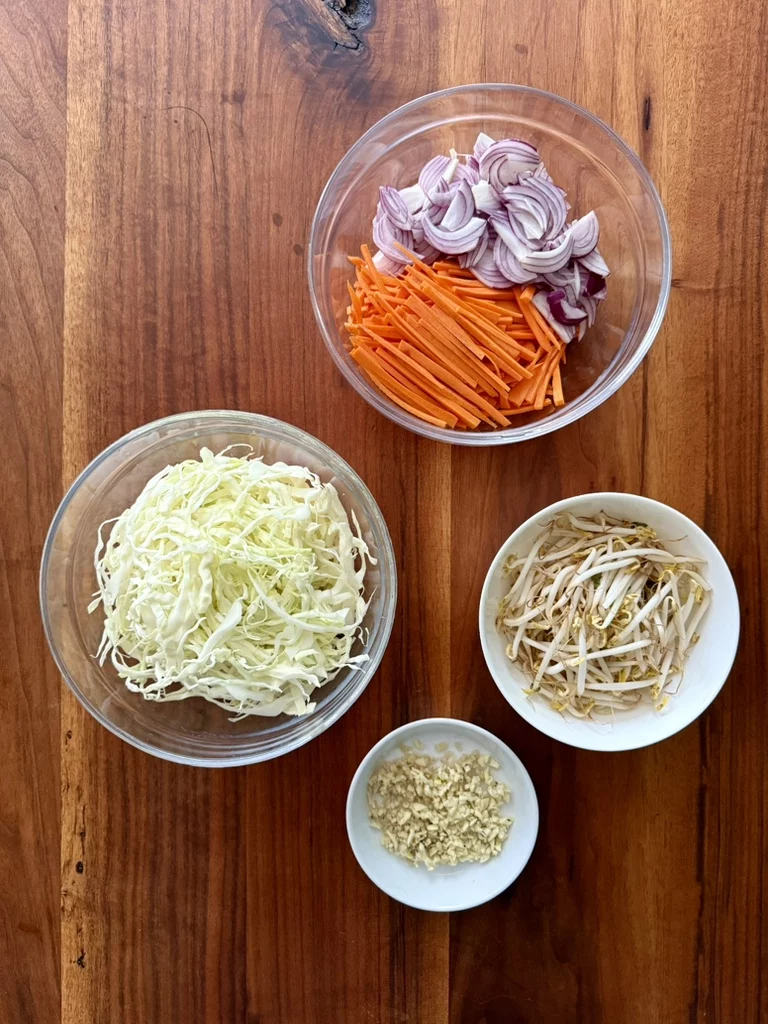
The common base for both versions is white cabbage, carrots and (red) onions in a ratio of 3:2:1. These vegetables are cut into very fine strips or shaved, and that is actually the most labour-intensive part of the whole preparation. Ginger and garlic are also finely chopped or grated; we also recommend adding mung bean sprouts for a crunchier filling.
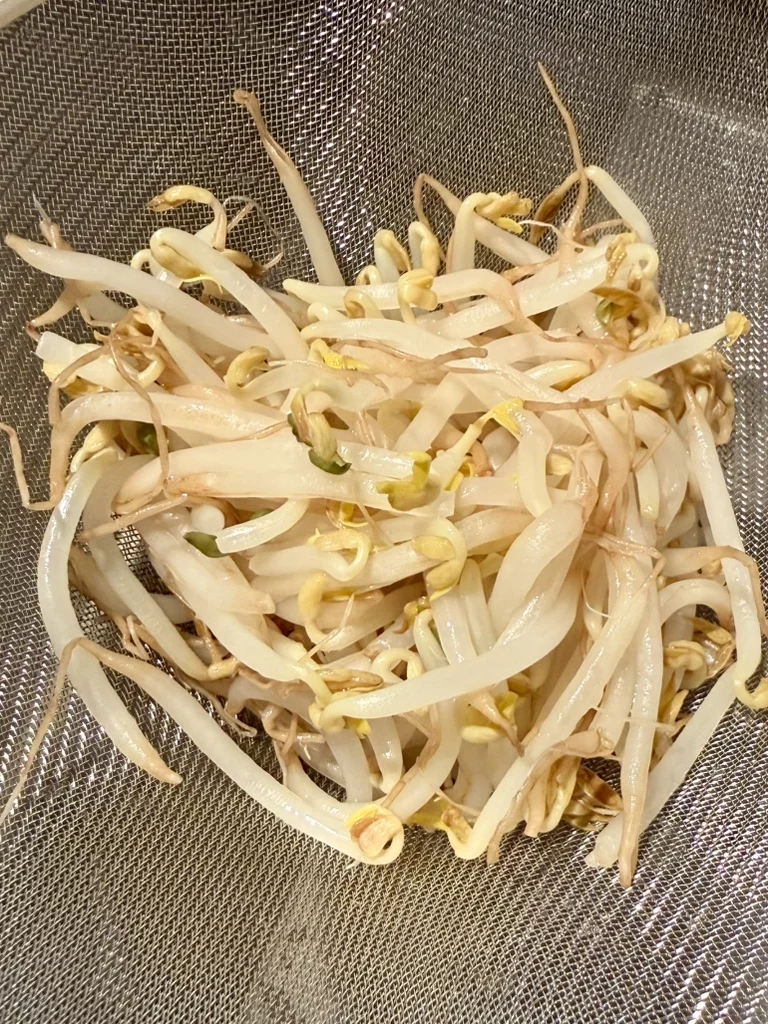
The sprouts should be blanched in boiling water for 15 seconds, then drained immediately and squeezed to remove any remaining liquid before use. You can then leave them whole or chop them roughly.
If you’re using meat – typically minced pork; we use half pork and half beef – fry it over a high heat with a little neutral oil until it becomes crumbly. Then set it aside.
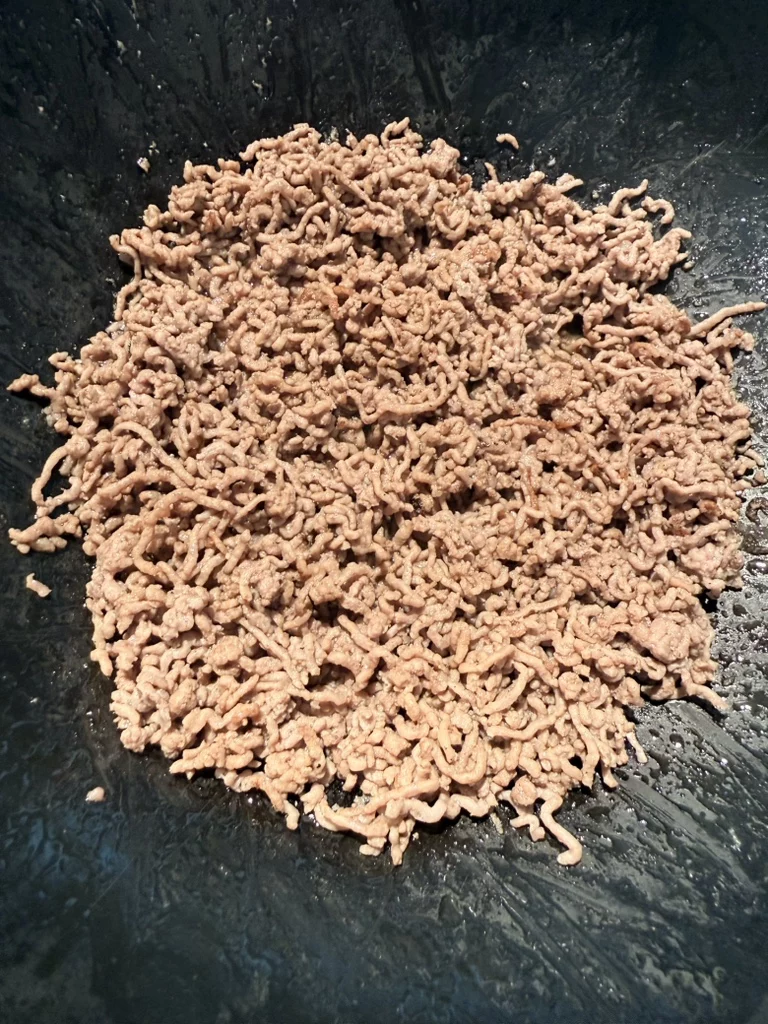
The vegetables are also sautéed in a little neutral oil over a high heat; the aim is to pre-cook them and make them soft. Start with the onions and carrots…
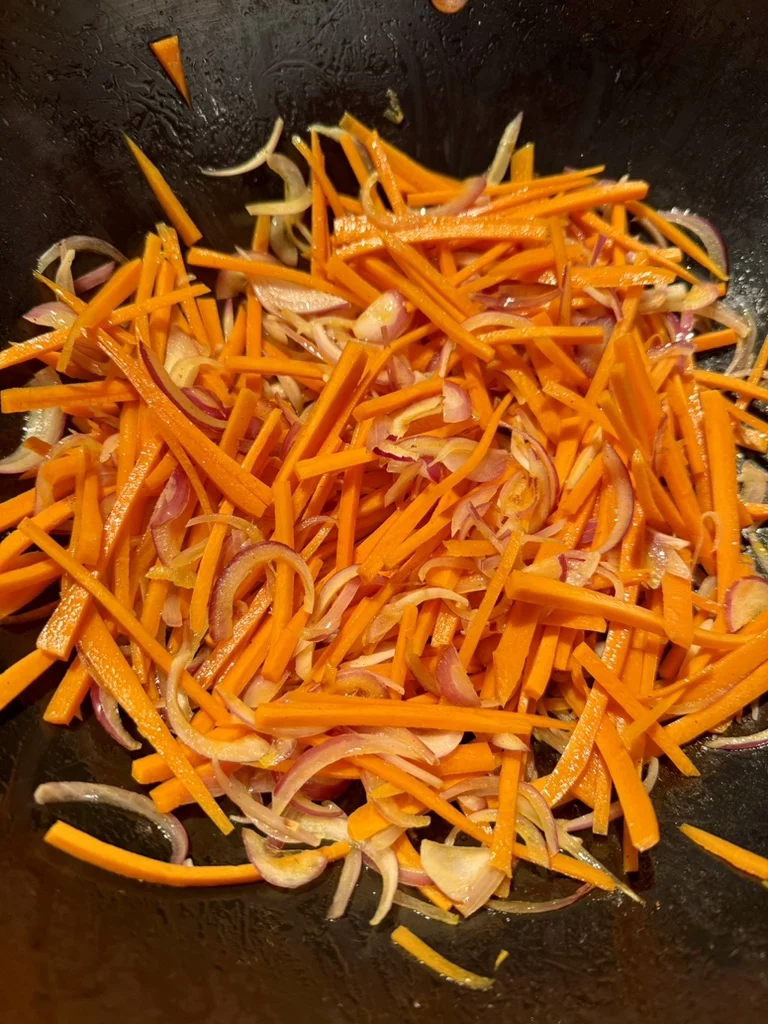
…add the cabbage after 3 minutes and, once it has softened after a further 3 minutes or so, add the ginger and garlic and cook for 2 minutes. Keep stirring or tossing the vegetables throughout.
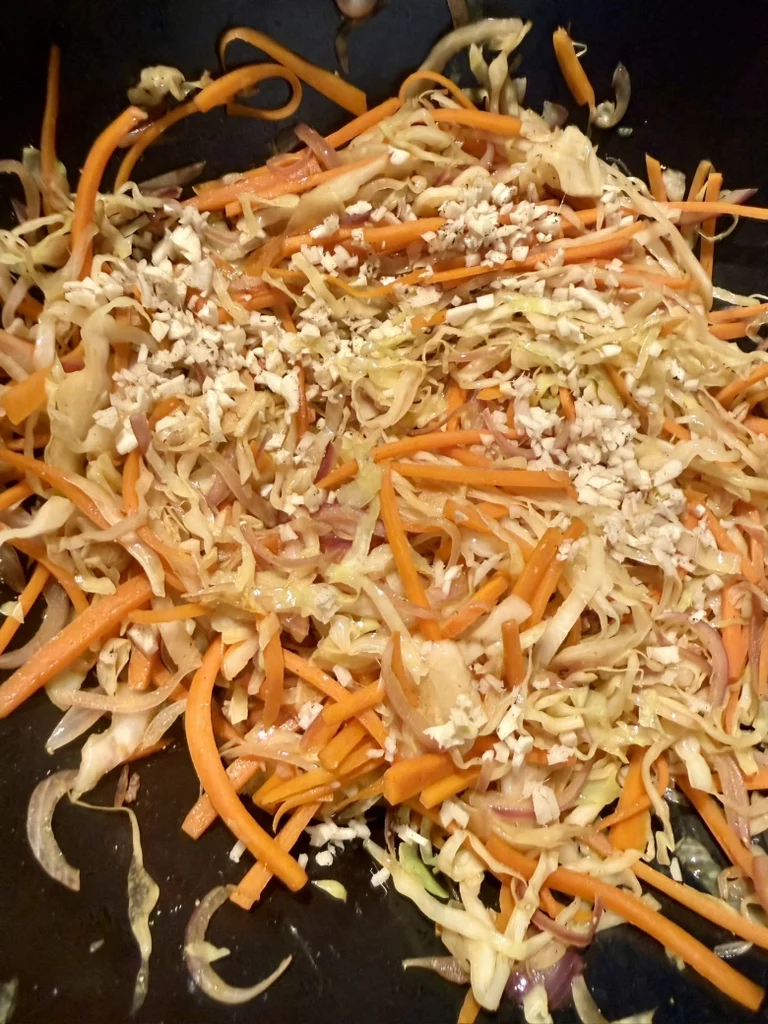
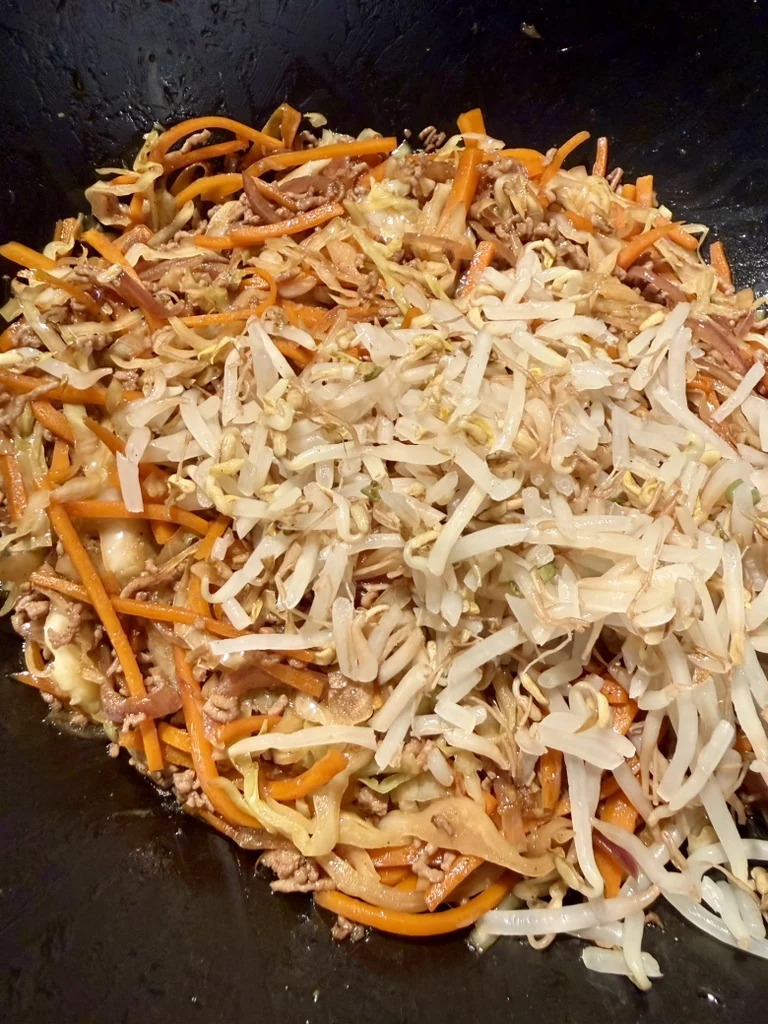
Finally, we add the bean sprouts; these simply need to be mixed in with the vegetables. Now it’s time to season the dish – sparingly, with a little white pepper, a dash of light soya sauce and oyster sauce, a little sesame oil and salt to taste, if at all necessary. Important: the filling should be moist at most, but definitely not wet. Therefore, the vegetables must not be cooked with the lid on under any circumstances.
You’ll need some paste to seal the rolls. You can dissolve flour in water, but we prefer starch. The water must be cold so that you can stir it in until smooth.
For small rolls, 2 tablespoons of filling per dough sheet are enough; for large rolls, you should use at least 3 tablespoons. Place a wrapper in front of you so that the tip is facing you. Then place the filling across the bottom third, but not right up to the edge.
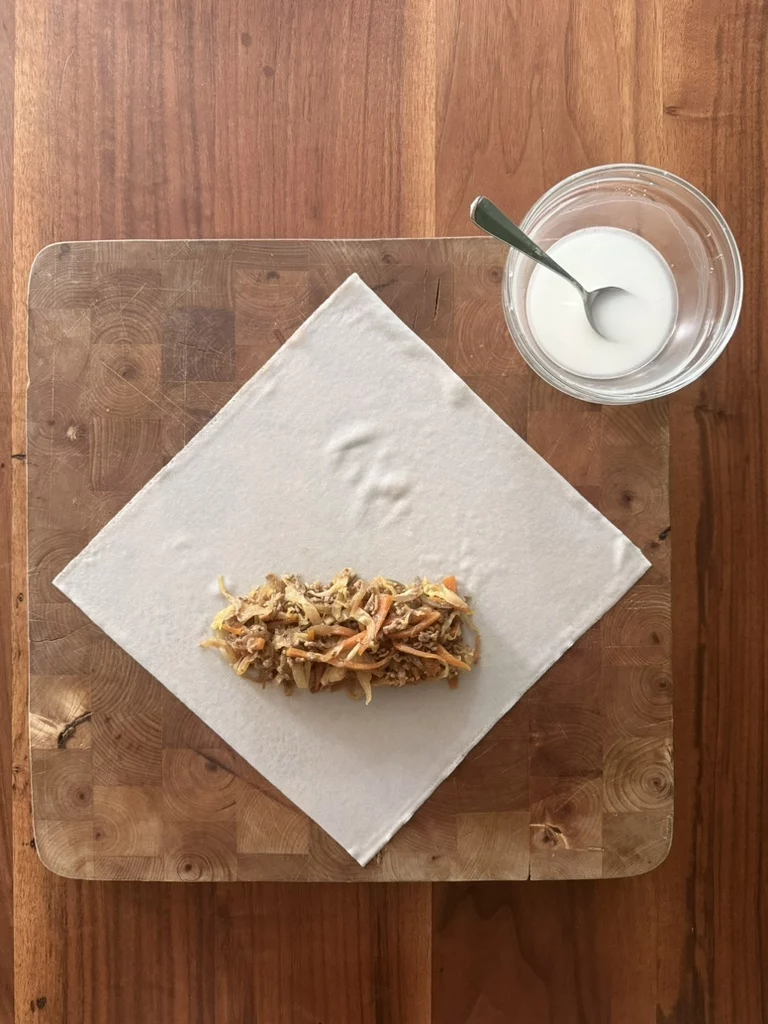
Now for rolling: Hold the sheet of pastry near the bottom corner with both hands and drape it over the filling. Now – and this is the most important part – pull the overlapping pastry lying on top of the filling back slightly and press it under the filling so that it is tightly enclosed by the dough sheet. This requires a bit of a feel for it, but it’s not complicated. Then roll the filling up to the centre of the wrapper.
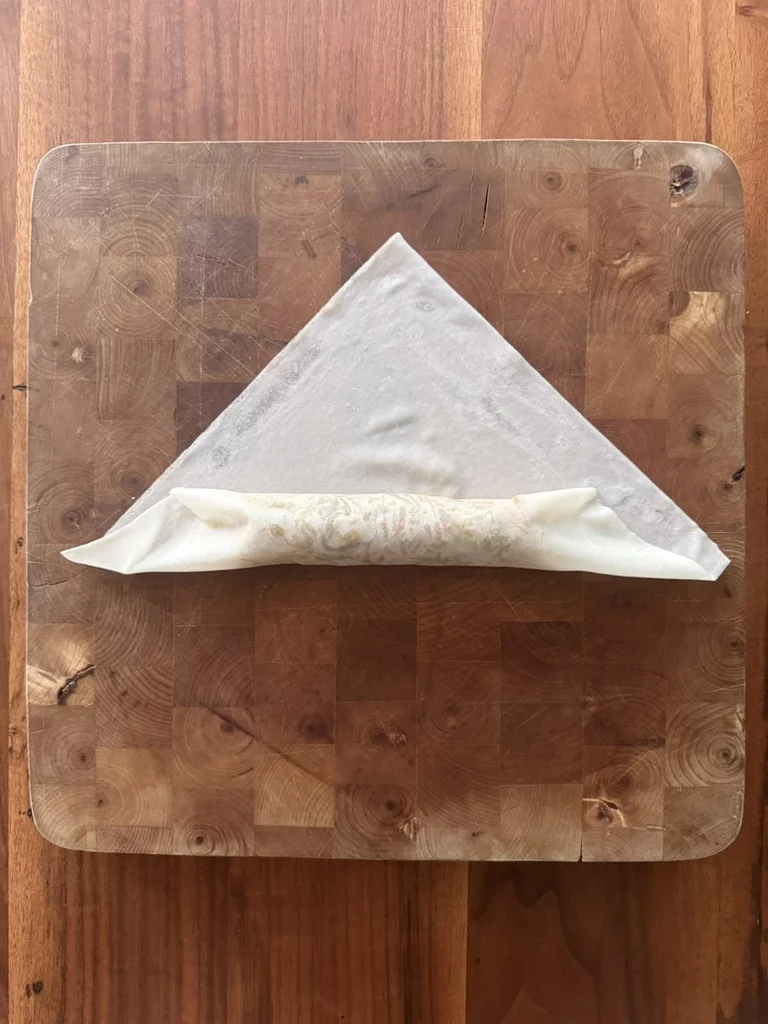
This is where the paste comes in. Dip two fingers into it and spread the starchy glue around the top edge of the wrapper and on the tips to the right and left of the filling.
Then fold these tips towards the centre…
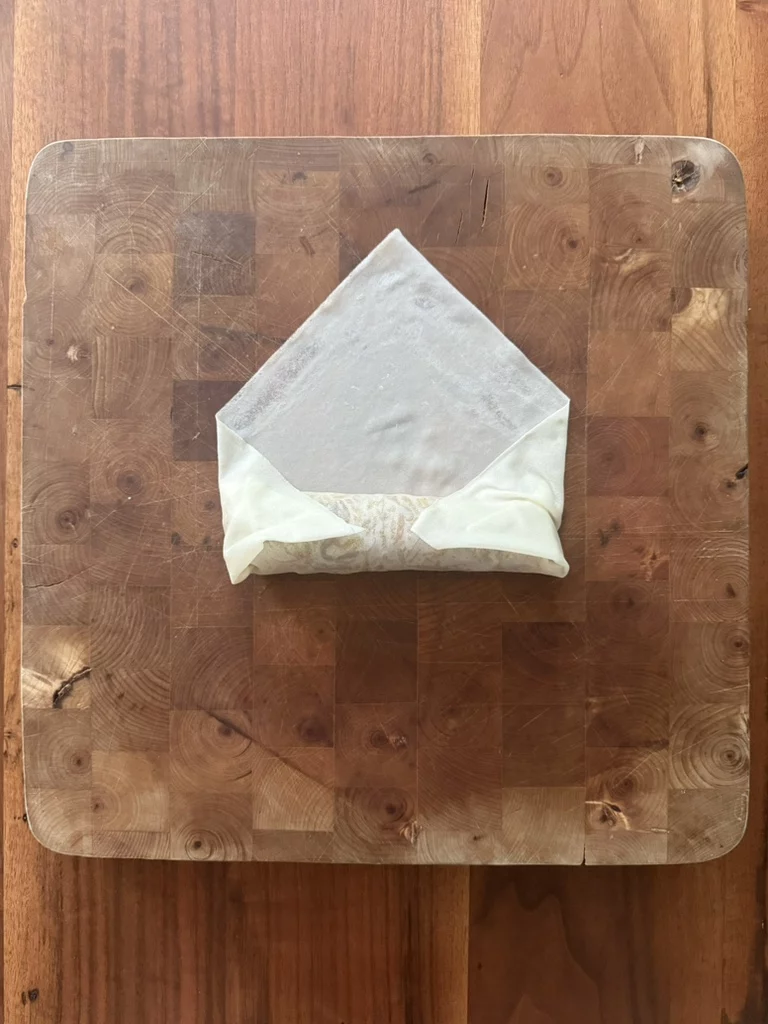
…and roll the whole thing up right to the end. With the final seam facing downwards, leave the rolls as they are so that the dough sticks together.
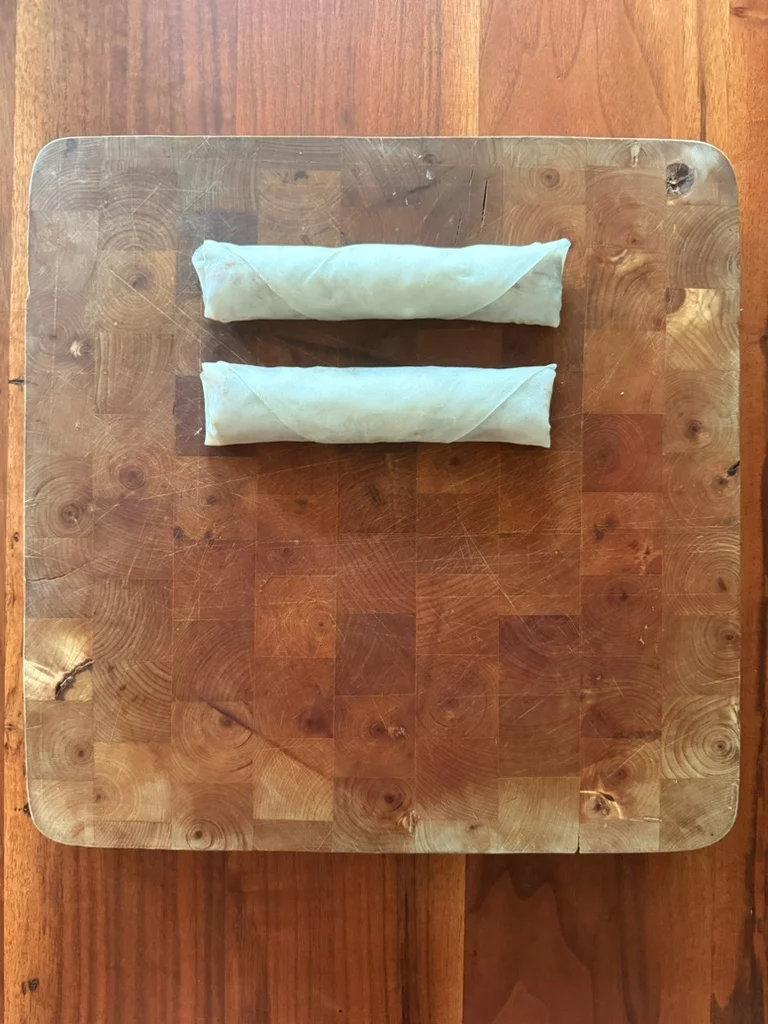
Important: The dough dries out quickly, so cover your finished rolls with a cloth and don’t wait too long before deep-frying them.
Once again in a wok, heat vegetable fat – specifically suitable for high heat. It’s best to buy it in solid blocks rather than as oil in a bottle. That way, it solidifies again after frying and is easier to store for future use. When you have finished frying, pour it through a sieve to remove any residue.
You don’t need a great deal of oil, but the spring rolls do need to be able to float. If you don’t have a wok, you should buy one 😉. You can also deep-fry them in a saucepan, though.
The ideal temperature for spring rolls is 165–170 degrees C°. If you don’t have a thermometer that measures such high temperatures, check the heat with a wooden skewer or the handle of a wooden cooking spoon. If you dip the wood in and air bubbles form around it after 2–3 seconds, the temperature is right. If the bubbles form immediately, it’s too hot.
And please remember: hot oil is hot. So always take extra care when deep-frying and turn the handle of the wok away from you so that you don’t accidentally knock it over. Also, use a utensil to gently lower the rolls into the oil so that it doesn’t splash. Slotted spoons or tongs work very well for this.
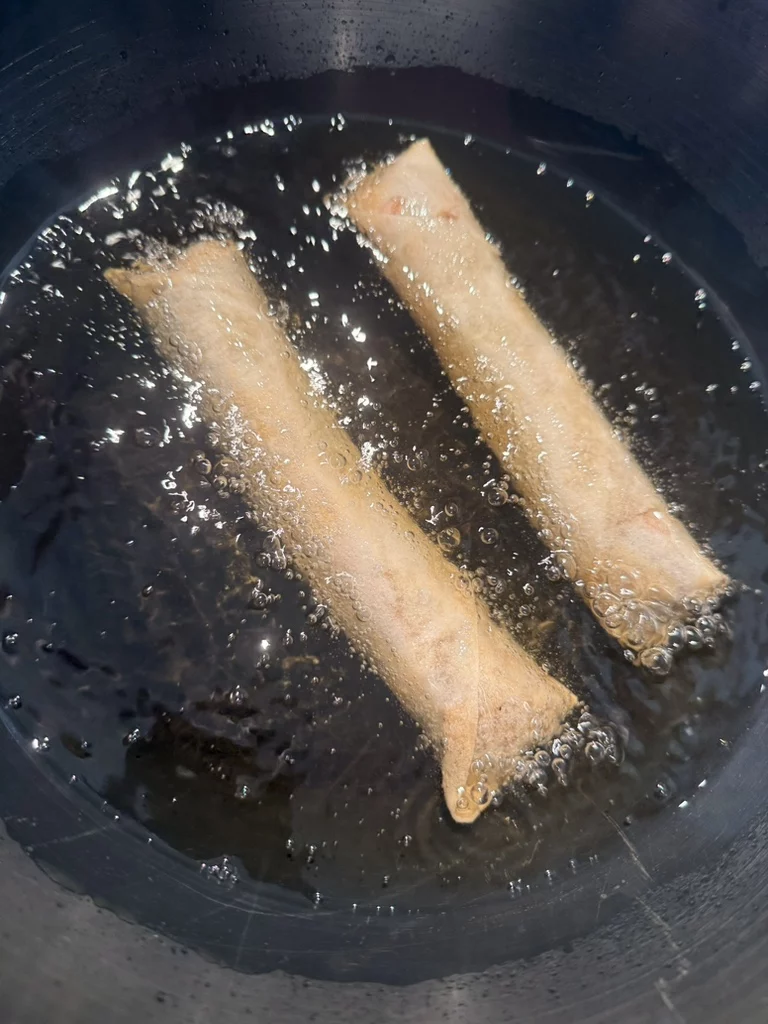
The dough will brown to a golden colour in about 4–5 minutes. During this time, turn the rolls over once. Don’t let them brown too much, as the residual heat will continue to cook them for a while longer.
It’s best to place the rolls on a tea towel or kitchen paper, as they will still release quite a bit of fat.
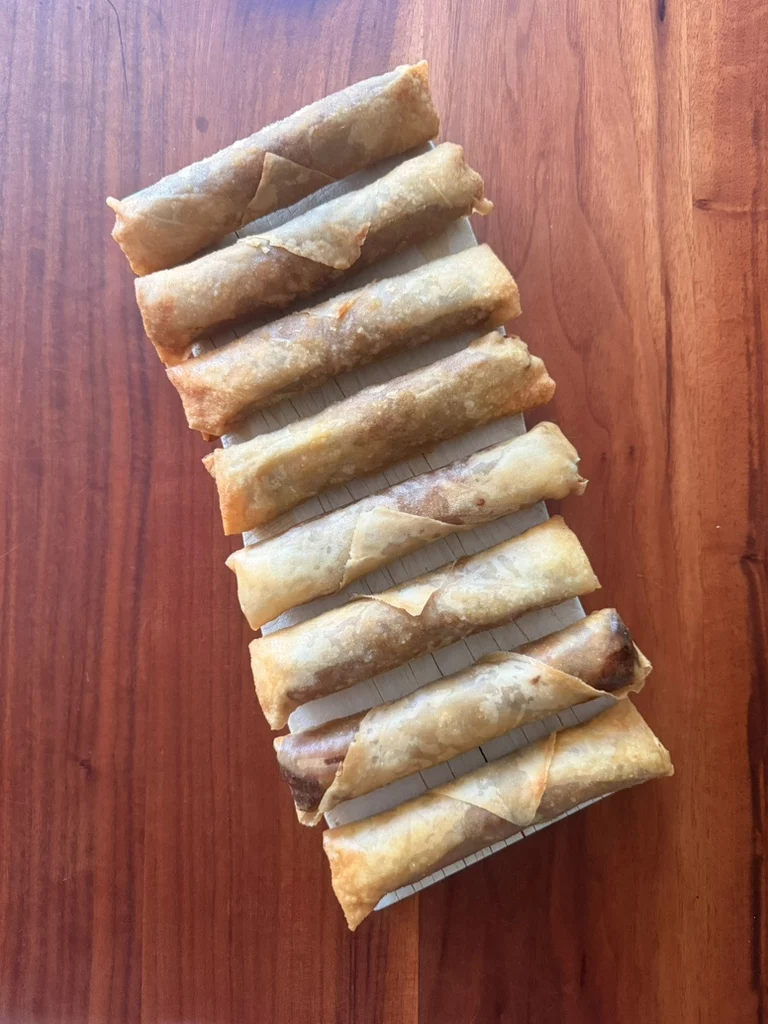
Spring rolls are best served with a dip. Sweet chilli sauce, which you can buy anywhere, is ideal. Of course, you can make it yourself too, but that’s another story.
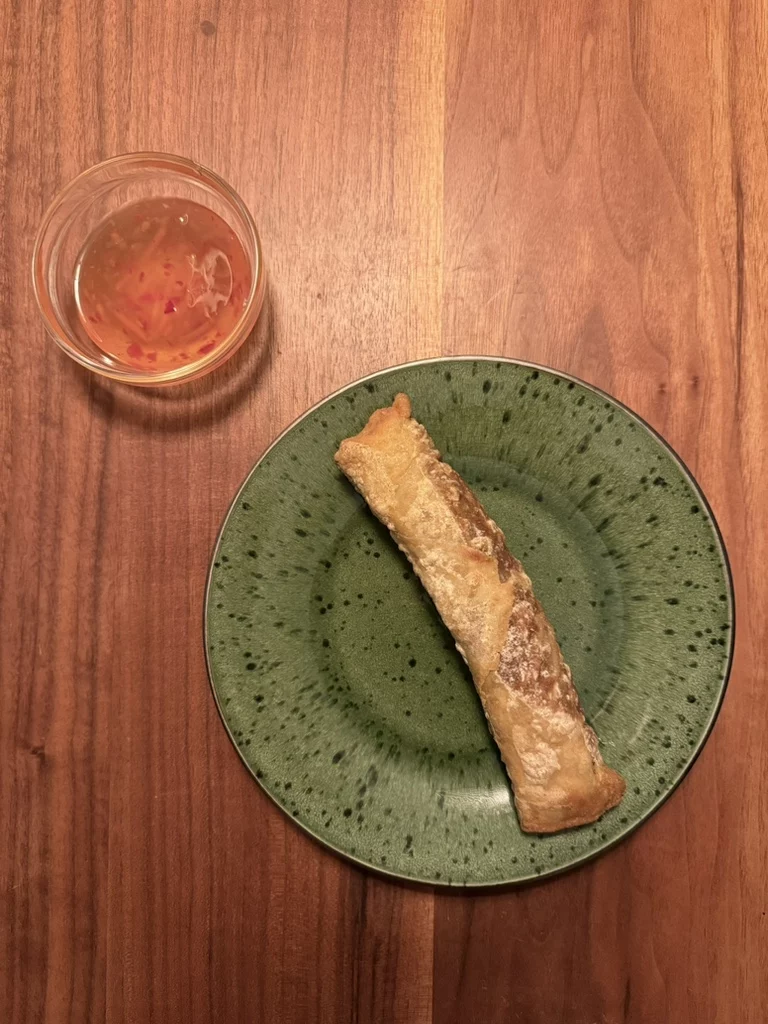
Enjoy.
And may the taste be with you.
Ingredients (for 20 large rolls or 4 people):
Joint base:
20 large dough sheets, approx. 25 × 25 cm
A little neutral oil for frying
300 g cabbage
200 g carrots
100 g onions
150 g mung bean sprouts
2 cm ginger
3 cloves of garlic
White pepper
½ tsp salt
2 tbsp light soya sauce
2 tbsp oyster sauce
2 tsp sesame oil
Variation 1 – Vegetarian:
30 g dried shiitake mushrooms (soaked, squeezed dry)
15 g mu-err mushrooms (soaked, squeezed dry)
Variation 2 – with meat:
300 g minced pork (or mixed pork and beef)
Thickener: 2 tsp cornflour + 2 tbsp water
0.5–1 l vegetable oil for deep-frying

3 thoughts on “Chinese Spring Rolls”