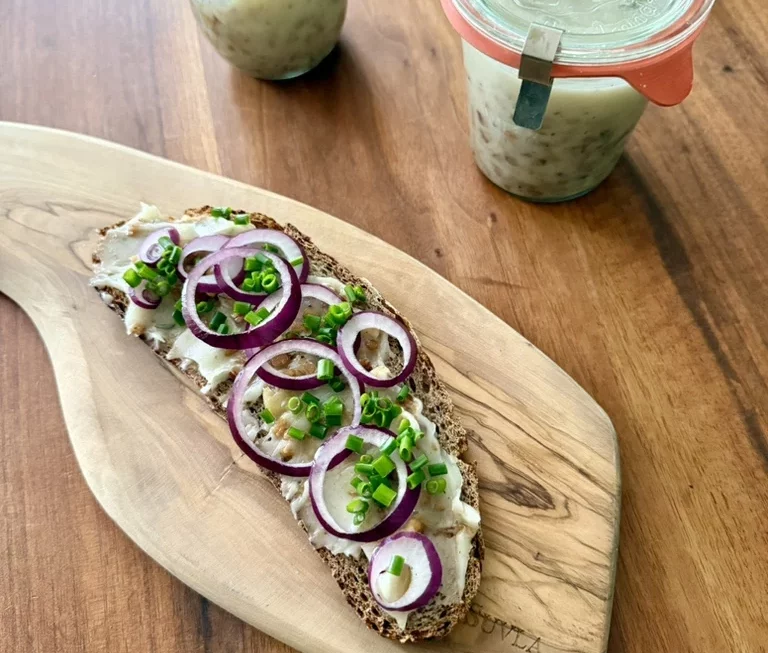
Lard, or crackling lard, is older than any kitchen we know of. Wherever pigs were kept – and in Central Europe, that was virtually everywhere since the Neolithic – the slaughter yielded fat that was simply not thrown away. When food is not a given, nothing is wasted. The fat is rendered by heat, and what remains – the fried, now crispy residue (crackling) – can be stirred back into the still-warm lard.
The farmhouse slaughter, for centuries a fixed ritual of late autumn and winter, was a nose-to-tail exercise. The inner kidney fat, known as leaf lard, yielded the purest and mildest result; back fat a more aromatic one. Both were rendered. Crackling lard on bread was nourishing and utterly simple food.
The spread of this preparation is correspondingly wide – it is still found today across Bavaria and Austria, in Hungary, Poland, Slovakia and the Czech Republic, and beyond. The technique is always the same; only the seasoning varies.
With prosperity comes forgetting. First displaced by butter, then by industrial margarine. What was once a matter of course became something backwards. Here we keep the memory alive – and it belongs to our Biergarten tag, for that is still where people enjoy it in Bavaria today.
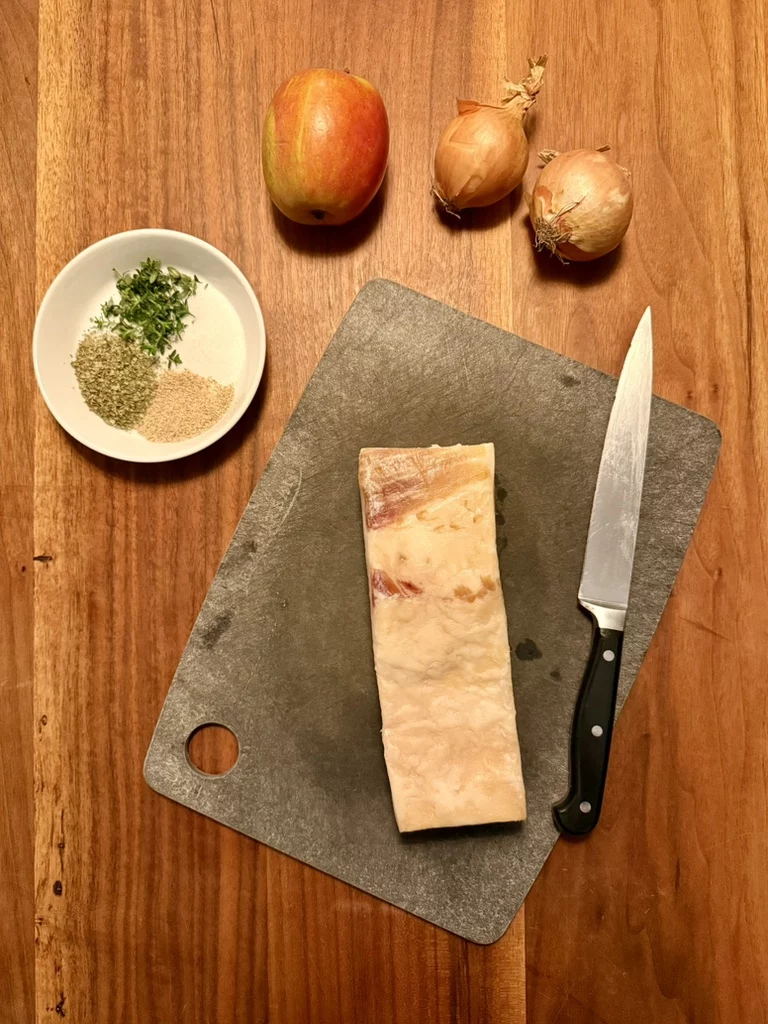
We start with the fat. Leaf lard is rarely available; unsmoked back fat – known in German as “grüner Speck”, literally green bacon – can be found in most supermarkets here in Germany. And that is precisely what we use, rather than let it go to waste. With a sharp knife we remove the rind and cut the fat into even cubes of around five millimetres. Evenness is not an aesthetic concern but a technical one: unevenly sized pieces render unevenly – the small ones burn before the large ones are done. Fat that has been briefly frozen is considerably easier to cut precisely.
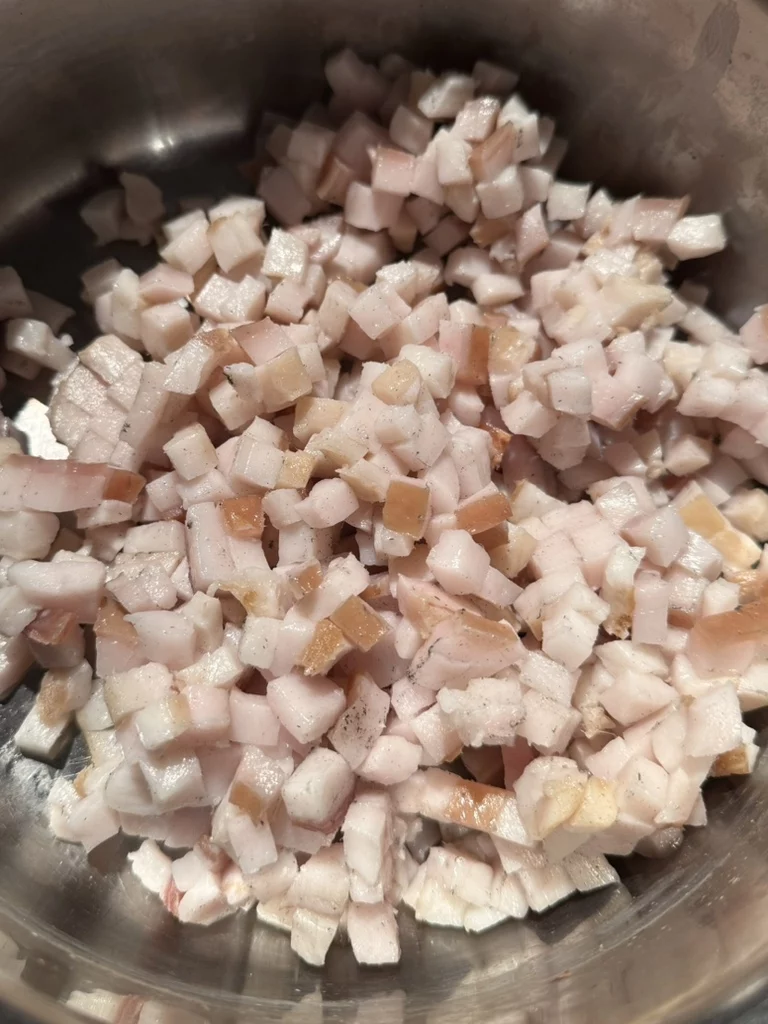
The cubes go into a heavy pot or cast-iron pan – no additional fat, no lid, low to medium heat (we use 4 out of 10). They need time – at least twenty to twenty-five minutes – and no hurry whatsoever. Leave them to sit without stirring until they begin to release fat of their own accord, then move them occasionally. The goal is an even, pale golden colour. Brown crackling tastes bitter, and bitter lard cannot be rescued.
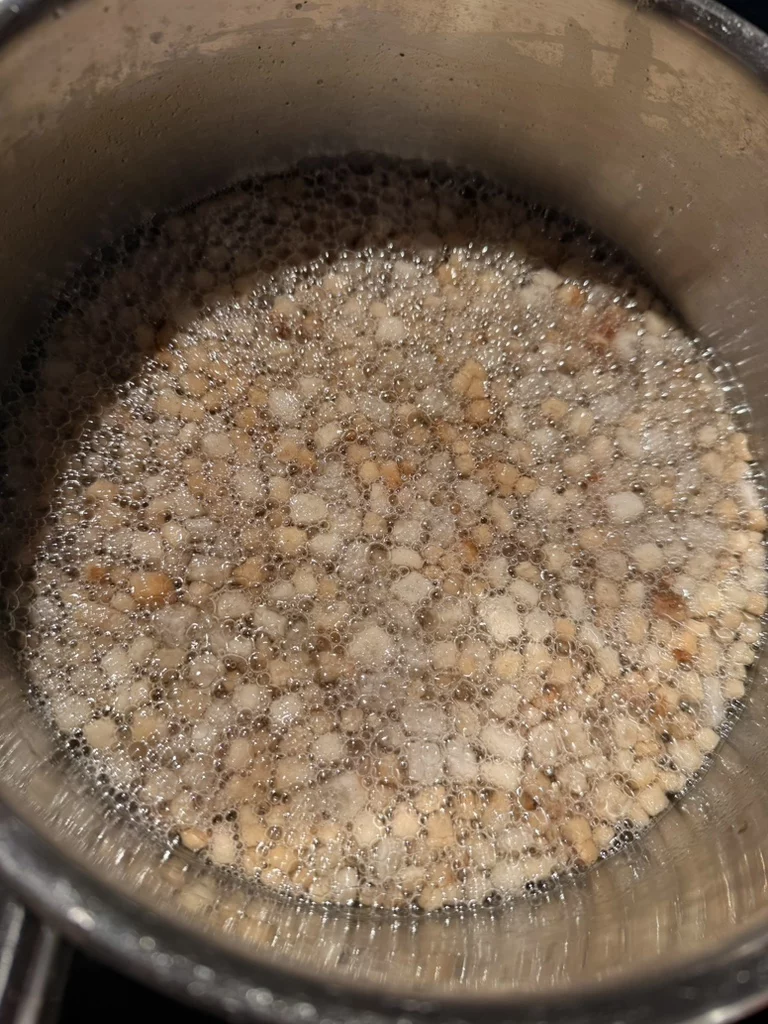
When the crackling has reached an even pale golden colour throughout, remove the pot from the heat – sooner rather than later, as the hot fat will continue to carry considerable temperature for some time.
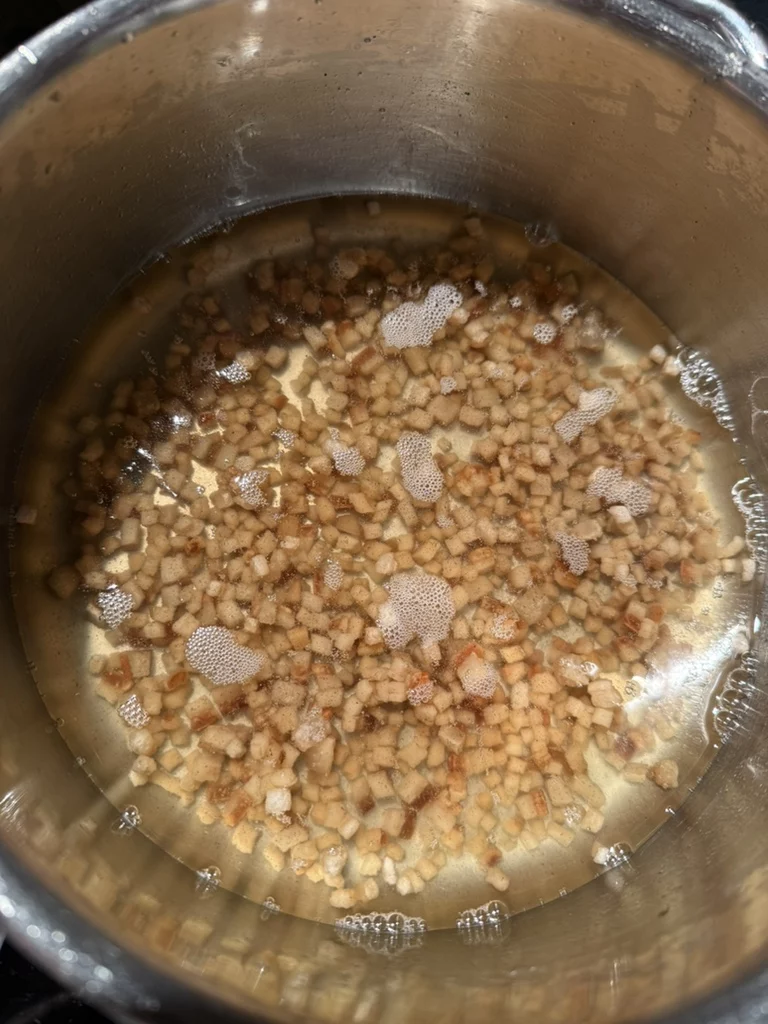
Lift the crackling out with a slotted spoon or fine sieve and leave it to drain briefly on kitchen paper. The lard remaining in the pot stays as it is – unfiltered. The fine particles that form during rendering are not a flaw; they are flavour.
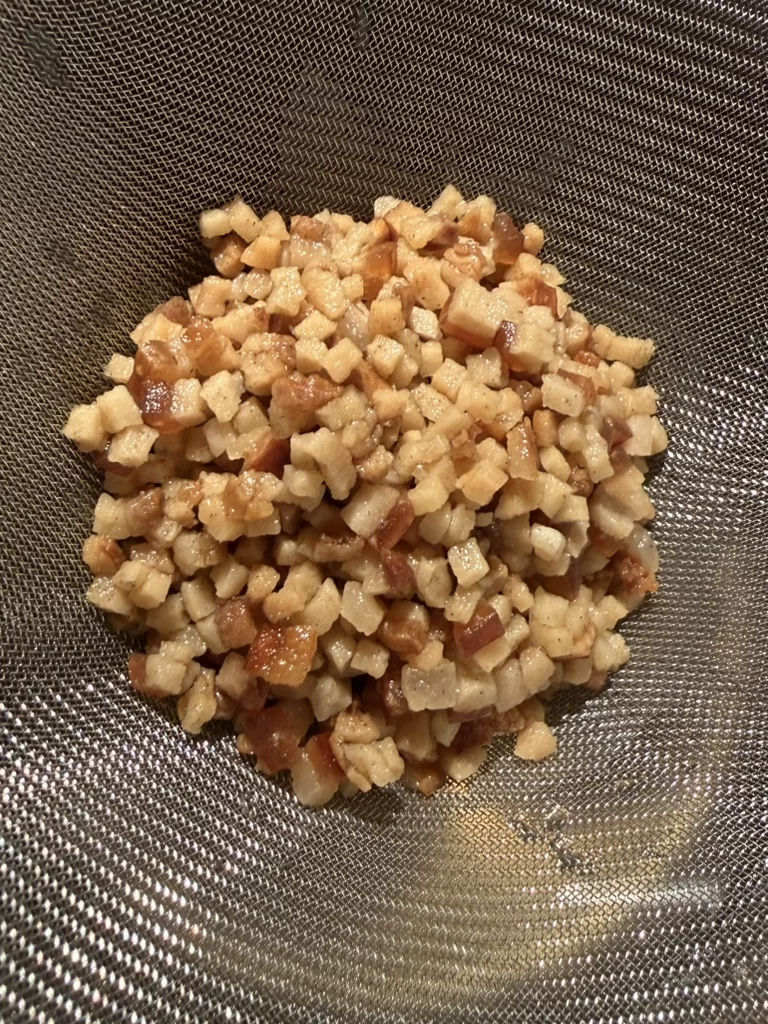
We finish with apple – very classical in Germany – and a firm, tart variety at that. We use Boskoop, Elstar or Braeburn. Peel the apple, remove the core, and cut the flesh into pieces roughly the same size as the fat cubes, then add them to the hot fat. Leave to cook gently on low heat for five minutes before returning the crackling to the pot. At this point remove the pot from the hob entirely, so nothing can catch. Those who like onion in their lard add it very finely cut along with the crackling – it colours quickly in the residual heat.
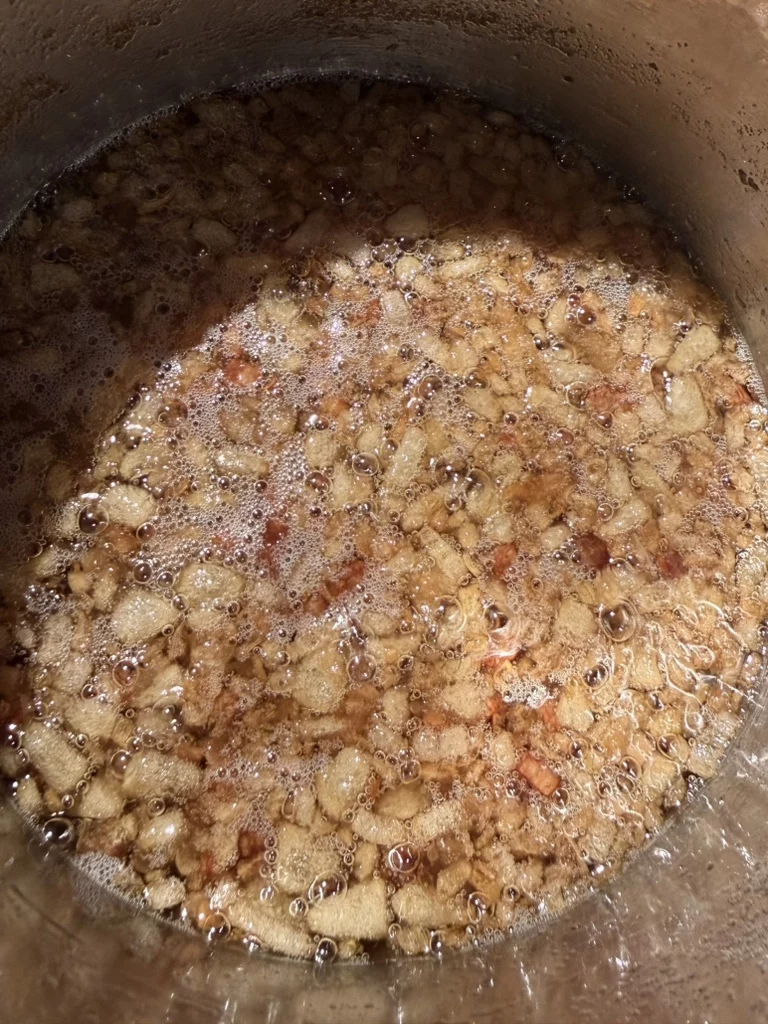
After a pause of fifteen minutes – to allow the heat to drop to around sixty to seventy degrees – the final aromatics go in. For us that is a little salt, white pepper and dried marjoram. Summer savory (“Bohnenkraut”), if you have it, adds a very interesting note.
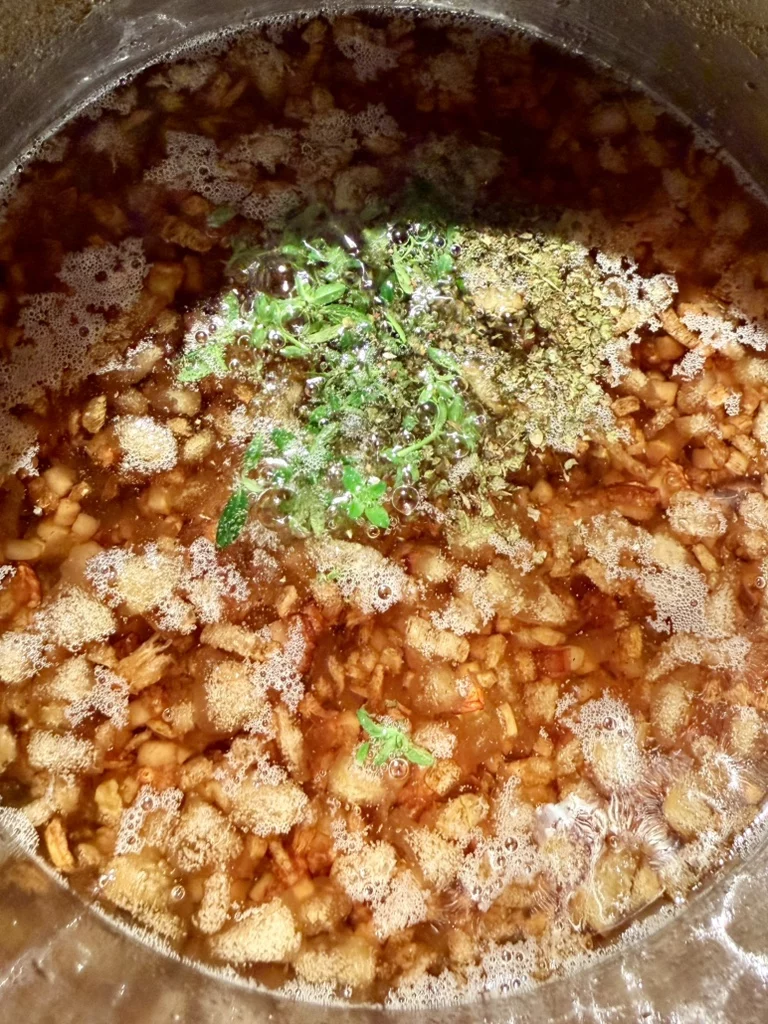
Leave the lard to cool at room temperature until it begins to turn cloudy and just starts to set – still pourable, but no longer hot. Sterilise jars beforehand by submerging them in boiling water for ten minutes and drying them completely, or by heating them in the oven at 130 degrees for fifteen minutes. Stir the lard once more so that the crackling, apple and seasoning are evenly distributed, then fill the jars promptly and seal firmly. As it cools completely, the lard will set and turn cream-coloured, almost white.
In the fridge, crackling lard keeps well for three to four weeks, provided it is always taken out with a clean, dry spoon. In Bavaria we spread it on good sourdough bread and scatter herbs over the top – above all plenty of chives. Raw onion to taste is another classic addition, especially in the beer garden.
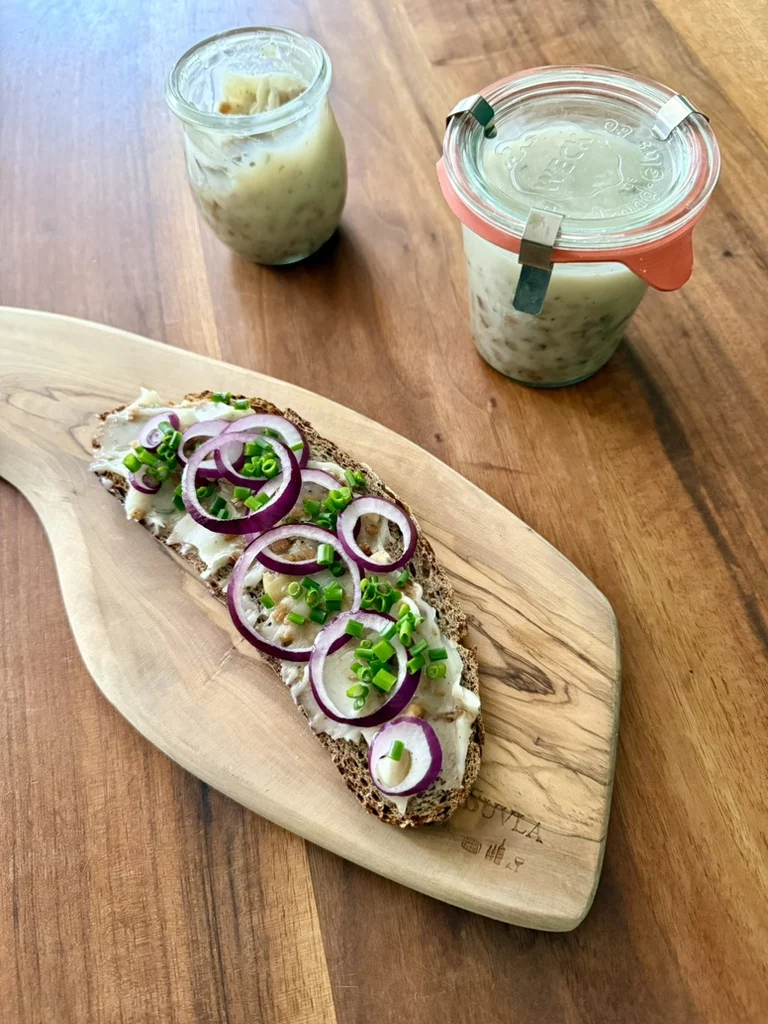
Ingredients (makes approx. 2 jars of ¼ litre each):
500 g unsmoked back fat (grüner Speck)
Optional: 1 small apple, approx. 120–150 g peeled and cored (tart variety)
Optional: 1–2 onions, approx. 120 g, finely cut
3 g salt
½ tsp white pepper
1 tbsp dried marjoram (or double the quantity of fresh leaves)
We also use: 1 tsp fresh summer savory leaves
