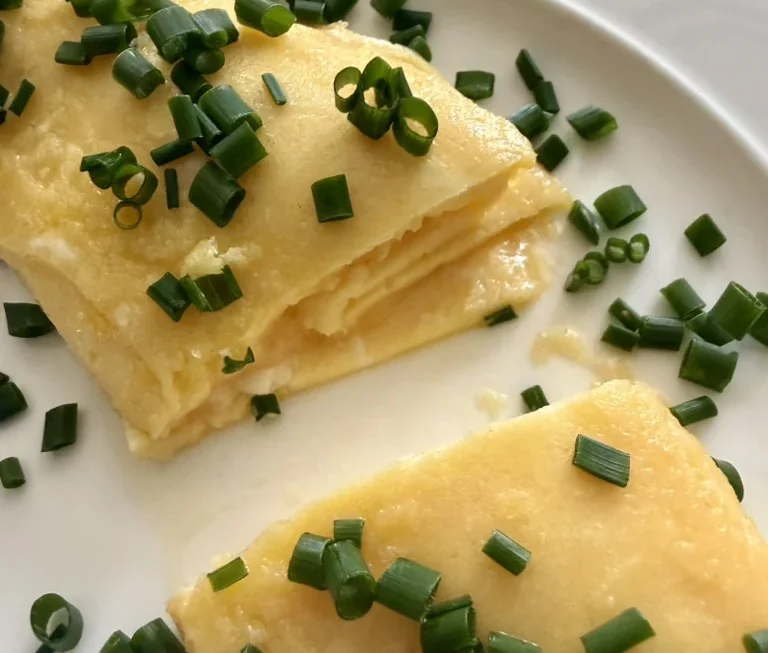
Anyone who reads this blog regularly will already know: we love to describe cooking with eggs in great detail, because there’s hardly a more versatile ingredient.
We’ve already posted articles on fried eggs, poached eggs, scrambled eggs, boiled eggs and œuf cocotte. Now we come to the French omelette, which for us is the queen of egg dishes. And by far the trickiest of all to make. What we won’t be covering here is the more rustic omelette, as enjoyed in North America, for example – often filled and always browned on the outside. Prepare that if you like, but there’s no need to go into detail about it, and the internet is full of recipes.
Surely you can find plenty more information online about French omelettes, so why this article? Because here we don’t just describe how to make one, but also how to learn how to do it.
It’s best to watch this video by the master chef Jacques Pepin first; it’ll give you a good overview of the basic characteristics of an omelette.
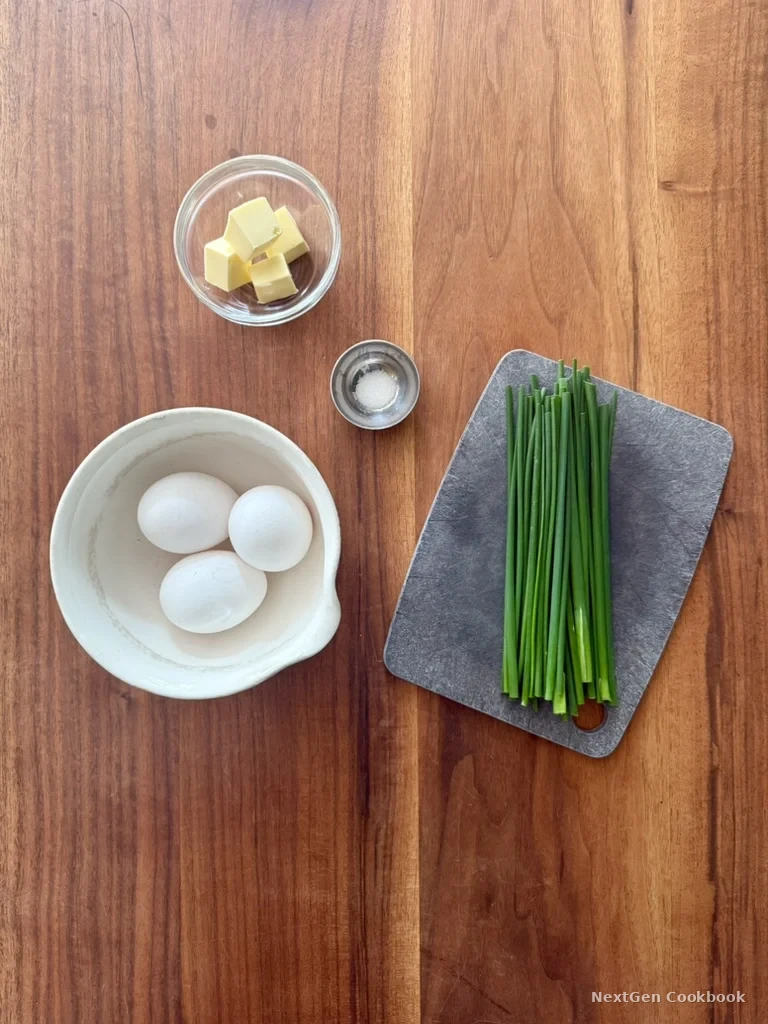
Next, you’ll need three eggs – always the perfect number for a French omelette – a pinch of salt, butter and chives. Only the chives can be left out.
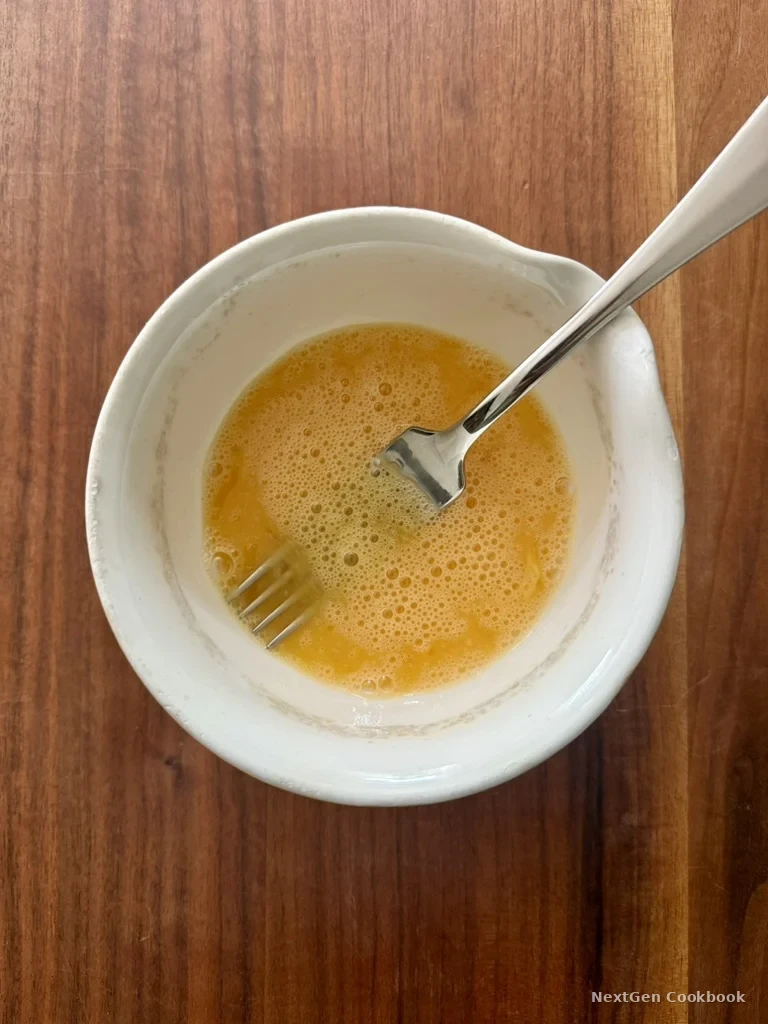
Crack the eggs into a bowl, add the salt, and then whisk everything vigorously with a fork until the mixture is smooth. The aim is not to incorporate as much air as possible; we advise against the various ‘hacks’ that keep cropping up – such as using a hand blender – just as much as we advise against using a whisk.
Be sure to use a non-stick frying pan – nothing else. Ideally, it should be small, with a rim diameter of 20 cm. This gives you the optimal ratio of surface area to egg. In general, we recommend having non-stick frying pans in three sizes in your kitchen: 20, 24 and 28 cm. That’s roughly 8, 10 and 12 inches.
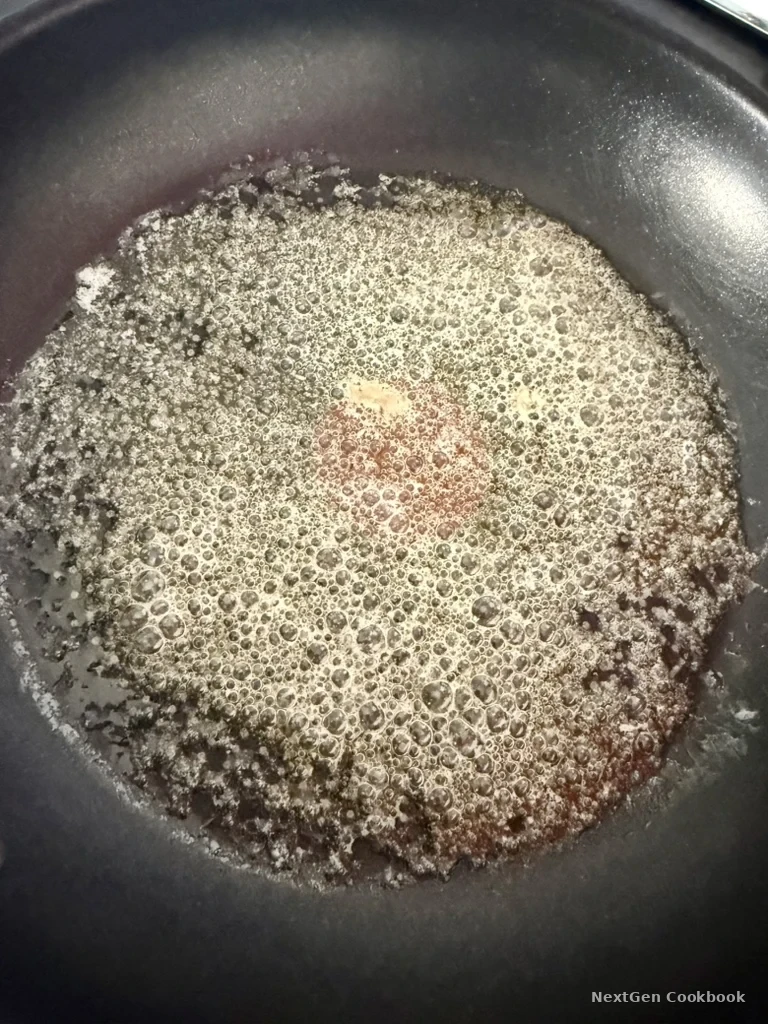
Now set the heat to medium (on our induction stove, that’s 5 out of 10). The higher the temperature, the more complex it is to make. Melt about 1 tbsp of butter and let it foam.
Now pour the eggs into the pan and stir immediately, continuously in small, quick circles. The best tool for this is a silicone spatula, as we explained in the article on scrambled eggs. Traditionally, you would also use a fork here, holding it flat with the prongs facing upwards, but that isn’t necessarily good for the pan.
The faster you stir, the smaller the solidifying strands of egg become, and that’s exactly the point: with a French omelette, the mixture should be as uniform as possible. This also means that the higher the temperature, the faster you have to work and the more stressful the process becomes. So, to learn how to make one, we recommend turning the heat down. Whilst this does affect the texture slightly for the worse, it’s a small price to pay for being able to make the perfect omelette after a bit of rehearsal. So add the egg and turn the heat down so you can practise at your own pace and gain some experience.
Once the mixture has mostly set but is still runny on top, remove the pan from the heat.
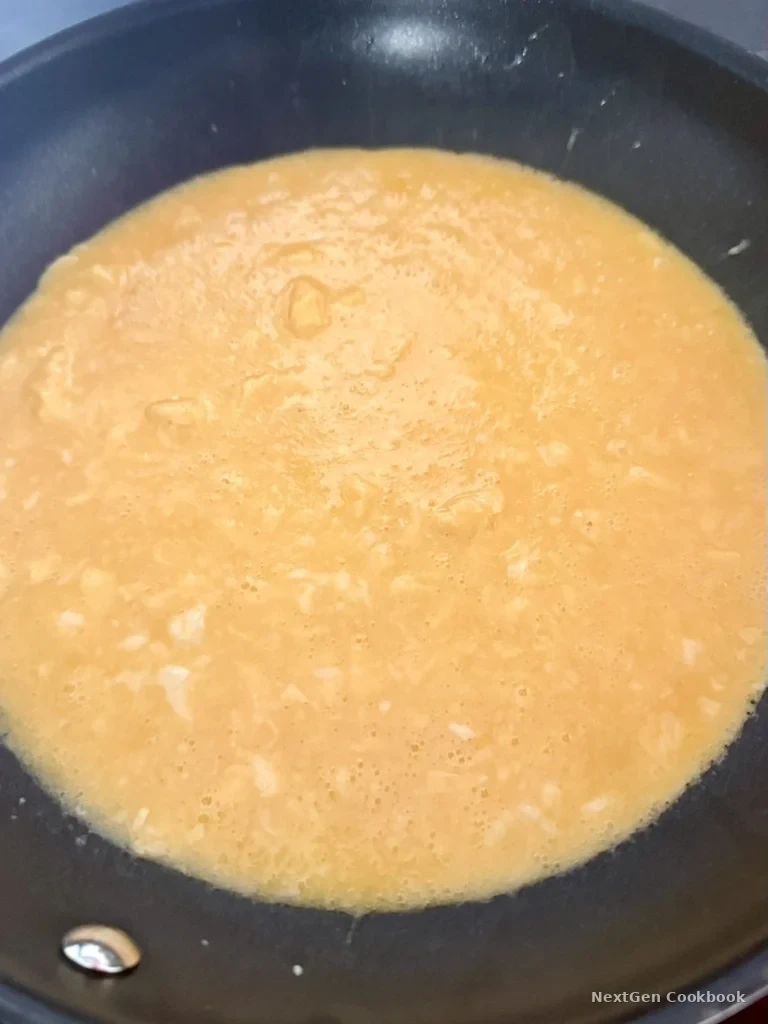
Starting from where the handle of the pan is attached, carefully slide underneath the base and fold it over once, by a quarter to a maximum of a third.
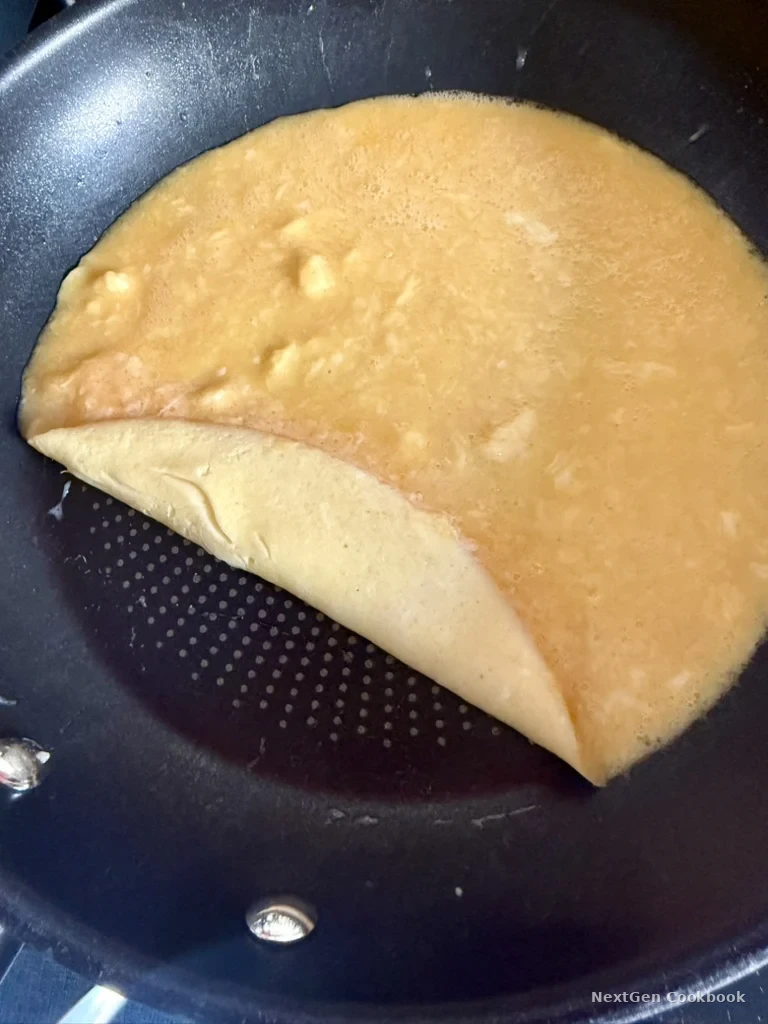
Do this again, and this time fold the edges in a little further. Don’t worry, you can take your time – that’s why you’ve stopped applying heat.
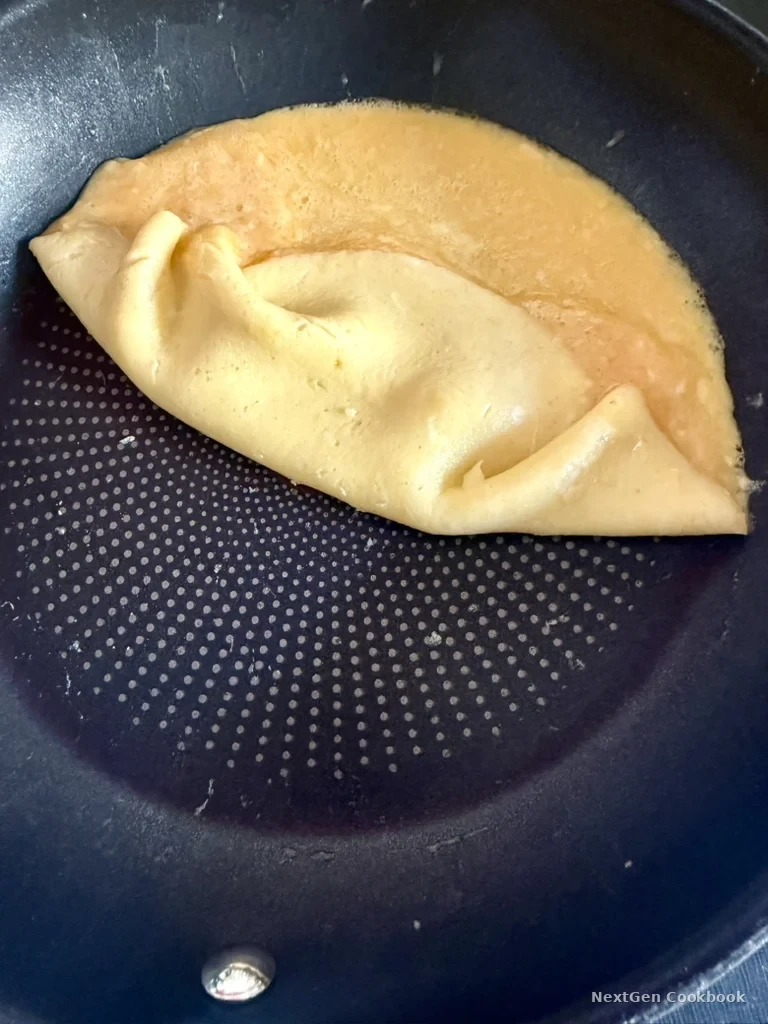
Fold it over one last time, and you can already make out the typical shape of the omelette. There’s a small bit left over, which you can now finish off in a rather artful way – as Jacques Pépin demonstrates in the video above, for example. As for learning: don’t worry, just ignore it. You’ll find your own technique with time and practice.
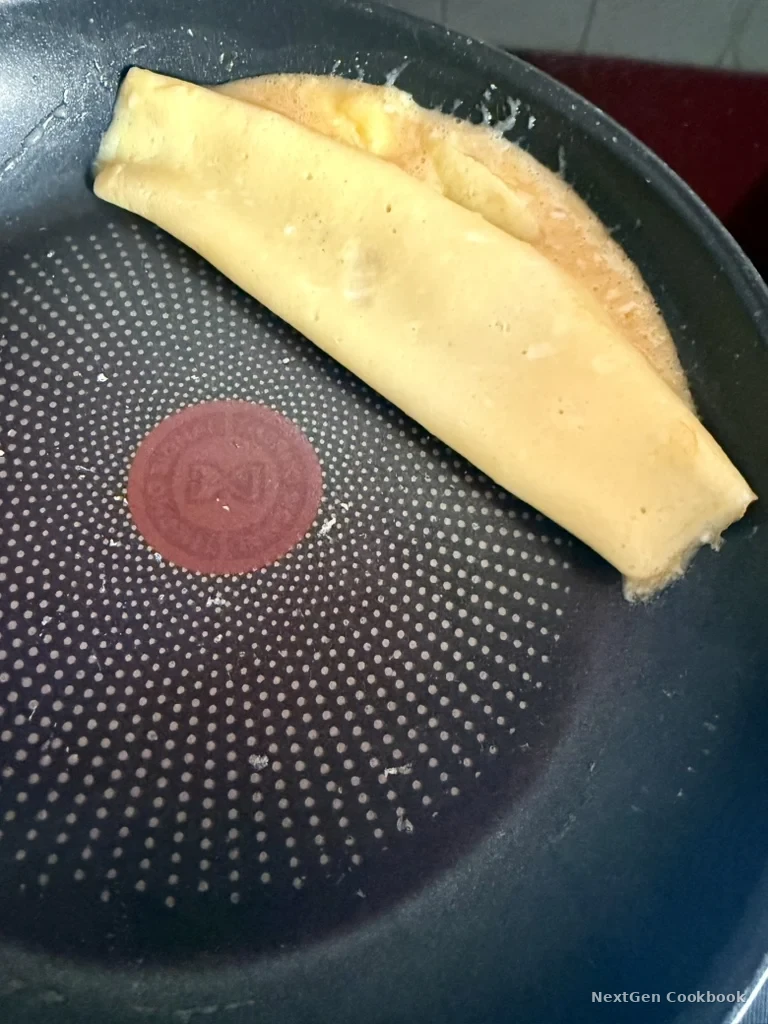
If the edges still seem a bit runny, or if some of the egg mixture is even oozing out, simply put the pan back on the heat for a moment. Don’t let the process put you under pressure – you don’t have to be able to make an omelette quickly.
Now grasp the pan by the handle – but from underneath, with your palm facing upwards. Take a large plate in your other hand, bring the two together and carefully tip the omelette out of the pan so that the edge is now facing downwards. Even professionals then take a kitchen paper towel, shape the omelette into a neat form and wipe the plate clean around it. Sprinkle with chopped chives – and you’re done.
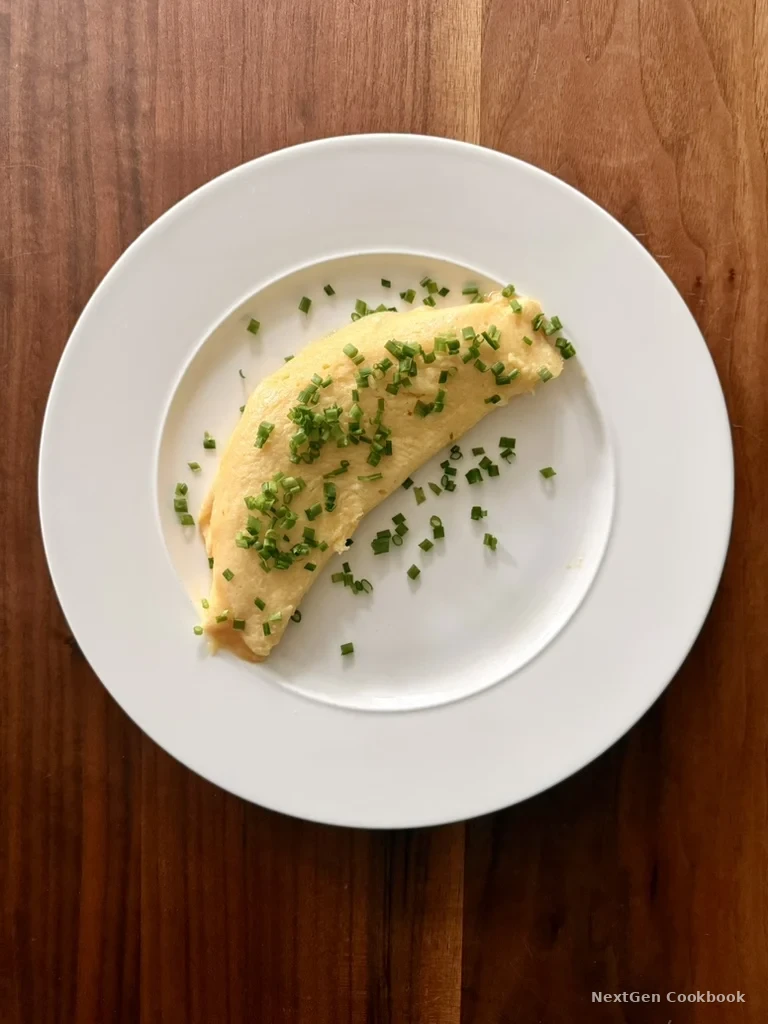
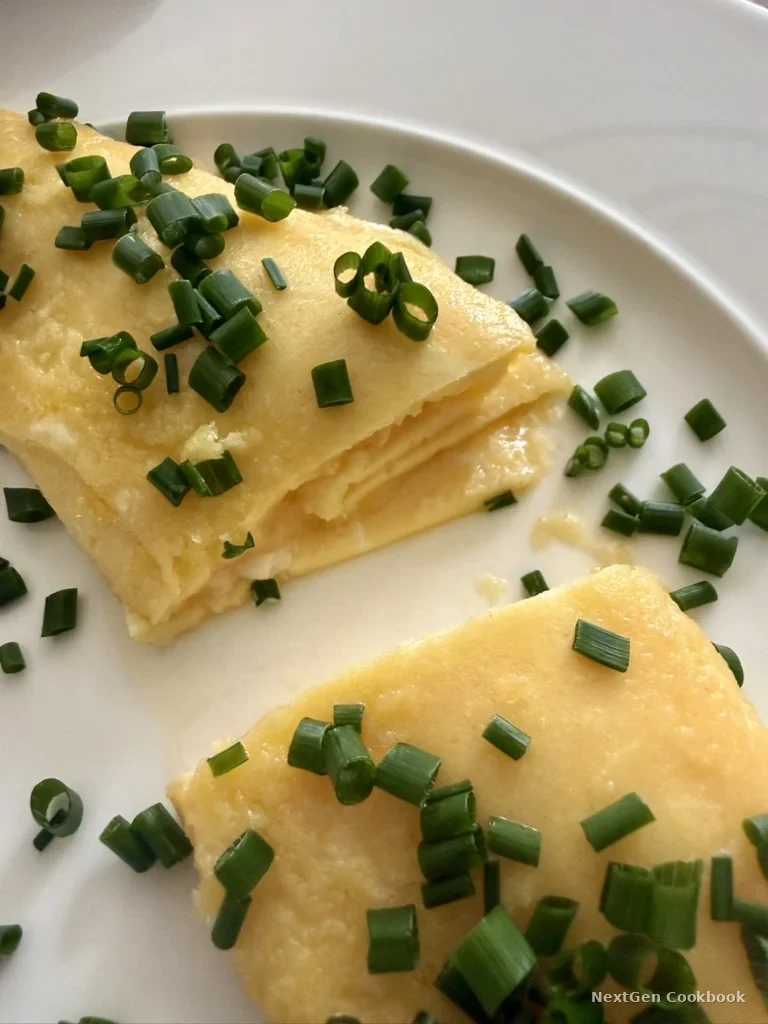
It’s anything but straightforward, but it produces an incredibly delicious result. A characteristic feature is that the inside of the French omelette is folded over and remains mostly creamy.
Omelettes like these can certainly become little works of art; we recommend, for example, this video on how to make Japanese omurice. It’s on our to-do list too, and it’s quite intimidating. For anyone who loves cooking, it’s a feast for the eyes. The omelette is prepared from 2:40 onwards.
You often read that this is actually the most difficult omelette of all.
That’s not true.
Just take a look at this master from France – it blows us away, no matter how many times we see it. Fortunately, it still tastes good even if you don’t reach those higher realms.
Enjoy.
And may the taste be with you.
