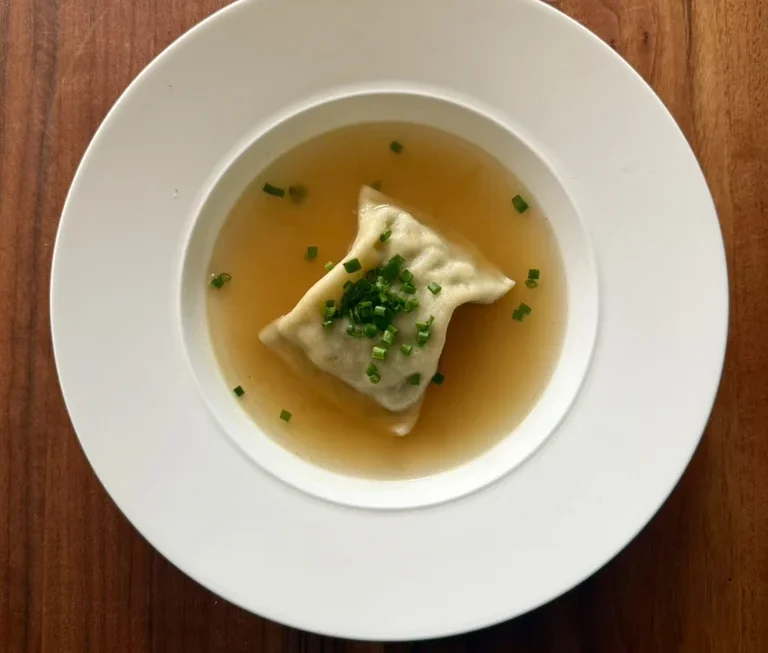
Maultaschen are arguably the most classic dish in Swabian cuisine – alongside Spaetzle, of course – for which you’ll find a basic recipe here and one for Käsespätzle here. ‘Schwäbische Maultasche’ is even a protected designation of origin recognised by the EU.
There are many theories and legends surrounding the name ‘Maultasche’. According to a widely told tale, the Maultasche was invented at Maulbronn Monastery as a way of concealing meat during Lent – which is probably also the origin of the name ‘Hergottsbscheißerle’, commonly used in Swabia. Literally, this means ‘which deceives the Lord’, but in strong language.
However, this is not certain. According to another legend, the noblewoman Margarete von Tirol – who was also given the rather unflattering name Margarete Maultasch – is said to have brought the stuffed pasta to Swabia.
Finally, it is noted that ‘Maultasche’ is an old word for a slap in the face. However, it is not immediately clear to us what this has to do with the dish.
But now to the preparation. We present all three classic ways to serve Maultaschen in true style. We’ve also opted for the classic filling, which contains meat.
We’ll start with the dough, as it needs to rest and prove for quite a while.
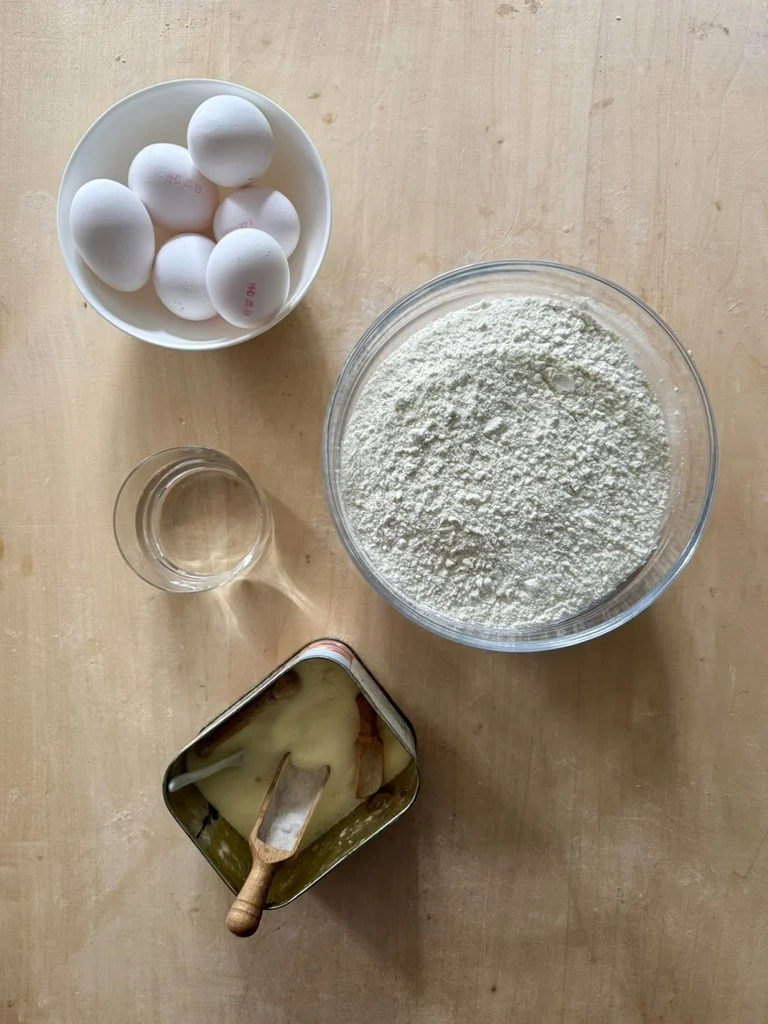
It is similar to pasta dough, but contains slightly more flour in relation to the egg and a little water.
Tip the bowl of flour onto the work surface and, using one hand, form a well in the centre into which the eggs are beaten.
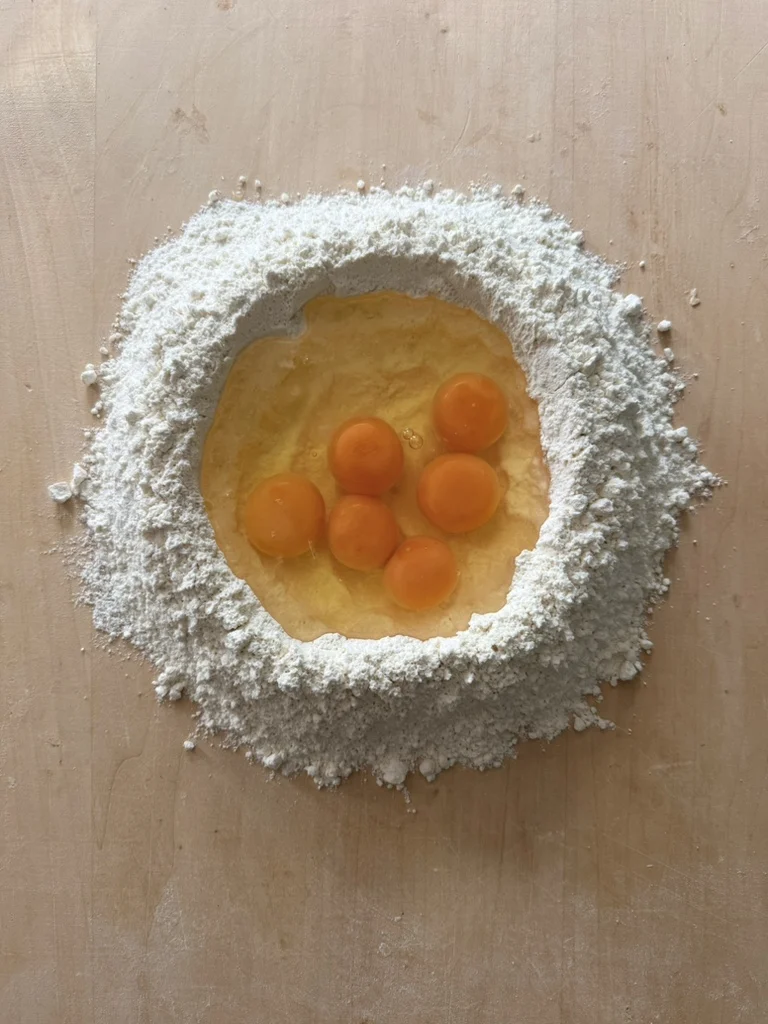
Beat the eggs with a fork, gradually incorporating the flour from the sides.
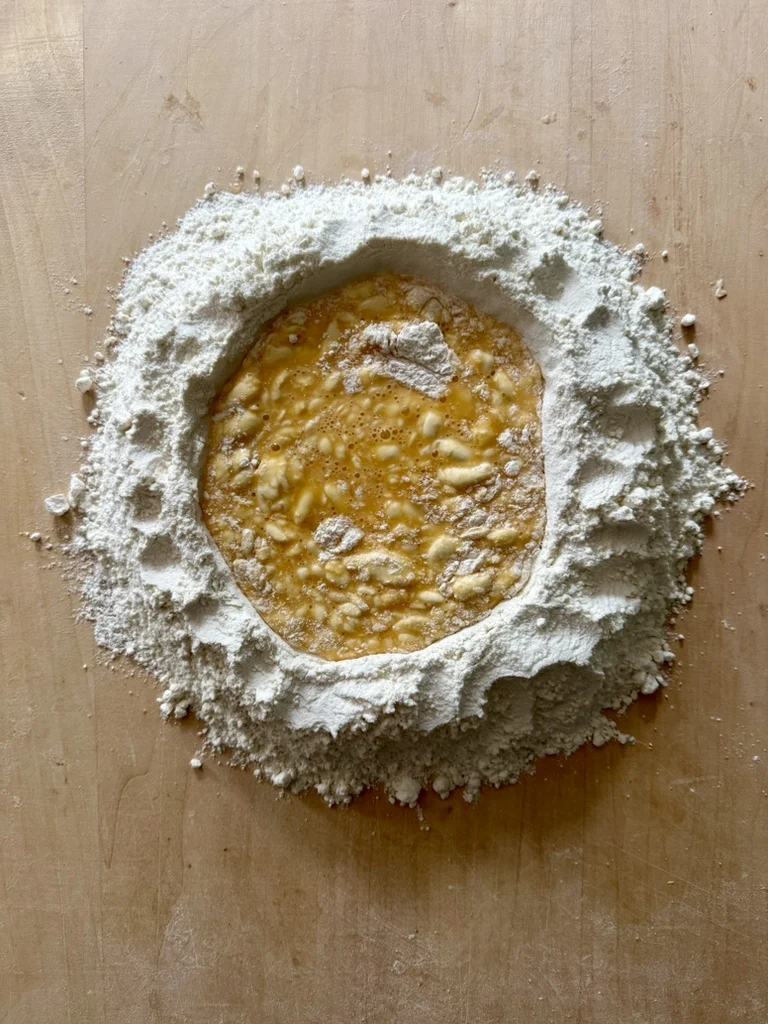
Finally, push everything together and mix it roughly at first, whilst kneading vigorously for about 10–12 minutes until a firm, smooth dough forms.
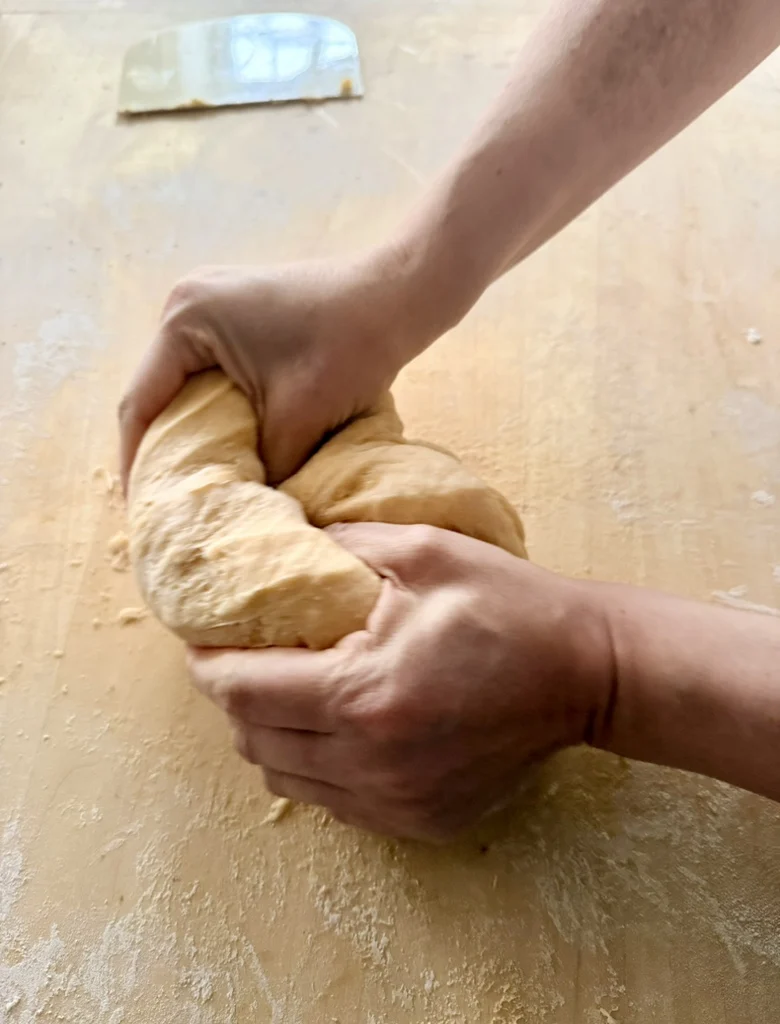
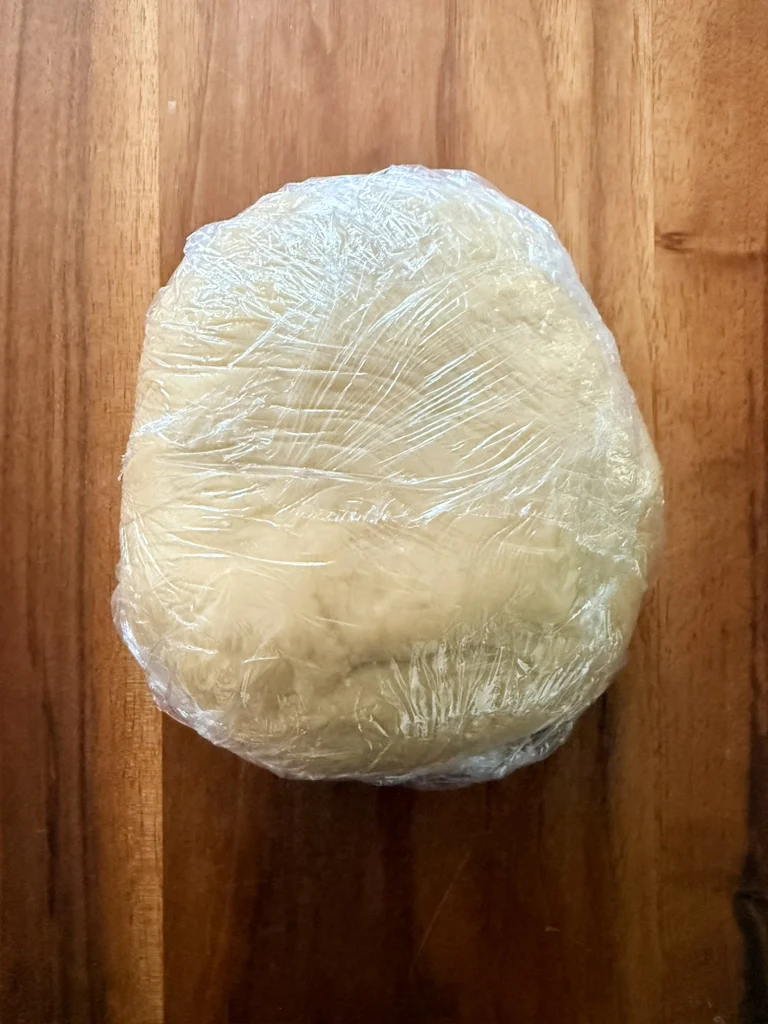
It is now wrapped in cling film and left to rest for at least an hour. Only then does it develop its ideal texture.
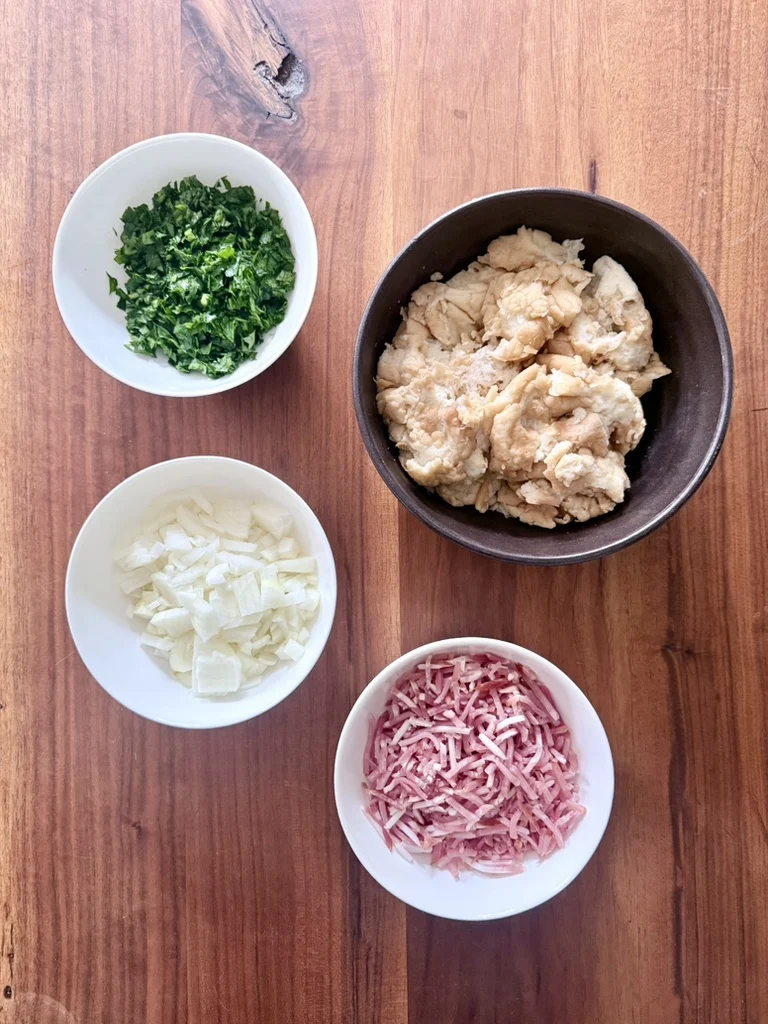
For the filling, you’ll need stale, dry bread rolls, which are soaked in water for a few minutes. Once they’ve absorbed the water, squeeze it out firmly and tear the mixture into pieces. You’ll also need thinly sliced bacon – we prefer raw ham, which contains less fat – diced onions and plenty of chopped parsley, including the stalks.
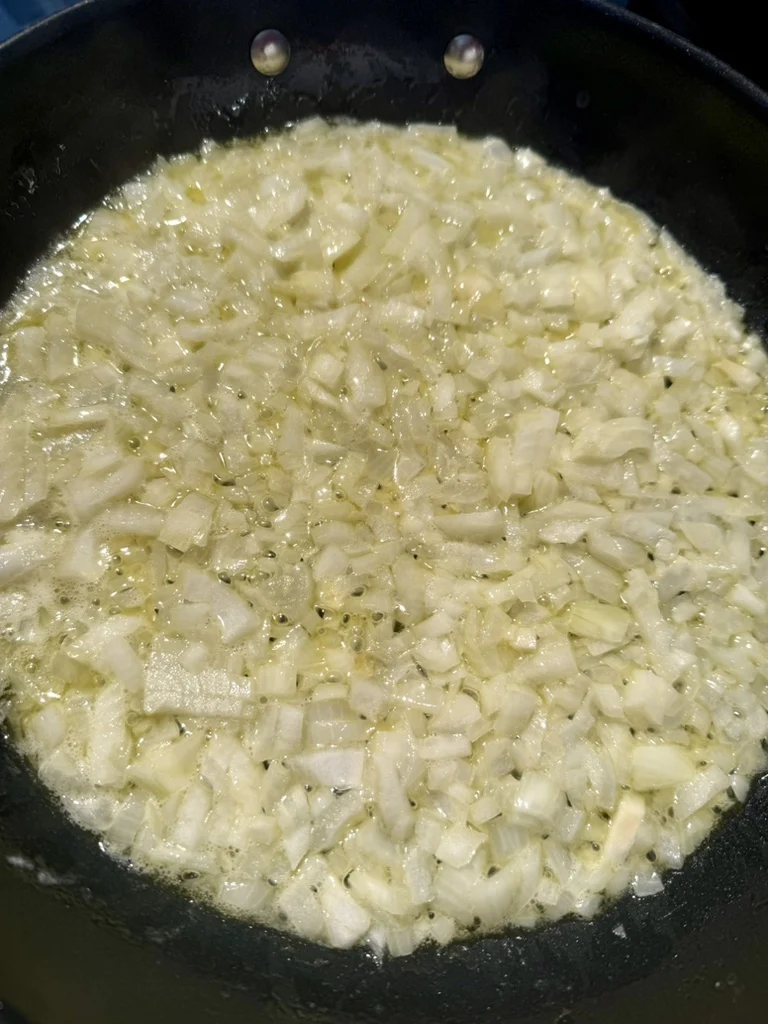
The onions are softened in butter or neutral oil until translucent; you don’t want their raw flavour to come through in the filling.
Next, add the bacon to let the fat render, and finally the torn-up bread. Fry everything for a few minutes to draw some more of the moisture out of the bread.
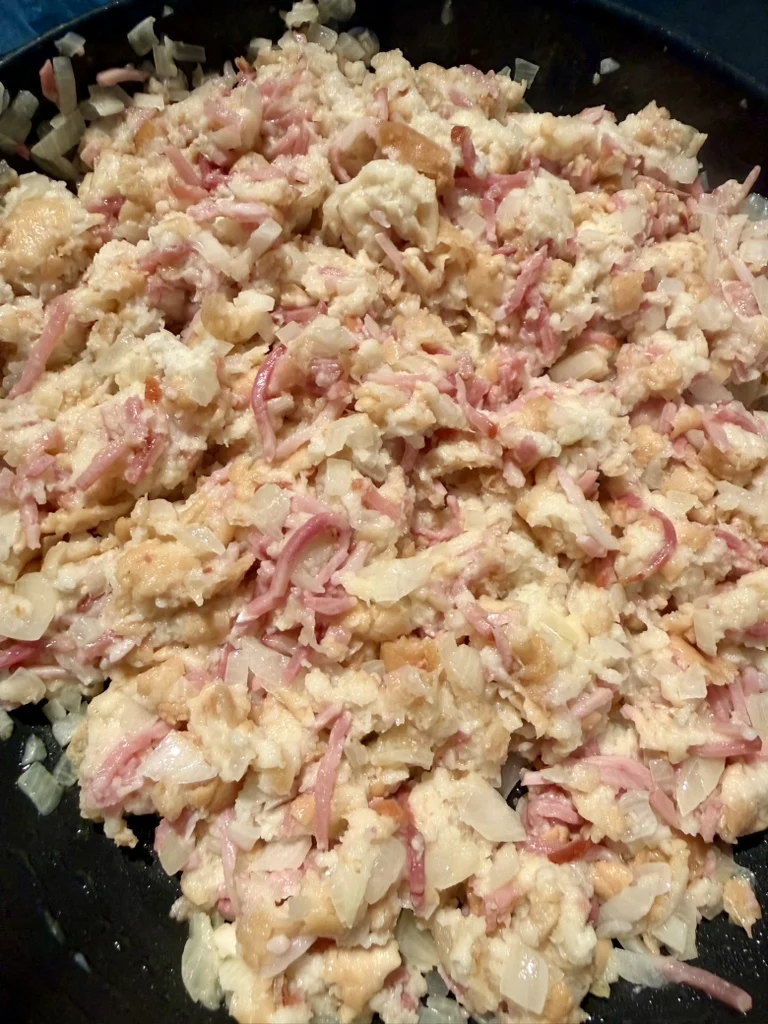
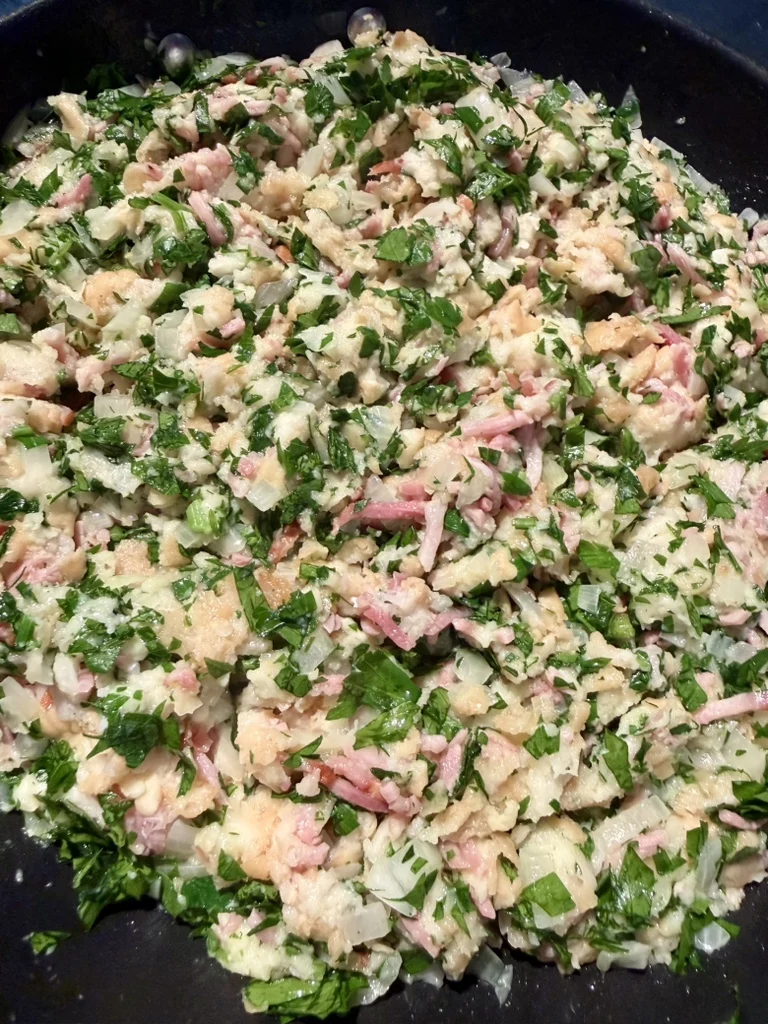
Stir in the parsley and leave to cool.
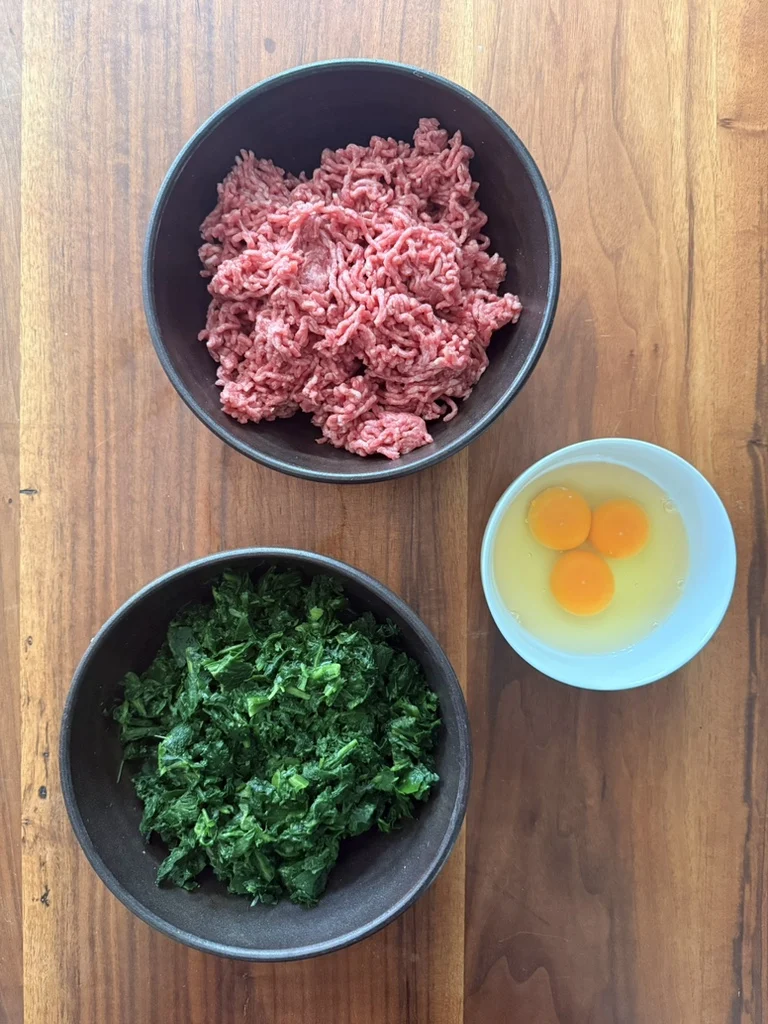
The filling also consists of minced meat – typically half beef and half pork – eggs and spinach leaves. The spinach is blanched: place it in boiling salted water for 30 seconds, then immediately transfer it to water that is as cold as possible to stop the cooking process and preserve its lovely colour. Place it in a colander and squeeze out the water.
Now bring all the ingredients for the filling together and mix them thoroughly. Season generously with salt, black pepper and grated nutmeg. As a guide, 10 g of salt per kilo of filling is a reasonable amount. If you’re unsure, fry a small amount of it in a pan until cooked through and then taste.
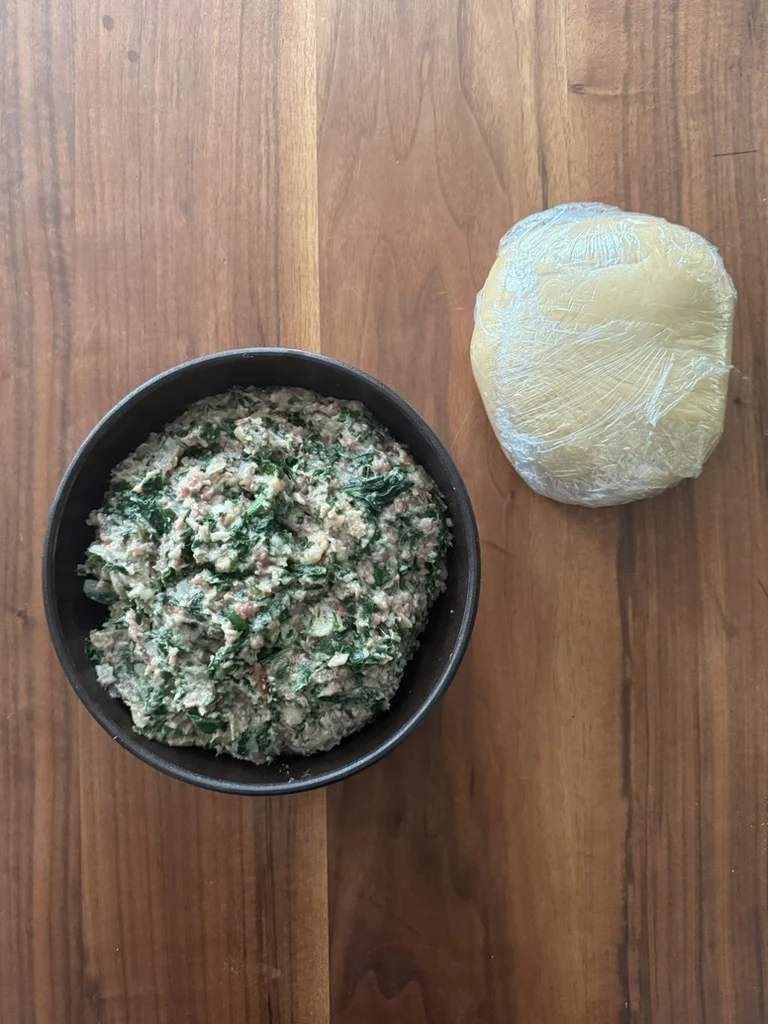
Roll out the dough into strips of any length, but at least 15 cm wide – preferably 20 cm. It should be thin, but not quite as thin as pasta dough. Maultaschen are bulkier than ravioli, for example.
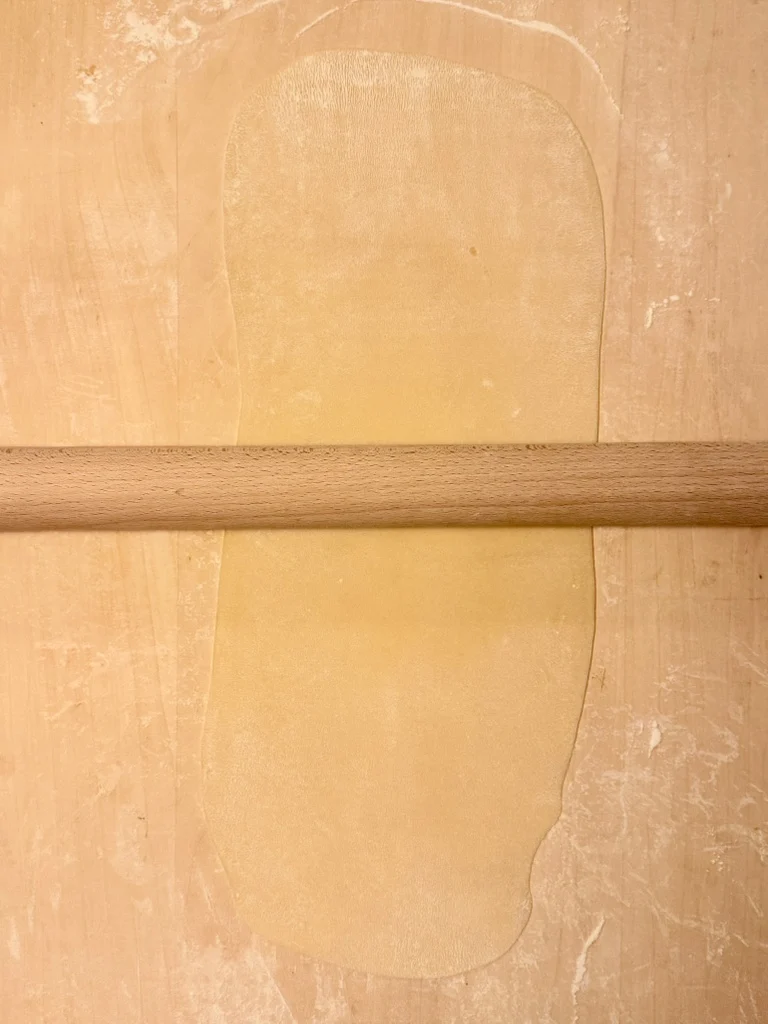
Spread filling over a third of the sheet of dough; this is best done with a tablespoon.
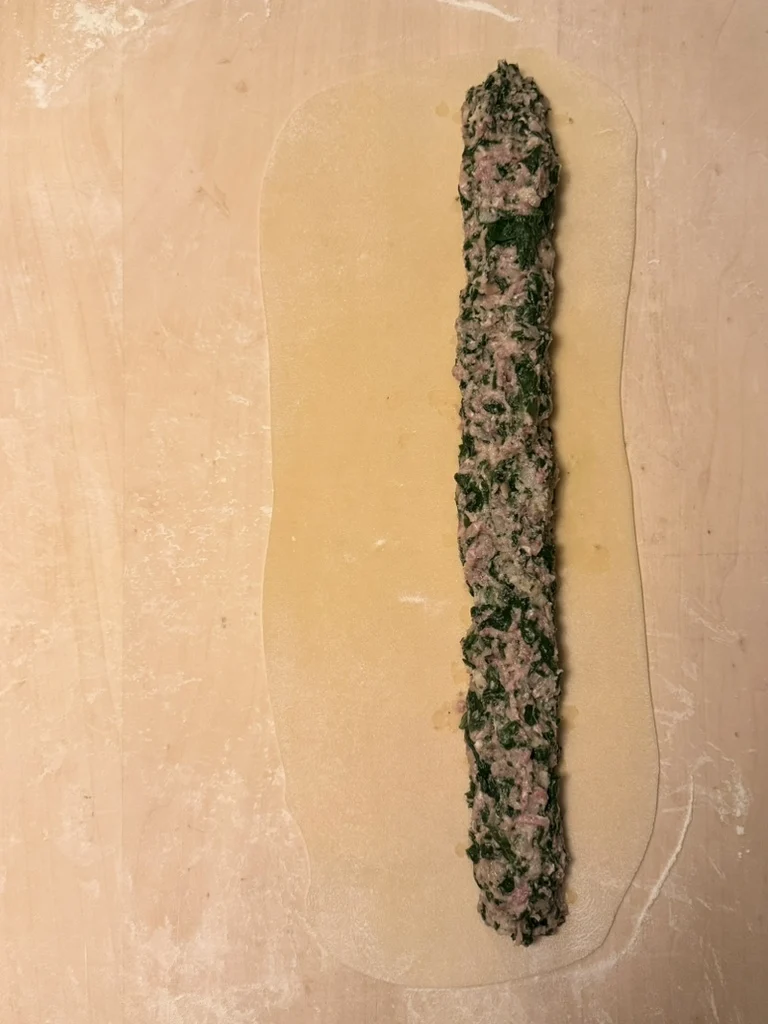
Then fold the dough over the filling and roll it up, stopping at the last third of the strip of dough. Brush this section with egg yolk as a glue.
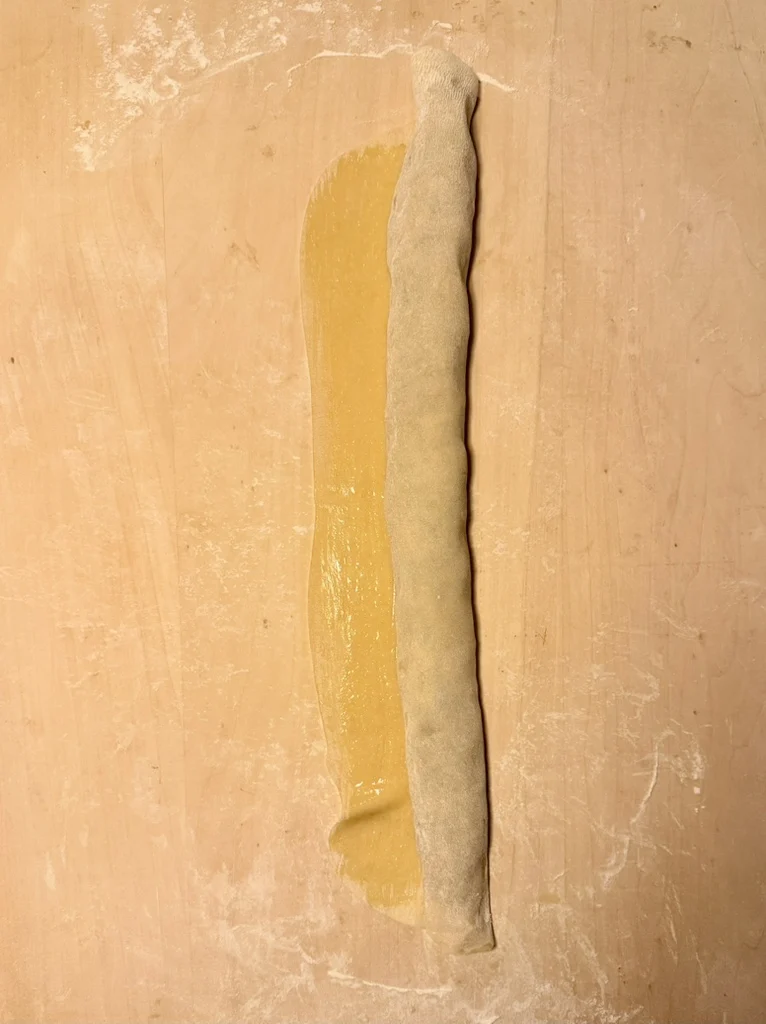
Roll the dough right to the end and gently flatten it a little. Now mark out the individual Maultaschen by pressing the roll of dough together with the handle of a wooden spoon.
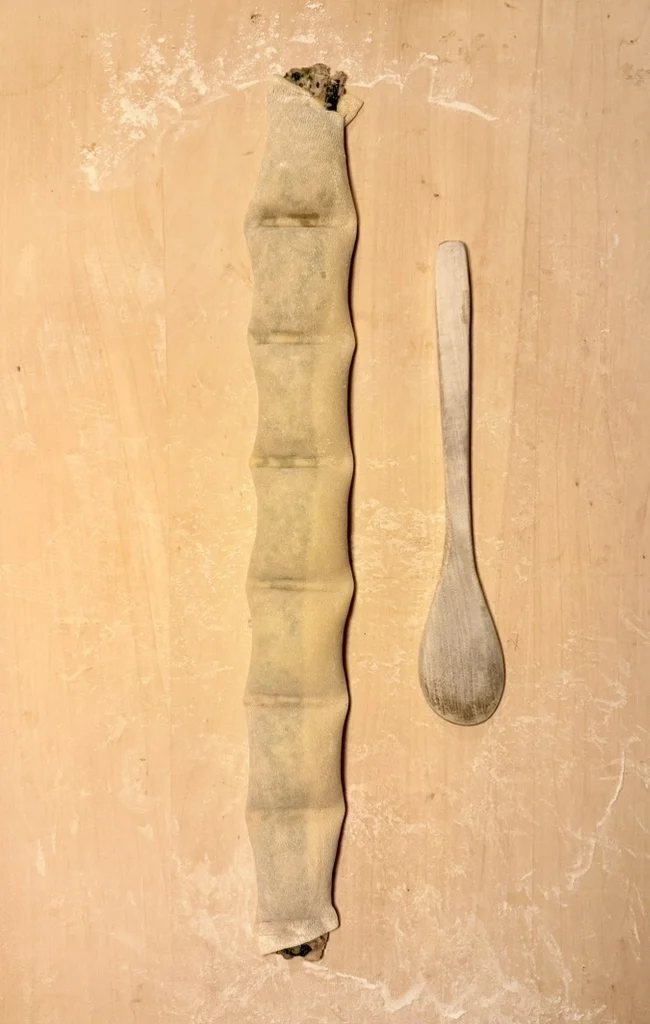
Finally, cut along the markings with a sharp knife. There’s no need to seal the ends of the Maultaschen; the egg in the filling will bind them together later during cooking, so that nothing leaks out. You just need to handle the raw Maultaschen with care at this stage.
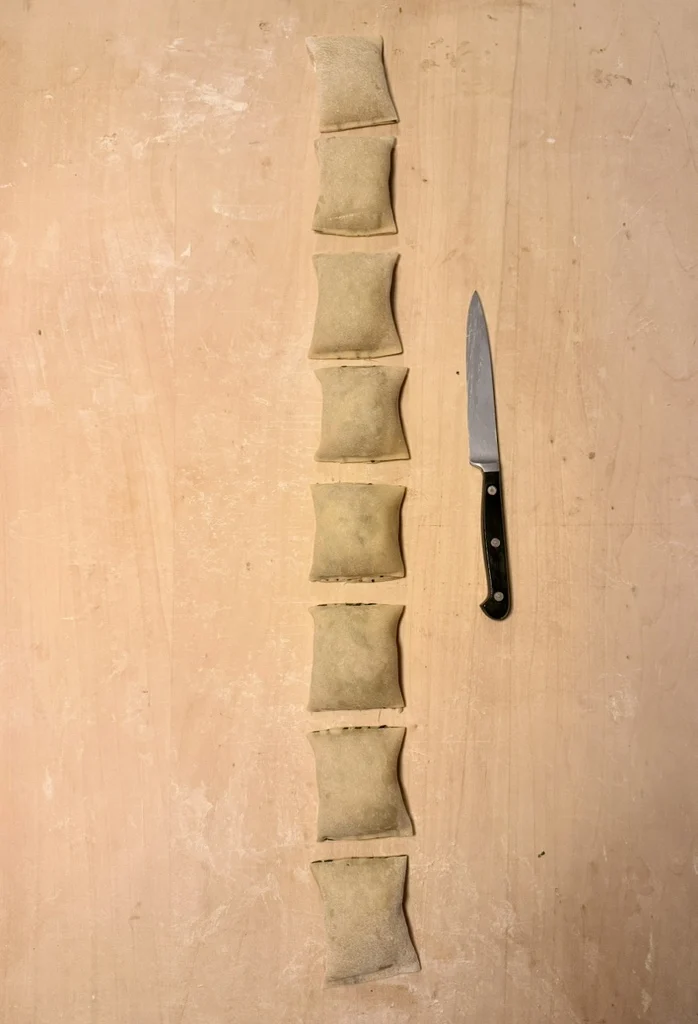
The Maultaschen are cooked in batches in a large saucepan with plenty of salted water for 8 minutes. Important: the water must not be boiling vigorously, but should only be simmering gently.
They are then ready and keep very well; above all, they are excellent for freezing.
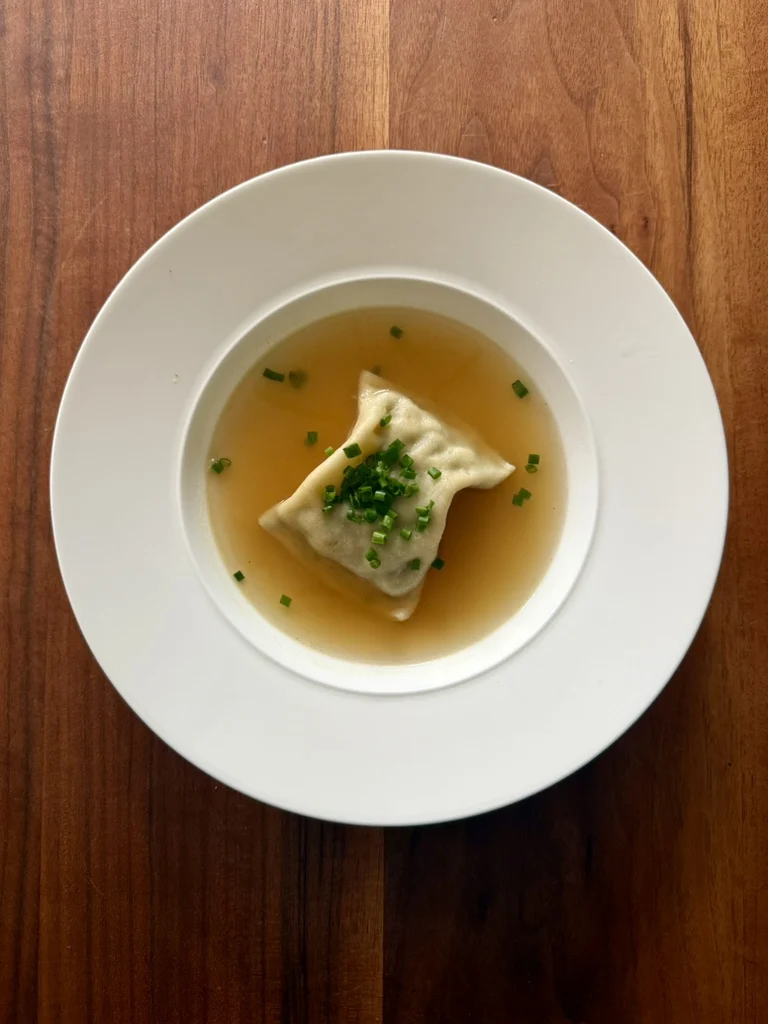
They are usually served in hot stock (mostly beef or vegetable stock):
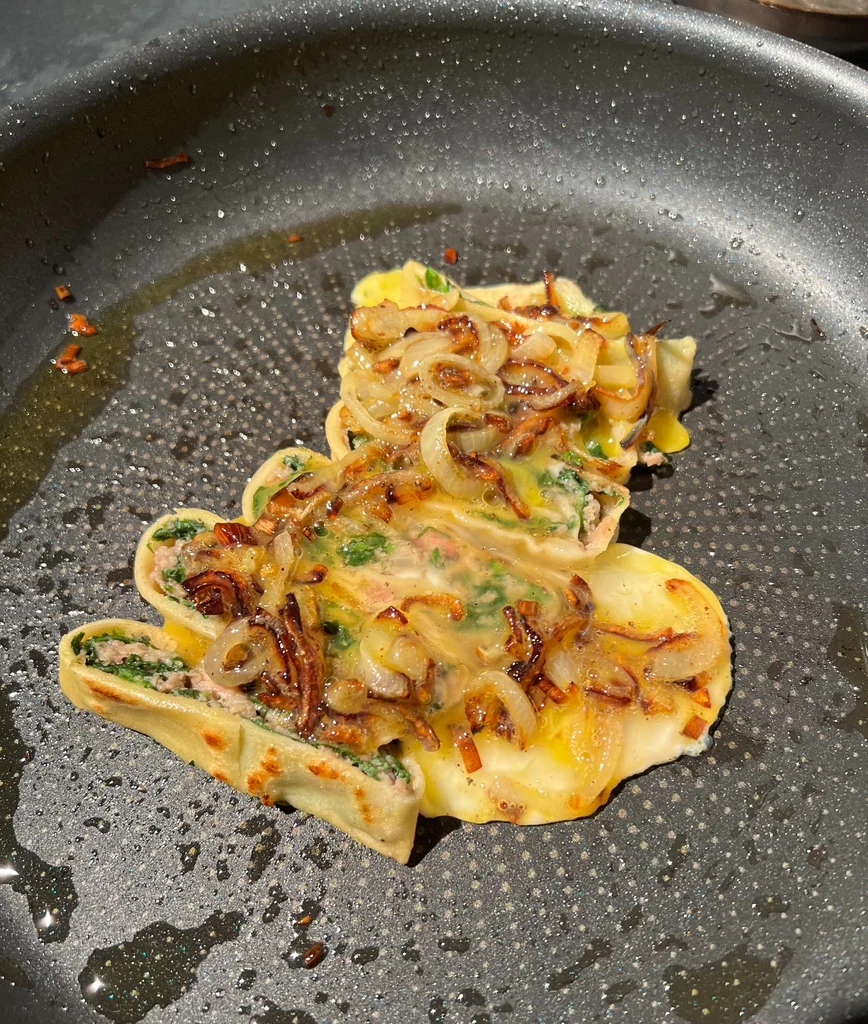
Or you can cut them into strips, fry them in butter on all sides in a pan – they go well with onions and herbs, and you can crack an egg over them:
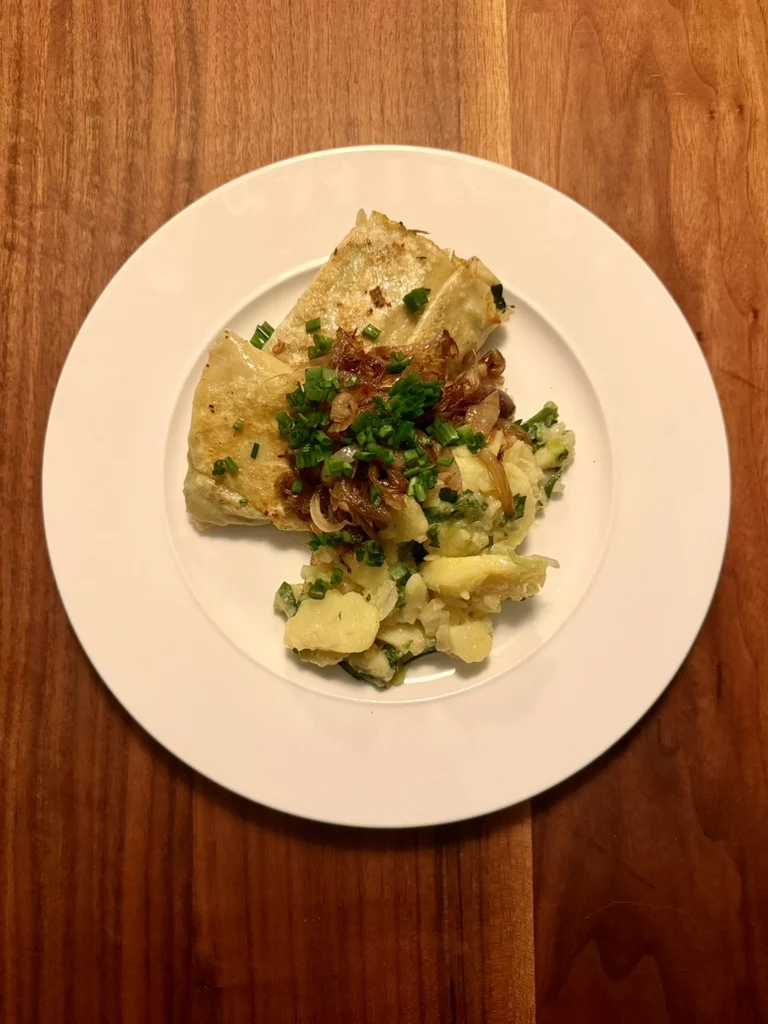
Or, a very traditional way: gently fry them whole in butter, served with browned onions and chives, and potato salad on the side. Swabian style, of course.
Enjoy.
And may the taste be with you.
Ingredients (for 4–6 people):
For the dough:
3 eggs
1–2 tbsp water
½ tsp salt
350 g pasta flour (DE: Type 550, AUT: Type 700, ITA: Tipo 00)
For the filling:
1 onion
1 tbsp butter or neutral oil for frying
2 stale bread rolls
300 g spinach
250 g minced beef or a mixture of beef and pork
50 g diced bacon (or raw ham)
1 bunch of parsley
1 egg and 1 egg yolk
Salt, pepper, nutmeg
To finish:
1 egg to seal the pastry

One thought on “Swabian ‘Maultaschen’”